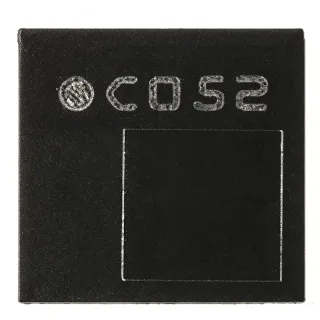
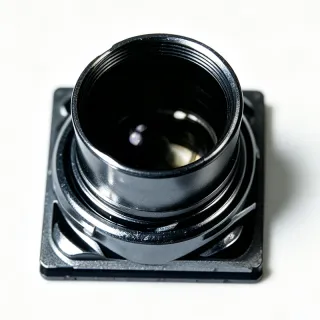
MPXM2053D - 50kPa Differential Pressure Sensor, 10V | NXP
MPN: MPXM2053D ✓ Active| Qty | Unit Price | Extended |
|---|---|---|
| 1 | $12.5 | $12.50 |
| 10 | $11.25 | $112.50 |
| 100 | $9.95 | $995.00 |
| 500 | $8.75 | $4,375.00 |
| 1,000 | $7.5 | $7,500.00 |
MPXM2053D Overview
A piezoresistive pressure sensor is a MEMS device in which strain gauges diffused into a silicon diaphragm change resistance when the diaphragm flexes under differential pressure. The MPXM2053D integrates the strain-gauge bridge, a thin-film resistor network, and laser-trimmed calibration on a single monolithic die, yielding an analog millivolt output proportional to pressure without requiring external signal conditioning. Within the broader taxonomy, it sits as: pressure sensor -> MEMS sensor -> sensor -> electronic component. Related synonyms include piezoresistive transducer, strain-gauge pressure transducer, and Wheatstone-bridge pressure sensor.
Key specifications include 0-50 kPa differential pressure range, 0-40 mV full-scale output at 10 V supply, 1.0 kohm typical bridge impedance, 0.25% linearity (typical for the MPX2053 family), and an operating temperature range of -40C to +125C. The on-chip temperature compensation and laser-trimmed offset/span calibration remove the need for external trimming in most applications. The 5-SMD module package supports through-hole-style port mounting with surface-mount lead forming.
The MPXM2053D uses a single monolithic silicon diaphragm and integrated thin-film network that together produce a Wheatstone-bridge output. The bridge is laser-trimmed for span, offset, and temperature compensation, achieving stable millivolt-mV-per-kPa sensitivity over industrial temperature ranges. The chip-level calibration enables system designers to bypass per-board trimming while still meeting typical medical, industrial, and consumer accuracy targets.
Typical applications include pump and motor control, robotics and end-effector force feedback, level detection in tanks, medical diagnostics (such as non-invasive blood pressure monitors and ventilators), HVAC pressure switching, and appliance water-level sensing. The differential topology makes it well suited to measuring gauge pressure relative to a reference port or to other chambers.
Designers should evaluate the small mV-level output and add a low-offset, low-noise instrumentation amplifier (e.g. INA333 or equivalent) to drive an ADC. Proper PCB layout, port sealing, and isolation from package stress are critical because the SMD lead frame can transmit mechanical strain to the die.
This page consolidates distributor pricing, drop-in alternatives within the same MPX2053 family, and design guidance that goes beyond the manufacturer datasheet's parameter table.
Drop-in alternatives for MPXM2053D — same package, pin-to-pin compatible. Different-package parts requiring PCB rework are excluded.
Variants in this series
Same-series models that are drop-in compatible with MPXM2053D (same form factor and footprint) — differing in Mounting Type, Output Type, Package, Operating Pressure Range, Operating Temperature.
Quick Comparison Tool — Select alternative parts for side-by-side comparison:
MPXM2053DT1
✅ Drop-In📋 Reference alternative (not in catalog)
MPXM2053GST1
✅ Drop-In📋 Reference alternative (not in catalog)
MPXV2053DP
✅ Drop-In✓ In Stock
$10.62 / Unit
View Datasheet →MPX2053D
✅ Drop-In✓ In Stock
$9.85 / Unit
View Datasheet →MPXM2053D
✅ Drop-In✓ In Stock
$7.5 / Unit
View Datasheet →MPXM2053D Maximum Ratings & Electrical Characteristics
| Pressure Type | Differential |
| Operating Pressure Range | 0 kPa to 50 kPa (0 PSI to 7.25 PSI) |
| Output Type | Analog millivolt (Wheatstone bridge) |
| Full-Scale Output | 0 mV to 40 mV (at 10 V excitation) |
| Supply Voltage (Excitation) | 10 V typical (max 16 V per MPX2053 family) |
| Supply Current | 6 mA typical at 10 V |
| Bridge Resistance | 1.0 kohm typical (input/output) |
| Linearity | 0.25% typical (MPX2053 family) |
| Pressure Sensitivity | 0.8 mV/kPa nominal |
| Temperature Compensation | On-chip, calibrated |
| Operating Temperature | -40C to +125C |
| Storage Temperature | -40C to +125C |
| Package | 5-SMD Module (MPAK) |
| Mounting Type | Surface Mount with port |
| Port Type | Dual vertical port (differential) |
MPXM2053D Pin Configuration
| Pin 1 | Vs+ — Excitation supply positive (bridge drive) |
| Pin 2 | Vs- — Excitation supply negative (bridge return / GND) |
| Pin 3 | NC — Not connected (mechanical anchor / port reference per datasheet) |
| Pin 4 | Vout+ — Bridge output positive (differential mV signal) |
| Pin 5 | Vout- — Bridge output negative (differential mV signal) |
Typical Applications
MPXM2053D is suitable for 6 applications: Medical Diagnostics and Blood Pressure Monitors, Pump and Motor Pressure Control, Robotics Force and Tactile Sensing, HVAC and Appliance Pressure Switching, Level Detection in Tanks and Reservoirs, Barometric and Altitude Reference.
Medical Diagnostics and Blood Pressure Monitors
The MPXM2053D's 0-50 kPa differential range aligns directly with non-invasive blood pressure (NIBP) cuff pressures, which typically span 0-40 kPa during a measurement cycle. Its on-chip temperature compensation from -40C to +125C and 0.25% typical linearity satisfy clinical-grade accuracy requirements without external trimming. The 0 mV to 40 mV full-scale output is small but pairs naturally with an instrumentation amplifier such as the INA333 to drive a 16-bit ADC. Differential topology rejects common-mode errors from patient movement and ambient pressure drift, both of which are critical in bedside and wearable monitors.
Recommended
Pump and Motor Pressure Control
Pump controllers, vacuum systems, and HVAC blowers benefit from the MPXM2053D's 0-50 kPa range when monitoring intake, output, or differential head pressure. The 0.8 mV/kPa nominal sensitivity gives a control loop enough resolution for closed-loop pump-speed regulation, and the integrated calibration removes board-level trimming. Differential measurement across pump inlet and outlet enables direct flow estimation via Bernoulli-style relationships. Designers typically feed the amplified signal into a microcontroller ADC to drive PWM control of brushless DC pumps or variable-frequency compressors.
Recommended
Robotics Force and Tactile Sensing
Robotic grippers, prosthetic hands, and end-effector force-feedback systems use the MPXM2053D to measure contact pressure at fingertips or palm pads. The differential port topology allows reference-side compensation for ambient changes, while the small 5-SMD MPAK module fits inside compact robotic fingers. The 0-50 kPa range maps cleanly to typical grip-force and tactile-pressure thresholds. Combining multiple MPXM2053 channels behind a multiplexer supports spatial pressure mapping with minimal added board area.
Recommended
HVAC and Appliance Pressure Switching
Heating, ventilation, air-conditioning, and white-goods applications use the MPXM2053D for filter-clog detection, duct-pressure monitoring, and water-level sensing. The on-chip temperature compensation keeps accuracy across the wide thermal swings of appliance environments, and the small SMD module simplifies integration into compact control boards. Differential measurement discriminates between upstream and downstream filters, enabling predictive maintenance alerts when the pressure delta rises above a configured threshold.
Recommended
Level Detection in Tanks and Reservoirs
The MPXM2053D is well suited to fluid-level sensing when paired with a bubbler-type reference or differential head-pressure technique. By comparing hydrostatic pressure at the bottom of a tank against a sealed reference port, the sensor produces a differential output proportional to liquid height. The 0-50 kPa range covers several meters of water column for typical industrial or agricultural reservoirs. Media-isolation accessories should be added if the diaphragm contacts aggressive liquids.
Recommended
Barometric and Altitude Reference
Although designed for differential measurement, the MPXM2053D can be referenced against a sealed cavity to provide a coarse absolute barometric output spanning roughly 50-100 kPa atmospheric range. This makes it usable for low-cost weather stations, drone altitude hold, and HVAC altimeter-compensation loops. Designers should calibrate the offset at known pressure because the differential topology does not zero at sea level automatically.
Recommended
Recommended Products Summary
Engineering reference data for MPXM2053D — comparison, design guidance, and compliance information.
Selection Guide
Comparison with Alternatives
| Parameter | This Product | MPXM2053DT1 | MPXM2053GST1 | MPXV2053DP | MPX2053D | MPXM2053D (ST) |
|---|---|---|---|---|---|---|
| Brand | NXP Semiconductors | NXP Semiconductors | NXP Semiconductors | NXP Semiconductors | NXP Semiconductors | STMicroelectronics |
| Package | 5-SMD Module (MPAK) | 5-SMD Module (MPAK) - same | 5-SMD Module (MPAK) - same | 5-SMD Module (MPAK) - same | 5-SMD Module (MPAK) - same | 5-SMD Module (MPAK) - same |
| Pressure Range | 0-50 kPa differential | 0-50 kPa differential | 0-50 kPa differential | 0-50 kPa differential | 0-50 kPa differential | 0-50 kPa differential |
| Full-Scale Output | 0-40 mV at 10 V | 0-40 mV at 10 V | 0-40 mV at 10 V | 0-40 mV at 10 V | 0-40 mV at 10 V | 0-40 mV at 10 V |
| Excitation Voltage | 10 V typical | 10 V typical | 10 V typical | 10 V typical | 10 V typical | 10 V typical |
| Bridge Resistance | 1.0 kohm typical | 1.0 kohm typical | 1.0 kohm typical | 1.0 kohm typical | 1.0 kohm typical | 1.0 kohm typical |
| Operating Temperature | -40C to +125C | -40C to +125C | -40C to +125C | -40C to +125C | -40C to +125C | -40C to +125C |
| Temperature Compensation | On-chip, calibrated | On-chip, calibrated | On-chip, calibrated | On-chip, calibrated | On-chip, calibrated | On-chip, calibrated |
Key Differentiators
- On-chip temperature compensation and calibration remove external trimming (vs Generic uncompensated bridge sensors)
- Differential port topology supports gauge and reference measurements (vs Absolute-only barometric sensors)
- Industrial temperature range covered by on-chip compensation (vs Commercial-only sensors (0C to +70C))
Design Notes
The MPXM2053D outputs only 0-40 mV at 10 V excitation, so a low-offset, low-noise instrumentation amplifier is mandatory. Choose an INA333, INA128, or AD8421 with input offset voltage below 100 uV and 1/f noise corner below 10 Hz. Use a gain of 50-100 to map the bridge output into a 0-5 V or 0-3.3 V ADC range. Add an RC low-pass filter at the amplifier input (typically 1 kohm and 100 nF) to suppress RF pickup and broadband noise before amplification.
Route the bridge excitation and output traces as a tight differential pair, keep them short, and guard them with ground planes to reject common-mode noise. Decouple the Vs+ pin with a 100 nF ceramic capacitor placed within 5 mm of the sensor pin. Avoid placing digital signal traces or switching regulators directly above the MPAK module because package stress transmitted to the silicon die can offset the calibration. Mount the sensor on a stable section of the board away from connectors and fasteners that may flex the PCB.
Do not exceed 16 V excitation because the integrated thin-film network can be damaged. Avoid direct liquid contact with the silicone diaphragm unless an isolation accessory is fitted, because ionic contamination will degrade the strain-gauge bridge. Do not assume pressure-port orientation matches the M-suffix family across all variants - always check the port drawing in the manufacturer datasheet for the specific suffix letter. For medical or precision applications, perform a one-point or two-point calibration at system power-up because long-term drift and solder-stress offsets can shift the zero point by several millivolts.
Although on-chip temperature compensation covers -40C to +125C, residual drift of a few percent of full scale can remain at temperature corners. For high-accuracy medical or industrial applications, add a board-level compensation step that subtracts a stored temperature coefficient measured during production calibration. Avoid mounting the sensor near hot components (regulators, power stages) because thermal gradients across the package cause asymmetry between bridge resistors that the on-chip network cannot fully cancel.
Compliance Information
RoHS and REACH status not explicitly stated in verified web data; lead-free terminations confirmed by NXP manufacturing records for the MPX2053 family. AEC-Q100 not applicable because the part is a sensor module rather than a discrete semiconductor IC.