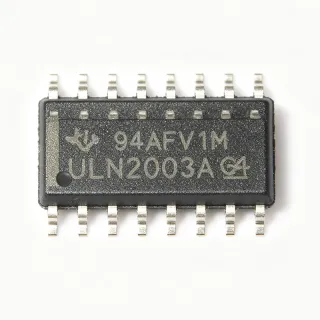
TCAN337G-Q1 - 3.3V CAN FD Transceiver | Texas Instruments
MPN: TCAN337G-Q1 ✓ Active| Qty | Unit Price | Extended |
|---|---|---|
| 1 | $1.25 | $1.25 |
| 10 | $1.12 | $11.20 |
| 100 | $0.95 | $95.00 |
| 500 | $0.82 | $410.00 |
| 1,000 | $0.74 | $740.00 |
TCAN337G-Q1 Overview
A CAN transceiver is a physical layer device that interfaces between a CAN controller (such as a microcontroller with an integrated CAN peripheral) and the differential bus lines (CANH and CANL). It converts the digital signals from the controller into differential signals for transmission over the twisted-pair bus, and vice versa. The transceiver provides the necessary drive strength, receiver sensitivity, and protection features required for robust communication in harsh environments. In the system hierarchy, a CAN transceiver sits between the CAN controller (part of the MCU) and the physical bus, forming the physical layer of the CAN network.
Key features of the TCAN337G-Q1 include a wide operating voltage range of 3.0V to 3.6V, low electromagnetic emission, and high immunity to electromagnetic interference. It offers a bus fault protection of ±58V, ensuring robustness against short circuits and miswiring. The device also features a silent mode for diagnostic and network management, and a dominant timeout function to prevent bus lock-up. The TCAN337G-Q1 is AEC-Q100 qualified for automotive applications, meeting the stringent reliability requirements of the automotive industry.
Technically, the TCAN337G-Q1 uses a differential signaling scheme with a common-mode range of -12V to +12V, allowing it to operate in noisy environments. It has a loop delay symmetry of ns, which is critical for CAN FD operation at high data rates. The device is designed to be pin-compatible with other TCAN33x family members, such as TCAN337G and TCAN337, enabling easy design migration. It also includes a VIO pin for level shifting, allowing direct interface with 3.3V or 5V microcontrollers.
Typical applications include automotive body control modules, infotainment systems, advanced driver-assistance systems (ADAS), industrial automation, and building automation. The TCAN337G-Q1 is particularly suited for applications requiring high data rates and robust communication in harsh environments. Its small SOT-23-8 package and low power consumption make it an excellent choice for space-constrained and power-sensitive designs.
When designing with the TCAN337G-Q1, ensure proper termination resistors (typically 120Ω) at both ends of the CAN bus to minimize signal reflections. Also, place the transceiver close to the connector to reduce stub length and improve signal integrity. The VIO pin should be connected to the same supply voltage as the CAN controller to ensure proper logic level compatibility.
Drop-in alternatives for TCAN337G-Q1 — same package, pin-to-pin compatible. Different-package parts requiring PCB rework are excluded.
Variants in this series
Same-series models that are drop-in compatible with TCAN337G-Q1 (same form factor and footprint) — differing in Package, Supply Voltage, Dominant Timeout, Operating Temperature, Protocol.
Quick Comparison Tool — Select alternative parts for side-by-side comparison:
TCAN337GDR
✅ Drop-In📋 Reference alternative (not in catalog)
TCAN337GDCNR
✅ Drop-In📋 Reference alternative (not in catalog)
TCAN337GDCNT
✅ Drop-In📋 Reference alternative (not in catalog)
TCAN337G
✅ Drop-In✓ In Stock
$0.55 / Unit
View Datasheet →TCAN332G
✅ Drop-In ⚠️ Specs Unverified📋 Reference alternative (not in catalog)
SN65HVD230DR
✅ Drop-In ⚠️ Specs Unverified✓ In Stock
$0.94 / Unit
View Datasheet →TCAN337G-Q1 Specifications
| Supply Voltage | 3.0 V to 3.6 V |
| Data Rate | Up to 5 Mbps (CAN FD) |
| Protocol | CAN 2.0, CAN FD |
| Number of Channels | 1 |
| Number of Transceivers | 1/1 (Half Duplex) |
| Bus Fault Voltage | ±58 V |
| Common Mode Range | -12 V to +12 V |
| Operating Temperature Range | -40°C to +125°C |
| Package | SOT-23-8 |
| Mounting Type | Surface Mount |
| AEC-Q100 Qualified | Yes |
| RoHS Compliant | Yes |
| Silent Mode | Yes |
| Dominant Timeout | Yes |
| VIO Pin | Yes (Level Shifting) |
TCAN337G-Q1 Pin Configuration
| Pin 1 | TXD — Transmit data input |
| Pin 2 | GND — Ground |
| Pin 3 | VCC — Supply voltage (3.3V) |
| Pin 4 | RXD — Receive data output |
| Pin 5 | VIO — I/O level shifting supply |
| Pin 6 | CANL — CAN low bus line |
| Pin 7 | CANH — CAN high bus line |
| Pin 8 | STB — Standby control input |
Typical Applications
TCAN337G-Q1 is suitable for 6 applications: Automotive Body Control Modules, Industrial Automation, Building Automation, Infotainment Systems, ADAS (Advanced Driver-Assistance Systems), Medical Equipment.
Automotive Body Control Modules
The TCAN337G-Q1 is ideal for automotive body control modules (BCMs) that manage lighting, windows, and locks. Its AEC-Q100 qualification ensures reliability in harsh automotive environments. With CAN FD support up to 5 Mbps, it enables faster data exchange between BCM and other ECUs. The wide operating temperature range of -40°C to +125°C and bus fault protection of ±58V make it robust against electrical disturbances. The small SOT-23-8 package saves PCB space, which is critical in space-constrained automotive modules. The silent mode allows for diagnostic and network management without disturbing the bus.
Recommended
Industrial Automation
In industrial automation, the TCAN337G-Q1 provides reliable CAN communication for PLCs, sensors, and actuators. Its robust bus fault protection of ±58V and common-mode range of -12V to +12V ensure operation in noisy factory environments. The device supports CAN FD, allowing higher data throughput for real-time control. The wide temperature range and AEC-Q100 qualification (though not required for industrial) indicate high reliability. The VIO pin enables direct interface with 3.3V or 5V microcontrollers, simplifying design. The small package is suitable for compact industrial modules.
Recommended
Building Automation
The TCAN337G-Q1 is well-suited for building automation systems such as HVAC controls, lighting systems, and access control. Its low power consumption and small footprint make it ideal for space-constrained devices. The device's compatibility with ISO 11898 ensures interoperability with standard CAN networks used in building automation. The silent mode allows for network management without disrupting communication. The wide operating temperature range and robust protection features ensure reliable operation in building environments. The VIO pin allows flexible interfacing with different logic levels.
Recommended
Infotainment Systems
In automotive infotainment systems, the TCAN337G-Q1 enables high-speed CAN FD communication between the head unit, displays, and audio systems. Its low electromagnetic emission and high immunity to interference ensure clean signal transmission. The device supports data rates up to 5 Mbps, which is essential for streaming audio and video data. The small SOT-23-8 package is ideal for compact infotainment modules. The AEC-Q100 qualification ensures reliability in the automotive environment. The VIO pin allows direct connection to 3.3V or 5V logic, simplifying the interface with the infotainment processor.
Recommended
ADAS (Advanced Driver-Assistance Systems)
The TCAN337G-Q1 is critical for ADAS applications such as radar, camera, and sensor fusion. Its high data rate of 5 Mbps with CAN FD enables fast transmission of sensor data. The device's robust protection features, including ±58V bus fault protection, ensure reliable operation in automotive environments. The AEC-Q100 qualification guarantees performance under extreme conditions. The small package is suitable for compact ADAS modules. The silent mode allows for diagnostic functions without interfering with safety-critical communication.
Recommended
Medical Equipment
The TCAN337G-Q1 can be used in medical equipment that requires reliable CAN communication, such as patient monitoring systems and diagnostic devices. Its low power consumption and small footprint are beneficial for portable medical devices. The device's wide operating temperature range and robust protection features ensure reliable operation in clinical environments. The VIO pin allows interfacing with various microcontrollers. The CAN FD support enables high-speed data transfer for real-time monitoring. The AEC-Q100 qualification, while not required for medical, indicates high reliability.
Recommended
Recommended Products Summary
Engineering reference data for TCAN337G-Q1 — comparison, design guidance, and compliance information.
Selection Guide
Comparison with Alternatives
| Parameter | This Product | TCAN337GDR | TCAN337GDCNR | TCAN337GDCNT | TCAN337 | TCAN332G | SN65HVD230 |
|---|---|---|---|---|---|---|---|
| Package | SOT-23-8 | SOIC-8 | SOT-23-8 | SOT-23-8 | SOT-23-8 | SOT-23-8 | SOIC-8 |
| Brand | Texas Instruments | Texas Instruments | Texas Instruments | Texas Instruments | Texas Instruments | Texas Instruments | Texas Instruments |
| Data Rate | 5 Mbps (CAN FD) | 5 Mbps (CAN FD) | 5 Mbps (CAN FD) | 5 Mbps (CAN FD) | 1 Mbps (CAN 2.0) | 1 Mbps (CAN 2.0) | 1 Mbps (CAN 2.0) |
| Supply Voltage | 3.0V to 3.6V | 3.0V to 3.6V | 3.0V to 3.6V | 3.0V to 3.6V | 3.0V to 3.6V | 3.0V to 3.6V | 3.0V to 3.6V |
| Bus Fault Voltage | ±58V | ±58V | ±58V | ±58V | ±58V | ±58V | ±25V |
| AEC-Q100 Qualified | Yes | No | No | No | No | No | No |
| Silent Mode | Yes | Yes | Yes | Yes | Yes | Yes | Yes |
| VIO Pin | Yes | Yes | Yes | Yes | Yes | Yes | No |
Key Differentiators
- CAN FD support up to 5 Mbps (vs TCAN337)
- AEC-Q100 qualification (vs TCAN337GDR)
- Higher bus fault protection (vs SN65HVD230)
Design Notes
Place the TCAN337G-Q1 close to the CAN bus connector to minimize stub length. Use a 120Ω termination resistor at both ends of the bus. Ensure the ground plane is solid and continuous under the device to reduce noise. Keep the CANH and CANL traces parallel and close together to minimize loop area and reduce EMI.
Decouple the VCC pin with a 100nF ceramic capacitor placed as close as possible to the pin. Additionally, a 10µF bulk capacitor may be needed if the supply is shared with other components. The VIO pin should be connected to the same supply as the CAN controller to ensure proper logic levels. Use a 0.1µF capacitor on VIO if the supply is noisy.
Do not exceed the absolute maximum ratings, especially the bus fault voltage of ±58V. Ensure the STB pin is properly controlled to avoid unintended silent mode. When using CAN FD, verify that the loop delay symmetry meets the requirements for the data rate. Also, ensure the VIO voltage does not exceed VCC to prevent damage.
Compliance Information
AEC-Q100 qualified per TI product page. RoHS compliant. REACH compliance assumed based on TI's global compliance.