CIs de Memória
Subcategorias
Produtos (875)

MT41K256M16HA-125:E - 4Gbit DDR3L SDRAM 800MHz | Micron
The Micron MT41K256M16HA-125:E is a 4Gbit DDR3L SDRAM organized as 256M x 16, operating at a clock frequency of 800 MHz (DDR3L-1600) with a CAS latency of 13.75 ns. It is housed in a 96-ball FBGA package (9x14 mm) and is lead-free. This memory IC is designed for low-voltage operation at 1.35V (DDR3L) while maintaining compatibility with standard 1.5V DDR3 systems, making it ideal for power-sensitive applications. DDR3L SDRAM is a low-voltage variant of DDR3 SDRAM, which is a type of synchronous dynamic random-access memory that transfers data on both edges of the clock signal. DDR3L operates at 1.35V, reducing power consumption by about 15% compared to standard DDR3 (1.5V), while offering the same performance. It is part of the DRAM family, which includes SDRAM, DDR, DDR2, DDR3, and DDR4, and is widely used in computing, networking, and embedded systems. Key features include a 4Gbit density, 16-bit data bus, 800 MHz clock speed, and a 13.75 ns CAS latency. The device supports on-die termination (ODT), programmable CAS latency, and burst lengths of 8 and 4 (with burst chop). It operates over a temperature range of 0°C to +95°C (TC) and is RoHS compliant. The 96-ball FBGA package (9x14 mm) is optimized for high-density PCB layouts. Technically, the MT41K256M16HA-125:E uses a CMOS process and features a 16n prefetch architecture, enabling high data rates. It includes auto-refresh and self-refresh modes, with a refresh period of 7.8 us at 85°C. The device supports DLL (Delay-Locked Loop) for precise timing and features programmable read and write latencies. Its low-voltage operation reduces I/O power, making it suitable for battery-powered devices. Typical applications include DDR3L memory modules for laptops, embedded systems, networking equipment (routers, switches), and industrial computing. Its low power and high density make it ideal for applications requiring large memory capacity with minimal power consumption. When designing with this device, ensure proper decoupling capacitors near the VDD and VDDQ pins, and follow the PCB layout guidelines in the Micron datasheet to minimize signal integrity issues. The device requires a 1.35V supply for VDD and VDDQ, and a separate VREF voltage for the address/command bus.
MT41K256M16HA-125IT:E - 4Gb DDR3L SDRAM 800MHz | Micron
The Micron MT41K256M16HA-125IT:E is a 4Gb DDR3L SDRAM organized as 256M x 16, operating at a clock speed of 800 MHz with a CAS latency of 13.75 ns. It is housed in a 96-ball FBGA package (9x14 mm) and operates from a 1.35V supply, making it ideal for low-power applications. This memory IC supports parallel interface and is lead-free and RoHS compliant. DDR3L SDRAM is a low-voltage variant of DDR3 SDRAM, operating at 1.35V instead of the standard 1.5V, reducing power consumption by up to 20% while maintaining compatibility with DDR3L and DDR3 systems. It is part of the DRAM memory hierarchy, providing high-speed, volatile storage for computing and embedded systems. Key features include a density of 4Gb, 256M words of 16 bits each, and a data rate of 800 MHz (DDR3L-1600). The device supports auto self-refresh, auto precharge, asynchronous reset, data mask, dynamic on-chip termination (ODT), ZQ calibration, and write leveling. These features enhance signal integrity and simplify system design. The MT41K256M16HA-125IT:E uses a CMOS process and operates over a temperature range of -40°C to +95°C, suitable for industrial applications. The 96-ball FBGA package with a 9x14 mm footprint is optimized for space-constrained designs, offering excellent thermal and electrical performance. Typical applications include networking equipment, servers, industrial computing, and embedded systems where high memory density and low power are critical. The 1.35V operation reduces thermal load, making it suitable for compact, fanless designs. When designing with this device, ensure proper decoupling capacitors near the power pins and follow Micron's layout guidelines for DDR3L to maintain signal integrity at 800 MHz. The device supports write leveling and ODT, which should be configured according to the memory controller requirements.
MT41K256M16HA-15EM:E - 4Gb DDR3L SDRAM 256Mx16 | Micron
The Micron MT41K256M16HA-15EM:E is a 4Gb DDR3L SDRAM organized as 256M x 16, operating at 1.35V. It is a low-voltage version of DDR3, designed for power-sensitive applications while maintaining high performance. The device is housed in a 96-ball FBGA package (9x14mm) and supports data rates up to 1333 Mbps (DDR3L-1333) with a CAS latency of 15. It is part of Micron's DDR3L family, offering a balance of speed, density, and power efficiency. DDR3L SDRAM is a type of dynamic random-access memory that operates at 1.35V, reducing power consumption by about 15% compared to standard DDR3 (1.5V). It is widely used in mobile devices, embedded systems, and networking equipment where power efficiency is critical. DDR3L is backward compatible with DDR3, allowing it to run in 1.5V mode when needed, as noted in the datasheet. Key features include a 4Gb density, 16-bit data bus, 1.35V core power supply, and support for 1.5V operation. The device offers a burst length of 8, on-die termination (ODT), and programmable CAS latency. It is RoHS compliant and lead-free, making it suitable for environmentally conscious designs. Technically, the MT41K256M16HA-15EM:E uses Micron's advanced DRAM process technology, providing high reliability and performance. The 96-ball FBGA package ensures compact footprint and good thermal characteristics. The device supports a wide operating temperature range, making it suitable for industrial applications. Typical applications include networking equipment, servers, embedded computing, and consumer electronics such as set-top boxes and routers. Its low voltage and high density make it ideal for designs where power and space are constrained. When designing with this memory, ensure proper decoupling capacitors near the power pins and follow the layout guidelines in the datasheet to minimize signal integrity issues. The device requires a stable 1.35V supply and careful termination of the address/control lines.
MT41K256M16HA-187EM:E - 4Gb DDR3L SDRAM 256Mx16 | Micron
The Micron MT41K256M16HA-187EM:E is a 4Gb DDR3L SDRAM organized as 256M x 16, operating at 1.35V with a data rate of 1866 MT/s (CL13). It is housed in a 96-ball FBGA package (9x14mm) and is designed for high-performance computing, networking, and industrial applications requiring low power and high bandwidth. DDR3L SDRAM (Low Voltage DDR3) is a type of synchronous dynamic random-access memory that operates at 1.35V, reducing power consumption by about 20% compared to standard DDR3 (1.5V). It is part of the DDR3 memory family, which uses double data rate architecture to transfer data on both edges of the clock, achieving high bandwidth. DDR3L is backward compatible with DDR3, allowing operation in 1.5V mode when needed. Key features include a 16n prefetch architecture, on-die termination (ODT), programmable CAS latency, and burst lengths of 8 and 4 (with burst chop). The device supports auto-refresh and self-refresh modes, and includes a temperature-compensated self-refresh (TCSR) for reduced power in idle states. The 96-ball FBGA package provides excellent thermal and electrical performance, with a ball pitch of 0.8mm. The MT41K256M16HA-187EM:E operates over a temperature range of 0°C to +95°C (TC) and is RoHS compliant. It features a 1.35V core and I/O supply, with a VDDQ of 1.35V. The device is compatible with JEDEC DDR3L standards, ensuring interoperability with a wide range of controllers. Typical applications include servers, networking equipment, industrial PCs, and embedded systems where low power and high density are critical. The 4Gb density and x16 organization make it ideal for memory modules and systems requiring 256M x 16 configuration. When designing with this device, ensure proper decoupling capacitors near the VDD and VDDQ pins, and follow the PCB layout guidelines in the Micron datasheet to minimize signal integrity issues. The device supports a 1.5V compatible mode, allowing it to be used in systems designed for standard DDR3.
MT41K256M16LY-107 - 4Gbit DDR3L SDRAM 933MHz | Micron
The Micron MT41K256M16LY-107 is a 4Gbit DDR3L SDRAM organized as 256M x 16, operating at a clock speed of 933 MHz with a CAS latency of 20 ns. It is housed in a 96-ball FBGA package (7.5x13.5 mm) and supports both 1.35V (DDR3L) and 1.5V (DDR3) operation, making it suitable for a wide range of computing and embedded applications. DDR3L SDRAM is a type of double data rate synchronous dynamic random-access memory that operates at a lower voltage (1.35V) compared to standard DDR3 (1.5V), reducing power consumption by up to 20% while maintaining similar performance. It is part of the DDR3 memory family, which is widely used in servers, laptops, and industrial systems due to its high bandwidth and cost-effectiveness. Key features include a 4Gbit density, 16-bit data bus, 933 MHz clock speed, and a 20 ns CAS latency. The device supports on-die termination (ODT), programmable CAS latency, and burst lengths of 8 and 4. It also features auto-refresh and self-refresh modes for low-power standby, making it ideal for battery-powered devices. Technically, the MT41K256M16LY-107 uses Micron's advanced DRAM process technology, offering high reliability and performance. It supports a data rate of 1866 MT/s (megatransfers per second) with a 16n prefetch architecture. The device includes a temperature-compensated self-refresh (TCSR) feature that adjusts refresh rate based on temperature, enhancing data integrity in varying thermal conditions. Typical applications include main memory in laptops, servers, networking equipment, and industrial PCs. Its low-voltage operation makes it particularly suitable for energy-efficient designs, while the high density supports memory-intensive applications like virtualization and data analytics. When designing with this component, ensure proper decoupling capacitors near the power pins and follow the layout guidelines in the Micron datasheet to minimize signal integrity issues. The device supports both 1.35V and 1.5V operation, but the voltage must be consistent across all memory devices in the system.
MT41K256M16LY-107:N - 4Gbit DDR3L SDRAM 933MHz | Micron
The Micron MT41K256M16LY-107:N is a 4Gbit DDR3L SDRAM organized as 256M x 16, operating at a clock frequency of 933 MHz with a CAS latency of 13 (CL=13) and an access time of 20 ns. It is housed in a 96-ball FBGA package (7.5x13.5 mm) and operates from a 1.35V supply, making it ideal for low-power applications. This memory device supports parallel data transfer and is designed for high-bandwidth computing, networking, and embedded systems. DDR3L (Double Data Rate 3 Low Voltage) is a type of synchronous dynamic random-access memory (SDRAM) that operates at 1.35V, reducing power consumption by about 20% compared to standard 1.5V DDR3. It is part of the DDR3 family, which uses double data rate signaling to transfer data on both edges of the clock, achieving high throughput. DDR3L is commonly used in laptops, servers, and industrial applications where energy efficiency is critical. Key features include a 4Gbit density, 16-bit data bus width, 933 MHz maximum clock frequency, and a 20 ns access time. The device supports on-die termination (ODT), programmable CAS latency, and burst lengths of 8 and 4. It operates over a temperature range of 0°C to 95°C (case temperature) and is RoHS compliant. The 96-ball FBGA package offers a compact footprint suitable for space-constrained designs. Technically, the MT41K256M16LY-107:N uses Micron's advanced DRAM process technology, providing high reliability and performance. It features a 1.35V core and I/O supply, with a self-refresh mode for low-power standby. The device supports DLL (Delay-Locked Loop) for precise timing and includes programmable read and write latencies. Its architecture allows for efficient burst operations, making it suitable for high-speed data processing. Typical applications include DDR3L memory modules for laptops and ultrabooks, networking equipment such as routers and switches, embedded systems for industrial automation, and high-performance computing platforms. Its low voltage and high density make it ideal for power-sensitive designs. When designing with this component, ensure proper decoupling capacitors near the power pins and follow the layout guidelines in the Micron datasheet to maintain signal integrity at 933 MHz. The device requires a 1.35V supply and a separate VDDQ, which should be regulated accurately.
MT41K256M16MTW-107IT - 4Gb DDR3L SDRAM 933MHz | Micron
The Micron MT41K256M16MTW-107IT is a 4Gb DDR3L SDRAM organized as 256M x 16, operating at a clock speed of 933 MHz (DDR3L-1866) with a CAS latency of 13. It is housed in a 96-ball FBGA package (8x14 mm) and operates from a 1.35V supply, making it suitable for low-power applications. The device supports industrial temperature range from -40°C to +95°C, ensuring reliable operation in harsh environments. DDR3L SDRAM is a type of double data rate synchronous dynamic random-access memory that operates at a lower voltage (1.35V) compared to standard DDR3 (1.5V), reducing power consumption by up to 20%. It is part of the DDR3 memory family, which uses an 8n-prefetch architecture to achieve high bandwidth. DDR3L is commonly used in servers, networking equipment, and embedded systems where power efficiency is critical. Key features include a 16-bit data bus, 4Gbit density, 933 MHz clock speed, and a 20 ns row cycle time. The device supports auto self-refresh, auto precharge, asynchronous reset, output enable, dynamic on-chip termination (DTC), ZQ calibration, and write leveling. These features enhance signal integrity and simplify system design. The MT41K256M16MTW-107IT uses a CMOS process and is designed for high-speed data transfer with low power consumption. The 96-ball FBGA package provides excellent thermal and electrical performance, and the industrial temperature rating ensures operation in extreme conditions. The device is RoHS compliant and lead-free. Typical applications include industrial computing, networking routers, telecommunications equipment, and embedded systems that require high-density, low-power memory. The 1.35V operation makes it ideal for battery-powered devices and energy-efficient data centers. When designing with this memory, ensure proper decoupling capacitors are placed near the power pins to minimize noise. The ZQ calibration pin must be connected to a 240-ohm resistor to ground for proper on-die termination calibration.
MT41K256M16RE-125:D - 4Gb DDR3L SDRAM 256Mx16 | Micron
The Micron MT41K256M16RE-125:D is a 4Gb DDR3L SDRAM organized as 256M x 16, operating at 1.35V with a data rate of 1600 MT/s (DDR3L-1600). It comes in a 96-ball FBGA package (9x14mm) and is lead-free and RoHS compliant. This component is designed for high-performance computing, networking, and industrial applications requiring low power consumption and high memory density. DDR3L SDRAM (Double Data Rate 3 Low Voltage) is a type of synchronous dynamic random-access memory that operates at 1.35V, reducing power consumption by about 20% compared to standard 1.5V DDR3. It is part of the DDR3 family, which uses double data rate signaling to transfer data on both edges of the clock, achieving high bandwidth. DDR3L is backward compatible with DDR3 and is widely used in servers, laptops, and embedded systems. Key features include a 4Gb density, 256Mx16 organization, 1.35V supply voltage, and a CAS latency of 11 (CL11) at 1600 MT/s. The device supports on-die termination (ODT), programmable CAS latency, and burst lengths of 8 and 4. It also features auto-refresh and self-refresh modes for power saving. The FBGA-96 package offers excellent thermal and electrical performance, making it suitable for space-constrained designs. Technically, the MT41K256M16RE-125:D uses Micron's advanced DRAM process technology, providing high reliability and low leakage. The device includes a temperature-compensated self-refresh (TCSR) feature that adjusts refresh rate based on temperature, enhancing data integrity. The 1.35V operation reduces I/O power, and the 96-ball FBGA package with a 0.8mm ball pitch ensures good signal integrity. Typical applications include DDR3L memory modules for servers, networking equipment, industrial PCs, and embedded systems. It is also used in consumer electronics like set-top boxes and routers. The low voltage and high density make it ideal for power-sensitive designs. When designing with this component, ensure proper decoupling capacitors near the power pins and follow the layout guidelines in the datasheet to minimize signal integrity issues. The device requires a stable 1.35V supply and a reference voltage (VREF) for the I/O.
MT41K256M16RE-15E:D - 4Gb DDR3L SDRAM 256Mx16 | Micron
The Micron MT41K256M16RE-15E:D is a 4Gb DDR3L SDRAM organized as 256M x 16, operating at 1.35V with a data rate of 667 MHz (DDR3L-1333). It is housed in a 96-ball FBGA (10x14mm) package and is designed for low-power applications requiring high memory density and bandwidth. DDR3L (Low Voltage DDR3) is a type of synchronous dynamic random-access memory (SDRAM) that operates at 1.35V, reducing power consumption by about 15% compared to standard 1.5V DDR3. It is part of the DDR3 SDRAM family, which uses double data rate signaling to transfer data on both edges of the clock, achieving high bandwidth. DDR3L is commonly used in mobile devices, embedded systems, and servers where power efficiency is critical. Key features include a 4Gb density, 16-bit data bus, 667 MHz clock speed (PC3L-10600), and an access time of 13.5 ns. The device supports on-die termination (ODT), programmable CAS latency, and burst lengths of 8 and 4. It operates over a temperature range of -40°C to 95°C (TC) for the industrial variant, making it suitable for harsh environments. The MT41K256M16RE-15E:D uses a 30nm DRAM process technology, enabling high density with low power. It features a 1.35V core and I/O supply, with a separate VDDQ for improved signal integrity. The device includes auto-refresh and self-refresh modes for power saving, and supports DLL (delay-locked loop) for precise timing. Typical applications include embedded computing, networking equipment, industrial automation, and automotive infotainment systems. Its low voltage and high density make it ideal for power-sensitive designs that require large memory capacity. When designing with this device, ensure proper decoupling of the VDD and VDDQ pins with 0.1uF and 1uF capacitors. The DDR3L interface requires careful PCB layout to maintain signal integrity, including matched trace lengths and controlled impedance.
MT41K256M16TG-125 - 4Gb DDR3L SDRAM 800MHz | Micron
The Micron MT41K256M16TG-125 is a 4Gb DDR3L SDRAM organized as 256M x 16, operating at 1.35V with a data rate of 800 MHz (DDR3L-1600). It is housed in a 96-ball FBGA package (8x14mm) and is designed for low-power applications requiring high memory density and bandwidth. DDR3L SDRAM is a low-voltage variant of DDR3 memory, operating at 1.35V instead of the standard 1.5V, reducing power consumption by approximately 20% while maintaining compatibility with DDR3 systems. It is part of the DRAM memory hierarchy, positioned between DDR3 and DDR4, and is widely used in computing, networking, and embedded systems. Key features include a parallel interface with 800 MHz clock speed, 20 ns access time, and support for 1.35V operation with 1.5V compatibility mode. The device offers burst lengths of 8 and 4, on-die termination (ODT), and programmable CAS latency. Its low voltage operation makes it ideal for power-sensitive applications such as laptops, servers, and industrial electronics. The MT41K256M16TG-125 utilizes Micron's advanced DRAM process technology, providing high reliability and performance. The 96-ball FBGA package ensures excellent thermal and electrical characteristics, with a compact footprint suitable for space-constrained designs. The device supports standard DDR3L features including auto-refresh, self-refresh, and partial array self-refresh for enhanced power management. Typical applications include main memory for embedded systems, networking equipment, and industrial computing. Its high density and low power make it suitable for applications requiring large memory capacity with minimal energy consumption. When designing with this device, ensure proper decoupling and signal integrity practices are followed. The 1.35V supply should be regulated accurately, and the memory controller must be configured for DDR3L timing parameters.
MT41K256M16TW-093 - 4Gbit DDR3L SDRAM 1.066GHz | Micron
The Micron MT41K256M16TW-093 is a 4Gbit DDR3L SDRAM organized as 256M x 16, operating at a clock frequency of 1.066 GHz (DDR3L-2133) with a CAS latency of 14. It is housed in a 96-ball FBGA (8x14mm) package and operates from a 1.35V supply, with compatibility for 1.5V DDR3 operation. This memory IC features a parallel interface with a data rate of 2133 MT/s and an access time of 20 ns. DDR3L SDRAM (Double Data Rate 3 Low Voltage) is a type of synchronous dynamic random-access memory that transfers data on both edges of the clock, achieving high bandwidth. It is a low-voltage variant of DDR3, operating at 1.35V instead of 1.5V, reducing power consumption by about 15% while maintaining similar performance. DDR3L is part of the DDR SDRAM family, which includes DDR, DDR2, DDR3, and DDR4, each generation offering higher speed and lower power. In a system hierarchy, DDR3L SDRAM sits between the memory controller (often integrated in the CPU or SoC) and the system bus, providing temporary data storage for active processes. Key features include a 4Gbit density, 16-bit data bus width, 1.35V core voltage, and support for auto self-refresh, auto precharge, asynchronous reset, data mask, dynamic on-chip termination (DTC), ZQ calibration, and write leveling. These features enhance signal integrity and power efficiency, making it suitable for high-performance computing and mobile applications. The device also supports a temperature range of 0°C to +95°C (TC) for standard operation, with an industrial temperature variant available. Technically, the MT41K256M16TW-093 uses a 30nm-class process technology, enabling high density and low power. It incorporates on-die termination (ODT) to improve signal quality on the memory bus, and its ZQ calibration feature allows precise impedance matching. The device is designed for reliable operation in demanding environments, with a mean time between failures (MTBF) that meets industry standards. Typical applications include servers, networking equipment, industrial computing, and embedded systems where high memory bandwidth and low power are critical. Its 1.35V operation makes it ideal for power-sensitive designs, such as laptops and portable devices, while its high speed supports data-intensive tasks like real-time analytics and virtualization. When designing with this component, ensure proper decoupling capacitors are placed near the power pins to minimize noise, and follow the PCB layout guidelines in the datasheet to maintain signal integrity at 2133 MT/s. The device requires a stable 1.35V supply and careful termination of the address/control bus.
MT41K256M16TW-093:P - 4Gbit DDR3L SDRAM 256Mx16 | Micron
The Micron MT41K256M16TW-093:P is a 4Gbit DDR3L SDRAM organized as 256M x 16, operating at 1.35V with a maximum clock frequency of 1.066 GHz and an access time of 20 ns. It comes in a 96-ball FBGA (8x14) package, offering high-density memory for computing and embedded systems. DDR3L SDRAM is a low-voltage variant of DDR3 memory, designed to operate at 1.35V while remaining backward-compatible with standard 1.5V DDR3. This reduction in voltage significantly lowers power consumption, making it ideal for power-sensitive applications such as laptops, servers, and industrial electronics. DDR3L is part of the DDR SDRAM family, which uses double data rate architecture to transfer data on both edges of the clock, effectively doubling throughput. Key features include a differential bidirectional data strobe, 8n-bit prefetch architecture, on-die termination (ODT), and ZQ calibration. The device supports auto self-refresh, auto precharge, asynchronous reset, and write leveling, ensuring reliable operation in high-speed systems. The 1.35V operation reduces power dissipation by up to 20% compared to standard DDR3, making it suitable for energy-efficient designs. The MT41K256M16TW-093:P utilizes Micron's advanced DRAM process technology, providing high-speed data transfer with low latency. The 8n-prefetch architecture enables burst lengths of 8, improving memory bandwidth efficiency. The device also features dynamic on-chip termination, which adjusts termination impedance during writes to improve signal integrity, and write leveling for improved timing margins in multi-rank systems. Typical applications include DDR3L memory modules for laptops, servers, networking equipment, and embedded systems. Its 4Gbit density and x16 organization make it ideal for applications requiring high memory capacity with a narrow bus, such as industrial PCs, routers, and test equipment. The 1.35V operation is particularly beneficial in battery-powered devices where power efficiency is critical. When designing with this component, ensure proper decoupling capacitors are placed near the power pins to minimize noise. The FBGA package requires careful PCB layout to maintain signal integrity at high frequencies. Refer to the Micron DDR3L datasheet for detailed timing and layout guidelines.
MT41K256M16TW-107 - 4Gb DDR3L SDRAM 933MHz | Micron
The Micron Technology MT41K256M16TW-107 is a 4Gbit DDR3L SDRAM organized as 256M x 16, operating at a 933 MHz clock (DDR3L-1866 data rate) with 20 ns access time, housed in a 96-ball FBGA (8x14 mm) package running from a 1.35V supply. DDR3L (Double Data Rate 3 Low Voltage) SDRAM is a synchronous dynamic random-access memory that transfers data on both rising and falling clock edges, doubling effective data rate relative to the clock frequency. As a member of the JEDEC DDR3 memory family hierarchy, DDR3L operates at 1.35V instead of the 1.5V used by standard DDR3, cutting I/O and core power by roughly 15% while remaining backward compatible with 1.5V operation, making it a cornerstone power-management-friendly memory for embedded and computing systems. Key features of this device include the 4Gbit density on a 16-bit data bus, 933 MHz clock speed, auto self-refresh, auto precharge, asynchronous reset, data mask (DM) support, write leveling, dynamic on-die termination (ODT), and ZQ calibration for precise output impedance matching. These signal-integrity features allow reliable operation at DDR3L-1866 speeds on cost-effective PCB stackups. Technically, the device uses Micron's advanced DRAM CMOS process and supports JEDEC-standard DDR3L command timing. Dynamic ODT adjusts termination impedance between write and read phases to reduce reflections, while ZQ calibration compensates for process, voltage, and temperature drift. Commercial grade variants are rated 0C to +95C, and industrial AAT variants extend to -40C to +105C. Typical applications include embedded computing platforms, networking and telecom infrastructure, industrial control systems, set-top boxes, and router designs where a 4Gb x16 DDR3L foot print at low voltage maximizes bandwidth per watt. When designing with this part, keep 1.35V VDD and VDDQ rails tightly decoupled, route address/command lines as a length-matched fly-by group, and complete ZQ calibration with a precision 240-ohm resistor to GND per Micron layout guidance. This page synthesizes distributor pricing, drop-in alternatives, and practical design notes not found in the manufacturer datasheet, with prices as of 2026-09-02.
MT41K256M16TW-107 AUT:P - DDR3L 4Gb 933MHz SDRAM | Micron
The Micron Technology MT41K256M16TW-107 AUT:P is a 4 Gbit DDR3L SDRAM memory IC organized as 256M x 16, operating at 933 MHz clock speed (DDR3L-1866) with 20 ns access time, housed in a 96-ball FBGA (9 x 14 mm) package rated for the automotive -40C to +125C temperature range on a 1.35V supply. DDR3L SDRAM (Double Data Rate 3 Low Voltage) is a type of synchronous dynamic random-access memory that transfers data on both the rising and falling edges of the clock, doubling effective bandwidth compared to SDR memories. Within the memory hierarchy, DRAM sits between processor caches and non-volatile storage, serving as the main working memory in embedded, industrial, and automotive computing platforms. The L suffix denotes a reduced core voltage of 1.35V (versus 1.5V for standard DDR3), lowering dynamic power consumption by roughly 17 percent while remaining backward-compatible with 1.5V operation per JEDEC DDR3L definitions. Key differentiating features of this device include its 4 Gbit density in a single x16 die, the 933 MHz maximum clock rate (DDR3L-1866 data rate class), the AUT automotive temperature grade of -40C to +125C, and lead-free (P suffix) RoHS-compliant construction. The x16 organization simplifies bus design for single-controller systems by providing full 16-bit data width from one device. Architecturally, the part implements a standard DDR3L core with eight internal banks, on-die termination (ODT), CAS and address pipelining, and programmable burst lengths, enabling efficient precharge and refresh management at high data rates. The 96-ball FBGA package provides low parasitic inductance for signal integrity at 1866 MT/s and a compact 9 x 14 mm footprint for space-constrained boards. Typical applications include automotive infotainment and ADAS memory, telematics gateways, industrial HMI and automation controllers, and embedded networking equipment, where the automotive temperature grade and DDR3L power efficiency directly extend system reliability and battery or rail power budgets. A key design consideration is fly-by termination routing and DQS/data-group length matching at DDR3L-1866 speeds; ensure the PCB controller supports ODT calibration and the 96-FBGA footprint follows Micron layout guidelines for ball-via placement. This page synthesizes distributor availability, drop-in alternatives, and practical design notes not found in the manufacturer datasheet.

MT41K256M16TW-107 IT:P - 4Gb DDR3L SDRAM 1600Mbps | Micron
The Micron MT41K256M16TW-107:IT:P is a 4 Gigabit (256M x 16) DDR3L SDRAM memory chip operating at up to 1600 Mbps data rate from a low-voltage 1.35 V (DDR3L) supply, housed in a 96-ball FBGA lead-free package. Micron is the manufacturer of this DRAM device in the IT grade (industrial temperature) speed bin. DDR3L SDRAM (Double Data Rate 3 Low Voltage) is a type of synchronous dynamic random-access memory that transfers data on both rising and falling clock edges, doubling effective bandwidth compared to SDR memory. Within the memory hierarchy, DRAM sits as the main-system working memory between CPU caches and non-volatile storage, and DDR3L is the low-voltage evolution of DDR3, backward compatible with a 1.5 V supply in many implementations. Key features of this family include the low 1.35 V core supply that reduces memory-subsystem power versus 1.5 V DDR3, on-die termination (ODT), and self-refresh operation for low standby power. The x16 organization suits systems that require narrower data buses or limited routing layers, such as embedded and industrial controllers. Architecturally, the device is organized as 256 Mbit x 16, controlled by standard DDR3 command sets including row/column addressing, precharge, refresh, and mode register programming. DLL-based timing alignment maintains data valid windows at 1600 Mbps transfer rates in the -107 speed bin. Typical applications include industrial embedded controllers, networking equipment, and test instrumentation that require industrial temperature range memory. Designers should follow Micron layout guidelines for fly-by-terminated address/command routing and verify signal integrity at the target data rate. This page adds drop-in same-family alternatives, procurement guidance, and design notes not consolidated in the manufacturer datasheet.
MT41K256M16TW-107:P - 4Gb DDR3L SDRAM 933MHz | Micron
The Micron MT41K256M16TW-107:P is a 4Gbit DDR3L SDRAM organized as 256M x 16, operating at a clock frequency of 933 MHz (DDR3L-1866) with a CAS latency of 13. It is housed in a 96-ball FBGA (8x14mm) package and operates from a 1.35V supply, with an I/O voltage of 1.35V. This memory device supports a data rate of 1866 MT/s and features a burst length of 8, with a 20ns tRCD and 20ns tRP. It is designed for high-performance computing, networking, and industrial applications requiring low power consumption and high bandwidth. DDR3L SDRAM (Double Data Rate 3 Low Voltage) is a type of synchronous dynamic random-access memory that operates at a lower voltage (1.35V) compared to standard DDR3 (1.5V), reducing power consumption by up to 20% while maintaining similar performance. It is part of the DDR3 family, which uses double data rate signaling to transfer data on both edges of the clock, and is widely used in servers, laptops, and embedded systems. DDR3L is backward compatible with DDR3 slots, making it a versatile choice for upgrades and new designs. Key features include a 4Gbit density, 16-bit data bus, 933 MHz clock speed, and support for JEDEC-standard DDR3L-1866 timing. The device includes auto self-refresh, auto precharge, write leveling, dynamic on-chip termination (ODT), and ZQ calibration, ensuring signal integrity and reliable operation. It operates over a temperature range of 0°C to +95°C, making it suitable for commercial and industrial environments. Technically, the MT41K256M16TW-107:P uses a high-performance CMOS process and features a programmable CAS latency of 11, 12, 13, and 14, with a burst length of 8 and burst chop of 4. It supports on-die termination (ODT) for improved signal integrity and includes a DLL for precise clock alignment. The device is RoHS compliant and lead-free, meeting environmental standards. Typical applications include high-performance computing, networking equipment, industrial automation, and embedded systems where low power and high bandwidth are critical. Its 1.35V operation reduces thermal load, making it ideal for compact, power-sensitive designs. When designing with this device, ensure proper decoupling capacitors near the power pins and follow the layout guidelines in the datasheet to minimize signal integrity issues. The device requires a stable 1.35V supply and careful termination of the address/control lines.
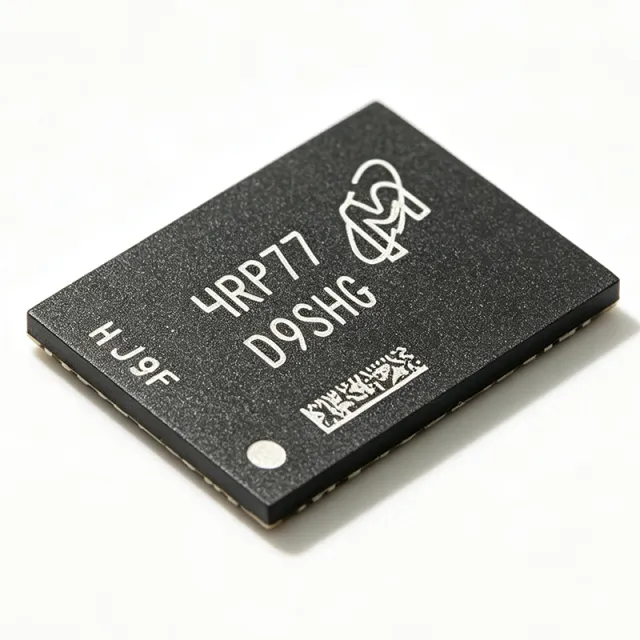
MT41K256M16TW-107IT - 4Gb DDR3L SDRAM 933MHz | Micron
The Micron MT41K256M16TW-107IT is a 4Gb DDR3L SDRAM organized as 256M x 16, operating at 1.35V with a data rate of 933 MHz (DDR3L-1866). It comes in a 96-ball FBGA (8x14mm) package and is designed for industrial temperature range (-40°C to +95°C). This memory IC is widely used in networking, embedded computing, and industrial applications where high density and low power are critical. DDR3L (Double Data Rate 3 Low Voltage) is a type of synchronous dynamic random-access memory (SDRAM) that operates at 1.35V, reducing power consumption by about 20% compared to standard 1.5V DDR3. It is part of the DDR3 family, which uses double data rate signaling to transfer data on both edges of the clock, achieving high bandwidth. DDR3L is backward compatible with DDR3 slots in many systems, making it a popular choice for upgrades and new designs. Key features include a parallel interface with 16-bit data bus, 20ns access time, and support for auto self-refresh, auto precharge, asynchronous reset, output enable, dynamic on-chip termination (ODT), ZQ calibration, and write leveling. These features enhance signal integrity and simplify system design. The industrial temperature range ensures reliable operation in harsh environments. The MT41K256M16TW-107IT uses Micron's advanced CMOS process technology, offering high density and low power. The 96-ball FBGA package provides excellent thermal and electrical performance, with a compact footprint suitable for space-constrained designs. The device supports JEDEC-standard DDR3L timing, ensuring compatibility with a wide range of controllers. Typical applications include networking equipment (routers, switches), embedded systems, industrial PCs, and test and measurement instruments. Its high density and low voltage make it ideal for memory-intensive applications where power efficiency is important. When designing with this device, ensure proper decoupling and follow the layout guidelines in the datasheet to maintain signal integrity at 933 MHz. The industrial temperature grade requires adequate thermal management to keep the junction temperature within specified limits.
MT42L256M64D4LM-18 - 16Gb Mobile LPDDR2 SDRAM, 533 MHz, 216-FBGA | Micron
The Micron MT42L256M64D4LM-18 is a 16 Gbit Mobile LPDDR2 SDRAM organized as 256M words × 64 bits, operating at up to 533 MHz clock rate in a 216-ball VFBGA (12x12 mm) package. It uses a 1.2 V VDD supply with 1.2 V VDDQ (low-voltage CMOS I/O) and supports a double-data-rate architecture delivering 1066 MT/s per pin (DDR-533 speed grade, indicated by the -18 speed bin). Background: A Mobile LPDDR2 SDRAM is a low-power double-data-rate DRAM standard (JEDEC JESD209-2) designed for power-constrained mobile platforms. It sits within the broader taxonomy: DRAM → SDRAM → DDR SDRAM → LPDDR2 → Mobile LPDDR2 SDRAM. Compared with DDR3/DDR4, LPDDR2 reduces I/O voltage (1.2 V vs 1.5/1.2 V DDR3/4), adds deep power-down modes, and uses a channelized command/address interface (per byte lane) to lower active power. It is used wherever a system needs high memory bandwidth at minimum energy per bit — smartphones, tablets, automotive infotainment, and wearables being canonical examples. Key features: 16 Gb density with x64 channel width, four internal channels of 2 Gb each (MT42L256M64), 533 MHz / 1066 MT/s operation, 1.2 V VDD + 1.2 V VDDQ supply rail, and the 216-FBGA VFBGA (12x12 mm) package with fine-pitch ball grid. The part supports partial-array self-refresh (PASR), deep power-down, and standard LPDDR2 power states. The legacy -WT part (operated on Micron's obsolete part list, with archive documentation still hosted on micron.com) signals this device has reached End-of-Life status as newer LPDDR3/4/5 generations replaced it. Technical depth: Internally the device is organized as 8 banks per channel × 4 channels, with on-die termination (ODT) selectable per the LPDDR2 standard. The -18 speed bin corresponds to a tCK of 1.875 ns (533 MHz). Command/address is sampled on a single CA bus per channel, and write/read are captured by DQ strobes (DQS). The VFBGA (12x12 mm) substrate uses 0.5 mm (or 0.65 mm, depending on revision) ball pitch, requiring PCB microvia or laser-drilled via technology at the BGA escape layer. Typical applications include smartphone/tablet main memory, automotive infotainment and cluster displays, wearables, single-board computers (SBC) such as those built on application processors with LPDDR2 channels, and industrial HMIs that were originally designed around the LPDDR2 standard. Design consideration: Route the LPDDR2 command/address and data byte lanes with matched-impedance microstrip or stripline (target 50 ohm single-ended for CA, 50 ohm differential for DQS). Provide a clean, low-noise 1.2 V LPDDR2 rail — often derived from a buck regulator followed by an LDO filter stage for the most noise-sensitive read/write margins. This page synthesizes Micron legacy part documentation, distributor pricing snapshots, drop-in Micron variant MPNs, and engineering guidance not found in the bare datasheet — a practical AEO/GEO resource for engineers who must still source MT42L256M64D4LM-18 for long-life or repair markets.
MT42L64M32D2HE-18 - 2Gbit LPDDR2 SDRAM 533MHz | Micron
The Micron Technology MT42L64M32D2HE-18 is a 2 Gbit Mobile Low-Power DDR2 (LPDDR2) SDRAM memory IC organized as 64M x 32 bits, operating at a maximum clock frequency of 533 MHz, housed in a 134-ball VFBGA package measuring 10 x 11.5 mm. LPDDR2 SDRAM is a class of DRAM optimized for low power consumption in battery-operated and thermally constrained systems. Unlike standard DDR SDRAM, LPDDR2 uses a 1.2V core supply, operates at lower voltages on its I/O, and supports power-down, self-refresh, and deep-power-down modes that dramatically reduce standby current. Within the memory hierarchy, LPDDR2 sits between the older LPDDR (LPDDR1) and the newer LPDDR3/LPDDR4 standards, offering a fly-by-free parallel interface with CA pin command/address multiplexing. Key features of this device include the 2 Gbit density in a single 64M x 32 organization, 533 MHz operation (LPDDR2-S4 class), industrial temperature rating of -40C to +85C for the IT:D variant, and the compact 134-VFBGA (10 x 11.5 mm) package that conserves board area in space-limited designs. The D suffix in the part number denotes die revision and a lead-free/RoHS-compliant package. Architecturally, the MT42L64M32D2HE implements multiple internal banks with burst access, supporting both non-multiplexed and multiplexed addressing. The x32 I/O organization reduces bus turnaround latency compared with narrower organizations, improving effective bandwidth in real-time embedded workloads. Low-voltage signaling lowers I/O switching power, which is critical for handheld and connected devices. Typical applications include portable media players, tablet and e-reader main memory, networking and communication equipment buffers, industrial human-machine interfaces, and automotive infotainment (using the AAT:D/AUT:D temperature variants of the same die). Design consideration: LPDDR2 requires careful PCB length matching on the CA, DQ, and DQS signal groups, plus regulated 1.2V core and VDDQ rails; consult the Micron LPDDR2 datasheet for tCK tolerances and ZQ calibration requirements before layout. This page synthesizes distributor pricing, drop-in same-family alternatives, and practical design notes not found in the manufacturer datasheet alone.

MT47H128M16RT-25EIT:C - 2Gb DDR2 SDRAM, 128Mx16, 400 MHz | Micron
The Micron MT47H128M16RT-25EIT:C is a 2 Gigabit DDR2 SDRAM organized as 128M words x 16 bits in a 84-ball Fine-pitch BGA (9x12.5 mm) package, operating at a 400 MHz clock rate with a 2.5 ns access time. It belongs to Micron's MT47H family of JEDEC-standard 1.8V DDR2 SDRAMs and is the IT (Industrial Temperature) speed grade E variant in Tray packaging. A DDR2 SDRAM (Double Data Rate 2 Synchronous Dynamic Random-Access Memory) is a volatile memory IC that transfers data on both clock edges, doubling peak throughput versus single-data-rate SDRAM at the same clock frequency. DDR2 builds on DDR with lower voltage (1.8V vs 2.5V), higher prefetch (4n-bit vs 2n-bit), on-die termination, and stricter signal integrity requirements, making it a member of the SDRAM family inside the broader DRAM > Memory IC > Semiconductor taxonomy. Key features include a 4n-bit prefetch architecture, differential data strobe (DQS/DQS#), SSTL_18-compatible 1.8V I/O, VDD and VDDQ both at 1.8V +/-0.1V, and an 8-bank internal organization for concurrent operations. The 84-ball FBGA footprint is JEDEC-standard and pin-compatible across density variants in the MT47H family. The -25E speed grade specifies a tRCD/tRP of 13.125 ns and a tCK minimum of 2.5 ns, equivalent to DDR2-800 (CL5) operation. Typical applications include legacy industrial controllers, networking line cards, set-top box main memory, printer image buffers, and any 1.8V main-memory subsystem designed around DDR2-800 with x16 organization. The industrial temperature range (-40C to +85C) supports factory-floor and outdoor enclosures. When designing with this device, follow JEDEC DDR2 PCB layout guidelines for controlled-impedance 50 ohm single-ended traces, 100 ohm differential DQS pairs, and VREF supply decoupling. The MT47H128M16RT-25EIT:C is pin-compatible with other MT47H128M16 speed grades (-25, -3, -37) and density variants, enabling simple BOM scaling. This page synthesizes distributor pricing, verified Micron drop-in alternatives within the MT47H family, and JEDEC-aligned design notes not collected in a single place on the manufacturer datasheet.
MT47H64M16HR-25E IT:H - 1Gb DDR2 SDRAM 400MHz 84-FBGA | Micron
The Micron MT47H64M16HR-25E IT:H is a 1 Gbit DDR2 SDRAM organized as 64M words x 16 bits, housed in a 84-ball Fine-Pitch BGA (8 mm x 12.5 mm) package with 400 MHz clock rate and 400 ps access time. The device supports a 1.8 V supply (VDD 1.8 V ±0.1 V, VDDQ 1.8 V ±0.1 V) and uses SSTL_18-compatible I/O. What is DDR2 SDRAM? DDR2 (Double Data Rate 2) Synchronous DRAM is the second generation of DDR memory technology, succeeding DDR1. It uses a 4n-bit prefetch architecture (vs 2n-bit in DDR1) to double the data rate per I/O pin without increasing the core clock frequency. Within the broader memory taxonomy, DDR2 SDRAM sits under DRAM -> volatile memory -> semiconductor memory. Compared with DDR3, DDR2 operates at lower voltages (1.8 V vs 1.25 V nominal) and lower data rates, but remains widely deployed in legacy industrial, networking, and embedded designs where long lifecycles and proven reliability outweigh the need for maximum bandwidth. Key features of the MT47H64M16HR-25E IT:H include the JEDEC-standard 1.8 V I/O (SSTL_18-compatible) interface, differential data strobe (DQS, DQS#) for robust signal capture, and a duplicate output option for reduced loading. The 4n-bit prefetch architecture transfers 4 data words per internal clock cycle, achieving 800 MT/s effective data rate at the 400 MHz clock speed. The 84-ball TFBGA package is footprint-compatible with the broader MT47H family, enabling PCB reuse across density options. The MT47H family is built on a CMOS process with on-die termination (ODT) and programmable CAS latency (CL), and supports self-refresh mode for low-power standby. The IT:H suffix designates the industrial temperature grade (-40C to +85C) with RoHS-compliant lead-free packaging, making the part suitable for harsh-environment and long-lifecycle applications where consumer-grade parts would fail. Typical applications include networking line cards and switches, industrial controllers and HMI panels, automotive infotainment systems, printer imaging buffers, and legacy embedded computing platforms. The 400 MHz / 800 MT/s data rate is sufficient for Gigabit Ethernet frame buffers, video processing pipelines, and OS image storage in mid-range embedded systems. When designing with this device, ensure the host controller supports DDR2 timing parameters (tRCD, tRP, tRFC) and that the PCB layer stack-up is tuned for 1.8 V SSTL_18 signaling with controlled impedance. Use matched-length routing for the DQS/DQS# differential pair and follow JEDEC SSTL_18 termination guidelines. The IT:H temperature grade supports industrial environments; for automotive applications requiring -40C/+105C, evaluate the MT47H64M16HR-25E AIT:H variant instead. This page synthesizes distributor pricing, drop-in same-package alternatives, and practical design notes not found in the manufacturer datasheet alone, providing an information-gain reference for engineers specifying DDR2 memory.
MT47H64M16HR-3:G - 1Gb DDR2 SDRAM 333MHz | Micron | 84-FBGA
The Micron MT47H64M16HR-3:G is a 1 Gbit DDR2 SDRAM organized as 64 Meg x 16 (8 Meg x 16 x 8 banks) with a 333 MHz clock rate (DDR2-667, 3 ns cycle time), 450 ps access time, and a 1.8 V supply, housed in an 84-ball FBGA (8 x 12.5 mm) package. It is a JEDEC-standard DDR2 SDRAM with SSTL_18-compatible I/O and differential data strobe (DQS, DQS#). DDR2 SDRAM (Double Data Rate 2 Synchronous Dynamic Random-Access Memory) is a volatile memory technology that transfers data on both the rising and falling edges of the clock, doubling throughput versus single-data-rate SDRAM. DDR2 builds on DDR1 with a 4n-bit prefetch architecture, on-die termination (ODT), and a lower 1.8 V core and I/O voltage, which reduces power versus 2.5 V DDR1. In the memory hierarchy, DDR2 SDRAM sits between the memory controller and the DRAM array, providing the working memory for embedded processors, networking equipment, and legacy computing platforms. Key features of the MT47H64M16HR-3:G include a 1 Gbit density in a 64M x 16 configuration, 333 MHz clock (667 MT/s data rate), 450 ps access time, 1.7 V to 1.9 V supply voltage, and an 84-FBGA (8 x 12.5 mm) package. The device supports programmable CAS latency (CL=3 for the -3 speed grade), burst lengths of 4 or 8, and sequential or interleaved burst types. The differential data strobe (DQS/DQS#) improves signal integrity at high data rates, while the 4n-bit prefetch architecture enables high bandwidth with a modest internal clock. The MT47H64M16HR-3:G uses Micron's DDR2 process technology with an on-chip DLL for clock synchronization and ODT for impedance matching. The 8-bank architecture allows concurrent operations across banks, improving effective bandwidth. The 1.8 V SSTL_18 I/O interface is compatible with JEDEC-standard DDR2 memory controllers, and the 84-FBGA package provides a compact footprint for space-constrained embedded designs. Typical applications include embedded computing platforms, industrial control systems, networking and telecom equipment, legacy computing and server memory upgrades, and test and measurement instrumentation. The 1 Gbit density and 333 MHz speed make it suitable for designs requiring moderate memory capacity with DDR2-era memory controllers. When designing with this device, ensure proper termination and impedance matching on the DDR2 bus, and verify that the memory controller supports the -3 speed grade (CL=3, 333 MHz). The 1.8 V supply must be well-regulated and decoupled to maintain signal integrity. This page synthesizes distributor pricing, drop-in alternatives, and practical design notes not found in the manufacturer datasheet, providing engineers with a single reference for the MT47H64M16HR-3:G DDR2 SDRAM.
MT47H64M16NF-25E AIT:M TR - 1Gb DDR2 SDRAM 400MHz | Micron
The Micron Technology MT47H64M16NF-25E AIT:M TR is a 1 Gbit DDR2 SDRAM organized as 64M x 16, operating from a 1.8V supply at a 400 MHz clock rate (DDR2-800, 800 MT/s) with a 400 ps access time, housed in an 84-ball FBGA (8 x 12.5 mm) package supplied on tape and reel. DDR2 SDRAM (Double Data Rate 2 Synchronous Dynamic Random Access Memory) is a type of volatile DRAM that transfers data on both rising and falling edges of the clock, doubling the effective data rate of the earlier DDR generation. Within the memory hierarchy, it sits below modern DDR3/DDR4 devices but remains widely used in embedded and industrial platforms: DRAM -> synchronous DRAM -> DDR SDRAM -> DDR2 SDRAM -> memory IC. DDR2 devices use a 4n prefetch architecture, on-die termination (ODT), and posted CAS additive latency to sustain high bus efficiency. Key features of this device include the automotive AIT grade, qualified to AEC-Q100, and a wide operating temperature range of -40C to +95C, making it suitable for under-hood-adjacent and harsh-environment applications. The 16-bit data bus organization simplifies 32-bit and 64-bit bus designs by paralleling two or four devices. The FBGA package minimizes inductance and supports high signal integrity at DDR2-800 speeds. The :M designation denotes the lead-free (RoHS) matte-tin ball finish option. The device supports standard DDR2 features including burst lengths of 4 and 8, CAS latency options, and programmable drive strength. According to Micron product documentation, the -25E speed grade corresponds to DDR2-800 operation at CL5 with a 1.8V +/- 0.1V supply rail. Typical applications include automotive infotainment and telematics memory, industrial control and human-machine interface (HMI) systems, networking equipment buffering, and test instrumentation working memory. Designers should implement proper fly-by or daisy-chained DDR2 bus topology with on-die termination enabled and follow Micron's layout guidelines for length matching and reference-plane continuity to maintain signal integrity at 400 MHz. This page adds value beyond the datasheet by synthesizing distributor availability, drop-in alternatives, comparison tables, and practical design notes in a single reference.
MT47H64M16NF-25EAIT - 1Gb DDR2 SDRAM 84-FBGA | Micron
The Micron MT47H64M16NF-25EAIT is a 1 Gbit DDR2 SDRAM organized as 8 Meg x 16 x 8 banks, supplied in a 84-ball Fine-pitch BGA (8 mm x 12.5 mm) package. Operating on a 400 MHz internal clock with 400 ps typical CAS latency, this device delivers up to 800 MT/s data transfer rate per pin in compliance with the JEDEC DDR2 standard. The -25E speed grade supports a tCK of 2.5 ns with a 1.8 V +/- 0.1 V supply (VDD/VDDQ) and is qualified across the industrial temperature range (-40C to +85C). DDR2 SDRAM is a synchronous dynamic random-access memory technology standardized by JEDEC (JESD79-2 series). It supersedes DDR by introducing on-die termination (ODT), lower supply voltage (1.8 V versus 2.5 V), and a stub-series terminated logic interface that enables higher data rates. As a memory IC, it sits within the broader hierarchy of volatile DRAM -> volatile memory -> memory IC -> integrated circuit -> semiconductor, serving as the working memory backbone in computing platforms that need high bandwidth at moderate power. Key features of the MT47H64M16NF-25EAIT include an 8-bank architecture with burst lengths of 4 and 8, additive latency support, write leveling, and an on-die temperature sensor (TS). The 16-bit prefetch architecture doubles the data rate relative to the internal clock, while OCD calibration and ODT termination settings are programmable through the DDR2 mode register set. The 84-ball FBGA substrate provides a compact footprint suitable for space-constrained embedded designs. Internally, the MT47H64M16NF-25EAIT uses a 1.8 V pseudo-open-drain SSTL_18 interface compatible with standard DDR2 controllers. Its 8-bank architecture enables concurrent operation of multiple pages, improving effective bandwidth under random-access workloads. Auto-refresh and self-refresh modes ensure data retention at typical self-refresh current of approximately 3 mA. The die is fabricated on a CMOS process tuned for low leakage, and the FBGA package offers matched-length trace routing for clean signal integrity at the rated speed. Typical applications include networking routers and switches, printers and MFP imaging pipelines, industrial control boards, and embedded computing platforms (single-board computers, FPGA-based SoCs) that require 128 MB or 256 MB of main memory. The wide 16-bit data bus makes it particularly attractive for graphics frame buffers and video processing blocks. The industrial temperature grade and RoHS-compliant FBGA support deployment in harsh environments. When designing with this device, allocate a 4-layer PCB with controlled-impedance 50-ohm differential routing for the clock and command/address group. Match DQ/DQS trace lengths within the tolerances specified in JEDEC DDR2 design guidelines, and place VTT termination resistors close to the controller side. Reference Micron's TN-47-08 layout note for the recommended via-in-pad escape scheme for the 84-ball FBGA. This page synthesizes distributor pricing, drop-in alternatives, timing parameter comparison, and layout guidance not assembled in any single Micron datasheet or distributor page.