Микросхемы памяти
Подкатегории
Товары (875)

MT40A1G8WE-075E - 8Gb DDR4 SDRAM 1.33GHz | Micron
The Micron MT40A1G8WE-075E is a high-performance DDR4 SDRAM component organized as 1G x 8, providing 8Gbit of memory density. It operates at a clock speed of 1.33 GHz (DDR4-2666) and is housed in a compact 78-ball FBGA (8x12mm) package, making it suitable for space-constrained applications requiring high bandwidth and low power consumption. DDR4 SDRAM (Double Data Rate 4 Synchronous Dynamic Random-Access Memory) is the fourth generation of DDR memory, offering higher speed and lower power than its predecessors. It uses a 1.2V supply (VDD and VDDQ) with a separate 2.5V VPP for wordline boost, and features on-die termination (ODT), internal VREFDQ generation, and pseudo-open-drain I/O. DDR4 achieves data rates up to 3200 MT/s, with the -075E speed grade indicating 2666 MT/s operation. Key features include a refresh time of 8192 cycles at TC temperature range: 64ms at -40°C to 85°C, 32ms at >85°C to 95°C, and 16ms at >95°C to 105°C. The device supports on-die, internal, adjustable VREFDQ generation and 1.2V pseudo-open-drain I/O. It is available in industrial temperature grades (AIT) and standard temperature grades, with options for automotive (AEC-Q100) qualification in some variants. Technically, the MT40A1G8WE-075E utilizes Micron's advanced DRAM process technology, achieving high density with low power consumption. The 78-ball FBGA package provides excellent thermal and electrical performance, with a ball pitch of 0.8mm. The device supports burst lengths of 8 and 4, and features programmable CAS latency, additive latency, and write recovery time. Typical applications include servers, networking equipment, high-performance computing, and embedded systems requiring high memory bandwidth. The 1G x 8 organization is ideal for error-correcting code (ECC) modules and systems with multiple memory channels. When designing with this component, ensure proper decoupling capacitors near the VDD and VDDQ pins, and follow Micron's layout guidelines for DDR4 routing to maintain signal integrity at 2666 MT/s.
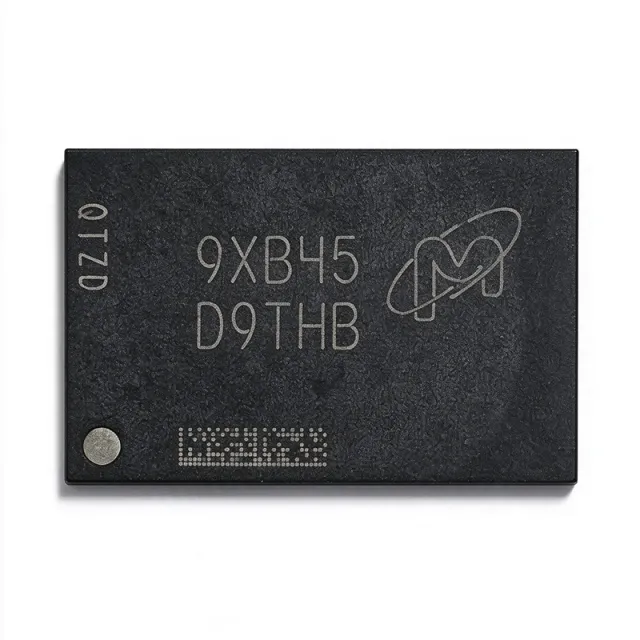
MT40A256M16GE-075E AAT:B - 4Gb DDR4 SDRAM 256Mx16 96-FBGA | Micron
The Micron MT40A256M16GE-075E AAT:B is a 4 Gbit DDR4 SDRAM organized as 256M x 16 bits, operating at a 1.33 GHz clock frequency (DDR4-2666 speed grade, -075E timing) and housed in a 96-ball Fine-pitch Ball Grid Array (FBGA) measuring 9x14 mm. The part carries the AAT suffix designating automotive-grade qualification (AEC-Q100) and is supplied on tape and reel (TR suffix) for high-volume surface-mount assembly. DDR4 SDRAM (Double Data Rate 4 Synchronous DRAM) is the fourth generation of DDR memory, introduced in 2014 as the successor to DDR3. It doubles the data rate per pin compared with DDR3, operates at a lower 1.2 V VDD/VDDQ supply (versus 1.5 V for DDR3), and introduces POD (Pseudo Open Drain) signalling, bank-grouping, and finer-grained refresh. DDR4 occupies the position DRAM -> volatile memory -> memory IC -> semiconductor in the component hierarchy and remains the dominant PC/server/embedded DRAM standard as of 2026, coexisting with the newer DDR5 in mainstream compute. Key features of the MT40A256M16GE-075E AAT:B include a 1.33 GHz maximum clock rate translating to 2666 MT/s peak transfer rate, a 1.14 V to 1.26 V supply-voltage window (1.2 V nominal), and a parallel interface supporting x16 data width. The die is organized as 8 banks with bank-grouping for improved concurrency, and on-die termination (ODT) is included for signal-integrity control. Temperature-controlled refresh (TCR) is supported to lower self-refresh current at moderate temperatures. The 96-FBGA (9x14 mm) footprint follows the JEDEC-standard x16 DDR4 outline, enabling PCB layout compatibility with industry-standard 4 Gbit x16 DDR4 parts. Architecturally, this device uses Micron's advanced 20 nm-class process node and a sub-byte-write capable 16-bit I/O. The -075E speed sort yields a tCK of 0.75 ns (1333 MHz base, 2666 MT/s effective). On-chip DLL and 1.2 V VPP support simplify board design versus legacy DDR3 platforms that need 2.5 V VPP. Typical applications include automotive infotainment, digital instrument clusters, ADAS compute platforms, industrial embedded controllers, and ruggedized networking gear where AEC-Q100 reliability is mandated. The wide 256M x 16 organization suits frame-store, lookup-table memory, and graphics frame buffers. The AAT suffix denotes the automotive temperature grade (-40C to +105C), and the AAT:B marking indicates lead-free RoHS compliance. A key design consideration is that this part is reported by Micron as obsolete/legacy in their part catalog (referenced May 2026); engineering teams planning new designs should evaluate MT40A256M16GE-075E-IT (industrial) or -AUT (extended automotive) suffixes, or migrate to MT40A512M16 DDR4 8 Gbit or 16 Gbit density migration paths. Signal-integrity, terminations, and VTT must follow JEDEC DDR4 layout rules. This page synthesizes distributor pricing, drop-in alternatives (including the verified HGCHIPS HGD44G16M26 cross-vendor replacement), and engineering guidance not found in the standalone manufacturer datasheet.

MT40A256M16GE-083E - DDR4 4Gb 256Mx16 2400MHz DRAM | Micron
The Micron Technology MT40A256M16GE-083E is a 4 Gbit DDR4 SDRAM organized as 256M x 16, operating at a 1200 MHz clock (DDR4-2400 data rate) from a single 1.2 V supply, housed in a 96-ball FBGA package measuring 9 x 14 mm. DDR4 SDRAM (Double Data Rate 4 Synchronous Dynamic Random Access Memory) is the fourth generation of DDR DRAM, sitting in the memory hierarchy above DDR3 and below DDR5. It is a volatile semiconductor memory that stores each bit in a capacitor-based cell refreshed at regular intervals. Compared with DDR3, DDR4 lowers the operating voltage from 1.5 V to 1.2 V, doubles the bank count to 16 (with bank groups), and raises peak data rates to 3200 MT/s and beyond, making it the dominant main-memory technology for embedded and server platforms of its generation. Key features of this device include a 4 Gbit density in a wide x16 organization suited to controllers with 16-bit memory buses, the DDR4-2400 speed grade (CL17 at 1.2 V per JEDEC speed bin -083E), and low-power features such as DLL-off mode and max power-down. The 96-ball FBGA (9 x 14 mm) footprint is the industry-standard package for x16 DDR4 components, enabling second-source layouts. Architecturally, the device is organized into bank groups that allow faster random column access through fine-grained interleaving, and it implements on-die termination (ODT) to preserve signal integrity on high-speed fly-by routed command/address buses. Typical applications include embedded industrial controllers, networking equipment line cards, set-top boxes, and automotive/telematics head units where 16-bit-wide DDR4 interfaces are common. Design consideration: DDR4 fly-by routing requires careful length matching and VTT termination on address/command lines; consult the Micron DDR4 system design guide for VTT and on-die termination settings. This page synthesizes distributor pricing, cross-referenced drop-in alternatives (Samsung, Nanya, and Micron speed/grade variants), and practical design notes not found in the manufacturer datasheet.
MT40A512M16HA-083E - 8Gb DDR4-2400 SDRAM | Micron
The Micron Technology MT40A512M16HA-083E is an 8Gbit DDR4 SDRAM organized as 512M x 16, operating at a 1.2 GHz data rate equivalent to DDR4-2400 and packaged in a 96-ball FBGA measuring 9 x 14 mm. It is designed for systems requiring high-bandwidth volatile memory in a compact surface-mount package. DDR4 SDRAM, or Double Data Rate 4 Synchronous Dynamic Random-Access Memory, is volatile memory that transfers data on both edges of the clock. It belongs to the SDRAM and DRAM hierarchies and operates from a lower core voltage than DDR3 while supporting higher data throughput. DDR4 memory is widely used in servers, networking equipment, data storage systems, and industrial computing platforms. The MT40A512M16HA-083E provides an 8Gbit density with a 16-bit parallel data bus. Its 1.2V VDD and VDDQ supply, 2.5V VPP supply, 1.2V pseudo open-drain I/O interface, and internal adjustable VREFDQ generation support modern DDR4 signal-integrity requirements. Micron specifies a 1.2V supply tolerance of plus or minus 60mV and VPP tolerances from -125mV to +250mV. Refresh timing is temperature dependent. The device uses an 8192-cycle refresh interval, with stated refresh times of 64 ms from -40 degrees C to 85 degrees C, 32 ms above 85 degrees C to 95 degrees C, and 16 ms above 95 degrees C. The 96-ball FBGA uses a 0.8 mm ball pitch and is intended for surface-mount assembly. Typical applications include high-performance servers, routers, switches, storage systems, and industrial platforms. The x16 organization enables practical memory-controller configurations where wider logical channels can be built from multiple devices. PCB implementation should follow Micron's DDR4 layout guidance, including controlled-impedance routing, careful fly-by topology, and placement of decoupling and command/address termination networks close to the memory device. A stable, low-noise 1.2V rail and a compliant 2.5V VPP supply are essential. This page combines manufacturer specifications, distributor references, replacement analysis, and practical DDR4 design guidance to support component selection and board-level implementation.
MT40A512M16HA-083E:A - 8Gb DDR4 512Mx16 SDRAM | Micron
The Micron Technology MT40A512M16HA-083E:A is an 8Gb DDR4 SDRAM organized as 512M x 16, operating at 1.2 GHz in a 96-ball FBGA (9x14) package. It is designed for systems requiring parallel DDR4 memory with a 1.14 V to 1.26 V supply range and an industrial temperature grade of 0C to +95C. DDR4 SDRAM is a volatile memory technology that stores data in an array of cells and refreshes its contents periodically to maintain data retention. Within the memory hierarchy, DDR4 SDRAM is a high-capacity working-memory component used by computer processors, embedded systems, networking equipment, and industrial controllers. The MT40A512M16HA-083E:A combines a 512M x 16 organization with DDR4 timing and interface features intended for reliable high-bandwidth embedded applications. The verified distributor and manufacturer listings identify this part as an 8Gbit, 512Mx16 DDR4 SDRAM with a 1.2 GHz data rate, 1.14 V to 1.26 V operating voltage, and a 96-FBGA (9x14) package. The x16 organization provides a wider data path than x8 devices when used in systems whose memory controller supports the corresponding organization. The exact speed-bin, timing, voltage, and temperature details should be confirmed against the current Micron datasheet before layout or firmware qualification. This memory is suited to embedded processors, industrial controllers, communications equipment, data-acquisition systems, and other applications that use DDR4 SDRAM directly or through a compatible memory controller. The 96-ball FBGA package requires careful PCB escape routing, power-delivery design, and thermal analysis. Because DRAM packages are sensitive to voltage noise and signal integrity, follow the manufacturer’s reference layout and power recommendations rather than relying on generic BGA rules. The main design consideration is ensuring that the memory controller, board layout, voltage rails, and firmware memory timing all support the selected DDR4 device and operating conditions. The part number suffix identifies the vendor ordering configuration, so designers should verify package orientation, ball assignments, and temperature requirements during procurement and validation. This page combines verified distributor specifications, manufacturer references, cross-reference results, and practical integration guidance to support component selection. Unlike a standalone register or interface IC, this device is a high-density, volatile memory component whose behavior depends strongly on system-level memory design. Use the exact Micron part documentation as the authoritative source for electrical, timing, mechanical, and reliability limits before production release.
MT40A512M16JY-075E - 8Gb DDR4 SDRAM 512Mx16 | Micron
The Micron MT40A512M16JY-075E is a high-performance DDR4 SDRAM component organized as 512M x 16, providing 8Gbit of memory density. It operates at a clock frequency of 1.33 GHz (DDR4-2666) and is housed in a 96-ball FBGA (8x14) package, designed for surface mounting. This memory IC supports a supply voltage of 1.14V to 1.26V for VDD and VDDQ, with VPP at 2.5V (-125mV, +250mV). It features on-die, internal, adjustable VREFDQ generation and 1.2V pseudo open-drain I/O, making it suitable for a wide range of computing and embedded applications. DDR4 SDRAM (Double Data Rate 4 Synchronous Dynamic Random-Access Memory) is a type of volatile memory that transfers data on both edges of the clock signal, doubling the data rate compared to single-data-rate SDRAM. It is the fourth generation of DDR memory, offering higher speed, lower power consumption, and increased density compared to DDR3. DDR4 operates at a lower voltage (1.2V) than DDR3 (1.5V), reducing power consumption and heat generation. It is widely used in servers, desktops, laptops, and embedded systems where high bandwidth and capacity are required. Key features of the MT40A512M16JY-075E include a refresh time of 8192 cycles, with 64ms at -40°C to 85°C, 32ms at >85°C to 95°C, and 16ms at >95°C. It supports auto precharge, data mask, dynamic on-chip termination, write leveling, auto self-refresh, and CRC functions. The device is RoHS compliant and operates over a temperature range of 0°C to +95°C (TC). These features ensure reliable operation in demanding environments. Technically, the MT40A512M16JY-075E utilizes Micron's advanced DRAM process technology, enabling high-speed data transfer with low power consumption. The 96-ball FBGA package provides excellent thermal and electrical performance, with a compact footprint suitable for space-constrained designs. The device supports a parallel interface, simplifying integration with memory controllers. Typical applications include high-performance computing, servers, networking equipment, and industrial systems where high memory bandwidth and capacity are critical. The 512M x 16 organization is ideal for systems requiring 16-bit data bus width, such as embedded processors and FPGAs. When designing with this component, ensure proper decoupling capacitors are placed near the VDD and VDDQ pins to minimize noise. Follow the PCB layout guidelines in the Micron DDR4 datasheet to maintain signal integrity at high speeds.
MT40A512M16JY-07EAIT:B - 8Gb DDR4 SDRAM 512Mx16 | Micron
The Micron MT40A512M16JY-07EAIT:B is a high-performance DDR4 SDRAM component organized as 512M x 16, providing 8Gbit of memory density. It operates at a clock frequency of 1.33 GHz (DDR4-2666) and is housed in a 96-ball FBGA (8x14) package. This device is designed for a wide range of computing, networking, and industrial applications requiring high bandwidth and reliability. DDR4 SDRAM (Double Data Rate 4 Synchronous Dynamic Random-Access Memory) is a type of volatile memory that transfers data on both edges of the clock signal, effectively doubling the data rate. It operates at a lower voltage (1.2V) compared to DDR3 (1.5V), reducing power consumption while offering higher speed and density. DDR4 is the industry standard for modern servers, desktops, and embedded systems, providing a balance of performance, capacity, and energy efficiency. Key features of the MT40A512M16JY-07EAIT:B include a supply voltage of VDD = VDDQ = 1.2V ±60mV, VPP = 2.5V, and on-die, internal, adjustable VREFDQ generation. It supports 1.2V pseudo open-drain I/O and has a refresh time of 8192 cycles at TC temperature range: 64ms at -40°C to 85°C, 32ms at >85°C to 95°C, and 16ms at >95°C to 105°C. The device is AEC-Q100 qualified (indicated by the 'AIT' suffix), making it suitable for automotive applications. The MT40A512M16JY-07EAIT:B utilizes Micron's advanced DRAM process technology, offering high reliability and performance. It features programmable data strobe preambles, on-die termination (ODT), and write leveling for improved signal integrity. The 96-ball FBGA package provides a compact footprint while enabling high-speed operation with minimal parasitic inductance. Typical applications include automotive advanced driver-assistance systems (ADAS), infotainment systems, networking equipment, servers, and high-performance computing. Its automotive qualification and wide temperature range make it ideal for under-the-hood and in-cabin electronics. When designing with this device, ensure proper decoupling capacitors are placed close to the VDD and VDDQ pins to minimize power supply noise. Follow Micron's layout guidelines for DDR4 routing to maintain signal integrity at 1.33 GHz.
MT40A512M16LY-062E AAT:E - 8Gbit DDR4 SDRAM 1.6GHz | Micron
The Micron Technology MT40A512M16LY-062E AAT:E is an 8Gbit DDR4 SDRAM memory IC organized as 512M x 16, operating from a 1.2V supply at a clock frequency of up to 1.6 GHz (DDR4-3200 data-rate class, 062E speed grade, CL19-class latency) with a 19 ns access time, housed in a 96-ball FBGA (7.5 x 13.5 mm) surface-mount package. DDR4 SDRAM (Double Data Rate 4 Synchronous Dynamic Random Access Memory) is the fourth generation of the JEDEC DDR memory family used as the main system memory in computers, servers, and embedded processors. Within the memory hierarchy, DRAM sits between CPU caches and mass storage, and DDR4 succeeds DDR3 with lower operating voltage (1.2V vs 1.5V), higher data rates, bank groups, and improved signaling such as DBI and CA parity. A memory IC like this one is a core component of the semiconductor memory product family under the broader dynamic RAM category. Key features of this device include 8Gbit density in a single x16-wide organization, a 1.2V core supply that reduces dynamic power versus DDR3, an industrial-relevant operating range per the AAT:E ordering code, and the compact 96-FBGA package that supports high-density memory subsystems. The 062E speed bin supports data transfer at DDR4-3200 class rates with a 19 ns access time. Architecturally, the device implements DDR4 bank groups, on-die termination (ODT), and a parallel interface, allowing burst transfers on both clock edges for maximum bandwidth. The x16 organization simplifies single-device designs where x4/x8 server RDIMM topologies are unnecessary, making it popular in embedded and industrial designs that require a single 1 GB-class DRAM. Typical applications include industrial controllers and edge compute modules, networking equipment line-card memory, and embedded processor boards pairing with SoCs that expose a DDR4 x16 controller. Designers choose the x16 organization to achieve 1 GB of DRAM with one BGA footprint. A key design consideration is signal integrity: DDR4 fly-by or point-to-point routing requires length-matched traces, controlled impedance, and proper VTT termination, and the 1.2V rail should be sourced from a DDR-capable PMIC. Confirm the exact speed bin and temperature rating in the manufacturer datasheet before production. This page adds value beyond the datasheet by consolidating distributor pricing as of 2026-09-02, drop-in alternatives from the same package family, and practical DDR4 layout guidance in one place.
MT40A512M16LY-062E-ATE - 8Gb DDR4-3200 SDRAM | Micron
The Micron MT40A512M16LY-062E-ATE is an 8 Gb DDR4 SDRAM organized as 512M x 16 with a 1.6 GHz (DDR4-3200) clock rate, 19 ns access time, and 1.2 V nominal supply, housed in a 96-ball FBGA (7.5 x 13.5 mm) package. The -062E speed grade denotes 0.625 ns tCK (DDR4-3200) operation, and the AT suffix marks the automotive temperature range of -40C to +105C. DDR4 SDRAM (Double Data Rate 4 Synchronous Dynamic Random-Access Memory) is the fourth generation of high-bandwidth volatile memory, transferring data on both the rising and falling edges of the clock. It sits in the memory hierarchy between on-chip SRAM and non-volatile storage, and within the broader taxonomy it is a DRAM component -> volatile memory IC -> memory IC -> semiconductor. DDR4 introduced a 1.2 V supply (down from 1.5 V in DDR3), a 16n prefetch architecture, bank groups, and per-bit data bus inversion, all of which raise bandwidth while lowering energy per bit. Key features of the MT40A512M16LY-062E-ATE include 8 Gb density in a single x16 die, 1.6 GHz clock (3200 MT/s), 19 ns access time, 1.2 V VDD with 2.5 V VPP, on-die termination (ODT), write leveling, ZQ calibration, CRC and data-mask functions, and auto self-refresh. The 96-ball FBGA uses a 0.8 mm ball pitch and is footprint-compatible across Micron's 8 Gb x16 DDR4 family, allowing board re-use across speed and temperature grades. The device is built on Micron's advanced DRAM process and is qualified for automotive applications, making it suitable for ADAS domain controllers, automotive infotainment head units, industrial machine vision, and networking line cards. Its 3200 MT/s data rate delivers 6.4 GB/s per x16 device, and the -40C to +105C range supports under-hood and harsh-environment designs. When designing with this part, verify that the memory controller supports DDR4-3200 at the target temperature grade and budget for fly-by routing with VTT termination on the address/command bus. This page synthesizes distributor pricing, drop-in alternatives, and practical design notes not found in the manufacturer datasheet.
MT40A512M16LY-062E:E - 8Gb DDR4-3200 x16 SDRAM | Micron
The Micron MT40A512M16LY-062E:E is an 8-Gbit DDR4 SDRAM organized as 512M x 16, delivered in a 96-ball TFBGA (7.5 x 13.5 mm) package and rated for DDR4-3200 operation (1600 MHz clock, 3200 MT/s data rate, -062E speed grade). It operates from a 1.2 V VDD core with a 0.6 V VPP high-voltage swing for the DDR4-defined VPP/word-line boost, and integrates on-die termination (ODT), write leveling, ZQ calibration, programmable data strobe (DQS) preamble training, CRC on the data channel, data bus inversion (DBI), and on-chip voltage regulation via the 2.5 V VDDQ / VDD / VPP / VSSQ architecture common to JEDEC JESD79-4 DDR4 SDRAM. A DDR4 SDRAM is a synchronous dynamic random-access memory that uses an 8n-prefetch architecture, dual-rank or single-rank banking, and a bank-group topology introduced in the JEDEC JESD79-4 standard. In the modern memory hierarchy, DDR4 sits between LPDDR4 (mobile, low power) and HBM (high bandwidth, stacked) as the mainstream workhorse DRAM for servers, desktops, embedded computing, and networking. Each generation introduces tighter timing budgets, lower voltage rails, and higher peak transfer rates; DDR4-3200 doubles the peak transfer rate of DDR3-1600 while cutting VDD from 1.5 V to 1.2 V. The MT40A512M16LY-062E:E supports JEDEC-standard DDR4 features including fine granularity refresh, low-power auto self-refresh (LPASR), per-DRAM addressability, multipurpose register (MPR) readouts, command/address (CA) parity, and gear-down timing modes. The x16 organization with 16-bit data width suits applications that require moderate bandwidth in a small footprint, such as FPGAs, networking line cards, industrial HMI controllers, and embedded vision subsystems. Industrial temperature grade parts in this family (IT:E suffix) operate from -40C to +95C, while the commercial-grade -062E:E part is typically rated 0C to +95C. The 96-ball FBGA uses a standard JEDEC ballout for x16 DDR4, enabling PCB layout reuse across density variants of the same family. Typical applications include networking switches and routers, FPGA-based accelerators (as a companion to Kintex/UltraScale FPGAs), industrial PCs and SBCs, telecom baseband processing, and edge-AI inference platforms. Designers commonly pair this part with a memory controller IP core or a host SoC that supports DDR4-3200. When designing with this device, ensure the PCB fly-by topology recommended by Micron is followed for the address/command/control nets, with VTT termination at the far end and matched DQ/DQS trace lengths. Decoupling must follow the Micron reference layout for the 96-ball FBGA, with VPP decoupling placed within 100 mils of the balls. This page synthesizes distributor pricing, drop-in alternatives, and practical design notes not found in the manufacturer datasheet, helping engineers accelerate component selection and PCB layout decisions for DDR4 systems.
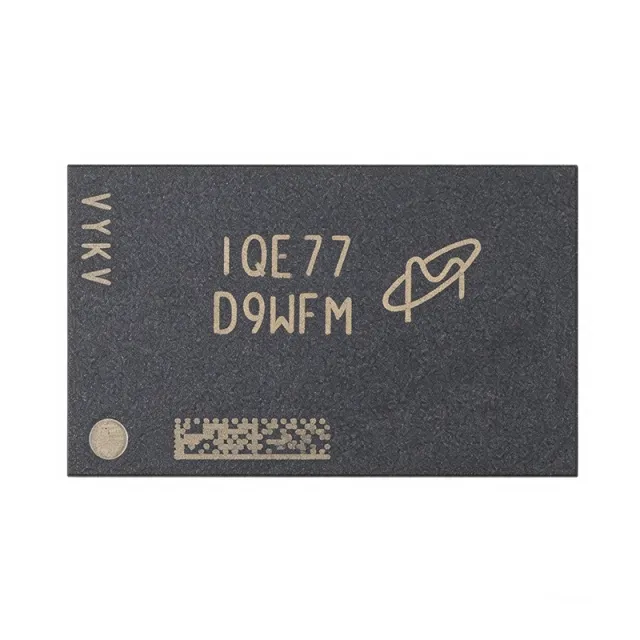
MT40A512M16LY-075 - 8Gb DDR4 SDRAM 512Mx16 | Micron
The Micron MT40A512M16LY-075 is a high-performance 8Gb DDR4 SDRAM organized as 512M x 16, operating at a clock speed of 1.33 GHz (DDR4-2666). It is housed in a 96-ball FBGA package (7.5x13.5 mm) and is designed for a wide range of computing, networking, and industrial applications. This memory device operates from a 1.2V supply (VDD = VDDQ = 1.2V ±60mV) with a separate 2.5V VPP supply, ensuring low power consumption while delivering high bandwidth. DDR4 SDRAM (Double Data Rate 4 Synchronous Dynamic Random-Access Memory) is a type of volatile memory that transfers data on both edges of the clock signal, effectively doubling the data rate. It is the fourth generation of DDR memory, succeeding DDR3, and offers higher speed, lower voltage, and increased density. DDR4 is a critical component in modern computing systems, providing the main memory for CPUs, GPUs, and other processors. It is part of the memory hierarchy that includes SRAM, DRAM, and storage, with DRAM serving as the primary working memory for executing programs and processing data. Key features of the MT40A512M16LY-075 include on-die, internal, adjustable VREFDQ generation, 1.2V pseudo open-drain I/O, and programmable data strobe preambles. It supports a refresh time of 8192 cycles at TC temperature range: 64ms at -40°C to 85°C, 32ms at >85°C to 95°C, and 16ms at >95°C to 105°C. The device has 16 internal banks (x16: 2 groups of 4 banks each) and is designed for high-reliability applications. The architecture of this DDR4 SDRAM includes advanced features such as on-die termination (ODT), write leveling, and read/write training, which enhance signal integrity at high speeds. The 1.2V operating voltage reduces power consumption by approximately 20% compared to DDR3, making it ideal for energy-efficient systems. The 96-ball FBGA package with a 7.5x13.5 mm footprint is optimized for space-constrained PCB designs. Typical applications include servers, data centers, networking equipment, industrial computing, and high-end consumer electronics. The high density and speed make it suitable for memory-intensive tasks such as virtualization, big data analytics, and real-time signal processing. The device's low power and high reliability also make it a preferred choice for automotive and embedded systems. When designing with this component, ensure proper decoupling capacitors are placed near the VDD and VDDQ pins to minimize power supply noise. Additionally, follow the PCB layout guidelines in the Micron datasheet to maintain signal integrity at DDR4-2666 speeds, including controlled impedance traces and proper termination.
MT40A512M16LY-075:E - 8Gb DDR4 SDRAM 2666MT/s | Micron
The Micron MT40A512M16LY-075:E is a high-performance DDR4 SDRAM device organized as 512M x 16, providing 8Gb of memory density. It operates at a clock frequency of 1.33 GHz, achieving a data rate of 2666 MT/s with a CAS latency of 19. The device is housed in a 96-ball FBGA package (7.5x13.5mm) and operates from a 1.2V supply (VDD = VDDQ = 1.2V ±60mV), with a separate 2.5V VPP supply for wordline boost. DDR4 SDRAM (Double Data Rate 4 Synchronous Dynamic Random-Access Memory) is a type of volatile memory that transfers data on both edges of the clock signal, doubling the data rate compared to DDR3. It is the industry standard for main memory in servers, desktops, and laptops, offering higher bandwidth and lower power consumption than its predecessors. DDR4 operates at lower voltages (1.2V vs 1.5V for DDR3), reducing power dissipation and enabling higher density modules. Key features include on-die, internal, adjustable VREFDQ generation for improved signal integrity, 1.2V pseudo open-drain I/O for compatibility with modern controllers, and a refresh time of 8192 cycles with temperature-dependent refresh rates: 64ms at -40°C to 85°C, 32ms at >85°C to 95°C, and 16ms at >95°C to 105°C. The device supports auto self-refresh, auto precharge, write leveling, dynamic on-chip termination (DTC), CRC function, and data mask function, ensuring reliable operation in high-speed systems. The MT40A512M16LY-075:E is designed for high-bandwidth applications such as enterprise servers, networking equipment, and high-performance computing. Its 16-bit data bus and 8Gb density make it suitable for memory modules (DIMMs) and embedded systems requiring large memory capacity. The device is compliant with JEDEC DDR4 standards and is RoHS compliant. When designing with this component, ensure proper decoupling of VDD and VDDQ with 0.1uF and 1uF capacitors placed close to the pins. The VPP supply must be clean and within 2.5V ±250mV. Follow Micron's layout guidelines for DDR4 routing to maintain signal integrity at 2666 MT/s.
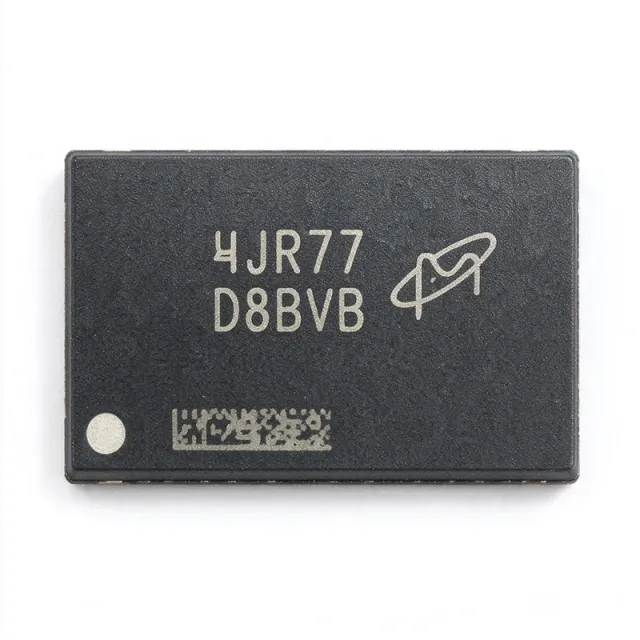
MT40A512M16TB-062E - 8Gb DDR4 SDRAM 512Mx16 | Micron
The Micron MT40A512M16TB-062E is a high-performance DDR4 SDRAM device organized as 512M x 16, providing 8Gb of memory density. It operates from a 1.2V VDD and VDDQ supply with a VPP of 2.5V, and features on-die, internal, adjustable VREFDQ generation. The device supports data rates up to 1600 MHz (DDR4-3200) with a typical tRCD of 19 ns, and is housed in a 96-ball FBGA package (7.5x13 mm). DDR4 SDRAM (Double Data Rate 4 Synchronous Dynamic Random-Access Memory) is a type of volatile memory that transfers data on both edges of the clock, doubling the data rate compared to DDR3. It is the industry standard for main memory in servers, desktops, and laptops, offering higher bandwidth and lower power consumption than previous generations. DDR4 operates at lower voltages (1.2V) and includes features like on-die termination (ODT) and write leveling to improve signal integrity at high speeds. Key features include a refresh time of 8192 cycles with temperature-dependent refresh rates: 64ms at -40°C to 85°C, 32ms at >85°C to 95°C, and 16ms at >95°C. The device supports auto self-refresh, auto precharge, write leveling, CRC, dynamic on-chip termination, and ZQ calibration. It operates over a temperature range of 0°C to +95°C for the standard version, with an industrial temperature range (-40°C to +95°C) available in the IT variant. The MT40A512M16TB-062E uses Micron's advanced DRAM process technology, offering high density and reliability. The 96-ball FBGA package provides excellent thermal and electrical performance, with a ball pitch of 0.8 mm. The device is designed for high-speed operation with low power consumption, making it suitable for a wide range of computing and embedded applications. Typical applications include servers, data centers, networking equipment, and high-performance computing systems. Its 8Gb density and x16 organization make it ideal for memory modules (DIMMs) and embedded systems requiring high capacity and bandwidth. The device is also used in industrial and automotive applications where reliability and temperature range are critical. When designing with this device, ensure proper decoupling capacitors are placed near the VDD and VDDQ pins to minimize noise. The ZQ pin requires a 240-ohm resistor to ground for calibration. Follow the DDR4 layout guidelines for signal integrity, including controlled impedance traces and proper termination.
MT40A512M16TB-062E:J - 8Gb DDR4 SDRAM 1.6GHz | Micron
The Micron MT40A512M16TB-062E:J is a high-performance DDR4 SDRAM device organized as 512M x 16, providing 8Gbit of memory density. It operates at a clock frequency of 1.6 GHz (DDR4-3200) with a CAS latency of 19 ns, and is housed in a 96-ball FBGA package (7.5x13.5 mm). This memory IC is designed for a wide range of computing, networking, and embedded applications requiring high bandwidth and low power consumption. DDR4 SDRAM (Double Data Rate 4 Synchronous Dynamic Random-Access Memory) is the fourth generation of DDR memory, offering higher speed and lower voltage compared to DDR3. It uses a 1.2V power supply (VDD and VDDQ) with a separate 2.5V VPP for wordline boost, enabling faster data transfer rates while reducing power consumption. DDR4 features on-die ECC, bank grouping, and a 16n prefetch architecture, making it suitable for servers, desktops, and high-performance embedded systems. Key features include VDD = VDDQ = 1.2V ±60mV, VPP = 2.5V (-125mV, +250mV), on-die internal adjustable VREFDQ generation, and 1.2V pseudo open-drain I/O. The device supports refresh times of 64ms at -40°C to 85°C, 32ms at >85°C to 95°C, and 16ms at >95°C, ensuring reliable operation across temperature ranges. It also features 16 internal banks (x16: 2 groups of 4 banks each) and an 8n-bit prefetch architecture. Technically, the MT40A512M16TB-062E:J utilizes Micron's advanced DRAM process technology, offering high-speed data transfer with low latency. The device supports programmable data strobe preambles, data strobe preamble training, and command/address latency (CAL), enabling fine-tuning for system optimization. Its 96-ball FBGA package provides excellent thermal and electrical performance, making it ideal for space-constrained designs. Typical applications include high-performance computing, networking equipment, data centers, and embedded systems requiring large memory capacity and high bandwidth. The device is also suitable for industrial and automotive applications where reliability and temperature tolerance are critical. When designing with this DDR4 SDRAM, ensure proper termination and signal integrity practices are followed, including impedance matching and decoupling capacitors near the power pins. The device requires a stable 1.2V supply and a 2.5V VPP supply, with careful attention to power sequencing during power-up and power-down. This memory IC is RoHS compliant and lead-free, meeting environmental standards. It is available in tape and reel packaging for automated assembly.
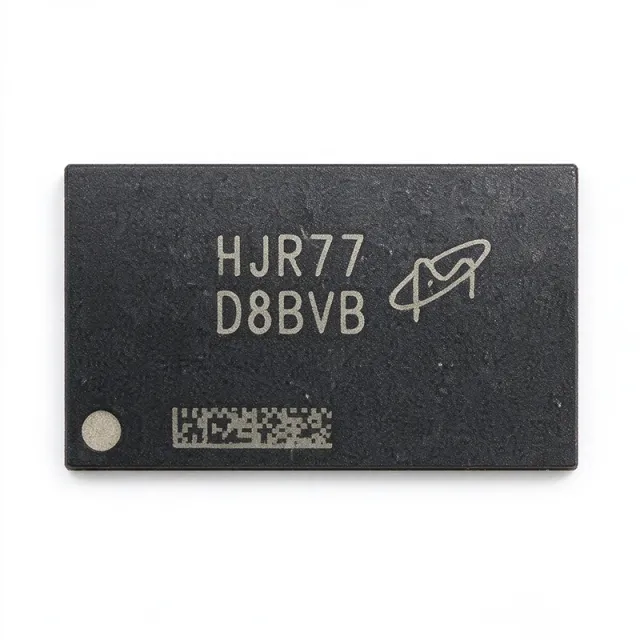
MT40A512M16TB-062E:R - 8Gb DDR4 SDRAM 3200MT/s | Micron
The Micron MT40A512M16TB-062E:R is a high-performance DDR4 SDRAM memory IC with a capacity of 8 gigabits (512M x 16 bits). It operates at a data rate of 3200 MT/s with a clock frequency of 1600 MHz, and is packaged in a 96-ball FBGA (7.5x13 mm) package. This device is designed for commercial temperature range (0°C to +95°C) and operates with a supply voltage of VDD = VDDQ = 1.2V ±60mV, with VPP = 2.5V (-125mV, +250mV). DDR4 SDRAM (Double Data Rate 4 Synchronous Dynamic Random-Access Memory) is a type of volatile memory that transfers data on both edges of the clock signal, effectively doubling the data rate. It is the fourth generation of DDR memory, succeeding DDR3, and offers higher speed, lower power consumption, and increased density. DDR4 is a critical component in modern computing systems, including servers, desktops, laptops, and embedded systems, where it serves as the main system memory. Key features of the MT40A512M16TB-062E:R include a 1.2V pseudo open-drain I/O interface, on-die internal adjustable VREFDQ generation, and support for auto self-refresh, auto precharge, write leveling, CRC, dynamic on-chip termination, and ZQ calibration functions. The device has a CAS latency of 22 (CL=22) and a refresh time of 8192 cycles, with refresh intervals of 64ms at -40°C to 85°C, 32ms at >85°C to 95°C, and 16ms at >95°C. This DDR4 SDRAM utilizes an 8n-prefetch architecture, which allows for high-speed data transfer by fetching 8 data words per clock cycle. The device supports a parallel interface with a 16-bit data bus, and the 96-ball FBGA package provides a compact footprint suitable for space-constrained designs. The memory is designed for reliable operation in commercial temperature environments, making it suitable for a wide range of applications. Typical applications include servers, networking equipment, industrial computing, and high-performance embedded systems. The high data rate and low power consumption make it ideal for memory-intensive tasks such as data center workloads, real-time data processing, and advanced computing platforms. When designing with this component, it is essential to follow DDR4 layout guidelines, including trace length matching and fly-by topology, to ensure signal integrity at 3200 MT/s. Proper decoupling and power integrity are also critical for reliable operation.
MT40A512M8RH-083E - 4Gb DDR4 512Mx8 2400MHz | Micron
The Micron Technology MT40A512M8RH-083E is a 4Gb DDR4 SDRAM organized as 512M x 8, operating at the DDR4-2400 speed grade (1.2 GHz clock rate) and housed in a 78-ball FBGA (9 x 10.5 mm) package. It runs from a VDD/VDDQ supply of 1.2V +/-60mV with a separate VPP of 2.5V (-125mV/+250mV) and operates over 0C to +95C. A DDR4 SDRAM is a synchronous dynamic random-access memory that transfers data on both edges of the clock (double data rate), sitting within the memory hierarchy as DRAM component -> DDR SDRAM family -> main system memory. Compared with DDR3, DDR4 lowers the core supply to 1.2V, increases the internal bank count, and adds bank groups for higher effective bandwidth. The MT40A512M8RH-083E implements 8 internal banks arranged as 2 groups of 4 banks each, with an 8n-bit prefetch architecture that lets the internal array run slower while the I/O sustains 2400 MT/s. Key features include programmable data strobe preambles, on-die internal adjustable VREFDQ generation that eliminates external reference resistors, a 1.2V pseudo open-drain I/O structure that reduces I/O power, and a 64ms, 8192-cycle refresh interval for operation up to 95C. The FBGA code for this device is D9TGG, which is useful for identifying marking codes on delivered parts. The 83E speed bin corresponds to the DDR4-2400 industry speed grade with CAS latency options defined in the Micron 4Gb x4/x8/x16 DDR4 datasheet (365 pages), which should be consulted for exact tCK, CL, and tRCD timing tables. Typical applications include desktop and notebook DIMMs, embedded and industrial x86/ARM systems, networking line cards, and test equipment main memory, where a 4Gb x8 component provides a balanced capacity-per-rank and bus-width trade-off. Design considerations: DDR4 routing requires length-matched, on-end ODT-tuned fly-by topologies, and VPP must be present at power-up for the pump circuits. Verify termination (RTT_NOM/RTT_WR) settings against your memory controller's training capability. This page adds value beyond the datasheet by consolidating distributor pricing, drop-in family alternatives, application guidance, and an engineer-oriented FAQ in one place.
MT41K128M16JT - 2Gb DDR3L SDRAM 128Mx16 96-FBGA | Micron
The Micron MT41K128M16JT is a 2 Gbit (128M x 16) DDR3L SDRAM organized as 8 banks of 16M x 16 bits, housed in a 96-ball Fine-Pitch Ball Grid Array (FBGA) package measuring 8 mm x 14 mm with 0.225 ns access time and a 1.35 V typical operating voltage. The base part number MT41K128M16JT is extended with speed-bin and temperature suffixes such as -125 (DDR3L-1600, 1.25 ns cycle time) and -107 (DDR3L-1866, 1.07 ns cycle time), and with industrial-grade AAT/AIT/IT suffix codes. Key features: 1.35 V VDD/VDDQ low-voltage operation (DDR3L) for reduced power consumption versus 1.5 V DDR3, 8n-bit prefetch architecture, auto self-refresh, auto precharge, asynchronous reset, data-mask function, dynamic on-chip termination (ODT), ZQ calibration, write-leveling function, and 1.5 GHz equivalent clock-rate support at the -107 speed bin. Technical depth: the 8n prefetch pipeline lets the device transfer 8 words per I/O per clock, giving peak per-pin throughput of 1866 MT/s at the -107 bin. Dynamic ODT (nominal/strong/weak termination states selected via MR1) eliminates external resistors and simplifies fly-by routing on DDR3 command/address buses; ZQ calibration uses an external 240 ohm reference resistor (ZQ ball) to trim the on-die termination impedance at power-up and periodic refresh. Typical applications: networking line cards, routers and switches, embedded industrial PCs, single-board computers, automotive infotainment/telematics, set-top boxes, printers, and industrial automation controllers that require a low-power volatile main buffer. Design considerations: trace lengths on the DDR3 command/address bus must be fly-by with matched impedance (40 ohm or 50 ohm nominal), all eight banks must be equilibrated before refresh, and a 240 ohm +/- 1% precision resistor must be tied to the ZQ ball for impedance calibration. This page synthesizes distributor pricing, drop-in alternative mappings, and application guidance not found in the manufacturer datasheet alone.
MT41K128M16JT-125K - 2Gb DDR3L SDRAM 1600MT/s | Micron
The Micron Technology MT41K128M16JT-125K is a 2 Gbit DDR3L SDRAM memory IC organized as 128M x 16, operating at 800 MHz clock frequency (1600 MT/s data rate) with a 13.75 ns cycle time, packaged in a 96-ball FBGA (8x14 mm) land-grid array. As a DDR3L device it runs from a 1.35V supply and is backward compatible with the 1.5V DDR3 standard. DDR3L SDRAM is a low-voltage version of DDR3 SDRAM; unless stated otherwise, DDR3L parts meet the functional and timing specifications of the DDR3 standard defined for the JEDEC DRAM family. DRAM components form the volatile working-memory layer of the memory hierarchy, sitting between nonvolatile storage and the processor cache in embedded, industrial, networking, and consumer platforms. Key features of this part include the industry-standard 8n-bit prefetch architecture, auto self-refresh, write leveling, data mask (DM) support, dynamic on-die termination (ODT), and an asynchronous reset function. Operating temperature spans 0C to +95C, making the commercial-temperature -125K version suited to cost-sensitive systems rather than extended-temperature industrial deployments (the IT/XIT variants cover that range). Architecturally, the device uses CMOS technology with a bank-based array supporting burst, interleaved, and posted-CAS read/write operations. The -125 speed bin supports DDR3L-1600 operation with CAS Latency 11, enabling seamless pairing with mainstream SoCs, FPGAs, and memory controllers that implement DDR3L PHY interfaces. Typical applications include industrial controllers and gateways, networking equipment, digital televisions and set-top boxes, and embedded computing modules. The 16-bit data width allows one or two devices to be placed on a 32-bit bus for compact designs. When designing the power tree, plan a 1.35V VDD/VDDQ rail with proper decoupling per the Micron datasheet layout guidance, and verify controller support for the DDR3L voltage range and the -125 timing bin. This page synthesizes distributor pricing, drop-in alternatives, and practical design notes not found in the manufacturer datasheet.
MT41K128M16JT-125K-TR - DDR3L 2Gbit 800MHz DRAM | Micron
The Micron Technology MT41K128M16JT-125K-TR is a DDR3L SDRAM memory IC offering 2 Gbit density organized as 128M x 16, operating at 800 MHz clock frequency with 13.75 ns access time, housed in a 96-ball FBGA (8 x 14 mm) package. Supplied in tape and reel format for automated assembly. DDR3L SDRAM (Low-Voltage Double Data Rate 3 Synchronous DRAM) is a category of volatile dynamic random-access memory that operates at 1.35 V, down-compatible with 1.5 V DDR3 supplies. Within the memory hierarchy, it sits under DRAM components, which in turn sit under semiconductor memory in the broader integrated circuit taxonomy. DDR3L doubles internal data rate to the I/O through an 8n-bit prefetch architecture, delivering high bandwidth for embedded processors, FPGAs, and networking SoCs. Key features include 2 Gbit capacity per chip, 16-bit wide data bus enabling simplified point-to-point layouts, 800 MHz data rate operation at DDR3L-1600 speed grade, and low 1.35 V core supply that reduces dynamic power versus 1.5 V DDR3. The FBGA package provides excellent signal integrity and thermal characteristics for high-speed operation. The device implements standard DDR3 SDRAM features including 8n-bit prefetch, on-die termination (ODT), DLL for read data alignment, and configurable CAS latency. Addressing, bank control, and refresh timing follow the JEDEC DDR3L convention as described in the Micron datasheet, allowing use with standard memory controllers and FPGA memory interface generators. Typical applications include embedded industrial controllers, FPGA-based processing and image processing systems, networking line cards, and test and measurement instruments requiring 2 Gbit of volatile working memory. When designing, follow the Micron datasheet layout guidelines: length-match address and command traces, implement ODT calibration in the memory controller, and respect the 1.35 V (with 1.5 V compatibility) supply ranges and refresh intervals. This page synthesizes distributor pricing, drop-in alternatives, and practical design notes not found in the manufacturer datasheet, providing additional engineering value for component selection.
MT41K1G8RKB-107:P - 8Gb DDR3L SDRAM 1Gx8 933MHz | Micron
The Micron MT41K1G8RKB-107:P is an 8 Gbit DDR3L SDRAM organized as 1G x 8, fabricated in Micron's TwinDie stack of two 4 Gbit DDR3L die, housed in a 78-ball FBGA package (8 mm x 10.5 mm) and rated for a 933 MHz clock rate (DDR3L-1866) with a 20 ns access time at the -107 speed grade. DDR3L SDRAM (Double Data Rate 3 Low-Voltage Synchronous DRAM) is a generation of synchronous DRAM that transfers data on both clock edges while operating from a reduced 1.35 V VDD/VDDQ supply (1.283 V to 1.45 V tolerant), cutting dynamic power roughly 20% versus the original 1.5 V DDR3. The 8 Gbit density sits in the middle of the DDR3L capacity ladder, sitting between mainstream 4 Gbit parts and the top-tier 16 Gbit densities; SDRAM is the broadest hypernym (volatile main memory -> DRAM -> SDRAM -> DDR3 -> DDR3L -> this 8 Gbit x 8 organization). Key features include support for CAS latencies from CL5 up to CL13, on-die termination (ODT) for clean signal integrity, auto-precharge, auto/self-refresh, an asynchronous reset pin for in-system reset, data masking for partial-word writes, and a 1.5 V tolerant input design (the 'L' suffix indicates low-voltage operation). The 78-ball FBGA, with its 8 mm x 10.5 mm outline and 0.8 mm ball pitch, matches the JEDEC-standard 78-ball DDR3L x8 footprint used across nearly every modern compute SoC reference design. The TwinDie topology places two 4 Gbit die within a single package so the controller can address an 8 Gbit, single-rank memory device as one logical entity; this effectively doubles the per-channel memory ceiling of a single-rank design without requiring a second DRAM site on the PCB. Typical applications include embedded computing platforms, networking line cards, industrial single-board computers, FPGA-based prototyping boards, automotive infotainment compute modules, and point-of-sale terminals. The wide operating range (0 degC to +95 degC case) and industrial-grade moisture sensitivity make it well suited to long-life deployments. When designing with this device, observe the read/write timing budget and keep the SSTL_15 differential clock trace length matched to within 5 ps to avoid command-address setup margin loss; place VREF decoupling within 100 mil of each VTT island. This page synthesizes distributor pricing, drop-in alternatives, and practical design notes not found in the manufacturer datasheet alone.
MT41K256M16HA-107:E - 4Gbit DDR3L SDRAM 933MHz | Micron
The Micron MT41K256M16HA-107:E is a 4Gbit DDR3L SDRAM organized as 256M x 16, operating at a clock frequency of 933 MHz with a CAS latency of 20 ns. It is housed in a 96-ball FBGA package (9x14 mm) and operates from a 1.35V supply, making it suitable for low-power applications. DDR3L (Double Data Rate 3 Low Voltage) is a type of synchronous dynamic random-access memory (SDRAM) that operates at 1.35V, reducing power consumption by about 20% compared to standard DDR3 (1.5V). It is part of the DDR3 family, which uses double data rate signaling to transfer data on both edges of the clock, achieving high bandwidth. DDR3L is commonly used in mobile devices, embedded systems, and servers where power efficiency is critical. Key features include a parallel interface with a data rate of 933 MHz (DDR3L-1866), a burst length of 8, and support for on-die termination (ODT) and posted CAS. The device is RoHS compliant and lead-free, meeting environmental standards. The 96-FBGA package offers a compact footprint with a 9x14 mm body, enabling high-density memory designs. Technically, the MT41K256M16HA-107:E uses Micron's advanced DRAM process technology, providing high reliability and performance. It supports a self-refresh mode for low-power standby and a temperature-compensated self-refresh (TCSR) feature. The device is designed for a wide operating temperature range of 0°C to 95°C (case temperature), making it suitable for industrial applications. Typical applications include networking equipment, enterprise storage, embedded computing, and consumer electronics such as set-top boxes and routers. Its low voltage and high density make it ideal for space-constrained designs requiring large memory capacity. When designing with this memory, ensure proper decoupling capacitors near the power pins and follow the layout guidelines in the Micron datasheet to minimize signal integrity issues. The device requires a 1.35V supply and a separate VDDQ, which should be regulated accurately.
MT41K256M16HA-107AAT:E - 4Gbit DDR3L SDRAM | Micron
The Micron MT41K256M16HA-107AAT:E is a 4Gbit DDR3L SDRAM organized as 256M x 16, operating at 1.35V with a data rate of 933 MHz (DDR3L-1866). It is housed in a 96-ball FBGA package (9x14mm) and is designed for low-power, high-bandwidth memory applications. This device is part of Micron's DDR3L family, offering a 20ns access time and a parallel interface. DDR3L SDRAM (Double Data Rate 3 Low Voltage) is a type of synchronous dynamic random-access memory that operates at 1.35V, reducing power consumption by about 20% compared to standard 1.5V DDR3. It is a key component in computing systems, networking equipment, and embedded applications where high speed and low power are critical. DDR3L is backward compatible with DDR3, allowing flexible system design. Key features include a 4Gbit density, 16-bit I/O width, 933 MHz clock frequency, and a 20ns access time. The device supports on-die termination (ODT), programmable CAS latency, and burst lengths of 8 and 4. It also features auto-refresh and self-refresh modes for power saving. The 96-ball FBGA package provides a compact footprint suitable for space-constrained designs. Technically, the MT41K256M16HA-107AAT:E uses Micron's advanced DRAM process technology, ensuring high reliability and performance. It operates over a temperature range of 0°C to +95°C (case temperature) and is RoHS compliant. The device is designed for high-speed data transfer with minimal signal integrity issues, making it suitable for demanding applications. Typical applications include servers, networking switches, industrial computing, and embedded systems that require high-density, low-power memory. Its 1.35V operation is ideal for battery-powered devices and energy-efficient data centers. When designing with this device, ensure proper decoupling capacitors near the power pins and follow the layout guidelines in the datasheet to maintain signal integrity at 933 MHz. The device supports a 1.35V supply, and the VDDQ should be matched to the I/O voltage of the controller.
MT41K256M16HA-107G:E - 4Gbit DDR3L SDRAM 933MHz | Micron
The Micron MT41K256M16HA-107G:E is a 4Gbit DDR3L SDRAM (Synchronous Dynamic Random-Access Memory) organized as 256M x 16, operating at a clock frequency of 933 MHz with a 20 ns access time. It is housed in a 96-ball FBGA (9x14 mm) package and is designed for high-performance computing and data-intensive applications. DDR3L (Double Data Rate 3 Low Voltage) is a type of synchronous dynamic random-access memory that operates at a lower voltage (1.35V) compared to standard DDR3 (1.5V), reducing power consumption while maintaining high bandwidth. It is part of the DDR3 SDRAM family, which is widely used in servers, networking equipment, and embedded systems for its balance of speed, capacity, and cost. Key features include a 4Gbit density, 16-bit data bus, 933 MHz clock speed (DDR3L-1866), and a 20 ns access time. The device supports parallel interface with a 96-FBGA package, making it suitable for space-constrained designs. It is RoHS compliant and lead-free, meeting modern environmental standards. Technically, the MT41K256M16HA-107G:E uses a 1.35V power supply, reducing power dissipation by about 15% compared to standard DDR3. It supports on-die termination (ODT) and dynamic ODT for improved signal integrity, and includes programmable CAS latency and burst lengths for flexibility. The device is designed for reliable operation in industrial temperature ranges, making it suitable for demanding environments. Typical applications include servers and data centers, networking equipment (routers, switches), embedded computing systems, and industrial control systems. Its high density and low power make it ideal for memory-intensive tasks such as virtualization, cloud computing, and real-time data processing. When designing with this component, ensure proper decoupling capacitors near the power pins and follow the layout guidelines in the Micron datasheet to maintain signal integrity at 933 MHz. The 96-FBGA package requires careful PCB design to manage thermal and electrical performance.
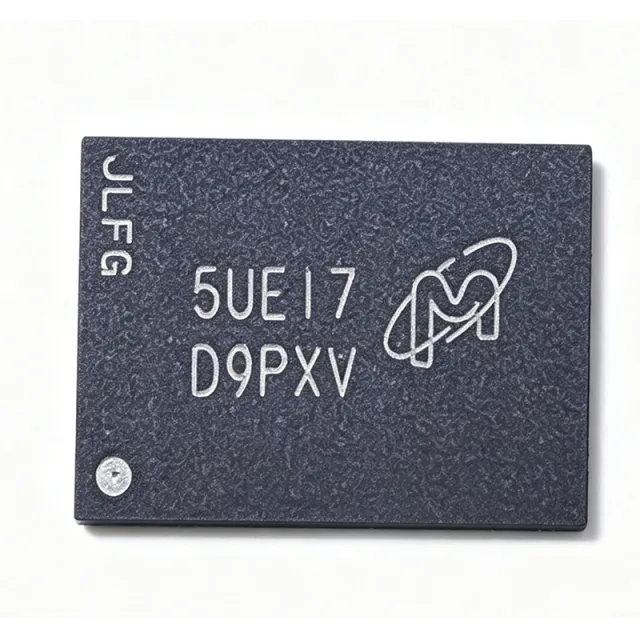
MT41K256M16HA-125 - 4Gbit DDR3L SDRAM 800MHz | Micron
The Micron MT41K256M16HA-125 is a 4Gbit DDR3L SDRAM organized as 256M x 16, operating at 1.35V with a clock speed of 800 MHz (DDR3L-1600). It is housed in a 96-ball FBGA (9x14mm) package, offering a compact footprint for high-density memory applications. This device supports parallel data transfer with a burst length of 8 and provides a CAS latency of 11 cycles, ensuring high-speed data throughput for computing and embedded systems. DDR3L SDRAM is a low-voltage variant of DDR3 memory, designed to operate at 1.35V instead of the standard 1.5V, reducing power consumption by up to 20% while maintaining compatibility with DDR3L-enabled controllers. It is part of the broader DRAM family, which includes DDR3, DDR4, and LPDDR variants, each optimized for different performance and power requirements. DDR3L is widely used in mobile devices, laptops, and industrial applications where energy efficiency is critical. Key features of the MT41K256M16HA-125 include a 4Gbit density, 16-bit data bus, and a 13.75 ns access time (tRCD). It supports on-die termination (ODT) and dynamic ODT for improved signal integrity, and includes programmable CAS latency and additive latency for flexible timing. The device is RoHS compliant and lead-free, meeting environmental standards for modern electronics. Technically, the MT41K256M16HA-125 utilizes a CMOS process and features a 1.35V core supply with a separate 1.35V I/O supply. It supports auto-refresh and self-refresh modes, with a refresh interval of 7.8 us at 85C. The device includes a temperature sensor for thermal management, enabling efficient operation in high-temperature environments. The FBGA package provides excellent thermal and electrical performance, with a thermal resistance of [DATA_NEEDED: theta_JA]. Typical applications include DDR3L memory modules for laptops, embedded systems, networking equipment, and industrial PCs. Its low voltage and high density make it ideal for power-sensitive designs, while the 800 MHz speed supports bandwidth-intensive tasks such as video processing and data analytics. When designing with this device, ensure proper decoupling with 0.1uF and 1uF capacitors near the power pins, and follow the layout guidelines in the Micron datasheet to minimize signal integrity issues. The device requires a stable 1.35V supply and careful termination of the address and control lines.