产品(17671)

STM32H7A3RIT6 - 280MHz Cortex-M7 MCU, 2MB Flash | STMicroelectronics
STM32H7A3RIT6

STM32H7A3RIT6 - 280MHz Cortex-M7 MCU, 2MB Flash | STMicroelectronics

The STMicroelectronics STM32H7A3RIT6 is a high-performance ARM Cortex-M7 32-bit RISC-core microcontroller operating at up to 280 MHz, integrating 2 MB of Flash memory and 1376 KB of SRAM in a 64-pin LQFP (10x10 mm) package. The device is built on a 40 nm CMOS process and includes a double-precision FPU, L1 cache (16 KB +16 KB), and DSP instructions, delivering up to 1177 DMIPS / 2741 CoreMark performance for compute-intensive embedded workloads. A microcontroller (MCU) is a single-chip computer that integrates a CPU core, memory, and programmable peripherals; the STM32 family is the 32-bit ARM Cortex-M based MCU portfolio from STMicroelectronics, spanning ultra-low-power (L0/L4), mainstream (F0/F1/F3/G0/G4), high-performance (F4/F7/H7), and wireless (WB/WL) lines. The Cortex-M7 core sits at the top of the Cortex-M performance hierarchy, above Cortex-M4/M33, and the H7A3 line further extends the H7 family with larger Flash and a cost-optimized peripheral set. Key features of the STM32H7A3RIT6 include 2 MB single-bank Flash with ECC, 1376 KB total SRAM (1 MB DTCM + 192 KB SRAM1 + 64 KB SRAM2 + 64 KB SRAM3 + 56 KB SRAM4), extensive connectivity (USB 2.0 FS+OTG, CAN-FD x2, SDMMC x2, USART/UART/SPI/I2C), a 16-bit ADC, two 12-bit DACs, two 32-bit timers, and multiple 16-bit timers. An external memory interface (FMC) and OCTOSPI/Quad-SPI interface allow expansion to external Flash/PSRAM, supporting displays up to XGA resolution. Typical applications include industrial motor control and factory automation, human-machine interfaces (HMI) with TFT LCD, audio processing with the dedicated SAI interface, IoT gateways, drones/flight controllers, point-of-sale terminals, and high-performance consumer devices. Designers often select the H7A3 line for higher performance than F7/F4 with no need for the dual-core A7 architecture of the H7 family. When designing with this MCU, ensure the SMPS or external LDO supplies 1.62-3.6 V to VDD with correct power sequencing; D1 and D2 power domains require separate decoupling. Use ST's STM32CubeMX for clock tree, peripheral pinout, and code generation to minimize bring-up time.

USD $10.20 有现货
STM32H7A3VGT6 - 280MHz Cortex-M7 MCU, 1MB Flash | STMicroelectronics
STM32H7A3VGT6

STM32H7A3VGT6 - 280MHz Cortex-M7 MCU, 1MB Flash | STMicroelectronics

The STMicroelectronics STM32H7A3VGT6 is a high-performance Arm Cortex-M7 based microcontroller operating at up to 280 MHz, delivering 1.4 MB of flash memory and 1.4 MB of SRAM in a 100-pin LQFP package. It is part of the STM32H7A3 line, designed for applications requiring intensive computation, rich connectivity, and advanced security features. What is a microcontroller (MCU)? A microcontroller is a compact integrated circuit that combines a processor core, memory, and programmable input/output peripherals on a single chip. It is the brain of embedded systems, executing firmware to control devices, process sensor data, and communicate with other systems. MCUs are classified within the broader hierarchy of embedded processors, which includes microprocessors, digital signal processors (DSPs), and system-on-chips (SoCs). The STM32H7A3VGT6 sits at the high-performance end of the MCU spectrum, offering near-DSP-level compute capability. Key features include a 280 MHz Arm Cortex-M7 core with double-precision FPU, 1.4 MB flash, 1.4 MB SRAM, and a rich set of peripherals: multiple 16-bit and 32-bit timers, 12-bit ADCs, 12-bit DACs, and advanced communication interfaces (USART, SPI, I2C, FDCAN, USB OTG, Ethernet MAC). The device also integrates a hardware cryptographic accelerator (AES, DES, 3DES, SHA-1, SHA-256) and a true random number generator (TRNG) for secure applications. Technically, the STM32H7A3VGT6 is built on a 40nm process, enabling high clock speeds with moderate power consumption. The Cortex-M7 core features a 6-stage pipeline, branch prediction, and a memory protection unit (MPU), supporting real-time deterministic execution. The device supports external memory interfaces (FMC) for SDRAM, NOR, and NAND flash expansion, and a flexible memory controller for parallel and serial interfaces. Typical applications include industrial automation (PLC, motor control), medical devices (patient monitors, infusion pumps), consumer electronics (smart speakers, wearables), and IoT gateways. The high core speed and rich peripherals make it suitable for real-time control, audio processing, and edge AI inference. When designing with this device, ensure adequate decoupling on all power pins and a proper crystal oscillator layout for the HSE. The 100-pin LQFP package requires careful thermal management; use a 4-layer PCB with a solid ground plane to dissipate heat effectively.

USD $8.10 有现货
STM32H7A3VIT6 - 280MHz Cortex-M7 MCU, 2MB Flash, LQFP-100 | STMicroelectronics
STM32H7A3VIT6

STM32H7A3VIT6 - 280MHz Cortex-M7 MCU, 2MB Flash, LQFP-100 | STMicroelectronics

The STMicroelectronics STM32H7A3VIT6 is a high-performance 32-bit ARM Cortex-M7 microcontroller operating at up to 280 MHz, delivering 2 MB of Flash memory and approximately 1.4 MB of SRAM in a 100-pin LQFP (14x14 mm) package. It belongs to the STM32H7A3xI/G line that combines a single-core Cortex-M7 with a rich set of peripherals aimed at motor control, audio, graphics and general-purpose high-speed embedded designs. A microcontroller (MCU) is a single-chip computer that integrates a CPU core, non-volatile program memory (Flash), volatile working memory (SRAM), and a wide range of peripheral interfaces into one package. Within the broader semiconductor taxonomy, an MCU sits under microcontrollers, which are a subcategory of integrated circuits (ICs); the Cortex-M7 core specifically belongs to the ARM Cortex-M family of embedded cores, optimized for deterministic real-time performance and DSP workloads. The STM32H7 series extends this family with the highest clock rates and largest memory footprints in the STM32 portfolio. Key features include a 16-bit ADCs sampling up to 3.6 MSPS, fast 12-bit DACs, two USB 2.0 Full-Speed/High-Speed OTG controllers, multiple CAN FD, SDMMC, FMC, and a TFT-LCD controller. On-chip math accelerators (FMAC, CORDIC) and the Chrom-ART (DMA2D) graphics engine offload CPU-intensive operations, while hardware cryptographic accelerators and a true random number generator (TRNG) support secure connectivity use cases. The Cortex-M7 core includes a double-precision FPU, L1 instruction and data caches (16 KB each), and a tightly-coupled SRAM region for zero-wait-state execution, enabling 280 MHz operation with sustained DSP throughput. The bus matrix is multi-layer AHB, allowing concurrent high-bandwidth access between the CPU, the Chrom-ART engine, and the SDMMC/USB peripherals without bus starvation. Typical applications include industrial motor drives, factory automation PLCs, audio processing and professional audio interfaces, HMI panels with TFT displays, IoT edge nodes with secure connectivity, and automotive-grade body and comfort modules (when ordered in the AEC-Q100 'Q' suffix variant). When designing with the STM32H7A3VIT6, pay close attention to power-supply decoupling and trace impedance around the high-speed SDMMC and USB signals. Proper boot-mode configuration on the BOOT0 pin and OTP area management is essential for field-deployable firmware security. This page synthesizes distributor pricing, pin-compatible drop-in alternatives, and practical design notes that are not found in the manufacturer datasheet alone.

USD $10.45 有现货
STM32H7A3ZIT6Q - Cortex-M7 MCU 280MHz 2MB Flash | STMicroelectronics
STM32H7A3ZIT6Q

STM32H7A3ZIT6Q - Cortex-M7 MCU 280MHz 2MB Flash | STMicroelectronics

The STMicroelectronics STM32H7A3ZIT6Q is a high-performance 32-bit ARM Cortex-M7 microcontroller operating at up to 280 MHz, featuring 2 MB of Flash and approximately 1376 KB of SRAM, housed in a 144-pin LQFP (20x20 mm) package. The 'Q' suffix indicates the industrial-grade temperature range and ST's automotive-grade qualification per AEC-Q100, making it suitable for harsh-environment applications that demand both processing throughput and long-term reliability. What is an ARM Cortex-M7 microcontroller? It is a 32-bit RISC processor core designed by Arm for embedded real-time workloads. The Cortex-M7 superset within the Cortex-M family introduces a six-stage superscalar pipeline, dual-issue capability, single/double-precision FPU, DSP extensions, and an instruction cache (I-cache) plus data cache (D-cache) with optional TCM (Tightly Coupled Memory) interfaces. In the broader taxonomy it sits above Cortex-M4 (no cache, no dual-issue) and below Cortex-A application processors, occupying the high-performance MCU tier. Key features of the STM32H7A3ZIT6Q include the Cortex-M7 core with double-precision FPU and L1 cache (16 KB I-cache + 16 KB D-cache), Chrom-ART graphics accelerator for TFT-LCD pipelines, up to 1.4 MB contiguous SRAM with multiple block options, two 16-bit ADCs (up to 3.6 MSPS), two 12-bit DACs, multiple U(S)ART/SPI/I2C/FDCAN/USB interfaces, SDMMC, Ethernet MAC, and a JTAG/SWD debug interface. The device integrates a 32-bit timer, 16-bit timers, and an HRTIM high-resolution timer for power-conversion control. Architecturally, the H7A3 line leverages ST's 40 nm embedded-Flash process, with bus-matrix decoupling of code (TCM), main SRAM, and peripherals for deterministic interrupt latency. The dual-bank Flash supports read-while-write, allowing firmware updates without halting execution. Cryptography acceleration (AES, SHA, RNG) is included for secure-boot and TLS workloads. Typical applications include industrial motor control (field-oriented control of PMSM and induction motors via HRTIM), HMI panels with TFT-LCD rendered through Chrom-ART, building-automation controllers, solar inverters, EV charging station control boards, and audio DSP front-ends. The wide temperature range and AEC-Q100 grade extend fit to chassis ECUs and body controllers. Design consideration: at 280 MHz the device dissipates roughly 250-400 mW depending on peripheral activity; a four-layer PCB with a continuous ground plane beneath the LQFP exposed pad is recommended to keep junction temperature within the 125 C industrial limit. Use ST's STM32CubeMX to generate pin-multiplexing tables and the HAL/LOWER-LAYER driver scaffolding. This page synthesizes distributor pricing, drop-in same-package alternatives, and AEC-Q100 design notes not found on the standalone manufacturer datasheet.

USD $11.50 有现货
STM32H7B0RBT6 - 32-bit Arm Cortex-M7 MCU 280MHz | STMicroelectronics
STM32H7B0RBT6

STM32H7B0RBT6 - 32-bit Arm Cortex-M7 MCU 280MHz | STMicroelectronics

The STMicroelectronics STM32H7B0RBT6 is a high-performance 32-bit microcontroller based on the Arm Cortex-M7 core, operating at up to 280 MHz. It is part of the STM32H7 series, designed for demanding applications requiring high processing power, advanced connectivity, and rich analog peripherals. The device is housed in a 64-pin LQFP package (LQFP64) and provides a comprehensive set of features including 128 Kbytes of Flash memory, 1 Mbyte of RAM, and a wide range of communication interfaces. What is a microcontroller? A microcontroller (MCU) is a compact integrated circuit designed to govern a specific operation in an embedded system. It contains a processor core, memory (Flash and RAM), and programmable input/output peripherals on a single chip. Microcontrollers are the brains of countless electronic devices, from automotive engine control units to IoT sensors and industrial automation systems. The STM32H7 series represents the high-performance tier of STMicroelectronics' STM32 portfolio, offering the Arm Cortex-M7 core with double-precision floating-point unit (FPU) and DSP instructions, making it suitable for real-time control, signal processing, and AI at the edge. Key features of the STM32H7B0RBT6 include a 280 MHz Arm Cortex-M7 core with 128 Kbytes of Flash and 1 Mbyte of RAM, a 16-bit ADC with up to 3.6 MSPS, multiple 16-bit and 32-bit timers, and a rich set of communication interfaces including USART, SPI, I2C, CAN, USB OTG, and Ethernet. The device also features a Chrom-ART Accelerator for 2D graphics, a cryptographic acceleration unit, and a true random number generator (TRNG). These features enable high-performance computing and secure data handling in a compact footprint. From a technical depth perspective, the STM32H7B0RBT6 leverages a 32-bit Arm Cortex-M7 core with a 6-stage pipeline, branch prediction, and a memory protection unit (MPU). The core supports single-cycle multiply-accumulate (MAC) instructions and hardware divide, enhancing real-time performance. The device integrates a flexible memory controller (FMC) for external memory expansion, and a power management unit with multiple low-power modes, including Sleep, Stop, and Standby, to optimize energy consumption. The advanced analog peripherals, including a 16-bit ADC with oversampling and a 12-bit DAC, provide high-resolution data acquisition for industrial and medical applications. Typical applications for the STM32H7B0RBT6 include industrial motor control, power conversion, advanced human-machine interfaces (HMI), IoT gateways, audio processing, and medical devices. Its high clock speed and rich peripheral set make it ideal for applications requiring real-time control and complex algorithms, such as robotics and drone flight controllers. The device's connectivity options, including Ethernet and USB, enable seamless integration into networked systems. When designing with the STM32H7B0RBT6, ensure adequate decoupling of the power supply pins with 100 nF capacitors placed close to each VDD pin, and a 4.7 uF bulk capacitor. The VDDA pin requires a dedicated 1 uF capacitor to ground for analog performance. For high-speed communication interfaces, pay attention to PCB layout to minimize signal integrity issues. The device supports a wide supply voltage range of 1.62V to 3.6V, allowing flexible power design.

USD $8.10 有现货
STM32H7B0VBT6 - 280MHz Cortex-M7 MCU, 128KB Flash | STMicroelectronics
STM32H7B0VBT6

STM32H7B0VBT6 - 280MHz Cortex-M7 MCU, 128KB Flash | STMicroelectronics

The STMicroelectronics STM32H7B0VBT6 is a high-performance 32-bit microcontroller based on the ARM Cortex-M7 core, operating at up to 280 MHz. It is part of the STM32H7 series, designed for demanding applications requiring high processing power, advanced connectivity, and rich analog peripherals. The device is housed in a 100-pin LQFP package (VBT6 suffix) and provides a balanced feature set for industrial, consumer, and IoT applications. A microcontroller (MCU) is a compact integrated circuit designed to govern a specific operation in an embedded system. It contains a processor core, memory, and programmable input/output peripherals on a single chip. The STM32H7B0VBT6 belongs to the high-performance MCU category, positioned above mainstream MCUs like the STM32F4 series, and is part of the broader STM32 family from STMicroelectronics. Its Cortex-M7 core with double-precision FPU and DSP instructions enables efficient handling of complex algorithms, making it suitable for real-time control, signal processing, and AI edge applications. Key features include a 280 MHz ARM Cortex-M7 core with double-precision FPU, 128 KB of flash memory, and 1.4 MB of SRAM. The device supports external memory interfaces via FMC and OCTOSPI, enabling expansion of code and data storage. It integrates a rich set of peripherals including multiple 16-bit and 32-bit timers, 12-bit ADCs, DACs, and advanced communication interfaces such as USART, SPI, I2C, CAN FD, USB OTG, and Ethernet. The device operates from a 1.62V to 3.6V supply and is available in a 100-pin LQFP package with a temperature range of -40°C to +85°C. The STM32H7B0VBT6 is built on a high-performance architecture with a 32-bit multi-AHB bus matrix, enabling concurrent access to memory and peripherals. It includes a Chrom-ART Accelerator for 2D graphics, a cryptographic acceleration unit, and a true random number generator. The device supports various low-power modes, including Sleep, Stop, and Standby, with typical power consumption in the microamp range in standby mode. The advanced memory protection unit (MPU) and secure access modes enhance system security. Typical applications include industrial control systems, motor control, smart home gateways, audio processing, and high-end consumer electronics. The high clock speed and rich peripherals make it ideal for real-time control and edge AI inference. The device also supports external memory expansion, making it suitable for applications requiring large data buffers or code storage. When designing with this MCU, ensure proper decoupling of the power supply pins with 100nF capacitors placed close to each VDD pin. The VDDA pin requires a dedicated 1uF capacitor for analog performance. For high-speed communication interfaces, pay attention to PCB layout to minimize signal integrity issues. The device supports in-circuit programming and debugging via SWD and JTAG interfaces, facilitating development.

USD $8.10 有现货
STM32H7B3ZIT6 - 280MHz Cortex-M7 MCU, 2MB Flash | STMicroelectronics
STM32H7B3ZIT6

STM32H7B3ZIT6 - 280MHz Cortex-M7 MCU, 2MB Flash | STMicroelectronics

The STMicroelectronics STM32H7B3ZIT6 is a high-performance 32-bit microcontroller based on the Arm Cortex-M7 core, operating at up to 280 MHz. It integrates 2 MB of flash memory and 1.4 MB of SRAM, making it suitable for demanding applications such as industrial control, motor control, and high-end consumer electronics. The device is housed in a 144-pin LQFP package (LQFP144) with a 20x20 mm body, providing ample I/O for complex system integration. A microcontroller (MCU) is a compact integrated circuit designed to govern a specific operation in an embedded system. It contains a processor core, memory, and programmable input/output peripherals. The STM32H7B3ZIT6 belongs to the STM32H7 series, which is part of the broader STM32 family of 32-bit flash microcontrollers. This family is widely used in embedded systems, ranging from simple sensor nodes to complex industrial automation, due to its balance of performance, power efficiency, and peripheral integration. Key features of the STM32H7B3ZIT6 include a 280 MHz Cortex-M7 core with double-precision FPU, a Chrom-ART Accelerator for 2D graphics, and a comprehensive set of communication interfaces including Ethernet, USB OTG HS, and multiple USARTs/SPIs/I2Cs. It also features a 16-bit ADC with 3.6 MSPS, a cryptographic acceleration unit, and a true random number generator. The device supports a wide supply voltage range of 1.62V to 3.6V and operates over a temperature range of -40°C to +85°C. Architecturally, the STM32H7B3ZIT6 leverages a dual-core architecture in some variants, but this specific model features a single Cortex-M7 core with an L1 cache, achieving 856 CoreMark score. The device includes a flexible memory controller supporting external SDRAM, SRAM, and NOR/NAND flash, enabling large data buffers and graphics frame buffers. The Chrom-ART Accelerator offloads 2D drawing tasks from the CPU, improving graphics performance in HMI applications. Typical applications include high-end human-machine interfaces (HMI), industrial automation controllers, motor control drives, and audio processing. The high clock speed and rich peripherals make it ideal for real-time control and signal processing. The device also supports secure boot and firmware update mechanisms, enhancing system security. When designing with this MCU, ensure adequate decoupling on all power pins and a stable clock source. The internal LDO can be bypassed for lower power consumption, but careful attention to the power sequencing is required. The device offers multiple low-power modes, allowing optimization for battery-powered applications.

USD $8.10 有现货
STM32L010C6T6 - Ultra-Low-Power ARM Cortex-M0+ MCU | STMicroelectronics
STM32L010C6T6

STM32L010C6T6 - Ultra-Low-Power ARM Cortex-M0+ MCU | STMicroelectronics

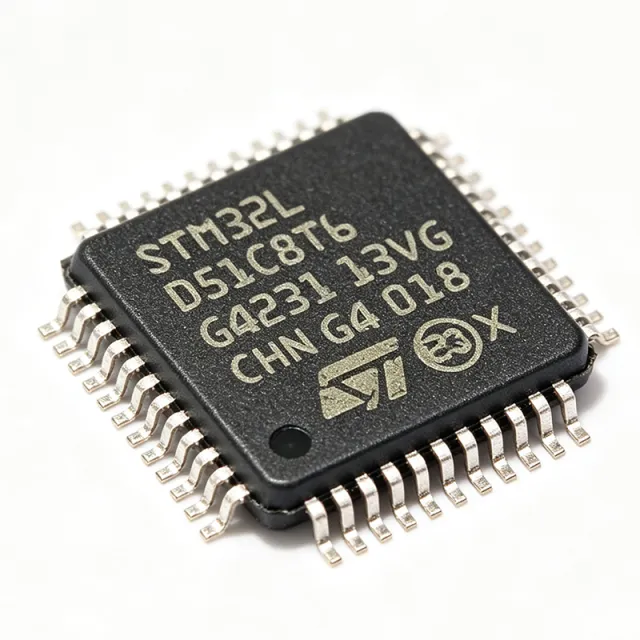
The STMicroelectronics STM32L010C6T6 is an ultra-low-power 32-bit microcontroller based on the ARM Cortex-M0+ core, operating at up to 32 MHz. It is part of the STM32L0 series, designed for energy-efficient applications requiring long battery life. The device features 32 KB of Flash memory and 8 KB of SRAM, with a wide supply voltage range of 1.8V to 3.6V, making it suitable for battery-powered and energy-harvesting systems. An ultra-low-power microcontroller (MCU) is a system-on-chip that integrates a processor core, memory, and peripherals, optimized to minimize power consumption while maintaining performance. The STM32L010C6T6 belongs to the STM32L0 family, which is part of the broader STM32 32-bit MCU portfolio. This hierarchy places it within the ARM Cortex-M0+ processor category, a 32-bit RISC architecture known for its energy efficiency and simplicity, ideal for cost-sensitive and power-constrained applications. Key features include multiple low-power modes (Sleep, Low-power Run, Low-power Sleep, Stop, Standby) with current consumption as low as 0.29 µA in Standby mode with RTC, and 3.4 µA in Stop mode. The MCU integrates a 12-bit ADC with up to 16 channels, two comparators, a DMA controller, and a variety of communication interfaces including I2C, SPI, and USART. It also includes a real-time clock (RTC) with calendar and alarm functions, and a true random number generator (RNG). The STM32L010C6T6 is built on ST's ultra-low-power technology, featuring a flexible clock management with an internal 16 MHz RC oscillator and an external 32.768 kHz crystal for the RTC. The device supports a wide operating temperature range of -40°C to +85°C, and is available in a 48-pin LQFP package (7x7 mm). It is RoHS compliant and lead-free, meeting environmental standards for global distribution. Typical applications include battery management systems, portable medical devices, smart sensors, IoT nodes, and industrial control systems. Its low power consumption and rich analog peripherals make it ideal for applications requiring precise analog measurements and long operational life. When designing with this MCU, careful attention should be paid to power supply decoupling and PCB layout to minimize noise and ensure reliable operation. The use of the internal RC oscillator can reduce external component count, but for time-critical applications, an external crystal is recommended for better accuracy.

USD $1.82 有现货
STM32L010K4T6 - 32MHz Cortex-M0+ MCU 16KB | STMicroelectronics
STM32L010K4T6

STM32L010K4T6 - 32MHz Cortex-M0+ MCU 16KB | STMicroelectronics

The STMicroelectronics STM32L010K4T6 is an ultra-low-power value-line 32-bit ARM Cortex-M0+ microcontroller integrating 16 KB of Flash, 2 KB of SRAM, and 128 bytes of user EEPROM in a 32-pin LQFP 7x7 mm package. The device operates up to 32 MHz from a 1.65 V to 3.6 V supply and includes a 12-bit ADC, two general-purpose 16-bit timers, one low-power timer (LPTIM), one RTC, SysTick, two watchdogs (independent and window), and standard STM32 communication peripherals such as I2C, SPI, and USART. What is an ultra-low-power microcontroller? An ultra-low-power MCU (often called ULP MCU) is a microcontroller architected around deep sleep modes in which most analog and digital peripherals are gated off, the CPU is stopped, and current consumption can drop to the nanoampere range. These parts target battery-powered and energy-harvesting designs where the average sleep current, not the active current, dominates battery life. The STM32L010 sits at the entry level of the STM32L0 family, descending from STMicroelectronics' broader STM32 32-bit MCU family that also includes mainstream (F0/F1/F3), high-performance (F4/F7/H7), and wireless (WB/WL) lines. Key features that differentiate the K4 from siblings in the L0 line include the inclusion of 128 bytes of true EEPROM (rare for STM32 and useful for storing calibration or user settings without page-erase wear on Flash), 4 KB of usable SRAM after bootloader reservation, an extended temperature range of -40 C to +85 C, and four low-power modes (Sleep, Low-power sleep, Stop with RTC, and Standby). The integrated 12-bit ADC supports hardware oversampling, enabling up to 16-bit equivalent resolution for sensor measurements in slow-moving signals such as temperature, light, or battery voltage. At the architectural level, the Cortex-M0+ core uses the Thumb-2 instruction subset optimized for code density, single-cycle I/O via the ARMv6-M architecture, and a Nested Vectored Interrupt Controller (NVIC). The part is supplied in a 32-pin LQFP package (7x7 mm body) which keeps the PCB footprint compact while leaving enough GPIO for typical embedded designs. The K4 suffix maps to a 32-pin LQFP package; the F4 variant ships the same die in a 20-pin TSSOP for tighter boards. Typical applications include battery-powered IoT sensor nodes, smart meters, wearables, remote controls, and any ultra-low-power embedded design that needs true 32-bit performance with sub-microamp standby. The compact 32-pin LQFP footprint and ST-supplied ecosystem (CubeMX, HAL, STM32CubeIDE, and the X-CUBE-ULP Expansion Package) reduce time to prototype. When designing with this part, pay attention to the stop-mode current budget and decoupling. Two 100 nF ceramic caps must be placed within 2 mm of VDD/VDDA, plus a 1 uF bulk cap on the regulator input; the NRST pin requires a 10 kohm pull-up and a 100 nF cap for a reliable reset, and the BOOT0 pin must be tied low for normal Flash boot. Estimated power-down current in Standby with RTC running is typically under 1 uA, allowing coin-cell designs to last years. This page synthesizes distributor pricing, drop-in alternatives within the same 32-pin LQFP footprint, and practical design notes not assembled in the ST datasheet alone.

USD $2.05 有现货
STM32L010RBT6 - Ultra-Low-Power ARM Cortex-M0+ MCU | STMicroelectronics
STM32L010RBT6

STM32L010RBT6 - Ultra-Low-Power ARM Cortex-M0+ MCU | STMicroelectronics

The STM32L010RBT6 is an ultra-low-power 32-bit microcontroller from STMicroelectronics, based on the ARM Cortex-M0+ core. It operates at a maximum frequency of 32 MHz and provides 128 KB of Flash memory and 20 KB of SRAM. The device is housed in a 64-pin LQFP package (LQFP64) and is designed for a wide range of battery-powered and energy-efficient applications. What is a microcontroller? A microcontroller (MCU) is a compact integrated circuit designed to govern a specific operation in an embedded system. It contains a processor core, memory (Flash and SRAM), and programmable input/output peripherals on a single chip. Microcontrollers are the brain of countless electronic products, from household appliances to industrial control systems. The STM32L010 series belongs to the STM32L0 family, which is part of the broader STM32 portfolio of 32-bit ARM Cortex-M based MCUs. This family is optimized for ultra-low-power operation, making it ideal for applications where energy efficiency is critical. Key features of the STM32L010RBT6 include multiple low-power modes (Sleep, Low-power run, Low-power sleep, Stop with RTC, Stop without RTC, Standby with RTC, Standby without RTC), a 12-bit ADC with up to 16 channels, multiple communication interfaces (I2C, SPI, USART), and a variety of timers. The device supports a supply voltage range of 1.8V to 3.6V and operates over a temperature range of -40°C to +85°C. It is RoHS compliant and available in a lead-free package. From a technical depth perspective, the STM32L010RBT6 leverages the ARM Cortex-M0+ core, which is known for its energy efficiency and small code footprint. The device includes a nested vectored interrupt controller (NVIC), a SysTick timer, and a memory protection unit (MPU) for enhanced reliability. The ultra-low-power design is achieved through advanced power management techniques, including dynamic voltage scaling and multiple low-power modes that allow the MCU to consume as little as 0.29 µA in Standby mode with RTC. Typical applications include battery-powered sensors, IoT devices, wearable electronics, smart home controllers, and industrial monitoring systems. The STM32L010RBT6 is particularly well-suited for applications that require long battery life, such as wireless sensor nodes and portable medical devices. Its rich set of peripherals and low-power capabilities make it a versatile choice for embedded designers. When designing with this MCU, it is important to consider the power supply decoupling and the selection of appropriate low-power modes to maximize battery life. The device supports a wide range of clock sources, including an internal RC oscillator and external crystals, allowing designers to optimize for cost and performance. Proper PCB layout, including a solid ground plane and short traces for high-frequency signals, is recommended for reliable operation.

USD $2.10 有现货
STM32L011F4P6 - 16KB Flash Cortex-M0+ MCU 32MHz | STMicroelectronics
STM32L011F4P6

STM32L011F4P6 - 16KB Flash Cortex-M0+ MCU 32MHz | STMicroelectronics

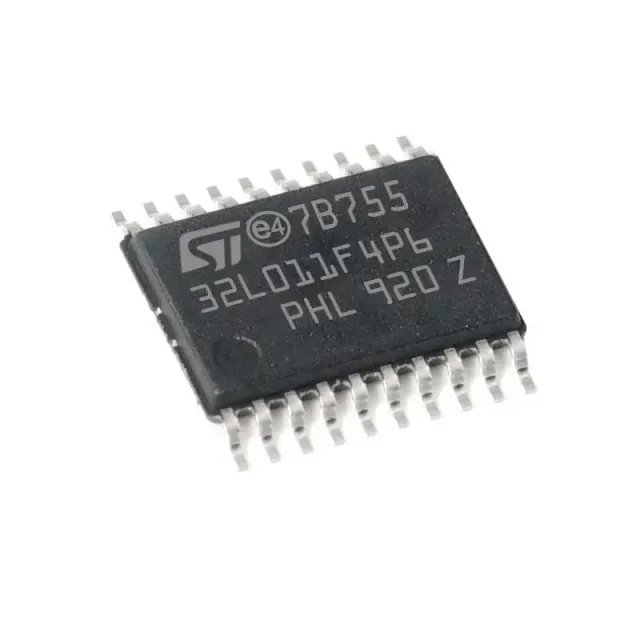
The STMicroelectronics STM32L011F4P6 is an ultra-low-power 32-bit ARM Cortex-M0+ microcontroller operating at up to 32 MHz, with 16 KB of Flash memory and 2 KB of SRAM, housed in a 20-pin TSSOP package. What is a microcontroller? A microcontroller (MCU) is a compact integrated circuit that combines a processor core, memory, and programmable input/output peripherals on a single chip. Within the embedded-systems hierarchy, an MCU sits above simple logic ICs but below application processors, offering a balance of performance, power efficiency, and cost for dedicated control tasks. The STM32L011F4P6 belongs to ST's STM32L0 access line, the entry point of the STM32 ultra-low-power family. Key features include a 12-bit ADC with up to 1 Msps sampling, multiple communication interfaces (I2C, SPI, USART), a rich set of timers, a real-time clock (RTC), a low-power UART (LPUART), and a 96-bit unique device ID for security and traceability. The device runs from a wide 1.8V to 3.6V supply, operates from -40C to +85C, and is built on ST's ultra-low-power process technology. Multiple low-power modes - Sleep, Low-power Run, and Stop - deliver typical current as low as 0.23 uA in Stop mode with RTC running, making it suitable for coin-cell and energy-harvesting designs. The flexible clock tree supports internal MSI/HSI/LSI sources plus an external 32.768 kHz crystal for precise RTC timing. Typical applications include portable medical devices, smart sensors, IoT battery nodes, and industrial monitoring systems, where the small TSSOP-20 footprint and microamp-level sleep currents extend battery life dramatically. Design consideration: achieve the lowest sleep currents by using the internal LSI for the RTC and configuring unused GPIOs to analog mode; every external clock source adds standby current. This page synthesizes distributor pricing (as of 2026-09-06), pin-compatible alternatives, and practical design notes not found in the manufacturer datasheet alone.

USD $0.46 有现货
STM32L021D4P7 - Ultra-Low-Power ARM Cortex-M0+ MCU | STMicroelectronics
STM32L021D4P7

STM32L021D4P7 - Ultra-Low-Power ARM Cortex-M0+ MCU | STMicroelectronics

The STMicroelectronics STM32L021D4P7 is an ultra-low-power 32-bit microcontroller based on the ARM Cortex-M0+ core, operating at up to 32 MHz. It is part of the STM32L0 series, designed for battery-powered and energy-harvesting applications where power efficiency is critical. The device integrates 16 KB of Flash memory and 512 bytes of EEPROM, along with 8 KB of SRAM, in a compact 14-pin TSSOP package. An ultra-low-power microcontroller (MCU) is a system-on-chip that combines a processor core, memory, and peripherals on a single integrated circuit, optimized for minimal energy consumption. The STM32L0 family sits within the broader hierarchy of microcontrollers, which are a type of embedded processor used in everything from consumer electronics to industrial control. The Cortex-M0+ core is a 32-bit RISC processor designed for low-power and cost-sensitive applications, offering a balance of performance and efficiency. Key features include multiple low-power modes (Sleep, Low-power Run, Low-power Sleep, Stop, Standby), a 12-bit ADC with hardware oversampling, ultra-low-power comparators, and a real-time clock (RTC) with calendar. The device supports a wide supply voltage range from 1.65V to 3.6V, making it suitable for single-cell battery operation. It also includes a rich set of communication interfaces, including I2C, SPI, and USART, enabling flexible connectivity. The STM32L021D4P7 is built on ST's ultra-low-leakage process technology, achieving typical current consumption of 0.29 µA in Standby mode with RTC, and 3.4 µA in Stop mode. This makes it ideal for applications that spend most of their time in sleep mode, waking periodically to perform tasks. The device also features a unique 96-bit ID, which can be used for security and traceability. Typical applications include wearable devices, smart sensors, medical monitoring devices, and industrial IoT nodes. Its low power consumption and small footprint make it perfect for space-constrained designs. For example, in a smart sensor node, the MCU can wake up every few seconds to read a sensor, process the data, and transmit it wirelessly, then return to sleep, extending battery life to years. When designing with this device, pay attention to the power supply decoupling and the selection of the appropriate low-power mode for your application. The STM32L0 series offers a comprehensive set of development tools, including the STM32CubeMX configuration tool and the STM32CubeL0 firmware library, which accelerate development and reduce time-to-market.

USD $1.55 有现货
STM32L031F6P6 - Ultra-Low-Power ARM Cortex-M0+ MCU | STMicroelectronics
STM32L031F6P6

STM32L031F6P6 - Ultra-Low-Power ARM Cortex-M0+ MCU | STMicroelectronics

The STMicroelectronics STM32L031F6P6 is an ultra-low-power 32-bit microcontroller based on the ARM Cortex-M0+ core, operating at up to 32 MHz. It features 32 KB of Flash memory and 8 KB of SRAM, packaged in a 20-pin TSSOP (P6) package. This device is part of the STM32L0 series, designed for applications requiring low power consumption and high integration. What is an ARM Cortex-M0+ microcontroller? It is a 32-bit processor core designed for low-cost and low-power embedded applications. The Cortex-M0+ is the smallest and most energy-efficient ARM processor, offering a balance of performance and power consumption. In the system hierarchy, a microcontroller (MCU) integrates a processor core, memory, and peripherals on a single chip, serving as the 'brain' of embedded systems. The STM32L0 series specifically targets battery-powered and energy-harvesting applications where every microamp of current matters. Key features of the STM32L031F6P6 include multiple low-power modes (Sleep, Low-power run, Low-power sleep, Stop with RTC, Standby with RTC), a 12-bit ADC with hardware oversampling, a low-power UART, I2C, SPI interfaces, and a real-time clock (RTC) with calendar. The device operates from 1.8V to 3.6V supply, with a typical current consumption of 87 uA/MHz in Run mode and 0.29 uA in Standby mode with RTC. It also includes a unique device ID, CRC calculation unit, and a true random number generator (RNG) for security applications. Technically, the STM32L031F6P6 is built on ST's ultra-low-power technology, featuring a flexible clock management with an internal 16 MHz RC oscillator, an external 32.768 kHz crystal for RTC, and a phase-locked loop (PLL) for higher frequencies. The device supports a wide temperature range from -40°C to +85°C, making it suitable for industrial and consumer applications. The TSSOP-20 package offers a compact footprint of 6.4mm x 4.4mm, ideal for space-constrained designs. Typical applications include portable medical devices, sensor nodes for IoT, smart home controllers, battery management systems, and industrial monitoring equipment. The ultra-low-power modes enable long battery life, while the rich analog and digital peripherals allow for versatile system integration. For example, in a wireless sensor node, the STM32L031F6P6 can wake up periodically, read sensors, process data, and transmit via a low-power radio, all while consuming minimal energy. When designing with this device, pay attention to the power supply decoupling: place a 100 nF capacitor close to each VDD pin and a 1 uF capacitor on the main supply. Also, configure the clock system properly to balance performance and power consumption. The STM32L0 series is supported by ST's comprehensive ecosystem, including the STM32CubeMX configuration tool and the HAL library, which accelerate development.

USD $1.38 有现货
STM32L031K6T6 - Ultra-Low-Power ARM Cortex-M0+ MCU | STMicroelectronics
STM32L031K6T6

STM32L031K6T6 - Ultra-Low-Power ARM Cortex-M0+ MCU | STMicroelectronics

The STMicroelectronics STM32L031K6T6 is an ultra-low-power 32-bit microcontroller based on the ARM Cortex-M0+ core, operating at up to 32 MHz. It features 32 KB of Flash memory and 8 KB of SRAM, packaged in a 32-pin LQFP (TQFP32) with a 7x7 mm footprint. This device is part of the STM32L0 series, designed for battery-powered and energy-efficient applications. What is an ultra-low-power microcontroller? An ultra-low-power microcontroller is a system-on-chip that integrates a processor core, memory, and peripherals while minimizing energy consumption, often featuring multiple low-power modes such as sleep, stop, and standby. These devices are essential in the hierarchy of embedded systems, from simple 8-bit MCUs to complex application processors, where power efficiency is critical for extending battery life in portable and IoT devices. Key features include a 12-bit ADC with hardware oversampling, multiple communication interfaces (I2C, SPI, USART), and a rich set of timers including a low-power timer. The device supports a wide supply voltage range from 1.8V to 3.6V, with a typical operating current of 84 uA/MHz in Run mode and as low as 0.29 uA in Standby mode with RTC. The STM32L031K6T6 also integrates a true EEPROM emulation, a 12-bit DAC, and a comparator, making it versatile for analog sensing applications. Technically, the STM32L031K6T6 is built on a 110nm process, offering a balance between performance and power. The Cortex-M0+ core includes a single-cycle multiplier and a nested vectored interrupt controller (NVIC), enabling efficient interrupt handling. The device features a flexible clocking system with an internal 16 MHz RC oscillator, an external crystal oscillator, and a PLL, allowing designers to optimize for speed or power. Typical applications include portable medical devices, smart sensors, fitness trackers, and industrial monitoring systems. Its ultra-low-power modes and rich analog peripherals make it ideal for applications that require long battery life and precise analog measurements, such as wearable health monitors and environmental sensors. When designing with this device, pay attention to the power supply decoupling: place a 100nF capacitor close to each VDD pin and a 1uF capacitor on the main supply. For lowest power consumption, use the STOP mode with the RTC running, and configure unused GPIOs as analog inputs to avoid leakage currents.

USD $1.82 有现货
STM32L051C8T3 - 32MHz Cortex-M0+ 64KB Flash MCU | STMicroelectronics
STM32L051C8T3

STM32L051C8T3 - 32MHz Cortex-M0+ 64KB Flash MCU | STMicroelectronics

The STMicroelectronics STM32L051C8T3 is an ultra-low-power 32-bit ARM Cortex-M0+ microcontroller in the STM32L0 access line, delivering 32 MHz CPU performance with 64 KB of Flash and 8 KB of SRAM in a 48-pin LQFP (7x7 mm) package. Operating from a 1.65 V to 3.6 V supply, it targets battery-powered and energy-harvesting designs where every microamp matters. An ultra-low-power microcontroller (MCU) is a class of embedded processor that combines a CPU core, on-chip memory, and a rich peripheral set with deep-sleep modes drawing only nanoamps to microwatts of quiescent current. The STM32L0 family sits inside the broader hierarchy of Cortex-M microcontrollers -> 32-bit MCUs -> microcontrollers -> microprocessors -> semiconductors, and ST positions the STM32L0 access line as the entry point for ultra-low-power embedded designs. Key features include 64 KB single-bank Flash, 8 KB SRAM, an 8-channel 12-bit ADC reaching 1 Msps, two ultra-low-power comparators, a real-time clock (RTC) with calendar, multiple timers (16-bit, 32-bit, SysTick), and seven communication interfaces including USART, SPI, and I2C. The integrated LDO + step-down DC-DC regulator combination on selected SKUs minimizes active and standby current while supporting flexible power modes. Architecturally, the Cortex-M0+ core pairs with ST's proprietary ultra-low-power peripherals (ULP) including low-power timers, brown-out reset, and multiple low-power run/sleep/shutdown modes. The dual-voltage operation and integrated DC-DC converter (on related STM32L0x2/x3 variants) deliver MCU run currents typically below 100 uA/MHz and standby currents in the sub-microamp range. Typical applications include IoT sensor nodes, wearable health monitors, smart meters, wireless remote controls, energy-harvesting devices, and battery-backed industrial alarms. Designers choose the STM32L051C8T3 specifically when they need deterministic Cortex-M0+ simplicity, generous Flash for an OTA-capable stack, and LQFP-48 hand-solderable packaging for prototyping or low-volume builds. When designing with this device, decouple both VDD and VDDA rails with 100 nF + 1 uF ceramics placed within 5 mm of the pins, and route the NRST line away from switching traces. The package's 7x7 mm LQFP-48 footprint is the industry-standard 0.5 mm pitch land pattern, simplifying PCB reuse across the STM32L0 family. This page synthesizes distributor pricing, drop-in alternatives within the STM32L0 family, and practical design notes not found in the manufacturer datasheet.

USD $2.21 有现货
STM32L051C8T6 - Ultra-Low-Power ARM Cortex-M0+ MCU | STMicroelectronics
STM32L051C8T6

STM32L051C8T6 - Ultra-Low-Power ARM Cortex-M0+ MCU | STMicroelectronics

The STM32L051C8T6 is an ultra-low-power 32-bit microcontroller from STMicroelectronics, based on the ARM Cortex-M0+ core running at up to 32 MHz. It integrates 64 KB of Flash memory and 8 KB of SRAM, with a rich set of peripherals including a 12-bit ADC, comparators, timers, and multiple communication interfaces (I2C, SPI, USART). The device operates from a 1.8V to 3.6V supply and features several low-power modes, making it ideal for battery-powered and energy-harvesting applications. Data verified as of 2026-08-05. What is an ultra-low-power microcontroller? An ultra-low-power microcontroller is a type of embedded processor designed to minimize energy consumption while maintaining computational capability. It fits within the broader hierarchy: ARM Cortex-M0+ core -> 32-bit microcontroller -> embedded processor -> semiconductor. These devices are optimized for applications where battery life is critical, such as IoT sensors, wearables, and portable medical devices. The STM32L0 series specifically targets the low-power segment with multiple sleep modes and dynamic voltage scaling. Key features include a 12-bit ADC with hardware oversampling, a low-power UART, and a real-time clock (RTC) with calendar. The device supports a wide operating temperature range of -40°C to +85°C and is available in a 48-pin LQFP package. The STM32L051C8T6 also includes a unique device ID, CRC calculation unit, and a true random number generator (RNG) for security applications. Technically, the STM32L051C8T6 is built on ST's ultra-low-power technology, featuring a flexible clock tree with multiple internal/external oscillators. It supports a 1.8V to 3.6V power supply and has a typical current consumption of 3.4 µA in Stop mode with RTC, and 0.29 µA in Standby mode. The device also includes a brown-out reset (BOR) and power-on reset (POR) for reliable operation. Typical applications include IoT sensor nodes, smart home devices, portable medical monitors, and industrial sensor interfaces. Its low power consumption and rich analog peripherals make it suitable for battery-powered designs where long operational life is required. When designing with this MCU, pay attention to the power supply decoupling and the selection of the appropriate low-power mode for your application. Use the STM32CubeMX tool to configure the clock tree and peripherals efficiently. This page synthesizes distributor pricing, drop-in alternatives, and practical design notes not found in the ST datasheet, providing a comprehensive resource for engineers evaluating the STM32L051C8T6.

USD $0.98 有现货
STM32L053C8T6 - Ultra-Low-Power ARM Cortex-M0+ MCU | STMicroelectronics
STM32L053C8T6

STM32L053C8T6 - Ultra-Low-Power ARM Cortex-M0+ MCU | STMicroelectronics

The STMicroelectronics STM32L053C8T6 is an ultra-low-power 32-bit microcontroller based on the ARM Cortex-M0+ core, operating at up to 32 MHz. It features 64 KB of Flash memory and 8 KB of SRAM, with a rich set of peripherals including USB 2.0, 12-bit ADC, DAC, comparators, and multiple communication interfaces. The device is housed in a 48-pin LQFP package, making it suitable for space-constrained applications. An ultra-low-power microcontroller (MCU) is a system-on-chip that integrates a processor core, memory, and peripherals, optimized for minimal energy consumption. The STM32L0 series is part of the STM32 family, which spans from entry-level Cortex-M0+ to high-performance Cortex-M7 cores. These MCUs are designed for battery-powered and energy-harvesting applications where power efficiency is critical, often featuring multiple low-power modes and dynamic voltage scaling. Key features include multiple low-power modes (Sleep, Low-power Run, Low-power Sleep, Stop with RTC, Standby with RTC), a 12-bit ADC with hardware oversampling, a 12-bit DAC, two ultra-low-power comparators, and a USB 2.0 crystal-less device. The device also integrates a real-time clock (RTC) with calendar and alarm functions, and a true EEPROM emulation. The operating voltage range is 1.8V to 3.6V, with a temperature range of -40°C to +85°C. The STM32L053C8T6 is built on ST's ultra-low-power technology, featuring a flexible power management that allows the core to run at 32 MHz while consuming only 84 µA/MHz in Run mode. The device supports a wide range of communication interfaces including I2C, SPI, USART, and LPUART, making it versatile for IoT and sensor applications. The integrated USB 2.0 interface supports both device and host modes, with a crystal-less design that reduces BOM cost. Typical applications include IoT sensor nodes, wearable devices, smart home controllers, industrial sensors, and portable medical devices. The ultra-low-power consumption and rich analog peripherals make it ideal for battery-powered systems that require long operational life. The device also supports firmware updates via USB or UART bootloader, simplifying field maintenance. When designing with this MCU, careful attention should be paid to the power supply decoupling and the selection of low-power modes to maximize battery life. The use of the internal 16 MHz HSI oscillator can reduce external component count, but for precise timing, an external crystal is recommended. The device's low-power modes require proper configuration of the RTC and wake-up sources to achieve optimal energy efficiency.

USD $2.24 有现货
STM32L053R8T6 - 32MHz Ultra-Low-Power Cortex-M0+ MCU | ST
STM32L053R8T6

STM32L053R8T6 - 32MHz Ultra-Low-Power Cortex-M0+ MCU | ST

The STMicroelectronics STM32L053R8T6 is an ultra-low-power 32-bit ARM Cortex-M0+ microcontroller with a maximum CPU frequency of 32 MHz, 64 KB of Flash memory, 8 KB of SRAM, and a 64-pin LQFP-64 (10x10 mm) package. What is an ultra-low-power microcontroller? It is an embedded processor optimized to minimize energy consumption while still providing enough compute for sensing, control, and communication tasks. It sits in the product hierarchy: microcontroller -> ARM Cortex-M0+ -> ultra-low-power MCU -> battery-powered embedded system. These devices rely on low-leakage process technology, flexible clock gating, and sleep/stop/standby modes to cut current draw to microamp or nanoamp levels, enabling multi-year operation from a coin cell. Key features include a USB 2.0 full-speed crystal-less device controller, an LCD driver supporting up to 8x28 segments, a 12-bit ADC with hardware oversampling, a 12-bit DAC, two ultra-low-power comparators, and a real-time clock with calendar. The STM32L053R8T6 runs from a 1.8 V to 3.6 V supply (down to 1.65 V in power-down without BOR), operates from -40C to +125C, and provides I2C, SPI, and USART serial interfaces. Technically, this MCU is built in a 110 nm ultra-low-leakage process. It integrates an NVIC, a memory protection unit, a true random number generator, a CRC calculation unit, and a unique 96-bit device ID. Typical Run-mode consumption is 84 uA/MHz, while Standby with RTC is only 0.29 uA. The flexible clock tree accepts an internal 16 MHz RC, an external crystal, or a 32.768 kHz oscillator for low-power RTC timekeeping. Typical applications include portable medical devices, wireless IoT sensor nodes, smart utility meters, wearable devices, and LCD-equipped industrial products. The very low standby current and configurable wake-up events make this MCU ideal for systems that must spend most of their life asleep and wake periodically to sample, log, or transmit. When designing with this device, place a 100 nF decoupling capacitor near each VDD pin and a 1 uF bulk capacitor on the main supply. Configure the RTC, EXTI, or USART wake-up sources to keep average current in the microamp range while preserving responsiveness. This page synthesizes distributor availability, drop-in STM32L0 alternatives, comparison data, and practical low-power design notes that are not reprinted in the datasheet, helping engineers select and validate the part faster.

USD $2.10 有现货
STM32L071CBT6 - Ultra-Low-Power ARM Cortex-M0+ MCU | STMicroelectronics
STM32L071CBT6

STM32L071CBT6 - Ultra-Low-Power ARM Cortex-M0+ MCU | STMicroelectronics

The STM32L071CBT6 is an ultra-low-power 32-bit microcontroller from STMicroelectronics, based on the ARM Cortex-M0+ core. It operates at a maximum frequency of 32 MHz and features 128 KB of Flash memory and 20 KB of SRAM. The device is housed in a 48-pin LQFP package (7x7 mm) and is designed for a wide range of battery-powered and energy-efficient applications. An ultra-low-power microcontroller (MCU) is a type of integrated circuit that combines a processor core, memory, and peripherals on a single chip, optimized for minimal power consumption. The STM32L0 series is part of the broader STM32 family, which includes various ARM Cortex-M based MCUs. These devices are essential in embedded systems where energy efficiency is critical, such as IoT devices, wearables, and industrial sensors. The STM32L071CBT6 sits within the STM32L0 category, which is known for its low-power modes and high integration. Key features of the STM32L071CBT6 include multiple low-power modes (Sleep, Low-power run, Low-power sleep, Stop with RTC, Stop without RTC, Standby with RTC, Standby without RTC), a 12-bit ADC with hardware oversampling, a 12-bit DAC, two comparators, and a wide range of communication interfaces including I2C, SPI, USART, and LPUART. The device also integrates a USB 2.0 full-speed device controller, a real-time clock (RTC) with calendar, and a true random number generator (TRNG). The STM32L071CBT6 is built on STMicroelectronics' ultra-low-power technology, which enables a dynamic current consumption as low as 87 uA/MHz in Run mode and 0.4 uA in Standby mode with RTC. This makes it ideal for applications that require long battery life, such as smart meters, medical devices, and wireless sensor nodes. The device also supports a wide supply voltage range from 1.65V to 3.6V, allowing operation from a single coin cell battery. Typical applications include IoT edge nodes, portable medical devices, smart home sensors, and industrial monitoring systems. The rich set of analog peripherals and communication interfaces makes it a versatile choice for many embedded designs. When designing with the STM32L071CBT6, it is important to consider the power supply decoupling and the use of the low-power modes to maximize battery life. The device supports a flexible clocking scheme with an internal 16 MHz RC oscillator, an external crystal oscillator, and a PLL. Proper PCB layout with short, low-inductance traces for the crystal and decoupling capacitors is recommended for reliable operation.

USD $2.19 有现货
STM32L072CBT6 - 32MHz Cortex-M0+ MCU 128KB Flash USB | STMicroelectronics
STM32L072CBT6

STM32L072CBT6 - 32MHz Cortex-M0+ MCU 128KB Flash USB | STMicroelectronics

The STMicroelectronics STM32L072CBT6 is an ultra-low-power 32-bit ARM Cortex-M0+ microcontroller running at up to 32 MHz with 128 KB of Flash, 20 KB of SRAM, and a crystal-less USB 2.0 full-speed device interface, supplied in a 48-pin LQFP (7x7 mm) industrial-grade package. An MCU (microcontroller unit) integrates a CPU core, embedded memory, and peripherals on a single chip, acting as the compute element in embedded designs. The STM32L072xx sits within the STM32L0 ultra-low-power family of Arm Cortex-M0+ devices, occupying the energy-conscious tier below the mainstream STM32F0 and the higher-performance STM32L4 lines, targeting battery-powered systems where quiescent current is the dominant figure of merit. Differentiating features include the crystal-less USB 2.0 full-speed controller (eliminating the external 12 MHz crystal in many designs), seven low-power modes reaching sub-µA standby, a flexible low-power timer (LPTIM) for autonomous operation, a 12-bit ADC, and a 1.65 V to 3.6 V supply range that supports direct coin-cell, alkaline, or Li-ion operation. Multiple USART, SPI, and I2C interfaces aggregate sensors and radios. The Cortex-M0+ core pairs a two-stage pipeline with single-cycle I/O for low dynamic power, while the integrated USB 2.0 FS PHY, BOR, and programmable voltage detector (PVD) reduce external components. Independent watchdogs (WWDG/IWDG), a real-time clock, and an AES-128 hardware accelerator address safety, timekeeping, and security in metering or IoT end nodes. Typical applications include battery-powered metering, portable medical monitors, USB-connected sensor dongles, and smart-building IoT end nodes. The crystal-less USB is particularly attractive for low-cost, small-form-factor devices where a 12 MHz crystal would compromise enclosure size. Design consideration: budget SRAM carefully (20 KB) when running a USB stack plus wireless protocol buffer - enabling link-layer encryption or larger descriptors can push SRAM to its ceiling. This page synthesizes distributor pricing, pin-compatible STM32L0 alternatives, and practical design notes not found in the manufacturer datasheet.

USD $3.71 有现货
STM32L072CZT6 - 192KB Flash Cortex-M0+ MCU | STMicroelectronics
STM32L072CZT6

STM32L072CZT6 - 192KB Flash Cortex-M0+ MCU | STMicroelectronics

The STMicroelectronics STM32L072CZT6 is an ultra-low-power 32-bit ARM Cortex-M0+ microcontroller with 192 KB of Flash, 20 KB of SRAM, and integrated USB 2.0 (crystal-less) in a 48-pin LQFP (7x7 mm) package. It runs at up to 32 MHz and operates from a 1.65 V to 3.6 V supply, making it suitable for battery-powered and energy-harvesting applications. The part belongs to the STM32L0 ultra-low-power family with multiple low-power modes (Stop, Standby, Shutdown) drawing sub-microamp quiescent currents. An ARM Cortex-M0+ microcontroller (MCU) is a 32-bit RISC processor core from ARM's Cortex-M family optimized for energy efficiency and deterministic interrupt response in deeply embedded systems. The Cortex-M0+ sits at the low-power end of the Cortex-M lineup (Cortex-M0+ -> Cortex-M0 -> Cortex-M3/M4/M33), and STM32L0 microcontrollers sit at the low-power end of the STM32 product hierarchy (STM32L0 -> STM32L1/L4/L5 -> STM32F/G/H families). L0-series MCUs target coin-cell, sensor, metering, and wearable designs where standby current and integrated analog peripherals matter more than raw compute throughput. Key features of the STM32L072CZT6 include 192 KB Flash with ECC, 20 KB SRAM, a 12-bit ADC with hardware oversampling, two ultra-low-power comparators, a real-time clock, multiple timers, and a USB 2.0 full-speed device interface that operates without an external crystal. The device supports AES-128 hardware encryption for secure connectivity in IoT endpoints. Integrated peripherals include I2C, SPI, USART, USB, and capacitive-touch sensing I/Os. The architecture combines a Cortex-M0+ core with ST's ultra-low-power design techniques, including multiple voltage domains, low-power RTC, and a wide set of GPIOs tolerant to 5 V. The 48-pin LQFP package balances compact board footprint with easy hand-soldering and breadboard prototyping, and supports the full STM32L072xx peripheral set on the available I/O count. Typical applications include battery-powered IoT sensors, USB-connected wearables, smart metering endpoints, wireless sensor nodes, medical patch devices, asset trackers, and human-machine interface panels. Designers value the part for USB connectivity in small form factors, deep-sleep currents, and an established STM32 toolchain (STM32CubeIDE, HAL/LL libraries). When designing with this part, plan decoupling around the 1.2 V core regulator pin and verify the low-power mode transitions in your application firmware before committing to battery-life calculations.

USD $3.78 有现货
STM32L072CZT6TR - 192KB Flash Cortex-M0+ USB MCU | STMicroelectronics
STM32L072CZT6TR

STM32L072CZT6TR - 192KB Flash Cortex-M0+ USB MCU | STMicroelectronics

The STMicroelectronics STM32L072CZT6TR is an ultra-low-power 32-bit ARM Cortex-M0+ microcontroller delivering 32 MHz CPU performance with 192 KB of embedded Flash and 20 KB of SRAM, integrated USB 2.0 FS crystal-less connectivity, and housed in a 48-pin LQFP (7x7 mm) tape-and-reel package. Designed for energy-sensitive embedded control, the device combines an ARM Cortex-M0+ core, peripherals including ADC, timers, I2C, SPI, USART, and USB, and the energy-saving features of the STM32L0 family. An ARM Cortex-M0+ microcontroller is a 32-bit reduced instruction set computing (RISC) processor core designed by ARM Holdings for embedded systems requiring predictable performance, low power consumption, and small silicon area. The Cortex-M0+ sits at the lowest power tier of the Cortex-M family and inherits the broader taxonomy of microcontroller -> embedded processor -> semiconductor device. STM32L0 devices specifically target battery-powered and energy-harvesting applications where quiescent current is measured in microamps. Key features include six ultra-low-power modes (Low-Power Run, Sleep, Low-Power Sleep, Stop with RTC, Standby with RTC, and Shutdown), a 12-bit ADC supporting up to 16 channels, multiple communication interfaces (USB 2.0 FS crystal-less, up to three I2C, two SPI, two USART/UART, one LPUART), and embedded RTC with calendar and alarm functions. The 192 KB Flash supports in-application programming (IAP) via USART, SPI, or USB. Architecturally, the STM32L072CZT6TR separates digital and analog supply domains (VDD/VDDA) to allow analog peripherals to operate while the digital core is stopped, and integrates a 1.2 V internal core regulator that powers the CPU only when required. The crystal-less USB 2.0 Full-Speed interface eliminates the external 8 MHz crystal, reducing BOM cost and board area. The device operates from 1.65 V to 3.6 V (down to 1.8 V with BOR disabled) across the -40C to +125C temperature range, making it suitable for industrial, metering, sensor, and consumer applications. Typical applications include battery-powered sensor nodes, USB-equipped industrial controllers, smart metering, wearable health monitors, and portable IoT edge devices. The crystal-less USB makes it ideal for any compact USB device without a physical connector, including medical measurement USB dongles. When designing with this MCU, prioritize decoupling capacitor placement close to VDD pins (100 nF ceramic) and consider using the integrated LDO regulator bypass for ultra-low-power Stop modes. Selecting the proper low-power mode for each use case (Run, Sleep, Stop, Standby, Shutdown) is essential to achieving datasheet-typical quiescent current figures. This page synthesizes distributor pricing, drop-in alternatives, and practical low-power design notes not found directly in the manufacturer datasheet, providing AEO-optimized answers for engineers evaluating ultra-low-power Cortex-M0+ USB microcontrollers.

USD $2.85 有现货
STM32L072RBT6 - Ultra-Low-Power ARM Cortex-M0+ MCU | STMicroelectronics
STM32L072RBT6

STM32L072RBT6 - Ultra-Low-Power ARM Cortex-M0+ MCU | STMicroelectronics

The STM32L072RBT6 is an ultra-low-power 32-bit microcontroller from STMicroelectronics, based on the ARM Cortex-M0+ core running at up to 32 MHz. It integrates 128 KB of Flash memory and 20 KB of SRAM, along with a rich set of analog and digital peripherals, making it ideal for battery-powered and energy-harvesting applications. An ultra-low-power microcontroller (MCU) is a system-on-chip that combines a processor core, memory, and peripherals while minimizing power consumption to extend battery life. The STM32L0 series is part of the STM32 family, which spans from entry-level Cortex-M0+ to high-performance Cortex-M7 devices. Within the power management hierarchy, these MCUs are designed for applications where energy efficiency is paramount, such as IoT sensors, wearables, and industrial monitoring. Key features include multiple low-power modes (Sleep, Low-power Run, Low-power Sleep, Stop with RTC, Standby with RTC, and Shutdown), a 12-bit ADC with hardware oversampling, a 12-bit DAC, two comparators, and an ultra-low-power timer. The device also integrates a USB 2.0 full-speed crystal-less interface, an LCD driver supporting up to 8x40 segments, and a true random number generator (TRNG). The operating voltage range is 1.8V to 3.6V, with a typical current consumption of 84 uA/MHz in Run mode and 0.29 uA in Standby mode with RTC. The STM32L072RBT6 is built on ST's ultra-low-power technology, featuring a flexible clocking scheme with an internal 16 MHz RC oscillator, an external 32.768 kHz crystal for RTC, and a PLL for higher frequencies. The device supports a wide range of communication interfaces including I2C, SPI, USART, and LPUART, enabling seamless connectivity in sensor networks. The integrated LCD driver and USB interface reduce external component count, simplifying board design. Typical applications include smart meters, medical devices, fitness trackers, wireless sensor nodes, and industrial process control. The ultra-low-power modes allow the MCU to operate for years on a single coin-cell battery, making it a preferred choice for IoT edge devices. When designing with this MCU, careful attention to the power supply decoupling and the selection of the appropriate low-power mode is essential to achieve the lowest possible energy consumption. The use of the internal RC oscillator can save cost, but for time-critical applications, an external crystal is recommended.

USD $2.88 有现货
STM32L072RZI6D - 192KB Flash 32MHz Cortex-M0+ MCU 64-UFBGA | STMicroelectronics
STM32L072RZI6D

STM32L072RZI6D - 192KB Flash 32MHz Cortex-M0+ MCU 64-UFBGA | STMicroelectronics

The STMicroelectronics STM32L072RZI6D is an ultra-low-power 32-bit ARM Cortex-M0+ microcontroller featuring 192KB of Flash, 20KB of SRAM, and a 32MHz maximum CPU clock speed, housed in a 64-ball UFBGA (5x5 mm) package. The device integrates a USB 2.0 Full-Speed interface (with on-chip PHY and crystal-less operation), an AES-128 encryption engine, and a true random number generator (TRNG), all within the STM32L0 ultra-low-power family. The wide operating voltage range of 1.65V to 3.6V and sub-uA standby currents make it a workhorse for battery-powered IoT nodes. An ARM Cortex-M0+ microcontroller is a 32-bit reduced instruction set core optimized for energy-sensitive embedded applications. It belongs to the microcontroller family hierarchy: microcontroller -> MCU -> 32-bit ARM MCU -> Cortex-M0+ -> ultra-low-power MCU -> STM32L0 family. The M0+ architecture trades peak performance for exceptionally low power and code density, making it ideal for applications where battery life matters more than GHz-class throughput. Key features of the STM32L072RZI6D include 192KB Flash, 20KB SRAM, 6KB EEPROM, a 12-bit ADC with up to 16 channels, multiple low-power modes down to deep-sleep with RTC retention, an integrated USB 2.0 Full-Speed peripheral (with on-chip PHY), and AES-128 hardware acceleration for secure communications. The device also includes a real-time clock (RTC), capacitive-touch sensing hardware (TSC), multiple timers, and a robust set of serial peripherals (USART, SPI, I2C). It is qualified for industrial temperature range of -40C to +85C and ships in a compact 5x5 mm 64-ball UFBGA package, reducing PCB footprint relative to equivalent LQFP64 parts. The STM32L072RZI6D leverages the Cortex-M0+ core with the ST proprietary ultra-low-power process technology. Designers benefit from the STM32CubeMX configuration utility, the STM32CubeL0 embedded software package with HAL/LL drivers, and broad toolchain support from IAR, Keil, and GCC-based IDEs. The device's integrated USB PHY eliminates the need for an external crystal on most USB designs, simplifying the BOM and reducing the PCB area required for USB connectivity. Typical applications include IoT sensor nodes, smart metering (gas, water and electricity), wireless M-Bus / wM-Bus endpoints, battery-powered asset trackers, medical wearables (continuous glucose monitors, pulse oximeters), and secure edge nodes where AES-128 hardware acceleration reduces firmware overhead. When designing with this device, plan decoupling capacitors as close as possible to the power pins and route the USB differential pair (D+/D-) with 90-ohm differential impedance and length matching. The integrated USB PHY requires careful PCB layout per ST application note AN4834 for signal-integrity compliance. This page synthesizes distributor pricing, drop-in alternatives, and practical design notes not found in the manufacturer datasheet, helping engineers evaluate the STM32L072RZI6D for new designs and second-source decisions as of 2026-10-10.

USD $6.10 有现货