M24C32-RMN6TP
M24C32-RMN6TP - 32Kbit I2C EEPROM | STMicroelectronics
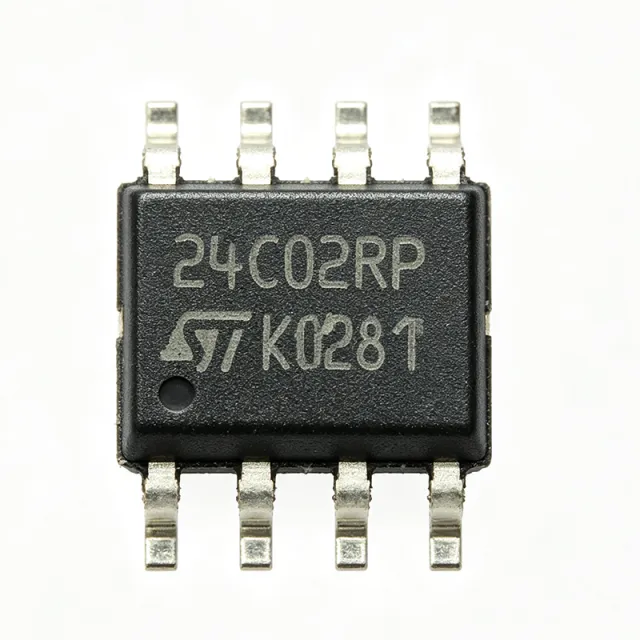
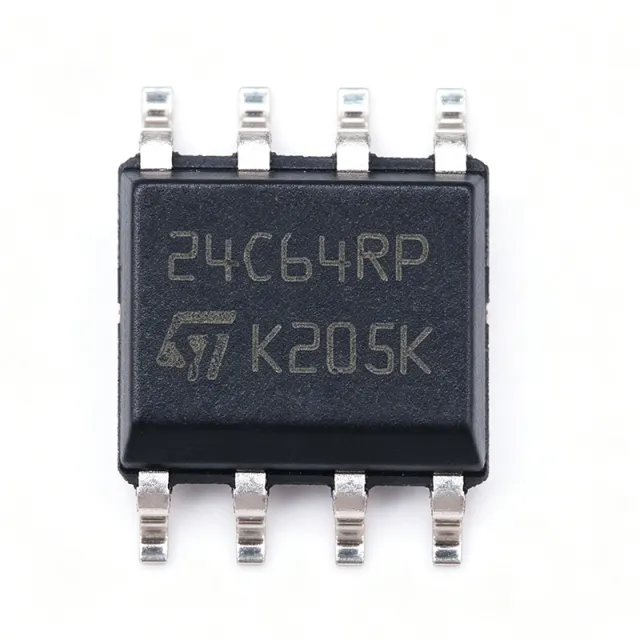
The M24C32-RMN6TP is a 32-Kbit (4 Kbyte) serial EEPROM from STMicroelectronics, organized as 4096 words of 8 bits each. It operates over an I2C-compatible two-wire serial interface, supporting clock frequencies up to 400 kHz (Fast mode) and 1 MHz (Fast mode Plus) depending on the voltage range. The device is available in an 8-pin SOIC (MN) package, specifically the SO-8N (150 mil) body, and is supplied in tape and reel packaging (TP suffix). It is designed for low-power and low-voltage applications, with a wide operating voltage range of 1.8V to 5.5V, making it suitable for battery-powered and industrial systems.
A serial EEPROM (Electrically Erasable Programmable Read-Only Memory) is a non-volatile memory that retains data when power is removed, and can be electrically erased and reprogrammed in-system. It is a type of EEPROM, which falls under the broader category of non-volatile memory (NVM) in the memory hierarchy. Serial EEPROMs use a serial interface (such as I2C, SPI, or Microwire) to communicate with a host controller, reducing pin count and PCB area compared to parallel EEPROMs. The M24C32 is part of the M24Cxx family of I2C EEPROMs from STMicroelectronics, which includes densities from 1 Kbit to 512 Kbit, all sharing a common command set and addressing scheme.
Key features of the M24C32-RMN6TP include a write cycle time of 5 ms (typical), byte and page write modes (up to 32-byte page), and a write protect pin (WC) for hardware data protection. The device supports both sequential and random read modes, and includes an internal write protection scheme with a software write protect feature (via the WC pin). It also features a Schmitt trigger input for noise immunity and a noise filter on the SCL and SDA lines, ensuring reliable operation in electrically noisy environments. The operating temperature range is -40°C to +85°C, and the device is RoHS compliant and halogen-free.
Technically, the M24C32 uses a floating-gate transistor technology for non-volatile storage, with a charge pump for programming and erasing. The I2C interface is compatible with standard, fast, and fast mode plus speeds, and the device supports 7-bit and 8-bit device addressing (with three address pins A0, A1, A2 for up to 8 devices on the same bus). The memory array is organized into 128 pages of 32 bytes each, and the device includes a self-timed write cycle with automatic erase-before-write. The write cycle time is 5 ms, and the device has an endurance of 1 million write cycles and a data retention of 40 years.
Typical applications include parameter storage in industrial sensors, calibration data in medical devices, configuration storage in networking equipment, and firmware update storage in consumer electronics. The low power consumption (standby current of 1 uA) and wide voltage range make it ideal for battery-operated IoT devices and portable instruments. In an industrial sensor application, the M24C32 can store calibration coefficients and device configuration, which are read at power-up and updated periodically.
When designing with this device, ensure that the I2C bus pull-up resistors are properly sized for the bus capacitance and speed. The WC pin should be tied to ground for normal write operations or to VCC for write protection. For reliable operation, decouple the VCC pin with a 0.1 uF ceramic capacitor close to the device. Also, consider the maximum write cycle time (5 ms) when planning write operations, and avoid exceeding the maximum clock frequency for the selected voltage range.
RFQ
Contact