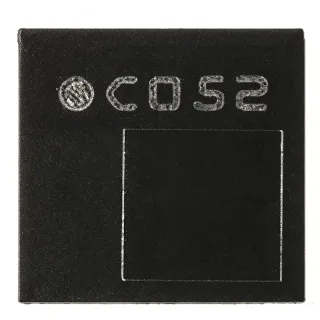
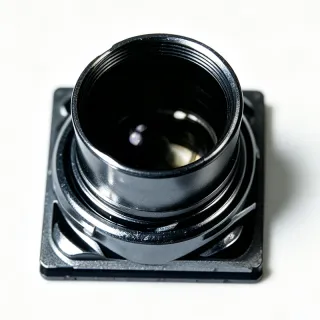
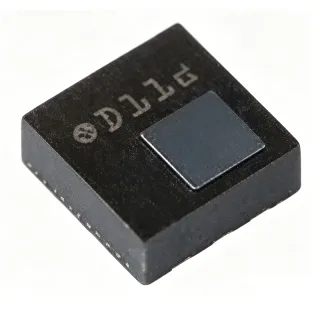
HSFPAR303A - Silicon Diaphragm Force Sensor 4x4mm | Alps Alpine
MPN: HSFPAR303A ✓ Active| Qty | Unit Price | Extended |
|---|---|---|
| 1 | $8.4 | $8.40 |
| 10 | $7.55 | $75.50 |
| 100 | $6.4 | $640.00 |
| 500 | $5.5 | $2,750.00 |
| 1,000 | $4.85 | $4,850.00 |
HSFPAR303A Overview
A force sensor (also called a load cell or force-sensing resistor at higher force ranges) is a transducer that converts mechanical force into a measurable electrical signal. Force sensors sit inside the broader sensor hierarchy of pressure sensors -> load sensors -> mechanical-quantity sensors -> transducers, and are widely used for touch, weight, and tactile-feedback applications where a strain gauge, load cell, or piezo-resistive element is required.
Key features include high-sensitivity load detection with low temperature drift, a small 4 mm footprint that enables dense PCB arrays, and an analog ratiometric output that interfaces directly with an external ADC or op-amp signal conditioner. The piezo-resistive silicon diaphragm delivers fast mechanical response and excellent repeatability compared with polymer-based FSRs.
The HSFPAR303A uses a diffused piezo-resistive bridge on a micromachined silicon diaphragm. When force is applied, the diaphragm flexes and the bridge resistors change value, producing a differential output. This monolithic construction gives the part better long-term stability and lower part-to-part variation than discrete strain-gauge assemblies.
Typical applications include stylus tip-force detection in pen tablets, key-press force measurement in industrial keypads, robotic gripper load feedback, precision weighing scales, and tactile/force-feedback switches in medical and consumer electronics. The compact package also suits wearable devices where PCB area is constrained.
When designing with this part, treat the analog output as a low-level signal and use a low-noise, low-offset instrumentation amplifier or 16-bit ADC front-end. Apply force only along the designed axis and respect the datasheet-specified maximum force rating to avoid permanent deformation of the silicon diaphragm.
This page synthesizes Mouser and Octopart pricing tiers, Alps Alpine datasheet parameters, and practical signal-conditioning notes not found in the manufacturer datasheet PDF alone.
Drop-in alternatives for HSFPAR303A — same package, pin-to-pin compatible. Different-package parts requiring PCB rework are excluded.
Quick Comparison Tool — Select alternative parts for side-by-side comparison:
HSFPAR301A
✅ Drop-In ⚠️ Specs Unverified📋 Reference alternative (not in catalog)
HSFPAR302A
✅ Drop-In ⚠️ Specs Unverified📋 Reference alternative (not in catalog)
HSFPD series
✅ Drop-In ⚠️ Specs Unverified📋 Reference alternative (not in catalog)
FSR402
✅ Drop-In📋 Reference alternative (not in catalog)
FSR406
✅ Drop-In📋 Reference alternative (not in catalog)
HSFPAR303A Maximum Ratings & Electrical Characteristics
| Sensor Type | Force Sensor |
| Technology | Piezo-resistive silicon diaphragm bridge |
| Package / Case | Surface-mount, 4.0 x 4.0 x 1.6 mm |
| Output Type | Analog, differential (bridge) |
| Mounting Type | Surface Mount |
| Manufacturer | Alps Alpine (ALPS Electric Co., Ltd.) |
| Datasheet Page Count | 14 pages |
| Datasheet Revision | Rev.1.4 |
| RoHS Status | Compliant |
| Output Channel | Differential Wheatstone bridge |
HSFPAR303A Pin Configuration
| Pin 1 | V+ — Bridge excitation positive (per Alps HSF datasheet convention) |
| Pin 2 | OUT+ — Differential output positive |
| Pin 3 | OUT- — Differential output negative |
| Pin 4 | GND — Bridge excitation return / ground |
Typical Applications
HSFPAR303A is suitable for 7 applications: Stylus Tip Force Detection in Pen Tablets, Industrial Keypad Force Measurement, Robotic Gripper Load Feedback, Precision Weighing Scales, Tactile and Force-Feedback Switches, Wearable Fitness and Health Devices, HMI Touch Panels with Force Sensing.
Stylus Tip Force Detection in Pen Tablets
The HSFPAR303A's 4.0 x 4.0 x 1.6 mm footprint fits inside slim active styluses where PCB area is severely constrained. Placing the sensor between the stylus tip and the stylus body PCB allows the piezo-resistive silicon diaphragm to transduce axial tip force into a differential analog signal. This signal is digitized by a 16-bit SAR ADC and processed for handwriting pressure and tilt recognition, giving smoother line weight than capacitive-only styluses without adding meaningful weight.
Recommended
Industrial Keypad Force Measurement
For rugged industrial keypads and HMI panels, the HSFPAR303A delivers repeatable force feedback at each key position. Its silicon-diaphragm piezo-resistive bridge responds in microseconds and survives millions of actuations with stable output. Pair one sensor per key with a multiplexed 16-bit ADC front-end to detect press depth, accidental touches, and stuck-key conditions in factory automation equipment where membrane switches alone are too imprecise.
Recommended
Robotic Gripper Load Feedback
Compact robot grippers need force feedback in tight envelopes; the HSFPAR303A's 4 mm silicon package fits on gripper fingertips where multi-axis load cells would be too large. The piezo-resistive bridge output is read at 1 kHz to enable closed-loop grasping control on delicate objects such as fruit, glassware, or surgical instruments. Compared with polymer FSRs, the silicon diaphragm offers tighter part-to-part tolerance and lower creep under sustained load.
Recommended
Precision Weighing Scales
The HSFPAR303A can serve as the load-sensing element in small precision weighing applications up to its rated force range. Use a Wheatstone completion circuit, drive the bridge with a low-noise reference, and digitize with a 24-bit sigma-delta ADC such as the MAX11110 to resolve sub-gram weight changes. The monolithic silicon diaphragm simplifies mechanical assembly compared with bonded foil gauges and improves long-term zero stability.
Recommended
Tactile and Force-Feedback Switches
Tactile switches in medical and consumer devices use the HSFPAR303A to discriminate soft taps from firm presses for richer UI input. The analog output feeds a comparator/MCU combination that fires different actions on a light tap, a normal press, or a hard press. Compared with mechanical dome switches alone, the sensor provides programmable thresholds and adds force-gradient gestures to small form-factor wearables, hearing-aid remotes, and surgical tools.
Recommended
Wearable Fitness and Health Devices
Wearable fitness devices use the HSFPAR303A in strap tension sensors and rehabilitation exoskeletons to measure applied force during exercise. Its 4 mm SMD profile integrates into flexible PCBs, and the silicon diaphragm handles sustained biomechanical loads without the drift seen in polymer-based FSRs. Combined with a low-power ADC and a BLE MCU, the sensor enables battery-powered wearables that capture quantitative force data for physiotherapy and athletic training.
Recommended
HMI Touch Panels with Force Sensing
Industrial HMI panels add force sensing to projected-capacitive touchscreens using an array of HSFPAR303A sensors along the bezel. Each silicon-diaphragm bridge returns a differential voltage proportional to local pressure, enabling rejection of accidental palm rests while confirming intentional touches. The 4 mm package tiles easily along bezels, and the analog front end shares a common instrumentation amplifier chain for cost-effective multi-zone force HMI.
Recommended
Recommended Products Summary
Engineering reference data for HSFPAR303A — comparison, design guidance, and compliance information.
Selection Guide
Comparison with Alternatives
| Parameter | This Product | HSFPAR301A | HSFPAR302A | HSFPD series | FSR402 | FSR406 |
|---|---|---|---|---|---|---|
| Brand | ALPS ALPINE | ALPS ALPINE | ALPS ALPINE | ALPS ALPINE | Interlink Electronics | Interlink Electronics |
| Package | SMD 4.0 x 4.0 x 1.6 mm | SMD 4.0 x 4.0 mm | SMD 4.0 x 4.0 mm | SMD 4.0 x 4.0 mm | Discrete FSR element | Discrete FSR square element |
| Sensor Technology | Silicon piezo-resistive diaphragm | Silicon piezo-resistive diaphragm | Silicon piezo-resistive diaphragm | Silicon piezo-resistive diaphragm | Polymer FSR | Polymer FSR |
| Output Type | Differential analog bridge | Differential analog bridge | Differential analog bridge | Differential analog bridge | Resistance change | Resistance change |
| Mounting Type | Surface Mount | Surface Mount | Surface Mount | Surface Mount | Through-hole / adhesive | Through-hole / adhesive |
| RoHS | Compliant | Compliant | Compliant | Compliant | Compliant | Compliant |
| Datasheet | Rev.1.4, 14 pages | Alps Alpine HSF datasheet | Alps Alpine HSF datasheet | Alps Alpine HSFPD datasheet | Interlink FSR402 datasheet | Interlink FSR406 datasheet |
Key Differentiators
- Monolithic silicon-diaphragm piezo-resistive bridge (vs FSR402 (Interlink Electronics))
- Compact 4.0 x 4.0 x 1.6 mm SMD package (vs FSR406 (Interlink Electronics))
- Differential analog bridge output for noise immunity (vs FSR402 (Interlink Electronics))
Design Notes
The HSFPAR303A emits a low-level differential bridge signal that is easily corrupted by EMI and ADC switching transients. Route the OUT+ and OUT- traces as a length-matched differential pair on a quiet reference plane, place a first-order RC low-pass filter (>=10 kHz) at the output, and digitize with a 16-bit or 24-bit SAR or sigma-delta ADC that has at least 100 dB power-supply rejection. Do not share the bridge excitation rail with digital logic without LC decoupling.
Avoid mechanical over-force and lateral loading on the HSFPAR303A silicon diaphragm; force applied off-axis or beyond the rated N range can crack the diaphragm and permanently zero-shift the bridge output per the Alps datasheet Rev.1.4 mechanical notes. Always mount the sensor on a flat, rigid section of the host PCB or housing with the specified elastomeric pad, and add a mechanical stop in the fixture to clamp peak forces.
Place the HSFPAR303A on a copper pour that matches its mechanical support footprint so that the load is transmitted through the silicon diaphragm and not through the solder joints. Keep high-current traces and switching regulators away from the sensor to avoid injecting noise into the bridge. Provide a stable ground plane directly under the sensor footprint, and add stitching vias around the periphery to minimize ground bounce during ADC conversions.
For bridge excitation, use a low-noise reference such as the REF5025 buffered by an op-amp, or a low-dropout regulator with <10 uVrms noise. Ratiometric measurement with the ADC's own reference tied to the bridge excitation further cancels supply noise. Expected: with 2.5 V excitation and a 1 kohm bridge (verify in Rev.1.4 datasheet), the quiescent bridge current is a few mA - budget for ADC reference current as well.
Compliance Information
RoHS and lead-free per Alps Alpine product page. AEC-Q100, halogen-free, REACH, and conflict-mineral status not explicitly stated in the Rev.1.4 datasheet snippet; confirm via manufacturer compliance letter.