LP8772x-Q1 - Automotive Radar PMIC | Texas Instruments
MPN: LP8772x-Q1 ✓ Active| Qty | Unit Price | Extended |
|---|---|---|
| 1 | $0 | $0.00 |
| 10 | $0 | $0.00 |
| 100 | $0 | $0.00 |
| 500 | $0 | $0.00 |
| 1,000 | $0 | $0.00 |
LP8772x-Q1 Overview
A PMIC (Power Management Integrated Circuit) is a system-level IC that manages multiple power rails, typically including DC-DC converters, LDOs, and load switches. It ensures that each subsystem receives the correct voltage, current, and sequencing. The LP8772x-Q1 belongs to a family of radar-specific PMICs that address the unique requirements of mmWave sensors, such as low noise for RF chains and precise power sequencing for radar MMICs. By integrating three buck converters, an LDO, and a load switch, the LP8772x-Q1 minimizes external component count and simplifies the power tree, reducing design complexity and PCB size.
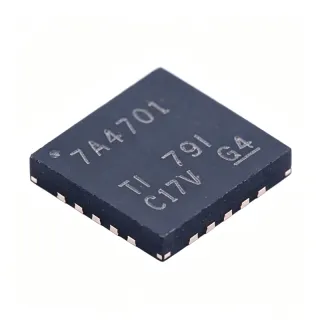
Key features include remote voltage sensing to compensate for IR drop between the regulator output and the point-of-load, programmable start-up and shutdown delays synchronized to the ENABLE signal, and an integrated watchdog timer for system monitoring. These features ensure accurate output voltage regulation and reliable operation. The 24-VQFN-HR package is compact and thermally efficient, with an exposed pad for heat dissipation. The Q1 suffix denotes AEC-Q100 qualification, which guarantees robust performance in harsh automotive environments.
The three synchronous buck converters deliver high-efficiency step-down regulation for digital core and I/O rails, while the LDO provides a low-noise supply for noise-sensitive analog circuits. The load switch allows controlled power gating to reduce standby current. The integrated watchdog helps detect system faults and ensures safe operation. The device supports programmable sequencing, allowing the power rails to come up in the correct order when the ENABLE signal is asserted.
Typical applications for the LP8772x-Q1 include automotive radar systems (AWR), industrial radar sensors (IWR), ADAS, traffic monitoring, and in-cabin occupant detection. The device is also used in UAV radar systems. Its flexible configuration and small footprint make it an ideal choice for space-constrained radar modules.
When designing with the LP8772x-Q1, engineers should pay careful attention to input/output capacitance, layout for remote sensing, and thermal management. The programmable sequencing must be configured to match the radar MMIC's power requirements. For precise output voltages, use the remote sense lines with Kelvin connections. Ensure the watchdog is properly programmed to avoid false resets during normal operation.
Drop-in alternatives for LP8772x-Q1 — same package, pin-to-pin compatible. Different-package parts requiring PCB rework are excluded.
Variants in this series
Same-series models that are drop-in compatible with LP8772x-Q1 (same form factor and footprint) — differing in Automotive Grade, Number of Outputs, Topology.
Quick Comparison Tool — Select alternative parts for side-by-side comparison:
LP87725-Q1
✅ Drop-In✓ In Stock
Contact for price
View Datasheet →LP87721-Q1
✅ Drop-In ⚠️ Specs Unverified✓ In Stock
Contact for price
View Datasheet →LP87722-Q1
✅ Drop-In ⚠️ Specs Unverified📋 Reference alternative (not in catalog)
LP87723-Q1
✅ Drop-In ⚠️ Specs Unverified📋 Reference alternative (not in catalog)
LP87724-Q1
✅ Drop-In ⚠️ Specs Unverified📋 Reference alternative (not in catalog)
LP8772x-Q1 Maximum Ratings & Electrical Characteristics
| Output Type | Three Buck Converters, One Linear Regulator, One Load Switch |
| Number of Outputs | 5 |
| Topology | Synchronous Buck (3) + LDO (1) + Load Switch (1) |
| Package | 24-VQFN-HR (4x4) |
| Mounting Type | Surface Mount |
| Automotive Qualification | AEC-Q100 Qualified |
| Remote Voltage Sensing | Supported |
| Programmable Sequencing | Supported, synchronized to ENABLE signal |
| Watchdog Timer | Supported |
LP8772x-Q1 24-vqfn-hr (4x4) Pin Configuration Guide
Pin configuration for LP8772x-Q1 (24-vqfn-hr (4x4) package). This power device features gate, drain, and source terminals. For non-polarized packages, refer to the manufacturer datasheet for exact pin 1 orientation and footprint details. Common applications include power supply design, motor driving, and load switching.

No detailed pinout data available for LP8772x-Q1.
Refer to the datasheet for full pin configuration.
Typical Applications
LP8772x-Q1 is suitable for 6 applications: Automotive Radar (AWR), Industrial Radar (IWR), ADAS (Advanced Driver Assistance Systems), Traffic Monitoring Radar, In-Cabin Radar (Occupancy Detection), UAV Radar for Altitude Sensing.
Automotive Radar (AWR)
The LP8772x-Q1 is ideal for automotive radar systems based on TI's AWR mmWave sensors. It provides three buck converters for digital core and I/O rails, an LDO for analog supply, and a load switch for power gating. The programmable sequencing ensures the radar MMIC powers up in the correct order, preventing latch-up. With AEC-Q100 qualification and remote voltage sensing, it maintains rail accuracy under load transients, essential for reliable ADAS operations. The compact 4x4 mm package saves space in corner radar modules.
Recommended
Industrial Radar (IWR)
For industrial radar sensing applications, the LP8772x-Q1 delivers the necessary power management for IWR mmWave sensors. It supplies three buck converters for the sensor's digital rails, an LDO for noise-sensitive analog circuits, and a load switch for standby control. The device's wide operating temperature and automotive-grade reliability make it suitable for industrial environments. The programmable shutdown delays allow proper sequencing when powering down, protecting the sensor from voltages out of range. The watchdog timer also monitors the system for errors during long-term operation.
Recommended
ADAS (Advanced Driver Assistance Systems)
In ADAS applications, the LP8772x-Q1 provides the power solution for radar sensors used in adaptive cruise control, collision warning, and blind spot detection. Its three buck converters offer high efficiency for continuous operation, while the LDO supplies low-noise power for RF front-ends. The load switch enables power gating to minimize standby current. The device's sequencing capability ensures safe startup when the vehicle's ignition is turned on, meeting automotive standards. The remote voltage sensing improves accuracy even with long PCB traces to the sensor.
Recommended
Traffic Monitoring Radar
Traffic monitoring and detection systems utilize the LP8772x-Q1 to power mmWave radar sensors that track vehicle flow and speed. The PMIC's three buck converters power the sensor's processing core, while the LDO provides clean analog rails for the RF chain. A load switch allows the radar to be powered down during idle periods, saving energy. With programmable delays, the power sequence matches the sensor's power-on reset requirements, ensuring reliable operation in outdoor conditions. The automotive qualification also supports use in smart transportation infrastructure.
Recommended
In-Cabin Radar (Occupancy Detection)
The LP8772x-Q1 supports in-cabin radar systems for occupant detection and monitoring. These systems require precise power sequencing and low noise to avoid false detections. The LDO provides ultra-clean supply for the radar sensor's analog front-end, while the buck converters efficiently step down the automotive battery voltage. The load switch permits the radar to be operated intermittently, reducing average power consumption. The device's compact footprint fits well in interior modules. Its automotive qualification ensures dependable performance across temperature extremes.
Recommended
UAV Radar for Altitude Sensing
In unmanned aerial vehicles (UAVs), the LP8772x-Q1 powers millimeter-wave radar sensors used for altitude and terrain detection. The PMIC's three buck converters provide efficient regulation from LiPo battery voltages, while the LDO feeds the sensitive RF chains. The load switch allows the radar system to be powered on and off for low-power standby. The small 4x4 mm package is critical for weight-constrained drone designs. Process control and monitoring ensure safe flight. The watchdog can help prevent system lockups during flight.
Recommended
Recommended Products Summary
Engineering reference data for LP8772x-Q1 — comparison, design guidance, and compliance information.
Selection Guide
Comparison with Alternatives
| Parameter | This Product | LP87725-Q1 | LP87721-Q1 | LP87723-Q1 |
|---|---|---|---|---|
| Package | 24-VQFN-HR (4x4) | 24-VQFN-HR (4x4) | 24-VQFN-HR (4x4) | 24-VQFN-HR (4x4) |
| Brand | Texas Instruments | Texas Instruments | Texas Instruments | Texas Instruments |
| Number of Outputs | 5 | 5 | 5 | 5 |
| Buck Converters | 3 | 3 | 3 | 3 |
| LDO Regulator | 1 | 1 | 1 | 1 |
| Load Switch | 1 | 1 | 1 | 1 |
| AEC-Q100 Qualified | Yes | Yes | Yes | Yes |
| Remote Voltage Sensing | Supported | Supported | Supported | Supported |
Key Differentiators
- Integrated solution with three bucks, one LDO, and one load switch in a 4x4 mm package (vs Discrete power circuit)
- AEC-Q100 qualification for automotive (vs Unqualified PMICs)
- Remote voltage sensing improves accuracy (vs PMICs without remote sensing)
Design Notes
The LP8772x-Q1 requires careful input and output capacitor selection to ensure stability and transient response. For the three buck converters, use low-ESR ceramic capacitors (e.g., 10-22 uF) near the outputs. The LDO requires a 1-10 uF output capacitor. The load switch output should be decoupled with at least 1 uF. Poor decoupling may cause voltage droop during radar pulse operation.
Remote voltage sensing is crucial for accurate output voltages. Route the sense lines as a Kelvin pair from the point-of-load back to the LP8772x-Q1, keeping them away from switching nodes. Use a solid ground plane underneath the PMIC, and place the thermal pad vias to maximize heat dissipation. Small 4x4 mm packages demand careful thermal management.
The programmable startup sequencing must be configured to match the radar MMIC's power requirements. If the sequence is incorrect, the device may experience latch-up or failure. Ensure the ENABLE signal timing is synchronized with the shutdown delays. Also, configure the watchdog timer correctly to avoid false resets during normal operation.
Compliance Information
AEC-Q100 qualified per Q1 designation. RoHS and REACH status not specified in verified data.