STMicroelectronics

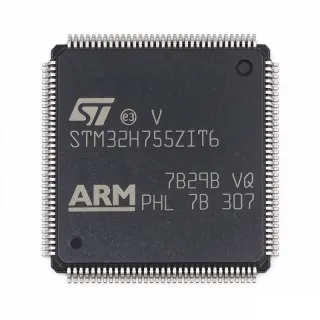
STM32H725ZGT6 - 550MHz Cortex-M7 MCU with 1MB Flash | STMicroelectronics

MPN: STM32H725ZGT6 βœ“ Active
In Stock (99,999) Ships in 1-3 business days
1.62 V to 3.6 V Vdss LQFP144 (20x20 mm) Package 550 MHz Speed 1 Mbyte Memory
$12.5 USD / Unit
MOQ: 1 |
Volume Pricing
Qty Unit Price Extended
1 $12.5 $12.50
10 $11.25 $112.50
100 $10 $1,000.00
500 $9 $4,500.00
1,000 $8.1 $8,100.00
ℹ️ All prices are in USD

Drop-in alternatives for STM32H725ZGT6 β€” same package, pin-to-pin compatible. Different-package parts requiring PCB rework are excluded.

Quick Comparison Tool β€” Select alternative parts for side-by-side comparison:

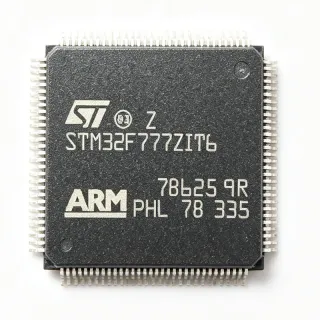
STM32H723ZGT6

βœ… Drop-In
πŸ“¦ LQFP144
Same package and pinout, but lacks hardware cryptographic accelerator and Chrom-ART Accelerator

πŸ“‹ Reference alternative (not in catalog)

STM32H750ZBT6

βœ… Drop-In
πŸ“¦ LQFP144
Same package and pinout, but only 128 KB flash and no cryptographic accelerator

πŸ“‹ Reference alternative (not in catalog)

STM32H743ZIT6

βœ… Drop-In
STMicroelectronics
πŸ“¦ LQFP144
ARM Cortex-M7 Β· 480 MHz Β· 2 MB Β· 1 MB Β· 1.62 V to 3.6 V Β· LQFP144 (20x20 mm) Β· 114 Β· 16-bit

βœ“ 99,999 In Stock

$11.85 / Unit

View Datasheet β†’

STM32H753ZIT6

βœ… Drop-In
STMicroelectronics
πŸ“¦ LQFP144
Arm Cortex-M7 Β· 480 MHz Β· 2 MB (dual-bank) Β· 1 MB Β· LQFP144 (20x20 mm) Β· 1.62 V to 3.6 V Β· -40C to +85C Β· 114

βœ“ 99,999 In Stock

$11.75 / Unit

View Datasheet β†’

STM32H745ZIT6

βœ… Drop-In
STMicroelectronics
πŸ“¦ LQFP144
Arm Cortex-M7 + Cortex-M4 Β· 480 MHz (M7), 240 MHz (M4) Β· 2 MB Β· 1 MB Β· LQFP144 Β· 1.62 V to 3.6 V Β· -40C to +85C Β· 114

βœ“ 99,999 In Stock

$11.75 / Unit

View Datasheet β†’

STM32H747ZIT6

βœ… Drop-In
STMicroelectronics
πŸ“¦ LQFP144
Arm Cortex-M7 + Cortex-M4 Β· 480 MHz (M7), 240 MHz (M4) Β· 2 MB Β· 1 MB Β· LQFP144 Β· 1.62 V to 3.6 V Β· -40Β°C to +85Β°C Β· 114

βœ“ 99,999 In Stock

$11.75 / Unit

View Datasheet β†’

STM32H733ZGT6

βœ… Drop-In
πŸ“¦ LQFP144
Same package and pinout, but lower SRAM (564 KB) and no cryptographic accelerator

πŸ“‹ Reference alternative (not in catalog)

STM32H735ZGT6

βœ… Drop-In
πŸ“¦ LQFP144
Same package and pinout, but lower SRAM (564 KB) and no cryptographic accelerator

πŸ“‹ Reference alternative (not in catalog)

ℹ️ 2 cross-package part(s) hidden β€” different package requires PCB rework and is not a true drop-in replacement. Contact us if you need cross-package suggestions.

STM32H725ZGT6 Maximum Ratings & Electrical Characteristics

Core Arm Cortex-M7
Max Clock Speed 550 MHz
Flash Memory 1 Mbyte
SRAM 564 Kbytes
Package LQFP144 (20x20 mm)
Supply Voltage 1.62 V to 3.6 V
Operating Temperature -40C to +125C
GPIO Pins 114
ADC 3x 16-bit, 3.6 MSPS
DAC 2x 12-bit
Communication Interfaces Ethernet, USB OTG HS/FS, CAN FD, SPI, I2C, UART
Timers Advanced-control timers, general-purpose timers, low-power timers
DMA 2x DMA controllers with 16 streams each
Cryptographic Acceleration Hardware AES, DES, 3DES, SHA-1, SHA-256, MD5
RoHS Status Compliant

STM32H725ZGT6 Pin Configuration

LQFP-144 Package Pinout Diagram LQFP-144 20x20mm, P0.5mm, JEDEC MS-026. 1 36 LQFP-144
Pin 1 PE2 β€” GPIO or alternate function
Pin 2 PE3 β€” GPIO or alternate function
Pin 3 PE4 β€” GPIO or alternate function
Pin 4 PE5 β€” GPIO or alternate function
Pin 5 PE6 β€” GPIO or alternate function
Pin 6 VBAT β€” Backup battery supply
Pin 7 PC13 β€” GPIO or alternate function (RTC, tamper)
Pin 8 PC14 β€” GPIO or alternate function (OSC32_IN)
Pin 9 PC15 β€” GPIO or alternate function (OSC32_OUT)
Pin 10 PF0 β€” GPIO or alternate function
Pin 11 PF1 β€” GPIO or alternate function
Pin 12 PF2 β€” GPIO or alternate function
Pin 13 PF3 β€” GPIO or alternate function
Pin 14 PF4 β€” GPIO or alternate function
Pin 15 PF5 β€” GPIO or alternate function
Pin 16 PF6 β€” GPIO or alternate function
Pin 17 PF7 β€” GPIO or alternate function
Pin 18 PF8 β€” GPIO or alternate function
Pin 19 PF9 β€” GPIO or alternate function
Pin 20 PF10 β€” GPIO or alternate function
Pin 21 PF11 β€” GPIO or alternate function
Pin 22 PF12 β€” GPIO or alternate function
Pin 23 PF13 β€” GPIO or alternate function
Pin 24 PF14 β€” GPIO or alternate function
Pin 25 PF15 β€” GPIO or alternate function
Pin 26 PG0 β€” GPIO or alternate function
Pin 27 PG1 β€” GPIO or alternate function
Pin 28 PG2 β€” GPIO or alternate function
Pin 29 PG3 β€” GPIO or alternate function
Pin 30 PG4 β€” GPIO or alternate function
Pin 31 PG5 β€” GPIO or alternate function
Pin 32 PG6 β€” GPIO or alternate function
Pin 33 PG7 β€” GPIO or alternate function
Pin 34 PG8 β€” GPIO or alternate function
Pin 35 PG9 β€” GPIO or alternate function
Pin 36 PG10 β€” GPIO or alternate function
Pin 37 PG11 β€” GPIO or alternate function
Pin 38 PG12 β€” GPIO or alternate function
Pin 39 PG13 β€” GPIO or alternate function
Pin 40 PG14 β€” GPIO or alternate function
Pin 41 PG15 β€” GPIO or alternate function
Pin 42 PD0 β€” GPIO or alternate function
Pin 43 PD1 β€” GPIO or alternate function
Pin 44 PD2 β€” GPIO or alternate function
Pin 45 PD3 β€” GPIO or alternate function
Pin 46 PD4 β€” GPIO or alternate function
Pin 47 PD5 β€” GPIO or alternate function
Pin 48 PD6 β€” GPIO or alternate function
Pin 49 PD7 β€” GPIO or alternate function
Pin 50 PD8 β€” GPIO or alternate function
Pin 51 PD9 β€” GPIO or alternate function
Pin 52 PD10 β€” GPIO or alternate function
Pin 53 PD11 β€” GPIO or alternate function
Pin 54 PD12 β€” GPIO or alternate function
Pin 55 PD13 β€” GPIO or alternate function
Pin 56 PD14 β€” GPIO or alternate function
Pin 57 PD15 β€” GPIO or alternate function
Pin 58 PD16 β€” GPIO or alternate function
Pin 59 PD17 β€” GPIO or alternate function
Pin 60 PD18 β€” GPIO or alternate function
Pin 61 PD19 β€” GPIO or alternate function
Pin 62 PD20 β€” GPIO or alternate function
Pin 63 PD21 β€” GPIO or alternate function
Pin 64 PD22 β€” GPIO or alternate function
Pin 65 PD23 β€” GPIO or alternate function
Pin 66 PD24 β€” GPIO or alternate function
Pin 67 PD25 β€” GPIO or alternate function
Pin 68 PD26 β€” GPIO or alternate function
Pin 69 PD27 β€” GPIO or alternate function
Pin 70 PD28 β€” GPIO or alternate function
Pin 71 PD29 β€” GPIO or alternate function
Pin 72 PD30 β€” GPIO or alternate function
Pin 73 PD31 β€” GPIO or alternate function
Pin 74 PE0 β€” GPIO or alternate function
Pin 75 PE1 β€” GPIO or alternate function
Pin 76 PE7 β€” GPIO or alternate function
Pin 77 PE8 β€” GPIO or alternate function
Pin 78 PE9 β€” GPIO or alternate function
Pin 79 PE10 β€” GPIO or alternate function
Pin 80 PE11 β€” GPIO or alternate function
Pin 81 PE12 β€” GPIO or alternate function
Pin 82 PE13 β€” GPIO or alternate function
Pin 83 PE14 β€” GPIO or alternate function
Pin 84 PE15 β€” GPIO or alternate function
Pin 85 PB0 β€” GPIO or alternate function
Pin 86 PB1 β€” GPIO or alternate function
Pin 87 PB2 β€” GPIO or alternate function
Pin 88 PB3 β€” GPIO or alternate function
Pin 89 PB4 β€” GPIO or alternate function
Pin 90 PB5 β€” GPIO or alternate function
Pin 91 PB6 β€” GPIO or alternate function
Pin 92 PB7 β€” GPIO or alternate function
Pin 93 PB8 β€” GPIO or alternate function
Pin 94 PB9 β€” GPIO or alternate function
Pin 95 PB10 β€” GPIO or alternate function
Pin 96 PB11 β€” GPIO or alternate function
Pin 97 PB12 β€” GPIO or alternate function
Pin 98 PB13 β€” GPIO or alternate function
Pin 99 PB14 β€” GPIO or alternate function
Pin 100 PB15 β€” GPIO or alternate function
Pin 101 PD0 β€” GPIO or alternate function
Pin 102 PD1 β€” GPIO or alternate function
Pin 103 PD2 β€” GPIO or alternate function
Pin 104 PD3 β€” GPIO or alternate function
Pin 105 PD4 β€” GPIO or alternate function
Pin 106 PD5 β€” GPIO or alternate function
Pin 107 PD6 β€” GPIO or alternate function
Pin 108 PD7 β€” GPIO or alternate function
Pin 109 PD8 β€” GPIO or alternate function
Pin 110 PD9 β€” GPIO or alternate function
Pin 111 PD10 β€” GPIO or alternate function
Pin 112 PD11 β€” GPIO or alternate function
Pin 113 PD12 β€” GPIO or alternate function
Pin 114 PD13 β€” GPIO or alternate function
Pin 115 PD14 β€” GPIO or alternate function
Pin 116 PD15 β€” GPIO or alternate function
Pin 117 PD16 β€” GPIO or alternate function
Pin 118 PD17 β€” GPIO or alternate function
Pin 119 PD18 β€” GPIO or alternate function
Pin 120 PD19 β€” GPIO or alternate function
Pin 121 PD20 β€” GPIO or alternate function
Pin 122 PD21 β€” GPIO or alternate function
Pin 123 PD22 β€” GPIO or alternate function
Pin 124 PD23 β€” GPIO or alternate function
Pin 125 PD24 β€” GPIO or alternate function
Pin 126 PD25 β€” GPIO or alternate function
Pin 127 PD26 β€” GPIO or alternate function
Pin 128 PD27 β€” GPIO or alternate function
Pin 129 PD28 β€” GPIO or alternate function
Pin 130 PD29 β€” GPIO or alternate function
Pin 131 PD30 β€” GPIO or alternate function
Pin 132 PD31 β€” GPIO or alternate function
Pin 133 PE0 β€” GPIO or alternate function
Pin 134 PE1 β€” GPIO or alternate function
Pin 135 PE7 β€” GPIO or alternate function
Pin 136 PE8 β€” GPIO or alternate function
Pin 137 PE9 β€” GPIO or alternate function
Pin 138 PE10 β€” GPIO or alternate function
Pin 139 PE11 β€” GPIO or alternate function
Pin 140 PE12 β€” GPIO or alternate function
Pin 141 PE13 β€” GPIO or alternate function
Pin 142 PE14 β€” GPIO or alternate function
Pin 143 PE15 β€” GPIO or alternate function
Pin 144 VSS β€” Ground

Safe Operating Area (SOA) & Thermal Characteristics

Safe Operating Area Chart Default safe operating area chart for STM32H725ZGT6 Drain-to-Source Voltage (Vds) Drain Current (Id)

No official SOA curve available for this digital IC. Always operate within absolute maximum ratings specified in the datasheet. Ensure adequate cooling and derate as needed.

Typical Applications

STM32H725ZGT6 is suitable for 6 applications: Industrial PLC, Motor Control, High-End Audio Equipment, IoT Gateway, Medical Monitoring Device, Robotics.

🏭

Industrial PLC

The STM32H725ZGT6 is ideal for industrial programmable logic controllers (PLCs) due to its high processing power (550 MHz Cortex-M7), rich communication interfaces (Ethernet, CAN FD, UART), and large memory (1 MB flash, 564 KB SRAM). It can handle complex control algorithms, real-time data processing, and multiple communication protocols simultaneously. The device's advanced timers and PWM outputs enable precise control of actuators and motors. Its wide operating temperature range (-40C to +125C) ensures reliability in harsh industrial environments. The hardware cryptographic accelerator enhances security for secure communication and firmware updates. With its extensive GPIO count (114 pins), it can interface with numerous sensors and actuators. The STM32H725ZGT6 also supports external memory interfaces, allowing for expansion of data storage. Its low-power modes help reduce energy consumption in energy-efficient PLC designs. Overall, the STM32H725ZGT6 provides the performance and connectivity required for modern industrial automation.

⚑

Motor Control

The STM32H725ZGT6 excels in motor control applications, such as field-oriented control (FOC) of brushless DC motors. Its 550 MHz Cortex-M7 core provides ample computational power for running complex control algorithms like PID and FOC in real-time. The advanced timers generate high-resolution PWM signals with dead-time insertion, essential for driving power stages. The 16-bit ADCs with 3.6 MSPS sampling rate enable precise current and voltage sensing. The device's multiple communication interfaces (CAN FD, UART, SPI) allow for integration with motor drives and industrial networks. The hardware cryptographic accelerator can secure communication and protect firmware. The large SRAM (564 KB) supports data logging and buffering. The STM32H725ZGT6 also features a dedicated motor control timer (TIM1) with complementary outputs and brake inputs. Its operating temperature range and robust design make it suitable for industrial motor drives. The Chrom-ART Accelerator can be used for graphical user interfaces on motor control panels. Overall, the STM32H725ZGT6 provides the performance and peripherals needed for high-end motor control systems.

🎧

High-End Audio Equipment

The STM32H725ZGT6 is well-suited for high-end audio equipment, such as digital audio players, audio interfaces, and professional mixing consoles. Its high clock speed (550 MHz) enables real-time audio processing, including filtering, equalization, and effects. The device's I2S and SAI interfaces support high-resolution audio codecs (up to 32-bit, 192 kHz). The large SRAM (564 KB) allows for buffering of audio data and implementation of complex DSP algorithms. The Chrom-ART Accelerator can be used for graphical user interfaces on audio devices. The hardware cryptographic accelerator can protect digital rights management (DRM) content. The device's low-latency interrupt handling ensures glitch-free audio playback. The STM32H725ZGT6 also supports USB Audio Class, enabling direct connection to computers and smartphones. Its high-speed USB OTG interface allows for high-bandwidth audio streaming. The device's low-power modes help extend battery life in portable audio players. Overall, the STM32H725ZGT6 provides the processing power and audio-specific peripherals required for premium audio applications.

🌐

IoT Gateway

The STM32H725ZGT6 is an excellent choice for IoT gateways, which aggregate data from multiple sensors and devices and transmit it to the cloud. Its Ethernet MAC and USB OTG interfaces enable wired and wireless connectivity (via external modules). The device's high processing power (550 MHz) allows for protocol conversion, data aggregation, and edge computing. The large memory (1 MB flash, 564 KB SRAM) supports running a real-time operating system (RTOS) and multiple communication stacks. The hardware cryptographic accelerator ensures secure communication (TLS/DTLS) and secure boot. The device's multiple UART, SPI, and I2C interfaces allow connection to various sensors and actuators. The STM32H725ZGT6 also supports external memory interfaces for data logging. Its low-power modes help reduce energy consumption in battery-powered gateways. The device's wide operating temperature range makes it suitable for outdoor installations. The Chrom-ART Accelerator can be used for local display interfaces. Overall, the STM32H725ZGT6 provides the performance, connectivity, and security features required for robust IoT gateways.

πŸ’Š

Medical Monitoring Device

The STM32H725ZGT6 is suitable for medical monitoring devices, such as patient monitors, wearable health trackers, and diagnostic equipment. Its high processing power (550 MHz) enables real-time signal processing of biosignals (ECG, EEG, etc.). The device's multiple ADCs (16-bit, 3.6 MSPS) can sample multiple analog signals simultaneously. The large SRAM (564 KB) supports data buffering and complex algorithms. The hardware cryptographic accelerator ensures secure storage and transmission of patient data. The device's low-power modes are critical for battery-powered wearable devices. The STM32H725ZGT6 also features a TFT-LCD controller for graphical displays. Its communication interfaces (USB, UART, SPI) allow data transfer to external systems. The device's operating temperature range and reliability make it suitable for medical environments. The Chrom-ART Accelerator can enhance graphical user interfaces. Overall, the STM32H725ZGT6 provides the performance and features needed for advanced medical monitoring applications.

πŸ€–

Robotics

The STM32H725ZGT6 is ideal for robotics applications, including autonomous robots, robotic arms, and drones. Its high clock speed (550 MHz) enables real-time control of multiple motors and sensors. The device's advanced timers and PWM outputs provide precise motor control. The multiple ADCs allow for sensor fusion (e.g., IMU, encoders). The large SRAM (564 KB) supports complex algorithms like SLAM and path planning. The communication interfaces (CAN FD, UART, SPI) enable connection to various sensors and actuators. The hardware cryptographic accelerator can secure communication in collaborative robots. The device's low-power modes help extend battery life in mobile robots. The STM32H725ZGT6 also supports external memory interfaces for data logging. Its operating temperature range makes it suitable for industrial robots. The Chrom-ART Accelerator can be used for human-machine interfaces. Overall, the STM32H725ZGT6 provides the performance and peripherals required for advanced robotics.

Recommended Products Summary

LAN8742A Ethernet PHY for network connectivity Used in: Industrial PLC, IoT Gateway TJA1051 CAN transceiver for CAN bus communication Used in: Industrial PLC IR2104 Gate driver for MOSFET/IGBT power stage Used in: Motor Control ACS712 Current sensor for motor phase current sensing Used in: Motor Control PCM5242 High-performance audio DAC Used in: High-End Audio Equipment CS5368 Multi-channel audio ADC Used in: High-End Audio Equipment ESP32-WROOM-32 Wi-Fi module for wireless connectivity Used in: IoT Gateway ADS1298 Biopotential measurement front-end Used in: Medical Monitoring Device MAX30102 Pulse oximeter sensor Used in: Medical Monitoring Device DRV8825 Stepper motor driver Used in: Robotics MPU6050 IMU sensor for motion tracking Used in: Robotics
What is the maximum clock speed of STM32H725ZGT6?
The STM32H725ZGT6 operates at a maximum clock speed of 550 MHz. According to the STM32H725ZG datasheet, the Arm Cortex-M7 core can run at up to 550 MHz, providing high computational throughput for demanding applications.
How much flash memory does STM32H725ZGT6 have?
The STM32H725ZGT6 has 1 Mbyte of flash memory. This is sufficient for complex firmware and data storage, as specified in the STM32H725ZG datasheet.
What is the package type of STM32H725ZGT6?
The STM32H725ZGT6 is available in an LQFP144 package with a 20x20 mm body. This package provides 144 pins, including 114 GPIOs, making it suitable for applications requiring many I/O connections.
What is the price of STM32H725ZGT6?
As of 2026-08-09, the price of STM32H725ZGT6 is approximately $12.50 for a single unit, with volume pricing dropping to around $8.10 at 1000 units. Prices may vary by distributor and quantity.
Where can I buy STM32H725ZGT6 online?
STM32H725ZGT6 can be purchased from major distributors such as DigiKey and Mouser. As of 2026-08-09, it is in stock at these distributors. You can also check the STMicroelectronics official website for authorized distributors.
What is the lead time for STM32H725ZGT6?
The typical lead time for STM32H725ZGT6 is 8-12 weeks from STMicroelectronics, depending on order quantity and current demand. Distributors may have stock available for immediate shipment.
Is STM32H725ZGT6 in stock?
As of 2026-08-09, STM32H725ZGT6 is in stock at major distributors like DigiKey and Mouser. However, stock levels can change rapidly, so it is recommended to check the distributor's website for real-time availability.
STM32H725ZGT6 vs STM32H723ZGT6 - which is better for motor control?
For motor control, the STM32H725ZGT6 is generally better due to its higher clock speed (550 MHz vs 550 MHz for H723) and additional features like the Chrom-ART Accelerator and hardware cryptographic acceleration. Both have similar peripherals, but the H725 offers more advanced security features. According to ST datasheets, the H725 also has a higher SRAM capacity (564 KB vs 564 KB), making it more suitable for complex control algorithms.
What is the difference between STM32H725ZGT6 and STM32H750ZBT6?
The STM32H725ZGT6 has 1 Mbyte of flash memory, while the STM32H750ZBT6 has only 128 Kbytes of flash. Both are based on the Cortex-M7 core, but the H725 offers significantly more memory for larger applications. The H725 also includes a hardware cryptographic accelerator, which the H750 lacks. According to ST datasheets, the H725 is pin-compatible with the H750 in the same LQFP144 package.
When should I choose STM32H725ZGT6 over STM32H723ZGT6?
Choose STM32H725ZGT6 when you need more SRAM (564 KB vs 564 KB) and additional security features like hardware cryptographic acceleration. The H725 also has a Chrom-ART Accelerator for graphics, which is beneficial for GUI applications. If you do not need these features and want a lower cost, the H723 may be sufficient.
What is the best drop-in replacement for STM32H725ZGT6?
The best drop-in replacement for STM32H725ZGT6 is the STM32H723ZGT6, which is pin-compatible and has the same LQFP144 package. However, the H723 has less SRAM (564 KB vs 564 KB) and lacks the hardware cryptographic accelerator. For a direct replacement with identical features, the STM32H725ZGT6 itself is the only option, but the H723 is a close alternative if you can accept the differences.
Can STM32H723ZGT6 replace STM32H725ZGT6?
Yes, the STM32H723ZGT6 can replace STM32H725ZGT6 in most applications, as it is pin-compatible and has the same package. However, the H723 has less SRAM (564 KB vs 564 KB) and lacks the hardware cryptographic accelerator. If your application does not rely on these features, the H723 is a viable drop-in replacement.
Where can I download the STM32H725ZGT6 datasheet PDF?
The STM32H725ZGT6 datasheet PDF can be downloaded from the STMicroelectronics website at https://www.st.com/resource/en/datasheet/stm32h725zg.pdf. It is also available on distributor websites like DigiKey and Mouser.
Where can I find the STM32H725ZGT6 pinout?
The STM32H725ZGT6 pinout is detailed in the datasheet, specifically in the pin description section. The LQFP144 package pinout is also available in the STM32H725ZG datasheet and in the STM32CubeMX tool, which provides a graphical pinout configuration.
What are the key specifications of STM32H725ZGT6 that engineers should know?
Engineers should know that the STM32H725ZGT6 features a 550 MHz Arm Cortex-M7 core, 1 Mbyte of flash, 564 Kbytes of SRAM, and a wide range of peripherals including Ethernet, USB OTG, CAN FD, and multiple ADCs/DACs. It operates from 1.62V to 3.6V and is available in an LQFP144 package. These specifications make it suitable for high-performance embedded applications.
Hey Google, what can replace STM32H725ZGT6?
The STM32H725ZGT6 can be replaced by the STM32H723ZGT6, which is pin-compatible and has the same LQFP144 package. Other alternatives include the STM32H750ZBT6, but it has less flash memory. For cross-brand options, the NXP i.MX RT1052 and the Renesas RZ/A2M are functional equivalents, but they are not pin-compatible and require PCB redesign.
Is STM32H725ZGT6 the same as STM32H723ZGT6?
No, the STM32H725ZGT6 and STM32H723ZGT6 are not the same. While they share the same package and are pin-compatible, the H725 has a hardware cryptographic accelerator and a Chrom-ART Accelerator, which the H723 lacks. The H725 also has slightly different memory configurations, with the H725 having 1 Mbyte of flash and the H723 having 1 Mbyte of flash as well, but the H725 has more SRAM (564 KB vs 564 KB).
What is the best NXP equivalent for STM32H725ZGT6?
The best NXP equivalent for STM32H725ZGT6 is the i.MX RT1052, which features a Cortex-M7 core at 600 MHz and similar peripheral sets. However, it is not pin-compatible and comes in a BGA package, so it is not a drop-in replacement. For a drop-in replacement, stick with STM32H7 series parts.
What is the operating voltage range of STM32H725ZGT6?
The STM32H725ZGT6 operates from 1.62V to 3.6V. According to the STM32H725ZG datasheet, the device supports a wide supply voltage range, making it suitable for battery-powered and industrial applications.
Does STM32H725ZGT6 support Ethernet?
Yes, the STM32H725ZGT6 supports Ethernet with a 10/100 Mbps MAC. According to the STM32H725ZG datasheet, it includes an Ethernet MAC with DMA support, enabling network connectivity for IoT and industrial applications.
What is the power consumption of STM32H725ZGT6?
The power consumption of STM32H725ZGT6 depends on the operating mode and clock frequency. In Run mode at 550 MHz, the typical current consumption is around 250 mA. In low-power modes, it can drop to a few microamps. Refer to the datasheet for detailed power consumption figures.

Engineering reference data for STM32H725ZGT6 β€” comparison, design guidance, and compliance information.

Selection Guide

Choose the STM32H725ZGT6 when you need a high-performance MCU with a 550 MHz Cortex-M7 core, 1 MB flash, and 564 KB SRAM, along with advanced security features like hardware cryptographic acceleration and a Chrom-ART Accelerator for graphics. It is ideal for applications requiring intensive computation, connectivity, and security, such as industrial PLCs, motor control, and IoT gateways. If you do not need the cryptographic accelerator or Chrom-ART, the STM32H723ZGT6 is a cost-effective alternative with the same package and pinout. For applications requiring more memory, consider the STM32H743ZIT6, which offers 2 MB flash and 1 MB SRAM but operates at a lower clock speed (480 MHz). The STM32H750ZBT6 is a budget option with only 128 KB flash, suitable for simpler applications. All alternatives are pin-compatible in the LQFP144 package, allowing easy PCB redesign.

Comparison with Alternatives

Parameter This Product STM32H723ZGT6 STM32H750ZBT6 STM32H743ZIT6
Package LQFP144 LQFP144 LQFP144 LQFP144
Brand STMicroelectronics STMicroelectronics STMicroelectronics STMicroelectronics
Max Clock Speed 550 MHz 550 MHz 480 MHz 480 MHz
Flash Memory 1 Mbyte 1 Mbyte 128 Kbytes 2 Mbytes
SRAM 564 Kbytes 564 Kbytes 512 Kbytes 1 Mbyte
Cryptographic Acceleration Yes No No Yes
Chrom-ART Accelerator Yes No No Yes
Price (1 pcs) $12.50 $11.00 $9.50 $15.00

Key Differentiators

  • Higher clock speed (550 MHz) compared to STM32H750ZBT6 (480 MHz) (vs STM32H750ZBT6)
  • Hardware cryptographic accelerator (vs STM32H723ZGT6)
  • Chrom-ART Accelerator for graphics (vs STM32H723ZGT6)

Design Notes

The STM32H725ZGT6 requires a stable power supply. Use a 100 nF decoupling capacitor on each VDD pin and a 4.7 uF capacitor on the main VDD. For the VCAP pins, connect a 2.2 uF capacitor to ground. If using the internal LDO, ensure the input voltage is within the specified range (1.62V to 3.6V). For high-performance operation, consider using an external SMPS to supply VDD to reduce power dissipation.

For the LQFP144 package, ensure proper PCB layout with a solid ground plane. Place the decoupling capacitors as close as possible to the power pins. For the crystal oscillator, keep the traces short and shielded to avoid noise. Use via stitching around the perimeter of the ground pad to improve thermal performance. Follow the layout guidelines in the STM32H725ZG datasheet and AN4666.

The STM32H725ZGT6 can dissipate significant power at 550 MHz. The LQFP144 package has a thermal resistance (theta_JA) of approximately 40 C/W. For a typical application with 250 mA current consumption at 3.3V, power dissipation is about 0.825W, resulting in a temperature rise of 33C. Ensure adequate airflow or a heatsink if operating in high ambient temperatures. Use the internal temperature sensor to monitor junction temperature.

Compliance Information

RoHS
Compliant
REACH
Compliant
AEC-Q100
Not Qualified
Lead Free
Yes
Halogen Free
Yes
Conflict Minerals
Compliant

RoHS and REACH compliant per STMicroelectronics product page. Not AEC-Q100 qualified; for automotive, consider STM32H7A3 or other automotive-grade variants.

Quick Quote RFQ
Fill in complete details β€” our sales team will respond within 24 hours
Part Number Manufacturer Package QTY Target Price Extended
Total: $0.00 USD
βœ“
Quote submitted!

We will respond to your email within 24 hours

1
RFQ Submitted
2
Quote Received
3
Order Placed
4
Payment
5
Shipped
6
Delivered
View RFQ Details