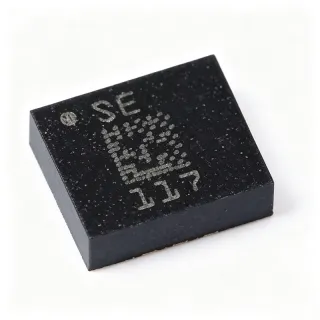
STM32MP157FAD2 - Dual Cortex-A7 800MHz MPU TFBGA257 | ST
MPN: STM32MP157FAD2 ✓ Active| Qty | Unit Price | Extended |
|---|---|---|
| 1 | $15.85 | $15.85 |
| 10 | $14.3 | $143.00 |
| 100 | $12.95 | $1,295.00 |
| 500 | $11.7 | $5,850.00 |
| 1,000 | $10.55 | $10,550.00 |
STM32MP157FAD2 Overview
An MPU (microprocessor unit) sits at the top of the embedded processing hierarchy: unlike a bare MCU, it boots a full operating system (Linux or Android via OpenSTLinux) while delegating deterministic, real-time tasks to a companion Cortex-M core. This heterogeneous architecture lets one chip run HMI, networking, and application code on Linux while the Cortex-M4 handles motor control, low-power I/O, or safety loops.
Key features of the STM32MP157FAD2 include 37 communication interfaces (including multiple SPI, I2C, UART, CAN-FD, Ethernet MAC, and USB), 29 timers, advanced analog peripherals (12-bit ADCs, DAC, and comparators), and a Vivante 3D GPU with TFT/DSI display output for rich graphical HMIs. The F variant is the open (non-crypto-enabled) member of the STM32MP157 family, sharing the silicon and pinout of the C variant.
Architecturally, the device combines the two Cortex-A7 cores with 32-bit address space, L1 caches, and an interconnect bridging to on-chip SRAM and external DDR3/LPDDR2/LPDDR3 memory. The Cortex-M4 shares peripherals with the A7 domain, enabling tightly coupled split workloads using STM32Cube ecosystem tools.
Typical applications include industrial HMI panels, building automation controllers, IoT gateways, and medical/portable devices that need a display, rich connectivity, and a real-time coprocessor in one footprint.
For design, plan the 10 x 10 mm TFBGA257 land pattern (0.5/0.65 mm ball pitch per ST layout guidelines), DDR routing, and power-tree early; boot media (eMMC/NAND/SD) selection and secure-boot configuration should be finalized before PCB spin.
This page synthesizes distributor data, same-family drop-in alternatives, and practical design notes not found in the ST datasheet.
Drop-in alternatives for STM32MP157FAD2 — same package, pin-to-pin compatible. Different-package parts requiring PCB rework are excluded.
Quick Comparison Tool — Select alternative parts for side-by-side comparison:
STM32MP157CAD2
✅ Drop-In ⚠️ 参数待验证📋 Reference alternative (not in catalog)
STM32MP157FAD1
✅ Drop-In📋 Reference alternative (not in catalog)
STM32MP157AAD2
✅ Drop-In📋 Reference alternative (not in catalog)
STM32MP153FAD2
✅ Drop-In📋 Reference alternative (not in catalog)
STM32MP151FAD2
✅ Drop-In ⚠️ 参数待验证📋 Reference alternative (not in catalog)
STM32MP157FAD2 Maximum Ratings & Electrical Characteristics
| Core | Dual Arm Cortex-A7 32-bit + Arm Cortex-M4 coprocessor |
| Cortex-A7 Frequency | up to 800 MHz |
| Cortex-M4 Frequency | 209 MHz |
| GPU | 3D GPU |
| Display Interface | TFT / DSI |
| Communication Interfaces | 37 |
| Timers | 29 |
| Analog Peripherals | Advanced analog (ADC, DAC, comparators) |
| Package | 257-ball TFBGA, 10 x 10 mm |
| Mounting Type | Surface Mount (BGA) |
| Security Variant | F = open (non-crypto) variant of STM32MP157 family |
| Supported OS | OpenSTLinux / RTOS on Cortex-M4 |
| External Memory Support | DDR3 / LPDDR2 / LPDDR3, eMMC / NAND / SD boot media |
| RoHS Status | Compliant |
STM32MP157FAD2 257-ball tfbga, 10 x 10 mm Pin Configuration Guide
Pin configuration for STM32MP157FAD2 (257-ball tfbga, 10 x 10 mm package). This digital IC includes GPIO, communication interfaces (UART, SPI, I2C), and power pins. Refer to the manufacturer datasheet for alternate pin functions and configuration options. Essential for embedded system design and PCB layout.

No detailed pinout data available for STM32MP157FAD2.
Refer to the datasheet for full pin configuration.
Typical Applications
STM32MP157FAD2 is suitable for 6 applications: Industrial HMI and Touch Panels, IoT and Edge Gateways, Building Automation Controllers, Medical and Portable Diagnostic Devices, Motor Control and Robotics, Smart Retail and POS Terminals.
Industrial HMI and Touch Panels
The STM32MP157FAD2 fits industrial HMI designs because its TFT and MIPI DSI display outputs drive modern touch panels while the Vivante 3D GPU accelerates Qt-based UI rendering at up to 800 MHz on dual Cortex-A7 cores. Running OpenSTLinux provides a full graphics stack, networking, and file systems, while the Cortex-M4 coprocessor at 209 MHz handles deterministic tasks such as PLC-style I/O scanning or sensor acquisition with microsecond-level jitter. Designers typically pair the MPU with DDR3L memory and eMMC boot media, using the 37 communication interfaces for EtherCAT-ready CAN-FD, industrial Ethernet, and RS-485 links. Because the 10 x 10 mm TFBGA257 integrates display, compute, and real-time control, it replaces separate CPU-plus-MCU architectures and shortens the BOM.
Recommended
IoT and Edge Gateways
For IoT gateways, the STM32MP157FAD2 combines Linux-class processing (dual Cortex-A7 at 800 MHz) with the 37 communication interfaces needed to bridge field buses and cloud links: multiple UART/SPI/I2C for Modbus and sensor buses, CAN-FD, and an Ethernet MAC for wired backhaul. OpenSTLinux supports containers, TLS stacks, and over-the-air update frameworks, which are prerequisites for maintainable edge deployments. The Cortex-M4 coprocessor at 209 MHz can keep a low-power always-on task - protocol translation or watchdog duties - running independently of the Linux kernel, improving uptime. Designs typically add eMMC storage and LPDDR2/LPDDR3 DRAM. The F (open) variant keeps the bill of materials simple where hardware crypto is not mandatory, while the pin-compatible C variant is available if security services are later required - a valuable second-source strategy on the same PCB.
Recommended
Building Automation Controllers
Building automation controllers benefit from the STM32MP157FAD2's balance of compute and determinism. The dual Cortex-A7 at 800 MHz runs OpenSTLinux hosting BACnet or KNX protocol stacks and a local web dashboard rendered via the 3D GPU to a TFT/DSI panel, while the Cortex-M4 at 209 MHz handles real-time I/O - damper control, metering pulses, and sensor polling on I2C/UART buses. With 29 timers and CAN-FD interfaces, it can service multiple concurrent control loops without Linux-induced latency. The 10 x 10 mm TFBGA257 footprint and extended-temperature family options suit enclosed controller housings. Using one device instead of an MPU-plus-MCU pair reduces PCB area, simplifies certification of a single silicon item, and allows firmware updates to the real-time coprocessor independently of the Linux image through the remoteproc mechanism.
Recommended
Medical and Portable Diagnostic Devices
Portable medical devices use the STM32MP157FAD2 where a graphical interface and signal processing coexist: the DSI interface drives touch screens for patient UIs, the dual Cortex-A7 at 800 MHz runs data acquisition applications on OpenSTLinux, and the advanced analog peripherals plus the Cortex-M4 at 209 MHz perform time-critical sample streaming from external front ends over SPI. The 37 communication interfaces support USB device/host connectivity for data export and wired peripherals. Because the F variant is the open (non-crypto) family member, teams that do not deploy hardware security services keep the design straightforward, with a pin-compatible upgrade path to the C variant if compliance later demands it. Typical memory configurations pair LPDDR2/LPDDR3 with eMMC, and the 10 x 10 mm package fits handheld enclosures.
Recommended
Motor Control and Robotics
Robotics and motor-control systems exploit the heterogeneous architecture of the STM32MP157FAD2: the Cortex-M4 at 209 MHz executes field-oriented control loops with PWM timers and fast ADC sampling at deterministic rates, while the dual Cortex-A7 cores at 800 MHz run ROS nodes, motion planning, and an HMI under OpenSTLinux. The 29 timers provide the PWM resolution and capture channels needed for multi-axis drives, and CAN-FD interfaces link to servo drives and encoders. OpenAMP/RPMsg carries commands and telemetry between Linux and the coprocessor with low overhead. Compared with a discrete MCU-plus-SoC approach, the single 257-ball TFBGA (10 x 10 mm) device reduces routing complexity and BOM cost while keeping real-time performance isolated from the Linux scheduler - a common pattern documented in ST's MPU application notes.
Recommended
Smart Retail and POS Terminals
Smart retail terminals - POS, kiosks, and price displays - need rich graphics, connectivity, and responsive peripheral handling, all of which the STM32MP157FAD2 provides in one package. The 3D GPU and TFT/DSI output render receipts, advertisements, and menus on touch panels, while the dual Cortex-A7 at 800 MHz runs the application stack on OpenSTLinux. USB host ports, multiple UARTs for receipt printers and barcode scanners, and the Ethernet MAC cover the connectivity matrix; the Cortex-M4 at 209 MHz can manage peripheral polling and secure element communication off the main OS. The 10 x 10 mm TFBGA257 allows compact terminal electronics, and long-lifecycle MPU availability supports multi-year retail deployments. Should transaction security later require hardware cryptography, the pin-compatible STM32MP157CAD2 can be dropped onto the same board without redesign.
Recommended
Recommended Products Summary
Engineering reference data for STM32MP157FAD2 — comparison, design guidance, and compliance information.
Selection Guide
Comparison with Alternatives
| Parameter | This Product | STM32MP157CAD2 | STM32MP157FAD1 | STM32MP157AAD2 | STM32MP153FAD2 |
|---|---|---|---|---|---|
| Brand | STMicroelectronics | STMicroelectronics | STMicroelectronics | STMicroelectronics | STMicroelectronics |
| Package | TFBGA257 (10 x 10 mm) | TFBGA257 (10 x 10 mm) - same | TFBGA257 (10 x 10 mm) - same | TFBGA257 (10 x 10 mm) - same | TFBGA257 (10 x 10 mm) - same |
| Cortex-A7 Frequency | up to 800 MHz | up to 800 MHz | up to 800 MHz | up to 650 MHz | up to 800 MHz |
| Cortex-M4 Coprocessor | 209 MHz | 209 MHz | 209 MHz | 209 MHz | 209 MHz |
| 3D GPU | Yes | Yes | Yes | Yes | No |
| DSI Display Interface | Yes | Yes | Yes | Yes | No |
| Hardware Crypto / Security | No (open F variant) | Yes (crypto-enabled) | No (open F variant) | No (open A variant) | No (open F variant) |
Key Differentiators
- Full display subsystem (3D GPU + TFT/DSI) in family (vs STM32MP153FAD2)
- 800 MHz dual Cortex-A7 performance (vs STM32MP157AAD2)
- Open variant with upgrade path (vs STM32MP157CAD2)
Design Notes
The 257-ball TFBGA with 0.5/0.65 mm pitch requires a dedicated escape plan: follow the ST layout guidelines for the 10 x 10 mm footprint, fan out DDR3/LPDDR buses with matched-length routing, and use ST's reference design files from the STM32MP157 evaluation boards as a starting template. Engage the STM32CubeMX pinout tool early to lock the ball assignment before PCB routing, since multiplexed pin functions constrain what can change after layout.
The STM32MP1 power tree is multi-rail (core, DDR, I/O domains) with sequencing requirements; ST strongly recommends a PMIC companion for first designs. Estimated: total power depends on A7 load and DDR configuration, so budget based on the reference design measurements rather than worst-case estimates, and verify rail sequencing in the manufacturer datasheet before finalizing the power supply.
When migrating from STM32MP153 to STM32MP157 on an existing board, DSI-related power pins that were left unconnected on the MP153 design must be reviewed - ST community threads document this exact pitfall. Also verify that the F (open) variant meets your security requirements before tape-out; switching to the C variant later is pin-compatible, but secure-boot keys cannot be retrofitted into an F-variant design.
DDR3/LPDDR2/LPDDR3 interfaces are the most sensitive nets on the board. Keep DDR traces on inner layers with solid reference planes, match trace lengths within the datasheet skew budget, and copy the termination and layout topology from ST's reference design. Signal integrity simulation or at least careful impedance control (50 ohm single-ended, 100 ohm differential for clock pairs) is recommended for first-pass success.
Compliance Information
RoHS compliant per STMicroelectronics product line policy for STM32MP1 series. Verify REACH and halogen-free status via ST's environmental documentation portal for the exact order code.