STTS751 - 1.8V to 3.6V Digital Temperature Sensor | STMicroelectronics
MPN: STTS751 ✓ Active| Qty | Unit Price | Extended |
|---|---|---|
| 1 | $1.25 | $1.25 |
| 10 | $1.12 | $11.20 |
| 100 | $0.98 | $98.00 |
| 500 | $0.85 | $425.00 |
| 1,000 | $0.72 | $720.00 |
STTS751 Overview
A digital temperature sensor is an integrated circuit that converts ambient temperature into a digital output, typically using an internal bandgap reference and an analog-to-digital converter (ADC). It belongs to the broader category of temperature sensors, which are essential in thermal management systems for monitoring and protecting electronic components. Digital temperature sensors like the STTS751 are preferred over analog sensors (e.g., thermistors) because they provide direct digital readout, eliminate the need for calibration, and can be easily interfaced with microcontrollers via standard communication protocols such as I2C or SMBus.
Key features of the STTS751 include a programmable resolution (9 to 12 bits), an SMBus-compatible interface with up to 400 kHz clock frequency, and a standby current of only 3.5 µA (typical) to extend battery life in portable applications. The device also supports a one-shot mode for single temperature readings, which reduces power consumption further. The operating temperature range is -40°C to +125°C, making it suitable for a wide range of environments.
The STTS751 uses a sigma-delta ADC architecture to achieve high accuracy and low noise. It includes an on-chip oscillator and a digital comparator that can generate an interrupt (ALERT) when the temperature exceeds programmable high or low limits. The device also features a shutdown mode that reduces current consumption to 0.5 µA (typical), ideal for power-sensitive designs.
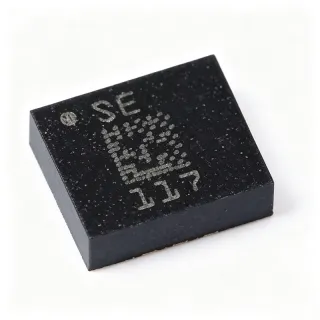
Typical applications include system thermal management in laptops, servers, and industrial controllers; battery temperature monitoring in smartphones and tablets; and environmental monitoring in IoT devices. The small UDFN package and low power consumption make it an excellent choice for space-constrained, battery-powered designs.
When designing with the STTS751, ensure proper PCB layout to minimize thermal coupling from other heat sources. Place the sensor away from power components and provide adequate copper pour for heat dissipation. The I2C address is set by the ADD0 pin, allowing up to two devices on the same bus.
Drop-in alternatives for STTS751 — same package, pin-to-pin compatible. Different-package parts requiring PCB rework are excluded.
Quick Comparison Tool — Select alternative parts for side-by-side comparison:
TMP102
✅ Drop-In ⚠️ Specs Unverified📋 Reference alternative (not in catalog)
STTS751 Maximum Ratings & Electrical Characteristics
| Supply Voltage Range | 1.8 V to 3.6 V |
| Temperature Accuracy | ±1°C (typical) from +75°C to +95°C |
| Temperature Range | -40°C to +125°C |
| Resolution | 9 to 12 bits (programmable) |
| Interface | I2C/SMBus (up to 400 kHz) |
| Standby Current | 3.5 µA (typical) |
| Shutdown Current | 0.5 µA (typical) |
| Conversion Time | Up to 210 ms (12-bit) |
| Package | 6-pin UDFN (2x2 mm) |
| Operating Temperature Range | -40°C to +125°C |
| Output Type | Digital (I2C/SMBus) |
| Number of Channels | 1 |
| ALERT Output | Yes (programmable high/low limits) |
| One-Shot Mode | Yes |
| RoHS Status | Compliant |
STTS751 Pin Configuration
| Pin 1 | SDA — I2C data line (open-drain) |
| Pin 2 | SCL — I2C clock line |
| Pin 3 | ALERT — Temperature alert output (open-drain, active low) |
| Pin 4 | ADD0 — I2C address select pin |
| Pin 5 | VDD — Power supply (1.8V to 3.6V) |
| Pin 6 | GND — Ground |
Typical Applications
STTS751 is suitable for 6 applications: System Thermal Management, Battery Temperature Monitoring, IoT Environmental Monitoring, Industrial Process Control, Automotive Climate Control, Medical Device Monitoring.
System Thermal Management
The STTS751 monitors CPU, GPU, or system ambient temperature in laptops, servers, and industrial controllers. Its high accuracy (±1°C) and programmable ALERT output enable proactive cooling fan control and thermal shutdown protection. The I2C interface allows easy integration with system management controllers (e.g., BMC) for real-time temperature monitoring. The low supply voltage (1.8V-3.6V) is compatible with modern low-power processors. In a typical laptop, the STTS751 is placed near the CPU heatsink, and its ALERT pin triggers a fan speed increase when temperature exceeds a set threshold, preventing overheating and improving system reliability.
Recommended
Battery Temperature Monitoring
In smartphones, tablets, and power banks, the STTS751 monitors battery temperature to prevent thermal runaway and optimize charging. Its ultra-low standby current (3.5 µA) extends battery life, and the small UDFN package fits compact designs. The one-shot mode allows periodic temperature readings without continuous power consumption. The device can be placed on the battery pack, and its ALERT output can trigger a charge current reduction or shutdown if the temperature exceeds safe limits. The I2C interface connects directly to the battery management IC or host processor.
Recommended
IoT Environmental Monitoring
The STTS751 is used in IoT nodes to measure ambient temperature for smart home, agriculture, and industrial monitoring. Its low power consumption (3.5 µA standby) is ideal for battery-powered sensors that wake up periodically to take readings. The I2C interface allows connection to low-power MCUs like the ESP32 or STM32L0. The device's small size and wide temperature range (-40°C to +125°C) make it suitable for outdoor deployments. In a typical IoT node, the STTS751 is read every minute, and the data is transmitted via LoRa or BLE to a cloud platform for analysis.
Recommended
Industrial Process Control
The STTS751 monitors temperature in industrial equipment such as motor drives, power supplies, and PLCs. Its accuracy and wide operating range ensure reliable operation in harsh environments. The ALERT output can trigger alarms or shutdowns to prevent equipment damage. The I2C interface allows integration with industrial microcontrollers and PLCs. In a motor drive, the STTS751 is mounted on the heatsink, and its temperature reading is used to derate the motor current at high temperatures, improving system safety and longevity.
Recommended
Automotive Climate Control
The STTS751 is used in automotive HVAC systems to monitor cabin temperature and control heating/cooling. Its wide temperature range and accuracy make it suitable for automotive environments. The device operates from a 1.8V-3.6V supply, which is compatible with automotive low-voltage rails. The I2C interface connects to the body control module (BCM) or climate control unit. In a typical application, the STTS751 is placed in the dashboard, and its readings are used to adjust the blower speed and temperature setpoint for passenger comfort.
Recommended
Medical Device Monitoring
The STTS751 is used in medical devices such as patient monitors, infusion pumps, and diagnostic equipment to monitor ambient or component temperature. Its accuracy and low power consumption are critical for battery-operated devices. The small package allows integration into compact medical devices. The I2C interface enables communication with medical-grade microcontrollers. In a patient monitor, the STTS751 can monitor the temperature of the device's internal components to prevent overheating, ensuring reliable operation in clinical settings.
Recommended
Recommended Products Summary
Engineering reference data for STTS751 — comparison, design guidance, and compliance information.
Selection Guide
Comparison with Alternatives
| Parameter | This Product | STTS75 | TMP102 | MCP9808 |
|---|---|---|---|---|
| Package | 6-pin UDFN (2x2 mm) | SO-8 | SOT-563 | MSOP-8 |
| Brand | STMicroelectronics | STMicroelectronics | Texas Instruments | Microchip Technology |
| Supply Voltage Range | 1.8V to 3.6V | 2.7V to 5.5V | 1.4V to 3.6V | 2.7V to 5.5V |
| Temperature Accuracy | ±1°C (typical) from +75°C to +95°C | ±2°C (typical) | ±0.5°C (typical) | ±0.25°C (typical) |
| Resolution | 9 to 12 bits | 9 to 12 bits | 12 bits | 13 bits |
| Interface | I2C/SMBus (up to 400 kHz) | I2C/SMBus (up to 400 kHz) | I2C/SMBus (up to 400 kHz) | I2C (up to 400 kHz) |
| Standby Current | 3.5 µA (typical) | 1 µA (typical) | 10 µA (typical) | 0.2 µA (typical) |
| ALERT Output | Yes | Yes | Yes | Yes |
Key Differentiators
- Ultra-low standby current of 3.5 µA (vs TMP102)
- Compact 2x2 mm UDFN package (vs TMP102)
- Wide supply voltage range down to 1.8V (vs STTS75)
Design Notes
Place the STTS751 away from heat-generating components (e.g., voltage regulators, high-power resistors) to ensure accurate ambient temperature measurement. Provide a solid ground plane under the device to improve thermal coupling to the PCB and reduce measurement errors. For best accuracy, avoid routing high-current traces directly beneath the sensor.
Decouple the VDD pin with a 0.1 µF ceramic capacitor placed as close to the pin as possible. The STTS751 operates from 1.8V to 3.6V, so ensure the supply is stable and within this range. If the supply is noisy, add a 1 µF capacitor in parallel to filter high-frequency noise.
The I2C address is set by the ADD0 pin. Connect ADD0 to GND for address 0x48 or to VDD for address 0x49. Ensure the ALERT pin is pulled up with a resistor (e.g., 10 kΩ) since it is open-drain. Do not leave the ALERT pin floating, as it may cause false triggers. Also, note that the STTS751 has a one-shot mode; use it to reduce power consumption in battery-powered applications.
Compliance Information
RoHS compliant per STMicroelectronics product page. Not AEC-Q100 qualified. Halogen-free status not specified in available data.