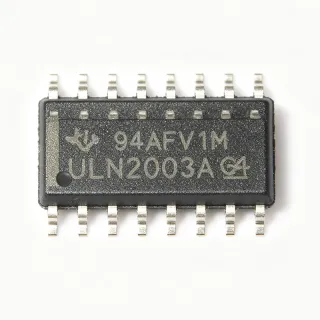
TPS2054 - Quad 0.5A USB Power Switch 80mOhm | Texas Instruments
MPN: TPS2054 ✓ Active| Qty | Unit Price | Extended |
|---|---|---|
| 1 | $0 | $0.00 |
| 10 | $0 | $0.00 |
| 100 | $0 | $0.00 |
| 500 | $0 | $0.00 |
| 1,000 | $0 | $0.00 |
TPS2054 Overview
A power-distribution switch is a type of load switch within the power management IC hierarchy that sits between a supply rail and its load, providing controlled turn-on, fault protection, and status reporting. USB power switches specifically guard downstream ports against overcurrent and short-circuit faults, preventing host rail collapse in systems that distribute 5 V power to multiple peripheral ports.
Key features include 500 mA continuous current per channel for USB compliance, 135 mOhm typical high-side MOSFET resistance, short-circuit and thermal protection, and an overcurrent logic output (nFAULT) that signals fault conditions to the host controller. The device offers logic-level enable inputs, a 2.5 ms typical output rise time that limits inrush current during hot-plug events, and undervoltage lockout for predictable startup behavior.
Internally, each switch uses a charge-pumped N-channel MOSFET gate drive with precision current-sense circuitry. When load current exceeds the 0.9 A limit, the device enters constant-current mode; sustained faults trigger thermal shutdown per channel. The open-drain overcurrent output allows direct connection to a microcontroller GPIO with a pull-up resistor.
Typical applications include USB hub port power control, self-powered and bus-powered USB peripherals, multi-port charging accessories, hot-plug power switching in embedded systems, and industrial power-rail partitioning requiring per-channel fault isolation.
Design tip: the controlled 2.5 ms rise time removes the need for external soft-start circuitry, but ensure PCB traces per channel are rated for 0.9 A fault current and place the input/output bypass capacitors close to the device pins for stable current-limit behavior.
Drop-in alternatives for TPS2054 — same package, pin-to-pin compatible. Different-package parts requiring PCB rework are excluded.
Variants in this series
Same-series models that are drop-in compatible with TPS2054 (same form factor and footprint) — differing in Fault Reporting, Output Rise Time, Package, RoHS Status, Topology.
Quick Comparison Tool — Select alternative parts for side-by-side comparison:
TPS2054BDR
✅ Drop-In✓ In Stock
$1.12 / Unit
View Datasheet →TPS2054BD
✅ Drop-In📋 Reference alternative (not in catalog)
TPS2054D
✅ Drop-In📋 Reference alternative (not in catalog)
TPS2044D
✅ Drop-In📋 Reference alternative (not in catalog)
TPS2053D
⚡ Same Package ⚠️ Specs Unverified📋 Reference alternative (not in catalog)
TPS2054 Maximum Ratings & Electrical Characteristics
| Topology | High-side power-distribution switch |
| Number of Channels | 4 |
| Input Voltage Range | 2.7 V to 5.5 V |
| Continuous Current per Channel | 500 mA |
| Current Limit | 0.9 A |
| On-Resistance | 80 mOhm maximum (5 V input); 135 mOhm typical |
| Enable Logic | Active-high |
| Output Rise Time | 2.5 ms typical |
| Protection | Short-circuit, thermal shutdown, undervoltage lockout |
| Fault Reporting | Overcurrent logic output |
| Operating Temperature | -40C to 85C |
| Package | 16-pin SOIC (D) |
| Mounting Type | Surface Mount |
| Application | USB power distribution |
| RoHS Status | Compliant |
TPS2054 Pin Configuration
| Pin 1 | EN1 — Enable input, channel 1 (active high) |
| Pin 2 | EN2 — Enable input, channel 2 (active high) |
| Pin 3 | EN3 — Enable input, channel 3 (active high) |
| Pin 4 | EN4 — Enable input, channel 4 (active high) |
| Pin 5 | nFAULT — Overcurrent logic fault output (open drain) |
| Pin 6 | IN — Input supply, 2.7 V to 5.5 V |
| Pin 7 | GND — Ground |
| Pin 8 | GND — Ground |
| Pin 9 | OUT4 — Switched output, channel 4 |
| Pin 10 | OUT3 — Switched output, channel 3 |
| Pin 11 | OUT2 — Switched output, channel 2 |
| Pin 12 | OUT1 — Switched output, channel 1 |
| Pin 13 | GND — Ground |
| Pin 14 | GND — Ground |
| Pin 15 | IN — Input supply, 2.7 V to 5.5 V |
| Pin 16 | IN — Input supply, 2.7 V to 5.5 V |
Typical Applications
TPS2054 is suitable for 6 applications: USB Hub Port Power Control, Self-Powered USB Peripherals, Industrial Multi-Rail Power Partitioning, Hot-Plug Power Switching, Battery-Charging Port Accessories, Embedded System GPIO Load Control.
USB Hub Port Power Control
The TPS2054 is purpose-built for USB hub power distribution: its four independent 500 mA channels map directly to four downstream ports, while the 0.9 A current limit exceeds the USB 500 mA budget to prevent nuisance tripping. The 2.5 ms controlled rise time suppresses hot-plug inrush from downstream bulk capacitance, and the open-drain overcurrent output lets the hub controller identify and report faulted ports. One SOIC-16 device replaces four discrete switches, cutting board area and BOM cost.
Recommended
Self-Powered USB Peripherals
In self-powered peripherals such as printers, scanners, and external drives, the TPS2054 switches the VBUS pass-through or auxiliary 5 V rails with full fault protection. The 2.7 V to 5.5 V input range tolerates 5 V rail sag, undervoltage lockout guarantees a clean output during brownout, and 135 mOhm typical on-resistance keeps voltage drop under 70 mV at 500 mA - comfortably within the USB 4.75 V minimum at the port.
Recommended
Industrial Multi-Rail Power Partitioning
Industrial control boards often need to switch multiple 5 V loads independently with per-channel fault isolation. The TPS2054 provides four protected high-side switches in one package; a single channel shorting to ground is clamped at 0.9 A and thermally shut down without affecting the other three channels, and the nFAULT output feeds a microcontroller for condition monitoring. Operation from -40C to 85C suits factory-floor environments.
Recommended
Hot-Plug Power Switching
Cards, docking accessories, and field-serviceable modules benefit from the TPS2054's controlled 2.5 ms output rise time, which limits inrush current when a capacitive load is connected. Combined with short-circuit clamping and undervoltage lockout, this prevents connector arcing damage and host rail droop during insertion. Four channels allow independent enable sequencing of several module rails from a single SOIC-16 footprint.
Recommended
Battery-Charging Port Accessories
Multi-port charging cradles and accessories use the TPS2054 to gate 5 V to individual charging bays. Per-channel 0.9 A current limiting tolerates high inrush from discharged battery-pack input capacitors while still protecting against hard shorts, and the overcurrent logic output enables host-side charge-fault logging. The 80 mOhm maximum resistance minimizes wasted power and heat across the switch during continuous charging.
Recommended
Embedded System GPIO Load Control
Embedded designers use the TPS2054 as a protected, logic-level GPIO-controlled load switch bank. The active-high enables connect directly to 3.3 V or 5 V microcontroller outputs without level shifting, and internal protection removes the need for discrete fuse, sense-resistor, and comparator circuits. One device independently switches four peripheral rails such as sensors, radios, and displays for aggressive power budgeting.
Recommended
Recommended Products Summary
Engineering reference data for TPS2054 — comparison, design guidance, and compliance information.
Selection Guide
Comparison with Alternatives
| Parameter | This Product | TPS2054BDR | TPS2054BD | TPS2054D | TPS2044D |
|---|---|---|---|---|---|
| Package | SOIC-16 (D) | SOIC-16 (D) - same | SOIC-16 (D) - same | SOIC-16 (D) - same | SOIC-16 (D) - same |
| Brand | Texas Instruments | Texas Instruments | Texas Instruments | Texas Instruments | Texas Instruments |
| Channels | 4 | 4 | 4 | 4 | 4 |
| Continuous Current | 0.5 A per channel | 0.5 A per channel | 0.5 A per channel | 0.5 A per channel | 0.5 A per channel |
| Current Limit | 0.9 A | 0.9 A (per TI) | 0.9 A (per TI) | 0.9 A | 0.9 A |
| On-Resistance | 80 mOhm max (5 V) | 70 mOhm | 70 mOhm | 80 mOhm max | 135 mOhm |
| Input Voltage Range | 2.7 V to 5.5 V | 2.7 V to 5.5 V | 2.7 V to 5.5 V | 2.7 V to 5.5 V | 2.7 V to 5.5 V |
| Enable Logic | Active-high | Active-high | Active-high | Active-high | Active-high |
| Protection Features | Short-circuit, thermal, UVLO, nFAULT | Short-circuit, thermal, UVLO, nFAULT | Short-circuit, thermal, UVLO, nFAULT | Short-circuit, thermal, UVLO, nFAULT | Short-circuit, thermal, UVLO, nFAULT |
Key Differentiators
- Lower on-resistance than TPS2044 (vs TPS2044D)
- Four channels in one SOIC-16 (vs TPS2051 (single-channel series))
- Per-channel overcurrent logic output (vs Discrete MOSFET + fuse solutions)
Design Notes
Place a 0.1 uF ceramic bypass capacitor close to the IN pins and size output capacitance per USB spec (typically 120 uF minimum bulk per port). Route each 500 mA channel trace with adequate copper width (at least 0.5 mm of 1 oz copper for margin) to handle 0.9 A fault current without excessive heating. Keep the nFAULT pull-up resistor (10 kOhm to logic rail) short to minimize noise pickup.
At 500 mA with 135 mOhm typical on-resistance, each channel dissipates about 34 mW - total roughly 135 mW, so no heatsinking is needed. However, during a sustained short-circuit the device clamps at 0.9 A, tripling conduction loss per channel before thermal shutdown; ensure ambient airflow allows repeated fault-retry cycles without exceeding the 85 C ambient limit.
The TPS2054 and TPS2054B have different on-resistance (80 mOhm max vs 70 mOhm) - verify which variant your BOM actually requires before substitution since the suffix matters for voltage-drop budgets. Also note distributor-listed equivalents TPS2051/TPS2053/TPS2055 differ in channel count and are NOT pin-compatible; do not treat them as drop-in parts.
Compliance Information
RoHS compliant per TI product page. AEC-Q100 qualification not indicated for the standard TPS2054; the TPS2054B family listing does not claim Q1 grade. REACH and halogen status not stated in verified data.