CC2652R1FRGZR - Multiprotocol 2.4GHz Wireless MCU | TI
MPN: CC2652R1FRGZR ✓ Active| Qty | Unit Price | Extended |
|---|---|---|
| 1 | $4.62 | $4.62 |
| 10 | $4.15 | $41.50 |
| 100 | $3.66 | $366.00 |
| 500 | $3.28 | $1,640.00 |
| 1,000 | $2.95 | $2,950.00 |
CC2652R1FRGZR Overview
A wireless MCU (wireless microcontroller unit) is a system-on-chip that combines a microcontroller core with a radio transceiver, enabling both wireless communication and embedded application processing in a single device. Wireless MCUs sit within the broader hierarchy of embedded processors -> microcontrollers -> wireless MCUs -> RF transceiver SoCs, and are the foundation of modern IoT and smart-home node design.
Key features of the CC2652R1FRGZR include support for Bluetooth 5.2 Low Energy, Zigbee 3.0, Thread, IEEE 802.15.4, 6LoWPAN, and TI 15.4-Stack proprietary protocols. The Dynamic Multiprotocol Manager (DMM) enables concurrent multiprotocol operation on a single radio, letting one hardware design serve multiple ecosystems. Programmable RF output reaches up to +5 dBm across the 2.4 GHz to 2.48 GHz band.
Technically, the device uses a dual-core architecture: the Cortex-M4F runs application code while an autonomous Cortex-M0 radio controller handles real-time protocol timing, and a dedicated sensor controller operates in standby for always-on sensing with minimal current. The radio core draws approximately 5.9 mA in RX and 5.4 mA in TX at 0 dBm, enabling multi-year coin-cell battery life. Hardware crypto acceleration covers AES-128/256, SHA2, ECC, and RSA.
Typical applications include smart-home devices such as locks, lighting, and sensors; industrial wireless sensor networks; and asset tracking tags where multiprotocol flexibility reduces inventory complexity.
Design consideration: decouple power pins with 0.1 uF and 1 uF capacitors close to the device, use TI reference-design balun and matching networks, and solder the exposed pad to a solid ground plane.
This page synthesizes distributor pricing, verified drop-in alternatives, comparison data, and practical design notes not consolidated in the manufacturer datasheet.
Drop-in alternatives for CC2652R1FRGZR — same package, pin-to-pin compatible. Different-package parts requiring PCB rework are excluded.
Quick Comparison Tool — Select alternative parts for side-by-side comparison:
CC2652P1FRGZR
✅ Drop-In📋 Reference alternative (not in catalog)
CC2652RB1FRGZR
✅ Drop-In ⚠️ Specs Unverified📋 Reference alternative (not in catalog)
CC2652RSFRGZR
✅ Drop-In ⚠️ Specs Unverified📋 Reference alternative (not in catalog)
CC2652R1FRGZR Maximum Ratings & Electrical Characteristics
| Product Type | Multiprotocol 2.4 GHz Wireless MCU |
| Protocol Support | Bluetooth 5.2 Low Energy, Zigbee 3.0, Thread, IEEE 802.15.4, 6LoWPAN, TI 15.4-Stack |
| Application Core | 32-bit Arm Cortex-M4F |
| Flash Memory | 352 kB |
| RAM | 88 kB |
| Frequency Band | 2.4 GHz to 2.48 GHz |
| Maximum RF Output Power | +5 dBm |
| RX Current Consumption | 5.9 mA |
| TX Current Consumption | 5.4 mA at 0 dBm |
| Multiprotocol Operation | Concurrent via Dynamic Multiprotocol Manager (DMM) |
| Crypto Acceleration | AES-128/256, SHA2, ECC, RSA |
| Peripherals | UART, SPI, I2C, ADC, Timers, GPIO |
| Sensor Controller | Yes, autonomous standby sensing |
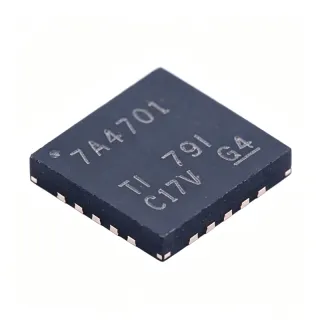
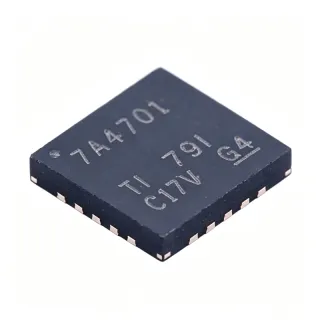
| Package | 48-pin VQFN (RGZ) with exposed pad |
| Mounting Type | Surface Mount |
| RoHS Status | Compliant |
CC2652R1FRGZR 48-pin vqfn (rgz) with exposed pad Pin Configuration Guide
Pin configuration for CC2652R1FRGZR (48-pin vqfn (rgz) with exposed pad package). This digital IC includes GPIO, communication interfaces (UART, SPI, I2C), and power pins. Refer to the manufacturer datasheet for alternate pin functions and configuration options. Essential for embedded system design and PCB layout.

No detailed pinout data available for CC2652R1FRGZR.
Refer to the datasheet for full pin configuration.
Typical Applications
CC2652R1FRGZR is suitable for 6 applications: Smart Home Devices, Industrial Wireless Sensor Networks, Asset Tracking Tags, Medical Monitoring Devices, Connected Lighting, Thread Border Routers and Hubs.
Smart Home Devices
The CC2652R1FRGZR fits smart-home nodes such as smart locks, lighting, thermostats, and door/window sensors because it natively supports Zigbee 3.0, Thread, and Bluetooth 5.2 Low Energy on one 2.4 GHz radio. Its 5.9 mA RX and 5.4 mA TX (0 dBm) current enable multi-year coin-cell operation in duty-cycled sensors, while the autonomous sensor controller samples inputs in standby without waking the Cortex-M4F. The Dynamic Multiprotocol Manager allows BLE commissioning alongside an always-on Zigbee or Thread connection, and hardware AES-128/256 plus ECC accelerates secure network joining. Placed on a TI reference-design balun layout with the exposed pad soldered to the ground plane, one hardware design can be certified across multiple smart-home ecosystems.
Recommended
Industrial Wireless Sensor Networks
In industrial automation and wireless sensor networks, the CC2652R1FRGZR provides IEEE 802.15.4-based connectivity via TI 15.4-Stack or Thread with the reliability and coexistence behavior demanded on factory floors. The 32-bit Arm Cortex-M4F at low active current handles local control logic and edge preprocessing, while 352 kB flash and 88 kB RAM accommodate mesh stacks and OTA update images. Hardware crypto (AES, SHA2, ECC, RSA) meets industrial security requirements for device identity and encrypted links. Radio current of 5.9 mA RX / 5.4 mA TX (0 dBm) supports battery-powered retrofit sensors, and the -40C-class industrial operation range from the CC2652R family datasheet covers harsh environments.
Recommended
Asset Tracking Tags
Battery-powered asset tags benefit directly from the CC2652R1FRGZR's power profile: 5.9 mA RX and 5.4 mA TX at 0 dBm, plus a sensor controller that monitors accelerometers or buttons in deep standby. Bluetooth 5.2 Low Energy with long-range and Bluetooth mesh support enables phone-based finding, while Thread/Zigbee support allows fixed-infrastructure backhaul using the same silicon. The DMM lets a tag switch protocols dynamically as it moves between coverage domains. With 352 kB flash, location-firmware and OTA images fit without external memory, cutting BOM cost and board area in the compact 7x7 mm 48-VQFN footprint.
Recommended
Medical Monitoring Devices
Wearable and portable medical monitors use the CC2652R1FRGZR to stream sensor data over Bluetooth 5.2 Low Energy to phones or gateways. RX current of 5.9 mA and TX of 5.4 mA (0 dBm) extend battery life between charges, and the sensor controller keeps periodic vitals sampling alive in standby. Hardware AES and ECC encrypt patient data end-to-end, supporting health-data privacy requirements. The 48-pin VQFN (RGZ) with exposed pad yields good thermal grounding on small wearable PCBs. TI's certified BLE stack reduces qualification burden, letting one radio serve both consumer-pairing and clinical-gateway networks concurrently through the DMM.
Recommended
Connected Lighting
Zigbee 3.0 lighting products (bulbs, dimmers, switches) are a core use case for the CC2652R1FRGZR. TI's Zigbee stack is Zigbee Alliance certified, and 352 kB flash holds the lighting application plus over-the-air upgrade images. The +5 dBm programmable output and good receiver sensitivity sustain reliable mesh links across a home, and the DMM can add BLE for direct-to-phone commissioning of luminaires. Radio TX of 5.4 mA at 0 dBm keeps sleep current budgets workable even in mains-neutral switches. Design with the TI reference balun/matching network and exposed-pad grounding to pass RF regulatory testing on the first iteration.
Recommended
Thread Border Routers and Hubs
As a Thread router or protocol-hub radio, the CC2652R1FRGZR supplies a certified Thread stack, 802.15.4 MAC, and 88 kB RAM sufficient for routing tables in dense meshes. Connected to a host processor over UART or SPI, its Cortex-M0 radio core offloads all protocol timing so the host CPU stays free. The DMM permits concurrent BLE provisioning on the same antenna. For greater range in whole-home coverage, pair it with the CC2652P variant or an external front end. Typical deployments include smart-home hubs, Thread border-router dongles, and Matter bridges bridging Thread devices to Ethernet or Wi-Fi backbones.
Recommended
Recommended Products Summary
Engineering reference data for CC2652R1FRGZR — comparison, design guidance, and compliance information.
Selection Guide
Comparison with Alternatives
| Parameter | This Product | CC2652P1FRGZR | CC2652RB1FRGZR | CC2652RSFRGZR |
|---|---|---|---|---|
| Package | 48-VQFN (RGZ) with exposed pad | 48-VQFN (RGZ) - same footprint | 48-VQFN (RGZ) - same footprint | 48-VQFN (RGZ) - same footprint |
| Brand | Texas Instruments | Texas Instruments | Texas Instruments | Texas Instruments |
| Flash Memory | 352 kB | 352 kB | 352 kB | 704 kB |
| RAM | 88 kB | 88 kB | 88 kB | 88 kB |
| Max RF Output Power | +5 dBm | +20 dBm class (integrated PA) | +5 dBm | +5 dBm |
| Protocols | BLE 5.2, Zigbee 3.0, Thread, 802.15.4, 6LoWPAN | BLE 5.2 (incl. mesh), Zigbee 3.0, Thread, 802.15.4 | BLE 5.2, Zigbee 3.0, Thread, 802.15.4 | BLE 5.2, Zigbee 3.0, Thread, 802.15.4 |
| Crypto Acceleration | AES-128/256, SHA2, ECC, RSA | AES-128/256, SHA2, ECC, RSA | AES-128/256, SHA2, ECC, RSA | AES-128/256, SHA2, ECC, RSA |
| Distinctive Feature | Balanced cost/performance multiprotocol node | Integrated high-power PA for extended range | Optimized sensor controller for battery sensing | Double flash for large multiprotocol apps |
Key Differentiators
- Concurrent multiprotocol operation via DMM (vs CC2652P1FRGZR)
- Lower power than high-PA sibling (vs CC2652P1FRGZR)
- Standard memory configuration fits most stacks (vs CC2652RSFRGZR)
Design Notes
Decouple all VDDS power pins with a combination of 0.1 uF and 1 uF ceramic capacitors placed within 2 mm of the pins, with vias direct to the ground plane. Solder the exposed thermal pad of the 48-VQFN (RGZ) to a solid, unbroken ground plane using a via array (typically 4x4 or more) - this pad is the primary RF ground return and thermal path. Follow the TI CC2652R reference design (LaunchPad / SimpleLink SDK hardware files) for the antenna balun and matching network component values.
The internal DCDC converter improves efficiency: use it with the recommended 10 uH inductor and supporting capacitors per the TI datasheet reference schematic instead of running the radio from a fixed 1.7-3.8 V linear supply. Estimated: at 5.4 mA TX / 0 dBm and a 3.0 V coin cell, DCDC operation reduces average supply current versus the regulated 1.7 V internal rail path, extending battery life proportionally to the input-to-core voltage ratio. Keep supply ripple low during TX bursts to preserve RF phase noise and modulation accuracy.
Do not route high-speed digital traces (SPI/UART clocks) or switching-regulator inductors near the RF balun and antenna feed; maintain a keep-out per the TI reference layout. Verify that the 32.768 kHz crystal (or LFOSC) load capacitors match the datasheet recommendation, since sleep-clock accuracy directly affects BLE timing budgets and RX window width. If migrating from CC2652R1F to CC2652P1F, re-run the RF matching verification and regulatory tests because the internal PA changes output spectrum.
Compliance Information
RoHS compliance and lead-free packaging per TI product listing and DigiKey product data. REACH, halogen-free, and conflict-minerals declarations should be pulled from TI's material declaration documents on ti.com.