CC430F5145 - Sub-1GHz RF SoC MCU 16kB Flash | Texas Instruments
MPN: CC430F5145 ✓ Active| Qty | Unit Price | Extended |
|---|---|---|
| 1 | $6.85 | $6.85 |
| 10 | $6.17 | $61.70 |
| 100 | $5.48 | $548.00 |
| 500 | $4.93 | $2,465.00 |
| 1,000 | $4.45 | $4,450.00 |
CC430F5145 Overview
A wireless MCU SoC combines a microcontroller and a radio transceiver on a single die, eliminating the inter-chip interface that a discrete MCU-plus-transceiver design requires. Within the power management and RF signal chain hierarchy, the CC430 family occupies the single-chip wireless node tier, sitting above discrete transceivers (such as the standalone CC1101) and below multi-chip RF modules. Single-die integration reduces BOM count, board area, and inter-chip digital interface noise.
Key features of the CC430F5145 include sub-1 GHz operation across three license-free ISM bands (300-348 MHz, 389-464 MHz, and 779-928 MHz), the ultra-low-power MSP430 CPUXV2 architecture with multiple low-power modes, a high-performance 10-bit ADC with six external inputs plus internal temperature and battery sensors, and two 16-bit timers. The CC1101-based RF core provides configurable modulation, data rate, and channel spacing for flexible ISM-band link design.
Technically, the device merges TI's proven CC1101 transceiver front end with the MSP430 bus architecture, so RF register configuration, packet handling, and application code all execute on one CPU. This removes the SPI timing race conditions and firmware coordination overhead typical of two-chip designs. Flash memory is in-system programmable, supporting field firmware and RF-parameter updates.
Typical applications include sub-1 GHz wireless sensor networks, AMR/utility metering, home and building automation, alarm and security systems, and industrial monitoring nodes where long range, low duty cycle, and multi-year battery life dominate the design.
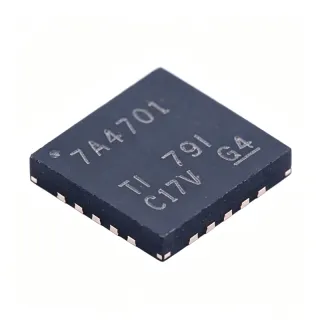
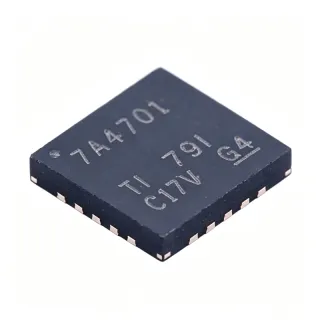
Design-wise, RF layout on the RGZ-48 exposed-pad package demands a solid ground plane, short matching-network traces, and careful antenna placement; the exposed pad must be soldered to ground for both thermal and RF performance.
This page synthesizes datasheet parameters, drop-in family alternatives, pricing, and practical design notes not consolidated in the manufacturer datasheet.
Drop-in alternatives for CC430F5145 — same package, pin-to-pin compatible. Different-package parts requiring PCB rework are excluded.
Variants in this series
Same-series models that are drop-in compatible with CC430F5145 (same form factor and footprint) — differing in ADC, Core, Package, RF Transceiver, Timers.
Quick Comparison Tool — Select alternative parts for side-by-side comparison:
CC430F5137
✅ Drop-In ⚠️ Specs Unverified📋 Reference alternative (not in catalog)
CC430F5147
✅ Drop-In ⚠️ Specs Unverified📋 Reference alternative (not in catalog)
CC430F5125
✅ Drop-In ⚠️ Specs Unverified📋 Reference alternative (not in catalog)
CC430F6145
✅ Drop-In ⚠️ Specs Unverified📋 Reference alternative (not in catalog)
CC430F5145IRGZT
✅ Drop-In✓ In Stock
$3.98 / Unit
View Datasheet →CC430F5145 Maximum Ratings & Electrical Characteristics
| Core | MSP430 CPUXV2, 16-bit RISC |
| Function | RF Transceiver + MCU System-on-Chip |
| RF Transceiver | CC1101-based sub-1 GHz core |
| Frequency Bands | 300-348 MHz, 389-464 MHz, 779-928 MHz |
| Flash Memory | 16 kB |
| RAM | 2 kB |
| ADC | 10-bit, 6 external inputs + internal temperature and battery sensors |
| Timers | 2 x 16-bit |
| Package | 48-VFQFN (RGZ) with exposed pad |
| Mounting Type | Surface Mount |
| Programmability | In-system programmable flash |
| Low-Power Modes | MSP430 ultra-low-power LPM modes |
CC430F5145 48-vfqfn (rgz) with exposed pad Pin Configuration Guide
Pin configuration for CC430F5145 (48-vfqfn (rgz) with exposed pad package). This digital IC includes GPIO, communication interfaces (UART, SPI, I2C), and power pins. Refer to the manufacturer datasheet for alternate pin functions and configuration options. Essential for embedded system design and PCB layout.

No detailed pinout data available for CC430F5145.
Refer to the datasheet for full pin configuration.
Typical Applications
CC430F5145 is suitable for 6 applications: Sub-1 GHz Wireless Sensor Networks, Utility and AMR Metering, Home and Building Automation, Alarm and Security Systems, Industrial Monitoring and Telemetry, RF Remote Controls and Keyless Entry.
Sub-1 GHz Wireless Sensor Networks
The CC430F5145 fits sub-1 GHz wireless sensor nodes where sub-GHz propagation gives superior range and wall penetration versus 2.4 GHz. The CC1101 RF core covers the 300-348 MHz, 389-464 MHz, and 779-928 MHz license-free bands, allowing region-optimized frequency selection, while the MSP430 CPUXV2 ultra-low-power modes support multi-year coin-cell or battery operation in duty-cycled networks. In a typical node, the device sleeps in a low-power mode and wakes periodically to sample sensors via the 10-bit ADC, then transmits a short packet and returns to sleep. Single-die integration removes the SPI interface power and board area of a two-chip design, and the internal battery sensor enables accurate remaining-life reporting without external circuitry.
Recommended
Utility and AMR Metering
Automatic meter reading (AMR) infrastructure benefits from the CC430F5145's combination of long-range sub-1 GHz radio and metering-grade analog capability. The 10-bit ADC with six external inputs plus an internal battery sensor supports energy-sampling front ends and battery-health telemetry, while 16kB of flash accommodates metering firmware with RF protocol stacks. Sub-1 GHz ISM bands at 779-928 MHz provide the building and terrain penetration that dense meter deployments require, and the CC1101 core's configurable data rate and channel spacing allow coexistence planning with other unlicensed traffic. The single-chip SoC reduces meter BOM cost - critical at utility deployment volumes - and the exposed-pad VQFN-48 package supports compact, sealed meter enclosures with wire antennas.
Recommended
Home and Building Automation
For home and building automation nodes such as thermostats, door/window sensors, and actuator controls, the CC430F5145 provides a single-chip radio-plus-MCU that minimizes per-node cost and size. Sub-1 GHz links reach through walls and across floors better than 2.4 GHz alternatives, which matters for whole-home coverage with few repeaters. The two 16-bit timers handle PWM actuator control and precise RF timing slots, and in-system programmable flash enables field updates of both application code and RF parameters as network requirements evolve. The MSP430 CPUXV2 low-power modes keep battery-powered sensors alive for years, while the 10-bit ADC reads potentiometers, NTC thermistors, or ambient sensors directly without an external converter.
Recommended
Alarm and Security Systems
Wireless alarm peripherals - PIR motion detectors, contact sensors, keypads, and sirens - use the CC430F5145 for its dependable sub-1 GHz link budget and low sleep current. Security protocols value the deterministic timing of the MSP430 CPUXV2 combined with the CC1101 core's packet radio features for authentication and wake-on-radio patterns. The 779-928 MHz band operation avoids the crowded 2.4 GHz spectrum, improving link reliability in residential and commercial buildings dense with Wi-Fi and Bluetooth traffic. With 16kB flash, encryption and supervision overhead fit within the on-chip memory, and the internal temperature sensor supports tamper and environmental diagnostics without added components. The compact RGZ-48 package suits small, battery-powered detector housings.
Recommended
Industrial Monitoring and Telemetry
In industrial telemetry - tank levels, pump status, cold-chain temperatures - the CC430F5145 connects remote analog sensors to a gateway over robust sub-1 GHz links. The 10-bit ADC's six external inputs can scan multiple 4-20 mA-derived or ratiometric sensor channels, and the internal temperature and battery sensors support node self-diagnostics demanded by industrial maintenance programs. The CC1101 core's selectable modulation and data rate let engineers trade throughput for link margin across noisy factory floors or outdoor sites spanning hundreds of meters. Ultra-low-power operation suits battery- or energy-harvesting-powered nodes where wiring runs are impractical. The industrial packaging option (CC430F5145IRGZT) supports the extended temperature environment typical of plant deployments.
Recommended
RF Remote Controls and Keyless Entry
Two-way sub-1 GHz remotes and keyless entry fobs leverage the CC430F5145's integrated radio and MCU to shrink the bill of materials to essentially one IC, a crystal, and an antenna match. The CC1101 core supports the low data rates and narrow channels typical of secure remote-link protocols, while MSP430 low-power modes deliver the multi-year button-cell life fobs require. The 10-bit ADC can read battery voltage through the internal sensor for low-battery warnings, and 16kB of flash holds rolling-code algorithms. At 779-928 MHz or 389-464 MHz, links resist interference in parking structures and urban environments better than 2.4 GHz designs, and the small RGZ-48 footprint fits ergonomically compact handheld enclosures.
Recommended
Recommended Products Summary
Engineering reference data for CC430F5145 — comparison, design guidance, and compliance information.
Selection Guide
Comparison with Alternatives
| Parameter | This Product | CC430F5137 | CC430F5147 | CC430F5125 | CC430F6145 |
|---|---|---|---|---|---|
| Package | 48-VFQFN (RGZ) exposed pad | 48-VQFN (RGZ) - same | 48-VQFN (RGZ) - same | 48-VQFN (RGZ) - same | 48-VQFN (RGZ) - same |
| Brand | Texas Instruments | Texas Instruments | Texas Instruments | Texas Instruments | Texas Instruments |
| Core | MSP430 CPUXV2, 16-bit | MSP430 CPUXV2, 16-bit | MSP430 CPUXV2, 16-bit | MSP430 CPUXV2, 16-bit | MSP430 CPUXV2, 16-bit |
| RF Core | CC1101 sub-1 GHz | CC1101 sub-1 GHz | CC1101 sub-1 GHz | CC1101 sub-1 GHz | CC1101 sub-1 GHz |
| ADC | 10-bit, 6 external inputs + temp/battery sensors | 10-bit ADC (family common) | 10-bit ADC (family common) | 10-bit ADC (family common) | 10-bit ADC (family common) |
| Frequency Bands | 300-348 / 389-464 / 779-928 MHz | 300-348 / 389-464 / 779-928 MHz | 300-348 / 389-464 / 779-928 MHz | 300-348 / 389-464 / 779-928 MHz | 300-348 / 389-464 / 779-928 MHz |
Key Differentiators
- Balanced 16kB flash / 2kB RAM memory point (vs CC430F5147)
- Larger memory headroom available in same footprint (vs CC430F6145)
- Single-die CC1101 integration (vs Discrete CC1101 + MSP430 two-chip solution)
Design Notes
The RGZ-48 exposed pad must be soldered to a solid ground plane - it is the RF ground return and the main thermal path for the die. Use an array of thermal vias under the pad (TI CC1101 reference layouts typically use 9-13 vias filled or plugged) and follow the CC430 family datasheet's recommended land pattern exactly. Do not route digital signals under the RF matching network, and keep the 50-ohm trace from the RF pin to the antenna match as short as the layout allows.
Place the 26 MHz crystal and its load capacitors close to the device with short, guarded traces, and keep the RF front-end components (inductors, matching capacitors) grouped tightly per the CC1101 reference design. Separate the RF section from switching regulators - route any DC-DC converter (e.g., a TPS62740-class buck) away from the antenna match and use a star or dedicated RF ground island. Decouple all VDD/VCORE pins with 100 nF ceramics placed within 2 mm of the pins.
Budget flash carefully: 16kB must hold the application plus the radio driver and any protocol stack - teams migrating from the 32KB CC430F614x variants have overrun memory when adding security. Also verify regional RF regulatory compliance per band: the 300-348/389-464/779-928 MHz coverage does not authorize all frequencies in every jurisdiction, so restrict channel tables in firmware to legal ISM allocations. Finally, use in-system flash programming carefully - always keep a bootloader sector reserved for field updates.
Compliance Information
Compliance status not stated in the provided web data; consult the TI product page quality/environmental section for CC430F5145 certification details.