CC430F5145IRGZT - Sub-1GHz RF SoC, 16kB Flash | Texas Instruments
MPN: CC430F5145IRGZT ✓ Active| Qty | Unit Price | Extended |
|---|---|---|
| 1 | $6.2 | $6.20 |
| 10 | $5.58 | $55.80 |
| 100 | $4.96 | $496.00 |
| 500 | $4.45 | $2,225.00 |
| 1,000 | $3.98 | $3,980.00 |
CC430F5145IRGZT Overview
A wireless MCU, or RF SoC, integrates a general-purpose microcontroller and a radio transceiver on a single die, collapsing the traditional two-chip MCU-plus-transceiver architecture into one package. This reduces bill-of-materials count, board area, and inter-chip interface complexity, sitting within the broader hierarchy of microcontrollers and RF transceiver ICs in the power management and connectivity domain.
Key features include the CC1101-format radio supporting flexible modulation (2-FSK, GFSK, MSK, OOK, ASK), programmable data rates, and packet handling in hardware; ultra-low-power operation typical of the MSP430 family with multiple low-power modes; two 16-bit timers; and a high-performance 10-bit ADC with six external inputs plus internal temperature and battery sensors.
Technically, the RF core shares a single crystal with the digital domain, and the MSP430 CPUXV2 delivers efficient 16-bit computation with fast wake-up from low-power modes, making the device well suited to battery-powered duty-cycled networks. The unified architecture simplifies RF-to-MCU data flow through dedicated radio register interfaces.
Typical applications include wireless sensor networks, smart metering, building automation, alarm and security systems, and industrial telemetry, where multi-year battery life and robust sub-1 GHz link budgets matter more than raw throughput.
Design consideration: RF layout of the VQFN-48 exposed pad requires careful impedance matching to the antenna per TI reference designs (e.g., DN023 style matching networks), and developers should budget flash/RAM headroom since 16kB/2kB is the smaller end of the CC430 memory range.
Drop-in alternatives for CC430F5145IRGZT — same package, pin-to-pin compatible. Different-package parts requiring PCB rework are excluded.
Variants in this series
Same-series models that are drop-in compatible with CC430F5145IRGZT (same form factor and footprint) — differing in ADC, Core, Package, RF Transceiver, Timers.
Quick Comparison Tool — Select alternative parts for side-by-side comparison:
CC430F5135IRGZT
✅ Drop-In ⚠️ Specs Unverified📋 Reference alternative (not in catalog)
CC430F5147IRGZT
✅ Drop-In ⚠️ Specs Unverified📋 Reference alternative (not in catalog)
CC430F5125IRGZT
✅ Drop-In ⚠️ Specs Unverified📋 Reference alternative (not in catalog)
CC430F6145IRGZT
✅ Drop-In ⚠️ Specs Unverified📋 Reference alternative (not in catalog)
CC430F6147IRGZT
✅ Drop-In ⚠️ Specs Unverified📋 Reference alternative (not in catalog)
CC430F5145IRGZT Specifications
| Core | MSP430 CPUXV2 16-bit |
| Flash Memory | 16 kB |
| RAM | 2 kB |
| RF Transceiver | CC1101 sub-1 GHz RF core |
| Frequency Bands | 300-348 MHz, 389-464 MHz, 779-928 MHz |
| Modulation | 2-FSK, GFSK, MSK, OOK, ASK |
| ADC | 10-bit, 6 external inputs plus temperature and battery sensors |
| Timers | Two 16-bit timers |
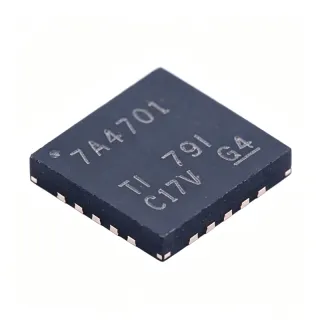
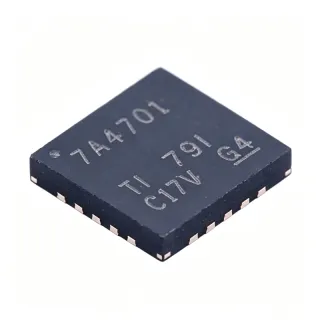
| Package | 48-VFQFN Exposed Pad (RGZ) |
| Mounting Type | Surface Mount |
| Application | General ISM < 1GHz |
| Product Family | CC430F514x SoC with RF Core |
| RoHS Status | Compliant |
CC430F5145IRGZT Pin Configuration
| Pin 1 | [DATA_NEEDED: pin 1 name] — See TI CC430F514x/CC430F614x datasheet pinout table |
| Pin 10 | [DATA_NEEDED: RF_N] — RF negative differential input/output to matching network |
| Pin 11 | [DATA_NEEDED: RF_P] — RF positive differential input/output to matching network |
| Pin [DATA_NEEDED] | DVCC — Digital power supply |
| Pin [DATA_NEEDED] | AVCC — Analog power supply |
| Pin [DATA_NEEDED] | GND — Ground / exposed pad RF ground |
| Pin [DATA_NEEDED] | RST/NMI — Reset input, non-maskable interrupt |
| Pin [DATA_NEEDED] | TEST/SBWTCK — Test mode entry for Spy-Bi-Wire programming |
| Pin [DATA_NEEDED] | XIN/XOUT — Crystal oscillator terminals |
Typical Applications
CC430F5145IRGZT is suitable for 6 applications: Wireless Sensor Networks, Smart Metering, Building Automation, Alarm and Security Systems, Industrial Telemetry and Monitoring, Handheld and Portable Devices.
Wireless Sensor Networks
The CC430F5145 fits battery-powered sensor nodes because its ultra-low-power MSP430 CPUXV2 with multiple low-power modes and the duty-cycled CC1101 radio enable multi-year operation on small cells. The integrated 10-bit ADC with six external inputs connects sensors directly without a separate converter. A node samples with the ADC, formats packets in the hardware radio, and transmits in the 902-928 MHz or 868 MHz band, waking from sleep in microseconds for event-driven reporting.
Recommended
Smart Metering
Utility meters benefit from the CC430F5145 because sub-1 GHz propagation penetrates enclosures and building structures better than 2.4 GHz, improving read reliability. The SoC's single-die integration shrinks meter PCB area while the 16kB flash holds the metrology and RF stack. The internal battery sensor monitors supply health for long service intervals, and the CC1101 core's hardware packet handling offloads the CPU, preserving metrology timing accuracy.
Recommended
Building Automation
Occupancy sensors, thermostats, and HVAC controllers use the CC430F5145 for its robust sub-1 GHz link and low standby current. The two 16-bit timers generate precise PWM for damper or valve control while the radio handles mesh or star network traffic in the 779-928 MHz regional bands. Because MCU and radio share one crystal, board BOM is reduced, and firmware synchronization between application and RF stack is simplified through the unified register interface.
Recommended
Alarm and Security Systems
Wireless security sensors leverage the CC430F5145's fast wake-up from low-power modes and CC1101-format radio for reliable event transmission on door/window and PIR sensors. Sub-1 GHz bands offer better range and wall penetration than 2.4 GHz alternatives, critical for whole-building coverage from one panel. The 10-bit ADC digitizes PIR signals directly, and the 16kB flash supports encrypted packet firmware within the small footprint of a CR2032-powered sensor.
Recommended
Industrial Telemetry and Monitoring
Factory-floor remote I/O and condition-monitoring nodes use the CC430F5145 to bridge analog field signals to a sub-1 GHz backhaul. The six-channel 10-bit ADC samples 0-10V-scaled sensor inputs via dividers, while timers support pulse counting for flow or RPM. RF packet handling in hardware tolerates noisy industrial RF environments, and the exposed-pad VQFN-48 provides solid ground return for coexistence with motors and switching supplies.
Recommended
Handheld and Portable Devices
Portable readers, testers, and remote controls benefit from the CC430F5145's ultra-low active current and compact 48-VQFN footprint, conserving battery and board space. The MSP430 architecture's efficient 16-bit instruction set keeps protocol processing overhead low, and the radio's programmable data rates let designers trade throughput for link margin. The internal temperature sensor supports battery-chemistry-aware charge indication in handheld products.
Recommended
Recommended Products Summary
Engineering reference data for CC430F5145IRGZT — comparison, design guidance, and compliance information.
Selection Guide
Comparison with Alternatives
| Parameter | This Product | CC430F5135IRGZT | CC430F5147IRGZT | CC430F6145IRGZT |
|---|---|---|---|---|
| Package | 48-VFQFN Exposed Pad (RGZ) | 48-VQFN (RGZ) - same | 48-VQFN (RGZ) - same | 48-VQFN (RGZ) - same |
| Brand | Texas Instruments | Texas Instruments | Texas Instruments | Texas Instruments |
| Flash Memory | 16 kB | 32 kB | 16 kB | up to 32 kB |
| RAM | 2 kB | 4 kB | 2 kB | up to 4 kB |
| RF Core | CC1101 sub-1 GHz | CC1101 sub-1 GHz | CC1101 sub-1 GHz | CC1101 sub-1 GHz |
| Frequency Bands | 300-348 / 389-464 / 779-928 MHz | 300-348 / 389-464 / 779-928 MHz | 300-348 / 389-464 / 779-928 MHz | 300-348 / 389-464 / 779-928 MHz |
| ADC | 10-bit, 6 external inputs | 10-bit | 10-bit | 10-bit |
| Core | MSP430 CPUXV2 16-bit | MSP430 CPUXV2 16-bit | MSP430 CPUXV2 16-bit | MSP430 CPUXV2 16-bit |
Key Differentiators
- Single-die MSP430 + CC1101 integration (vs CC1101 (standalone))
- Lowest memory/cost CC430F514x option (vs CC430F5135IRGZT)
- Headroom for growing firmware (vs CC430F6145IRGZT)
Design Notes
RF layout is the highest-risk area. Follow TI reference designs for the CC1101 differential matching network (RF_P/RF_N to 50-ohm antenna), keep RF traces impedance-controlled and as short as possible, and solidly solder the VQFN-48 exposed pad to a continuous ground plane for RF return and thermal relief. Separate RF ground from digital switching currents to minimize spurs.
Supply the SoC with clean, low-ripple power; RF sensitivity degrades with noisy supplies. Decouple AVCC and DVCC pins with 100nF ceramics placed within 2mm, and follow the datasheet's recommended inductor/ferrite between analog and digital rails. Budget current for TX bursts in battery sizing, since peak transmit current of the CC1101 core is much higher than average sleep current.
The 16kB flash / 2kB RAM is the smallest CC430 memory option; a full RF network stack plus application code can exhaust it quickly. Prototype with a higher-memory family member such as CC430F5135 or CC430F6145 to measure code size before committing to the F5145. Also confirm regional band compliance (ETSI/FCC) for your selected frequency plan.
Compliance Information
RoHS compliant per TI product page. REACH, halogen-free, and conflict minerals status not stated in provided data.