LIS2DE12TR - 3-Axis MEMS Accelerometer, 2g/4g/8g/16g | STMicroelectronics
MPN: LIS2DE12TR ✓ Active| Qty | Unit Price | Extended |
|---|---|---|
| 1 | $1.25 | $1.25 |
| 10 | $1.12 | $11.20 |
| 100 | $0.98 | $98.00 |
| 500 | $0.85 | $425.00 |
| 1,000 | $0.72 | $720.00 |
LIS2DE12TR Overview
An accelerometer is a sensor that measures proper acceleration (the rate of change of velocity) of a body in its own instantaneous rest frame. In the context of MEMS (Micro-Electro-Mechanical Systems), accelerometers typically use capacitive sensing elements to detect changes in capacitance caused by the displacement of a proof mass under acceleration. The LIS2DE12TR belongs to the category of motion sensors, which are a subset of sensors used in electronic systems to detect movement, orientation, and vibration. Motion sensors play a critical role in applications ranging from consumer electronics (smartphones, wearables) to industrial monitoring and automotive safety systems.
Key features of the LIS2DE12TR include an ultra-low-power consumption of 2 µA in low-power mode at 10 Hz ODR, a 16-bit data output, and an embedded first-in, first-out (FIFO) buffer that reduces host processor load. The device also integrates a programmable interrupt generator for motion detection, free-fall detection, and 6D/4D orientation detection, enabling always-on functionality with minimal power draw. The I2C and SPI interfaces provide flexibility for system integration, and the device is RoHS compliant and halogen-free.
From a technical perspective, the LIS2DE12TR uses a capacitive sensing element with a dedicated ASIC (Application-Specific Integrated Circuit) for signal conditioning and digital conversion. The device includes a self-test capability that allows verification of the sensing element and electronics, and it operates over a temperature range of -40°C to +85°C. The LGA package is designed for surface-mount assembly and is compatible with standard reflow soldering processes, with a moisture sensitivity level (MSL) of 1.
Typical applications include motion-activated user interfaces, orientation detection in portable devices, vibration monitoring in industrial equipment, and activity tracking in wearables. The low power consumption and small footprint make it particularly suitable for battery-powered IoT devices and smart home sensors.
When designing with the LIS2DE12TR, ensure proper decoupling of the power supply with a 100 nF capacitor placed close to the VDD pin, and route the I2C/SPI lines with appropriate pull-up resistors. The interrupt pins can be configured to wake the host processor only when motion is detected, significantly extending battery life in always-on applications.
Drop-in alternatives for LIS2DE12TR — same package, pin-to-pin compatible. Different-package parts requiring PCB rework are excluded.
Variants in this series
Same-series models that are drop-in compatible with LIS2DE12TR (same form factor and footprint) — differing in Interface, Package, Resolution.
Quick Comparison Tool — Select alternative parts for side-by-side comparison:
LIS2DE12
✅ Drop-In📋 Reference alternative (not in catalog)
LIS2DH12TR
✅ Drop-In ⚠️ Specs Unverified✓ In Stock
$0.67 / Unit
View Datasheet →LIS2DS12TR
✅ Drop-In ⚠️ Specs Unverified📋 Reference alternative (not in catalog)
LIS2DE12TR Maximum Ratings & Electrical Characteristics
| Full-Scale Range | ±2g, ±4g, ±8g, ±16g |
| Output Data Rate (ODR) | 1 Hz to 5.3 kHz |
| Supply Voltage | 1.71 V to 3.6 V |
| Current Consumption (Low-Power Mode) | 2 µA at 10 Hz ODR |
| Interface | I2C / SPI |
| Resolution | 16-bit |
| Operating Temperature | -40°C to +85°C |
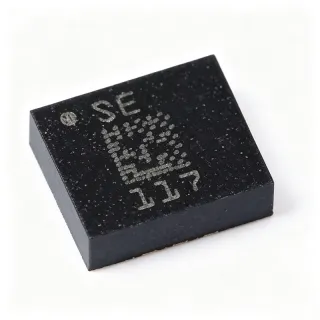
| Package | 12-lead LGA (2x2x1 mm) |
| Mounting Type | Surface Mount |
| MSL Level | 1 |
| RoHS Status | Compliant |
| Halogen Free | Yes |
LIS2DE12TR Pin Configuration
| Pin 1 | VDD — Power supply (1.71V to 3.6V) |
| Pin 2 | GND — Ground |
| Pin 3 | SCL/SPC — I2C clock / SPI clock |
| Pin 4 | SDA/SDI/SDO — I2C data / SPI data in / SPI data out (3-wire) |
| Pin 5 | CS — Chip select (active low) for SPI |
| Pin 6 | INT1 — Interrupt 1 output |
| Pin 7 | INT2 — Interrupt 2 output |
| Pin 8 | NC — Not connected |
| Pin 9 | NC — Not connected |
| Pin 10 | NC — Not connected |
| Pin 11 | NC — Not connected |
| Pin 12 | NC — Not connected |
Typical Applications
LIS2DE12TR is suitable for 6 applications: Wearable Activity Tracking, IoT Motion Sensing, Industrial Vibration Monitoring, Smart Home Security, Automotive Anti-Theft, Consumer Electronics Orientation.
Wearable Activity Tracking
The LIS2DE12TR's ultra-low power consumption (2 µA at 10 Hz ODR) and small 2x2x1 mm package make it ideal for wearable fitness trackers and smartwatches. The device can continuously monitor steps, activity intensity, and sleep patterns without significantly draining the battery. Its 16-bit resolution and programmable interrupt generator enable precise motion detection and wake-on-motion functionality, allowing the host processor to remain in sleep mode until meaningful movement is detected. The I2C/SPI interface simplifies integration with low-power MCUs, and the wide supply voltage range (1.71V to 3.6V) supports direct battery connection. In a typical wearable design, the accelerometer is placed near the center of the device to minimize rotational effects, and the FIFO buffer can store up to 32 samples to reduce host wake-ups. The device's low noise floor ensures accurate step counting even during slow walking, while the free-fall detection feature can be used for fall detection in elderly care applications.
Recommended
IoT Motion Sensing
In IoT applications such as smart home sensors and industrial monitoring, the LIS2DE12TR provides reliable motion detection with minimal power draw. Its 2 µA low-power mode enables battery-powered sensors to operate for years on a single coin cell. The device's programmable interrupt pins can be configured to trigger on motion, free-fall, or orientation changes, allowing the system to stay in a deep sleep state until an event occurs. The wide output data rate range (1 Hz to 5.3 kHz) supports both low-frequency monitoring (e.g., door open/close detection) and high-frequency vibration analysis (e.g., machine health monitoring). The I2C interface allows easy connection to popular IoT MCUs like ESP32 or STM32, and the small LGA package fits into compact sensor nodes. The device's self-test capability ensures reliable operation in the field, and its industrial temperature range (-40°C to +85°C) makes it suitable for outdoor and harsh environments. In a typical IoT node, the accelerometer is powered directly from the battery and wakes the MCU only when motion is detected, significantly extending battery life.
Recommended
Industrial Vibration Monitoring
The LIS2DE12TR is well-suited for industrial vibration monitoring due to its high output data rate (up to 5.3 kHz) and wide full-scale range (up to ±16g). It can detect abnormal vibrations in rotating machinery, pumps, and motors, enabling predictive maintenance. The device's 16-bit resolution provides fine granularity for analyzing vibration signatures, while the programmable interrupt generator can trigger alerts when vibration levels exceed thresholds. The SPI interface supports high-speed data streaming to an industrial controller, and the device's robust operating temperature range (-40°C to +85°C) ensures reliable performance in factory environments. In a typical installation, the accelerometer is mounted on the equipment housing using a threaded stud or adhesive, and the output is processed by an MCU or DSP to compute vibration metrics such as RMS velocity or FFT spectra. The device's low power consumption allows it to be powered from a 24V industrial supply with a simple LDO regulator, and its small package enables integration into existing sensor housings. The self-test feature can be used during commissioning to verify proper installation.
Recommended
Smart Home Security
The LIS2DE12TR can be used in smart home security systems for intrusion detection, window/door opening detection, and tamper detection. Its low power consumption allows battery-powered sensors to operate for extended periods, and its programmable interrupts can wake the system only when motion is detected. The device's 6D/4D orientation detection can identify if a device has been tilted or moved, making it useful for detecting tampering with security cameras or smart locks. The I2C interface simplifies connection to home automation hubs, and the small package allows discreet integration into sensors. In a typical smart home deployment, the accelerometer is placed on a door or window frame, and the interrupt output is connected to a low-power MCU that sends a wireless alert when the door is opened. The device's free-fall detection can also be used to detect if a security camera has been knocked down. The wide supply voltage range (1.71V to 3.6V) allows direct battery operation, and the device's low noise floor ensures reliable detection without false alarms.
Recommended
Automotive Anti-Theft
In automotive anti-theft systems, the LIS2DE12TR can detect vehicle movement, tilt, or impact, triggering alarms or notifications. Its wide full-scale range (±16g) allows detection of strong impacts, while its low power consumption enables always-on monitoring without draining the vehicle battery. The device's operating temperature range (-40°C to +85°C) meets automotive requirements, and its small package allows integration into existing electronic control units (ECUs). The SPI interface supports high-speed communication with the vehicle's central security system, and the programmable interrupts can be configured to differentiate between minor vibrations (e.g., passing trucks) and actual break-in attempts. In a typical installation, the accelerometer is mounted on the vehicle chassis or inside the ECU, and its output is monitored by a microcontroller that activates the alarm when thresholds are exceeded. The device's self-test capability can be used during manufacturing to ensure proper soldering and functionality. While the LIS2DE12TR is not AEC-Q100 qualified, it is suitable for non-safety-critical automotive applications.
Recommended
Consumer Electronics Orientation
The LIS2DE12TR is used in consumer electronics such as smartphones, tablets, and digital cameras for screen rotation and image stabilization. Its low power consumption and small package make it ideal for portable devices, and its 6D/4D orientation detection can determine the device's orientation in real time. The I2C interface allows easy connection to application processors, and the device's high output data rate (up to 5.3 kHz) supports fast response for user interactions. In a typical smartphone, the accelerometer is used to automatically rotate the display when the device is tilted, and it can also be used for gesture recognition (e.g., shake to undo). The device's low noise floor ensures accurate orientation sensing, and its wide supply voltage range (1.71V to 3.6V) allows direct connection to the system's power rail. The FIFO buffer reduces host processor load by storing acceleration data during high-rate sampling, and the programmable interrupts can wake the processor only when significant orientation changes occur. The device's small footprint (2x2x1 mm) allows it to be placed near the edge of the PCB, away from heat sources that could affect accuracy.
Recommended
Recommended Products Summary
Engineering reference data for LIS2DE12TR — comparison, design guidance, and compliance information.
Selection Guide
Comparison with Alternatives
| Parameter | This Product | LIS2DE12 | LIS2DH12TR | LIS2DS12TR | ADXL345BCCZ | MMA8452Q |
|---|---|---|---|---|---|---|
| Package | 12-lead LGA (2x2x1 mm) | 12-lead LGA (2x2x1 mm) - same | 12-lead LGA (2x2x1 mm) - same | 12-lead LGA (2x2x1 mm) - same | 14-lead LGA (3x3x1 mm) - different | 16-lead QFN (3x3x1 mm) - different |
| Brand | STMicroelectronics | STMicroelectronics | STMicroelectronics | STMicroelectronics | Analog Devices | NXP Semiconductors |
| Full-Scale Range | ±2g, ±4g, ±8g, ±16g | ±2g, ±4g, ±8g, ±16g | ±2g, ±4g, ±8g, ±16g | ±2g, ±4g, ±8g, ±16g | ±2g, ±4g, ±8g, ±16g | ±2g, ±4g, ±8g |
| Supply Voltage | 1.71V to 3.6V | 1.71V to 3.6V | 1.71V to 3.6V | 1.71V to 3.6V | 2.0V to 3.6V | 1.95V to 3.6V |
| Current Consumption (Low-Power) | 2 µA at 10 Hz ODR | 2 µA at 10 Hz ODR | 2 µA at 10 Hz ODR | 2 µA at 10 Hz ODR | 23 µA at 10 Hz ODR | 6 µA at 1.56 Hz ODR |
| Interface | I2C / SPI | I2C / SPI | I2C / SPI | I2C / SPI | I2C / SPI | I2C |
| Resolution | 16-bit | 16-bit | 16-bit | 16-bit | 13-bit | 14-bit |
| Operating Temperature | -40°C to +85°C | -40°C to +85°C | -40°C to +85°C | -40°C to +85°C | -40°C to +85°C | -40°C to +85°C |
Key Differentiators
- Ultra-low power consumption of 2 µA at 10 Hz ODR (vs ADXL345BCCZ)
- Smaller package size (2x2x1 mm vs 3x3x1 mm) (vs ADXL345BCCZ)
- Higher resolution (16-bit vs 13-bit) (vs ADXL345BCCZ)
Design Notes
Place a 100 nF ceramic capacitor as close as possible to the VDD pin to decouple high-frequency noise. For optimal performance, add a 1 µF capacitor in parallel for lower-frequency decoupling. The supply voltage should be stable and within the 1.71V to 3.6V range; avoid voltage droops during high-current events. If the supply is noisy, consider adding a ferrite bead in series with VDD.
Ensure the LGA package is soldered correctly with proper reflow profile. The exposed pad (if present) should be connected to ground for thermal and mechanical stability. Route I2C/SPI lines with controlled impedance if possible, and keep traces short to minimize parasitic capacitance. Add pull-up resistors (typically 4.7 kΩ) on I2C lines to VDD.
Do not exceed the absolute maximum ratings, especially the supply voltage (3.6V) and any pin voltages. Ensure the CS pin is properly tied to VDD or GND depending on the interface mode (I2C vs SPI). When using SPI, ensure the clock polarity and phase match the datasheet specifications. Avoid floating interrupt pins; configure them as push-pull or open-drain with appropriate pull-ups.
Compliance Information
RoHS compliant and halogen-free per STMicroelectronics product page. Not AEC-Q100 qualified, but suitable for non-safety-critical automotive applications.