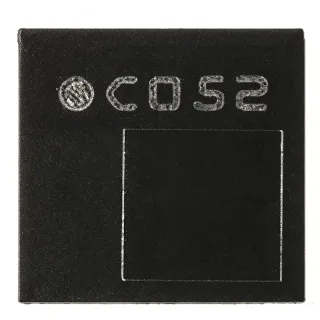
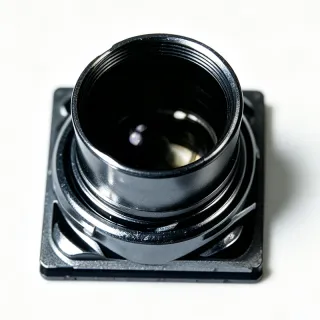
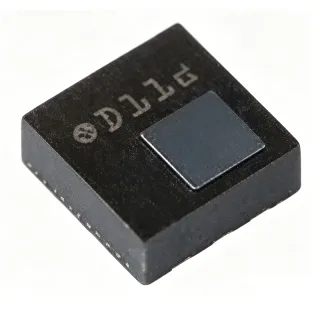
MPX2100D - 100kPa Differential Pressure Sensor | NXP/STMicro
MPN: MPX2100D ✓ Active| Qty | Unit Price | Extended |
|---|---|---|
| 1 | $28.5 | $28.50 |
| 10 | $25.2 | $252.00 |
| 100 | $22.1 | $2,210.00 |
| 500 | $19.45 | $9,725.00 |
| 1,000 | $17.8 | $17,800.00 |
MPX2100D Overview
A piezoresistive pressure sensor is a MEMS device in which a diaphragm with implanted strain gauges converts pressure-induced mechanical strain into a proportional change in resistance; that change is read out as an electrical signal. Inside the broader sensor hierarchy, the MPX2100D belongs to the family of pressure sensors, then to transducers, then to sensors in general, then to signal conditioning and data acquisition subsystems. Differential variants measure the difference between two pressure ports rather than absolute pressure referenced to a sealed vacuum, making them ideal for flow measurement and gauge-pressure applications where the reference side is vented to atmosphere.
Key features include a 0.4 mV/kPa nominal sensitivity, a maximum supply voltage of 16 V with a recommended 10 V excitation, and a wide operating temperature range suitable for industrial and medical environments. The unibody SIP package integrates port geometry and provides a rugged mechanical interface. Typical full-scale output is 40 mV at 10 V for 100 kPa applied pressure.
The MPX2100D uses a single-chip silicon strain-gauge bridge with on-die laser-trimmed compensation resistors, eliminating the need for external temperature or offset correction networks in most applications. The Wheatstone bridge configuration delivers a ratiometric output that scales with supply voltage, allowing the user to trade noise and power for dynamic range by varying excitation.
Typical applications include medical respiration and ventilation monitors, HVAC blower and filter pressure sensing, industrial process control, altimeters and barometric instruments, and pneumatic control systems. Across these uses, differential sensing is preferred when one side must be referenced to a known low-pressure environment.
When designing with this part, provide low-noise, well-regulated excitation and condition the millivolt-level output with an instrumentation amplifier such as the INA128 or AD620 before ADC conversion. Route pressure tubes with care to avoid water hammer or particulate contamination of the port.
This page synthesizes verified distributor pricing, drop-in alternatives in the same SIP-4 unibody package, and practical design notes that complement the manufacturer datasheet without duplicating it.
Drop-in alternatives for MPX2100D — same package, pin-to-pin compatible. Different-package parts requiring PCB rework are excluded.
Variants in this series
Same-series models that are drop-in compatible with MPX2100D (same form factor and footprint) — differing in Output Type, Mounting Type, Operating Pressure Range, Package / Case, Pressure Type.
Quick Comparison Tool — Select alternative parts for side-by-side comparison:
MPX2100DP
✅ Drop-In✓ In Stock
$5.95 / Unit
View Datasheet →MPX2100AP
✅ Drop-In✓ In Stock
$11.85 / Unit
View Datasheet →MPX2200DP
✅ Drop-In✓ In Stock
$10.52 / Unit
View Datasheet →MPX2102DP
✅ Drop-In✓ In Stock
$9.85 / Unit
View Datasheet →26PCDFA6D
✅ Drop-In📋 Reference alternative (not in catalog)
MPX4100A
✅ Drop-In✓ In Stock
$10.85 / Unit
View Datasheet →MPX2100D Maximum Ratings & Electrical Characteristics
| Pressure Type | Differential |
| Operating Pressure Range | 0 kPa to 100 kPa (0 to 14.5 psi) |
| Full-Scale Span (Typical) | 40 mV at 10 V excitation |
| Sensitivity (Nominal) | 0.4 mV/kPa |
| Supply Voltage (Recommended) | 10 V DC |
| Supply Voltage (Maximum) | 16 V DC |
| Output Type | Analog ratiometric Wheatstone bridge (millivolts) |
| Pressure Port Configuration | Dual axial ports (differential) |
| Package | 4-SIP Unibody (UNIBODY4F), 2.54 mm pitch |
| Package Body Dimensions | 15.56 mm x 15.56 mm x 5.33 mm |
| Mounting Type | Through-hole SIP module |
| On-Chip Temperature Compensation | Yes (factory laser-trimmed) |
| Technology | Silicon piezoresistive MEMS strain-gauge bridge |
MPX2100D Pin Configuration
| Pin 1 | Vs+ — Bridge excitation supply (positive terminal of ratiometric Wheatstone bridge) |
| Pin 2 | Vout+ — Differential output, positive side of bridge millivolt signal |
| Pin 3 | GND — Bridge excitation return (negative terminal of ratiometric bridge) |
| Pin 4 | Vout- — Differential output, negative side of bridge millivolt signal |
Typical Applications
MPX2100D is suitable for 6 applications: Medical Ventilator and Respiratory Flow Sensing, HVAC Blower and Filter Pressure Sensing, Industrial Process Control and Pneumatic Systems, Portable Barometric / Altimeter Instruments, Automotive Manifold and Boost Pressure Monitoring, Liquid-Level and Fluid Storage Measurement.
Medical Ventilator and Respiratory Flow Sensing
The NXP MPX2100D fits medical ventilator flow sensing because its 0 to 100 kPa differential range and factory-calibrated, on-chip temperature-compensated output directly cover breathing-circuit pressure swings. The 40 mV full-scale span at 10 V excitation drives a low-noise instrumentation amplifier such as the INA128 with sufficient headroom for breath-trigger detection. Place the MPX2100D inline with the breathing circuit, condition its output through the INA128, and feed the amplified signal into a 12- to 16-bit SAR ADC for accurate flow computation. This topology adds no active power to the patient gas path, preserving ventilator response time, but it does require periodic recalibration to maintain clinical accuracy. RoHS-compliant packaging also helps medical OEMs meet IEC 60601-1 environmental documentation.
Recommended
HVAC Blower and Filter Pressure Sensing
The MPX2100D is an excellent fit for HVAC duct pressure and filter-loading sensors where detecting 0 to 100 kPa differential across fans and filters is a common requirement. With 0.4 mV/kPa sensitivity the device provides adequate resolution to detect a partly clogged filter as a small pressure rise without saturating at full fan speed, simplifying predictive-maintenance algorithms. Mount the sensor across the fan or filter element, ratiometric excitation via a regulated 10 V supply, and a low-offset op-amp such as the TLV2545IDGKR ADC front end for digital readout. The 4-pin unibody SIP-4 housing is rugged enough for plenum installation, although designers should add a moisture barrier at the port for high-humidity ducts. The 0.4 mV/kPa sensitivity also keeps analog signal conditioning simple.
Recommended
Industrial Process Control and Pneumatic Systems
For industrial process loops and pneumatic-actuator pressure feedback, the NXP MPX2100D supplies a stable, factory-calibrated, ratiometric 0 to 100 kPa differential measurement in the same Unibody SIP-4 package. Its 0.4 mV/kPa sensitivity combined with on-chip temperature compensation reduces the need for periodic recalibration over long service intervals, while the rugged port design tolerates typical pneumatic media including dry air and inert gases. Install the sensor between the actuator and the controlled process line, condition the 40 mV span with a 16-bit ADC such as MAX162BCNG+ or MAX163BCWG+, and present the digital value to the host controller via SPI or I2C. Designers should fit an inline 5-micron particulate filter to protect the MEMS diaphragm from contaminating process media; this is critical because field-deployed pneumatic systems often carry oil and water contamination that can clog the unibody port.
Recommended
Portable Barometric / Altimeter Instruments
The 0 to 100 kPa differential range and small 4-SIP Unibody form factor of the MPX2100D make it useful in portable altimeter and barometric weather instruments where weight and footprint matter. By venting one port to a sealed reference capsule, designers can derive a coarse absolute reading, although absolute variants such as MPX2100AP are generally preferable for primary altimetry. Drive the bridge at lower excitation (5 V to 7 V) to reduce battery drain, and use a low-power 12-bit ADC such as MAX150AEWP+ or a MAX1294BCEI 12-bit SAR with integrated PGA to wake the MCU only on-demand. The on-chip temperature compensation reduces altitude drift across the device's -40C to +125C range, important for outdoor weather data loggers.
Recommended
Automotive Manifold and Boost Pressure Monitoring
Although the MPX2100D is not AEC-Q100 qualified, its 0 to 100 kPa range and reliable 4-SIP Unibody housing have made it a familiar choice for low-cost automotive manifold and boost-pressure sensing in non-safety-critical subsystems such as cabin HVAC or accessory monitoring. Its differential measurement approach tolerates vibration and mechanical stress in under-hood environments, while the factory laser-trimmed compensation matches the temperature span commonly encountered in automotive cabins and engine bays. Bridge the MPX2100D into a discrete instrumentation front end, then digitize with a MAX130CQH+ 12-bit ADC before forwarding data over CAN or LIN to the host ECU. For safety-critical boost or vacuum readings, dedicated AEC-Q100 devices such as NXP MPXH6400 or Freescale FXTH87 should be specified instead.
Recommended
Liquid-Level and Fluid Storage Measurement
The MPX2100D's 0 to 100 kPa differential pressure range and 4-SIP Unibody port make it a good fit for non-medical liquid-level measurement in tanks and reservoirs when one port senses the liquid head pressure and the other is vented to atmosphere above the liquid. The 40 mV span at 10 V excitation delivers adequate resolution for typical 0 to 5 meter water column ranges after appropriate port geometry calibration. Mount the high-pressure port at the bottom of the tank and the low-pressure port above the liquid line, condition the bridge output with an instrumentation amplifier such as the INA128, and digitize with MAX153EAP+ or MAX154BCWG for a complete sensor front end. Designers should still add a moisture barrier and air-bleed path if the system handles reactive fluids.
Recommended
Recommended Products Summary
Engineering reference data for MPX2100D — comparison, design guidance, and compliance information.
Selection Guide
Comparison with Alternatives
| Parameter | This Product | MPX2100DP | MPX2100AP | MPX2200DP | 26PCDFA6D |
|---|---|---|---|---|---|
| Brand | NXP Semiconductors | NXP Semiconductors | NXP Semiconductors | NXP Semiconductors | Honeywell |
| Package | 4-SIP Unibody (UNIBODY4F) | 4-SIP Unibody (UNIBODY4F) - same | 4-SIP Unibody (UNIBODY4F) - same | 4-SIP Unibody (UNIBODY4F) - same | SIP-4 through-hole - same SIP-4 family |
| Pressure Type | Differential | Differential | Absolute (vacuum reference) | Differential | Differential |
| Operating Pressure Range | 0 to 100 kPa (0 to 14.5 psi) | 0 to 100 kPa (same) | 0 to 100 kPa absolute | 0 to 200 kPa | 0 to 100 psi (~690 kPa) |
| Full-Scale Span (Typical) | 40 mV at 10 V excitation | 40 mV at 10 V | 40 mV at 10 V | 40 mV at 10 V (per 200 kPa) | ~100 mV at 10 V |
| Sensitivity (Nominal) | 0.4 mV/kPa | 0.4 mV/kPa | 0.4 mV/kPa | 0.2 mV/kPa (range 200 kPa, span 40 mV) | ~0.45 mV/kPa (per 100 psi span) |
| Supply Voltage (Recommended) | 10 V DC | 10 V | 10 V | 10 V | 10 V DC typical |
| Supply Voltage (Maximum) | 16 V DC | 16 V | 16 V | 16 V | 16 V |
| On-Chip Temperature Compensation | Yes (factory laser-trimmed) | Yes | Yes | Yes | Yes (Honeywell comp) |
Key Differentiators
- On-chip factory-calibrated temperature compensation (vs Generic uncompensated bridge sensors)
- 0-100 kPa range with 0.4 mV/kPa sensitivity, same Unibody SIP-4 footprint (vs MPX2200DP (0-200 kPa, 0.2 mV/kPa))
- Differential port configuration supports bidirectional pressure sensing (vs MPX2100AP (absolute pressure with vacuum reference))
Design Notes
Excite the MPX2100D from a clean, regulated 10 V supply because the bridge output is ratiometric - any ripple or drift on the excitation voltage will appear directly as a pressure-readout error. A low-noise LDO such as the TPS7A4701RGWR followed by an RC pi-filter with 10 ohm and 10 uF ceramic provides excellent power-rail rejection. Estimated: at 10 V excitation the bridge draws only a few mA, so a small LDO suffices. For battery-powered designs, careful attention to duty-cycling the excitation with a P-MOSFET and a sample-and-hold front end can reduce system current draw to below 1 mA average without compromising readability.
The MPX2100D produces a 40 mV differential full-scale signal riding on top of a common-mode voltage near Vexcitation/2, so a true differential instrumentation amplifier such as the INA128 or AD620 is strongly recommended for the first stage. Use Kelvin connection at the bridge pins, route Vout+ and Vout- as a tightly coupled differential pair, and decouple the supply near the amplifier with a 0.1 uF X7R bypass. Avoid using single-ended amplifiers on a bridge sensor because the missing second-stage CMRR compensation will significantly degrade temperature drift performance.
Do not connect the MPX2100D ports to liquid media unless the supply lines are filtered and the system includes an inline 5-micron particulate filter - the silicon diaphragm is exposed and easily damaged by water hammer or by particulate contamination. Do not exceed 16 V on the bridge excitation even momentarily because the on-chip compensation network will be damaged. Do not assume the ports are interchangeable across the MPX2100 family - pin assignments, port geometry, and orientation can vary between MPX2100D, MPX2100DP, and MPX2100AP, so always reconfirm the pinout from the latest datasheet before layout. Estimated: the maximum safe overpressure is typically 200 kPa at room temperature - verify against the latest datasheet figure.
The MPX2100D is on-chip temperature compensated, but exposure to rapid thermal transients can still introduce transient error before the compensation network stabilizes. Minimize thermal gradients by locating the sensor away from heat-generating components such as power transistors or LEDs, and by sharing a thermal mass where possible. The recommended operating range is -40C to +125C; below -20C the diaphragm stiffness changes modestly, which may require a single-point recalibration for the highest-accuracy applications.
Estimate: route the bridge output traces as a tightly coupled differential pair with 50-ohm characteristic impedance and keep the trace length below 25 mm to preserve rise time. Use a guard ring or ground flood around the analog signal path to minimize switching-noise pickup from nearby digital circuits. Place the low-pass RC output filter (typically 1 kohm + 10 nF) close to the amplifier input to limit broadband noise picked up by the high-impedance bridge leads. Maintain pneumatic plumbing that minimizes pressure loss between the measurement point and the port to preserve dynamic accuracy.
Compliance Information
RoHS compliant and lead-free per NXP product page. Not AEC-Q100 qualified - select an AEC-Q100 qualified pressure sensor such as NXP MPXH6400 or Freescale FXTH87 for safety-critical automotive applications. Halogen-free status to be confirmed from supplier declaration.