onsemi

NCV2904DR2G - Dual Op-Amp, 3-26V Single Supply | onsemi

MPN: NCV2904DR2G ✓ Active
In Stock Ships in 1-3 business days
3.0 V to 26 V Vdss Low input bias current Id SOIC-8 (Case 751, D suffix) Package
From $0.19 USD / Unit
MOQ: 1 |
Price updated: 2026-09-13
Volume Pricing
Qty Unit Price Extended
1 $0.42 $0.42
10 $0.36 $3.60
100 $0.28 $28.00
500 $0.23 $115.00
1,000 $0.19 $190.00
ℹ️ All prices are in USD

NCV2904DR2G Overview

The onsemi NCV2904DR2G is a single-supply dual operational amplifier in an 8-pin SOIC (Case 751) package, operating from 3.0 V to 26 V with a common-mode input range extending to ground/VEE, targeted at automotive-grade applications.

An operational amplifier (op-amp) is a high-gain differential voltage amplifier that sits within the analog signal chain hierarchy: op-amp -> amplifier IC -> analog IC -> semiconductor. Dual op-amps integrate two independent amplifier cores in one package, halving board space and BOM line items versus two singles. Single-supply op-amps like the NCV2904 are specifically designed for input common-mode ranges that reach the negative rail, making them usable directly on ground-referenced sensor signals without negative supplies.

Key features of the NCV2904 include low power drain, short-circuit protected outputs, a true differential input stage, internally compensated frequency response, and ESD clamps on the inputs. The NCV prefix designates onsemi automotive qualification and temperature screening, making this device suitable for under-hood and body-electronics environments. Per the onsemi datasheet, the LM358 series is equivalent to one-half of an LM324, positioning the NCV2904 as the automotive member of this industry-standard family.

Technically, the NCV2904 uses the circuit designs perfected for the quad LM2904/LM324 family: an internally compensated architecture that provides unity-gain stability without external compensation components. Single-supply or split-supply operation gives designers flexibility across 3.0 V to 26 V rails, and the input bias currents are low, minimizing offset errors with high-impedance sensors.

Typical applications include automotive sensor signal conditioning (throttle position, pressure), battery-voltage monitoring dividers, comparators for window detection in ECUs, and general industrial signal amplification on single 5 V to 24 V rails.

A key design consideration: the output cannot swing to the positive rail, so gain-setting must keep target output levels below the VOH specification at the expected load current.

This page synthesizes distributor availability, drop-in alternatives across the LM258/LM358/LM2904 family, and practical design notes beyond what the manufacturer datasheet states.

Drop-in alternatives for NCV2904DR2G — same package, pin-to-pin compatible. Different-package parts requiring PCB rework are excluded.

Variants in this series

Same-series models that are drop-in compatible with NCV2904DR2G (same form factor and footprint) — differing in Package, Slew Rate, Amplifier Type, Input Offset Voltage, Supply Voltage (Single).

Texas Instruments
Package: 8-SOIC (D)
Slew Rate: 0.3 V/us
Amplifier Type: General Purpose
Compare with NCV2904DR2G →
Texas Instruments
Package: SOIC-8 (D)
Slew Rate: 0.3 V/µs
Input Offset Voltage: 2 mV (typ), 7 mV (max)
Compare with NCV2904DR2G →
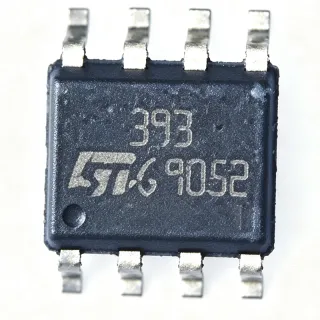
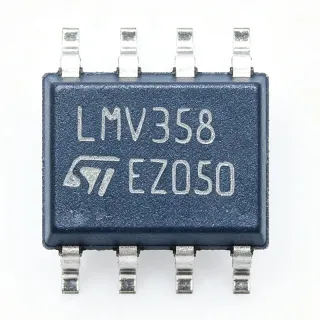
STMicroelectronics
Package: SOIC-8 (SO-8)
Slew Rate: 0.6 V/µs
Input Offset Voltage: 2 mV (typical)
Compare with NCV2904DR2G →

Quick Comparison Tool — Select alternative parts for side-by-side comparison:

LM2904DR2G

✅ Drop-In
📦 SOIC-8
same die family and pinout, non-automotive (no NCV prefix), otherwise identical

📋 Reference alternative (not in catalog)

NCV2904VDR2G

✅ Drop-In
📦 SOIC-8
V-suffix grade variant of NCV2904, same SOIC-8 pinout, minor electrical characteristic grading

📋 Reference alternative (not in catalog)

LM358DR2G

✅ Drop-In
📦 SOIC-8
same pinout and architecture, supply range 3.0 V to 32 V vs 26 V (+23% ceiling)

📋 Reference alternative (not in catalog)

LM2904DR

✅ Drop-In
Texas Instruments
📦 SOIC-8
2 · 3 V to 26 V · ±1.5 V to ±13 V · 700 kHz · 0.3 V/us · 2 mV (typical) · 500 uA (typical) · 0.7 mA (typical)

✓ In Stock

$0.1 / Unit

View Datasheet →

LM358DR

✅ Drop-In
Texas Instruments
📦 SOIC-8
General Purpose Operational Amplifier · 2 · 700 kHz · 0.3 V/µs · 3 V to 32 V · ±1.5 V to ±16 V · 0.7 mA (typ) · 2 mV (typ), 7 mV (max)

✓ In Stock

$0.0514 / Unit

View Datasheet →

LM358DT

✅ Drop-In
STMicroelectronics
📦 SOIC-8
2 · 3 V to 32 V · ±1.5 V to ±16 V · 350 µA (typical) · 2 mV (typical) · 45 nA (typical) · 1.1 MHz · 0.6 V/µs

✓ In Stock

$0.0509 / Unit

View Datasheet →

NCV2904DR2G Maximum Ratings & Electrical Characteristics

Amplifier Type General Purpose Operational Amplifier
Number of Circuits 2
Supply Voltage (Single Supply) 3.0 V to 26 V
Supply Voltage (Split Supply) +/-1.5 V to +/-13 V
Common Mode Input Range Extends to ground/VEE
Output Short circuit protected
Input Stage True differential input
Compensation Internally compensated
ESD Protection ESD clamps on inputs
Input Bias Current Low input bias current
Power Drain Low power drain
Package SOIC-8 (Case 751, D suffix)
Mounting Type Surface Mount
Qualification NCV automotive grade

NCV2904DR2G Pin Configuration

SOIC-8 Package Pinout Diagram SOIC-8 8-pin small outline IC, 3.9x4.9mm, P1.27mm, JEDEC MS-012. 1 8 2 7 3 6 4 5 SOIC-8
Pin 1 1OUT — Output of amplifier A
Pin 2 1IN- — Inverting input of amplifier A
Pin 3 1IN+ — Non-inverting input of amplifier A
Pin 4 GND/VEE — Ground or negative supply
Pin 5 2IN+ — Non-inverting input of amplifier B
Pin 6 2IN- — Inverting input of amplifier B
Pin 7 2OUT — Output of amplifier B
Pin 8 VCC — Positive supply, 3.0 V to 26 V

Typical Applications

NCV2904DR2G is suitable for 6 applications: Automotive Sensor Signal Conditioning, Battery Voltage Monitoring, Industrial 24V PLC Input Modules, Active Filter Stages, Window Comparators for ECU Diagnostics, Single-Supply Audio Preamplification.

🚗

Automotive Sensor Signal Conditioning

The NCV2904's automotive NCV qualification and ground-sensing input common-mode range make it a natural fit for conditioning ground-referenced automotive sensors such as throttle-position, pressure, and level sensors in ECUs. Powered from the vehicle 12 V rail (within the 3.0 V to 26 V specification), each amplifier channel can be configured as a non-inverting gain stage with gain set by two resistors, scaling a 0-5 V sensor output to the ADC input range. The low power drain suits always-on body-electronics nodes, and short-circuit protected outputs tolerate wiring faults to ground. Because the input extends to ground/VEE, signals near 0 V are read accurately without a negative supply.

Battery Voltage Monitoring

Monitoring a 12 V or 24 V battery rail with a ground-referenced ADC is a classic use for the NCV2904: a resistor divider drops the rail to a safe level and one amplifier channel buffers the divided node into the ADC, eliminating loading errors that a high-impedance divider would otherwise suffer. The 26 V single-supply ceiling covers 24 V industrial and dual-battery automotive systems directly. The second channel can implement an undervoltage threshold comparator against a reference. Low input bias current minimizes divider offset error, and the low power drain keeps quiescent battery load negligible in always-connected monitoring nodes.

🏭

Industrial 24V PLC Input Modules

Programmable logic controller input cards frequently buffer 0-10 V or 4-20 mA derived signals on 24 V rails, and the NCV2904's 3.0 V to 26 V single-supply operation with ground-sensing inputs fits this environment directly. One channel amplifies and level-shifts the sensor signal; the second channel can be wired as an active rectifier or window comparator for signal-valid detection. The short-circuit protected outputs survive field-wiring faults common in industrial panels, and the internal compensation removes any need for external frequency components, simplifying channel-to-channel replication across a multi-input card at minimal cost per channel.

🔧

Active Filter Stages

Because the NCV2904 is internally compensated and unity-gain stable, it implements Sallen-Key and multiple-feedback active filters without external compensation parts - two independent filter stages per SOIC-8 package. A second-order low-pass anti-aliasing filter ahead of an ADC, or a band-pass filter extracting a sensor tone, can be built with just resistors and capacitors per channel. The ground-extending input range simplifies single-supply biasing at mid-rail using a divider. Designers should keep closed-loop gain moderate and output swings below the VOH limit at load, since the output does not reach the positive rail.

🎥

Window Comparators for ECU Diagnostics

Two comparators are typically required to detect whether a sensor voltage is inside a valid window - one for upper and one for lower threshold. The NCV2904 provides both channels in one SOIC-8, wired with reference dividers so each output asserts when the sensor crosses a limit; an external logic gate ORs the outputs into an MCU fault input. The 26 V supply tolerance and automotive NCV qualification make it suitable for under-hood diagnostic monitoring of throttle, pressure, and position sensors. ESD input clamps add robustness during assembly and vehicle-level transient exposure, protecting the reference divider nodes.

🎧

Single-Supply Audio Preamplification

In cost-sensitive single-supply audio designs - intercoms, alarm annunciators, basic microphone preamps - the NCV2904 acts as a low-power preamplifier biased at mid-rail. Its low power drain suits battery-backed and always-on audio nodes, and the ground-extending input range makes AC-coupled biasing straightforward with a simple divider. One channel handles gain, the second can drive a volume-control stage or an active tone filter. Performance is general-purpose rather than hi-fi: designers needing sub-0.001% distortion should step up to dedicated audio amplifiers, but for annunciator-level reproduction the NCV2904 is fully adequate at very low cost.

Recommended Products Summary

What is the NCV2904 operational amplifier?
The NCV2904 is an onsemi single-supply dual operational amplifier from the LM2904/LM358 family. According to the onsemi datasheet, it operates from 3.0 V to 26 V single supply (or split supply), features a common-mode input voltage range extending to ground/VEE, short-circuit protected outputs, a true differential input stage, and internal compensation. It comes in an 8-pin SOIC package, and the NCV prefix designates automotive-grade qualification for demanding vehicle environments.
What is the supply voltage range of NCV2904?
The NCV2904 operates from 3.0 V to 26 V in single-supply configuration, per the onsemi datasheet. It also supports split-supply operation for bipolar signal handling. This wide range lets one amplifier part cover 3.3 V, 5 V, 12 V, and 24 V automotive and industrial rails. Note that this range applies to the NCV2904/LM2904 variant; the related LM258/LM358 versions extend to 32 V, so verify the exact suffix on your specific part before design-in.
What is the difference between NCV2904 and LM2904?
The NCV2904 is the automotive-grade variant of the LM2904. Both are single-supply dual operational amplifiers with the same die architecture, the same 8-pin SOIC pinout, and equivalent electrical performance. The NCV prefix on onsemi parts indicates automotive qualification and tighter manufacturing controls, so the NCV2904 is the correct choice for vehicle applications, while LM2904 suits consumer and industrial designs. They are pin-to-pin drop-in compatible with each other in the SOIC-8 package.
What is the best drop-in replacement for NCV2904?
The onsemi LM2904DR2G is the closest drop-in replacement: same manufacturer, same SOIC-8 footprint, same pinout (1OUT, 1IN-, 1IN+, GND, 2IN+, 2IN-, 2OUT, VCC), and the datasheet itself groups NCV2904 with the LM258/LM358/LM2904 family. Cross-brand drop-in equivalents include the TI LM2904DR and ST LM358DT, which are pin-compatible in SOIC-8. The only trade-off is losing the NCV automotive qualification prefix, so non-automotive designs can substitute freely while automotive designs should stay with NCV-suffixed parts.
Is NCV2904 the same as LM358?
Functionally yes - the onsemi datasheet states the LM358 series is equivalent to one-half of an LM324, and NCV2904 belongs to this same dual op-amp family. The differences are suffix-level: supply range (LM358 extends to 32 V versus 26 V for the LM2904/NCV2904 group) and qualification level (NCV = automotive). Pinout is identical in SOIC-8, so LM358 and NCV2904 are physically interchangeable, but always verify the supply-voltage ceiling matches your application rail.
Where can I buy NCV2904DR2G and what does it cost?
NCV2904DR2G is stocked by authorized distributors including DigiKey, where the part is listed as a general-purpose 2-circuit amplifier in 8-SOIC with same-day shipping. Pricing at XAIPART as of 2026-09-14 starts at approximately $0.42 at quantity 1, dropping to about $0.19 at 1000 pieces. For production volumes, request an RFQ from XAIPART or check distributor stock directly, since automotive-grade op-amps can experience allocation during supply constraints.
Where to download the NCV2904 datasheet PDF?
The official NCV2904 datasheet is available on the onsemi product page at onsemi.com under the NCV2904 product listing, which links the current PDF revision. Third-party mirrors such as Alldatasheet (234 Kb, 14 pages) and datasheet4u also host the document, but always prefer the manufacturer page for the latest revision and automotive qualification documentation. The datasheet covers pinout, absolute maximum ratings, electrical characteristics, and typical application circuits for the full LM258/LM358/LM2904/NCV2904 family.
What is the pinout of NCV2904 in SOIC-8?
The NCV2904 SOIC-8 pinout follows the industry-standard dual op-amp arrangement: pin 1 is output A, pin 2 is inverting input A, pin 3 is non-inverting input A, pin 4 is ground/Vee, pin 5 is non-inverting input B, pin 6 is inverting input B, pin 7 is output B, and pin 8 is VCC. This is the same pinout used by LM358, LM2904, and virtually all SOIC-8 dual op-amps, which is why cross-brand substitution within this footprint is straightforward.
Can NCV2904 be used in automotive applications?
Yes - the NCV prefix on this onsemi part designates automotive qualification, making it intended for vehicle environments such as sensor signal conditioning, body electronics, and ECU monitoring circuits. The device operates from a 3.0 V to 26 V supply that tolerates automotive 12 V rail excursions, and the common-mode input range extending to ground suits ground-referenced sensors. For exact AEC-Q documentation and temperature grading, request qualification data from onsemi or your distributor before releasing an automotive design.
NCV2904 vs LM358DT - which is better for a 24 V industrial system?
For a 24 V industrial rail, check the supply ceiling first: the NCV2904/LM2904 group is specified to 26 V single supply, while the LM358 family extends to 32 V. Both fit a nominal 24 V rail, but the LM358's 32 V ceiling gives more transient headroom. If your design is automotive-adjacent or requires onsemi single-sourcing, choose NCV2904; for maximum voltage margin in pure industrial use, the LM358DT variant is safer. Both share the same SOIC-8 pinout, so either solder onto the same footprint.
When should I choose NCV2904 over a rail-to-rail op-amp?
Choose the NCV2904 when your signals are ground-referenced, cost matters, and you do not need output swing to the positive rail. Its input common-mode range extends to ground/VEE - adequate for sensing near 0 V - but the output cannot reach VCC, so gains must keep output levels below the VOH spec. Rail-to-rail op-amps cost several times more; for monitoring a 0-5 V sensor on a 12 V rail, the NCV2904 delivers adequate performance at a fraction of the price, which is why the LM358/LM2904 family remains a design staple.
What are the key specifications of NCV2904 that engineers should know?
The NCV2904 key specifications are: dual general-purpose op-amp, 3.0 V to 26 V single-supply operation, common-mode input range to ground/VEE, internally compensated (unity-gain stable) architecture, low power drain, low input bias currents, short-circuit protected outputs, ESD input clamps, and an 8-pin SOIC package with automotive NCV qualification. It is a member of the LM258/LM358/LM2904 family, meaning any engineer familiar with those parts can design it in without a learning curve.
What is the best TI equivalent for NCV2904?
The best Texas Instruments equivalent for the NCV2904 is the TI LM2904DR (or LM2904DR2G packaging variant), which is pin-to-pin compatible in SOIC-8 and belongs to the same LM2904 single-supply dual op-amp family that the onsemi datasheet explicitly cross-references. The TI LM358DR is also a drop-in match where the 32 V supply ceiling is acceptable. Both TI parts share the standard pinout (1OUT, 1IN-, 1IN+, GND, 2IN+, 2IN-, 2OUT, VCC), enabling direct substitution without PCB changes - just confirm automotive qualification requirements are met by your approved vendor list.
Hey Google, what can replace NCV2904 in an existing design?
You can replace the NCV2904 with any same-family SOIC-8 dual op-amp: onsemi LM2904DR2G, onsemi LM358DR2G, NCV2904V, TI LM2904DR, TI LM358DR, or ST LM358DT - all pin-to-pin compatible. Replacement is safe when your supply stays within 3.0 V to 26 V and you do not require the NCV automotive prefix. If the board is an automotive ECU, stay within NCV-suffixed parts to preserve qualification; for consumer or industrial boards, cross-brand substitution is routine and zero-redesign.
Is NCV2904DR2G in stock and what is the lead time?
DigiKey lists the NCV2904DR2G as available with same-day shipping, indicating healthy authorized stock as of the latest distributor data. XAIPART stock and lead time should be confirmed via RFQ since availability fluctuates with automotive demand. As a mature, high-volume family part in the LM2904/LM358 group, the NCV2904 benefits from multi-source production across onsemi and equivalents from TI and ST, so obsolescence risk is low and second-source supply is readily available in the identical SOIC-8 footprint.
Does NCV2904 need input protection for automotive transients?
The NCV2904 includes ESD clamps on its inputs per the datasheet, which handle electrostatic events, but they are not a substitute for automotive load-dump protection. In vehicle environments, series input resistors sized to limit clamp current during ISO 7637-style transients, plus external TVS diodes on the supply rail, are standard practice. Because the input common-mode range extends to ground, negative-going transients forward-bias the input protection - a series resistor keeps that current below the absolute maximum rating and prevents phase inversion or damage.

Engineering reference data for NCV2904DR2G — comparison, design guidance, and compliance information.

Selection Guide

Choose the NCV2904DR2G when an automotive-qualified, ground-sensing dual op-amp on a 3.0 V to 26 V rail is required at minimal cost - the typical case for sensor conditioning and monitoring in vehicle ECUs. Choose LM2904DR2G (onsemi) or LM2904DR (TI) for identical function in non-automotive designs where the NCV prefix is unnecessary. Choose LM358 variants (LM358DR2G, LM358DR, LM358DT) when your rail approaches or exceeds 26 V, since the LM358 group is specified to 32 V single supply. Choose NCV2904VDR2G when your automotive approved-vendor list calls for the V-suffix grading. All six options share the same SOIC-8 pinout, so footprint reuse is universal; the only genuine design decision is supply ceiling and qualification grade. If output swing to the positive rail is required, none of these fit - step up to a rail-to-rail output amplifier instead.

Comparison with Alternatives

Parameter This Product LM2904DR2G NCV2904VDR2G LM358DR2G LM2904DR LM358DR LM358DT
Package SOIC-8 SOIC-8 - same SOIC-8 - same SOIC-8 - same SOIC-8 - same SOIC-8 - same SOIC-8 - same
Brand onsemi onsemi onsemi onsemi Texas Instruments Texas Instruments STMicroelectronics
Number of Circuits 2 2 2 2 2 2 2
Single Supply Range 3.0 V to 26 V 3.0 V to 26 V 3.0 V to 26 V 3.0 V to 32 V 3.0 V to 26 V 3.0 V to 32 V 3.0 V to 32 V
Automotive Grade (NCV prefix) Yes No Yes No No No No
Common-Mode Input to Ground Yes Yes Yes Yes Yes Yes Yes
Output Protection Short circuit protected Short circuit protected Short circuit protected Short circuit protected Short circuit protected Short circuit protected Short circuit protected

Key Differentiators

  • Automotive NCV qualification (vs LM2904DR2G)
  • Lowest family cost at volume (vs LM358DR2G)
  • Honest trade-off: not rail-to-rail (vs Rail-to-rail dual op-amps)

Design Notes

The NCV2904 output does not swing to the positive rail. Estimate: with a 12 V supply and typical load, expect headroom of roughly 1 to 1.5 V below VCC at moderate currents - verify against the VOH specification in the manufacturer datasheet for your exact load. Gain stages must be scaled so the maximum expected output stays below VOH, or peaks will clip. Similarly, do not exceed the input common-mode range; although inputs sense to ground, they are not rail-to-rail on the high side.

Place a 100 nF ceramic decoupling capacitor directly across pins 8 (VCC) and 4 (GND/VEE), with traces under 10 mm. Because both amplifiers share the same die and supply node, keep high-current output wiring away from the input traces of the opposite channel to avoid crosstalk through shared impedance. A solid ground plane under the SOIC-8 footprint is recommended practice per general analog layout guidance for the LM2904/LM358 family.

The NCV2904 includes ESD clamps on its inputs. When input signals can go below ground (inductive sensor rings, automotive transients), the clamp conducts - add series resistance sized to keep clamp current within absolute maximum limits. Estimated: a 10 kOhm series resistor limits current to about 1.4 mA during a -14 V transient relative to ground, well within typical clamp ratings; confirm the exact limit in the onsemi datasheet before finalizing.

Compliance Information

RoHS
Unknown
REACH
Unknown
AEC-Q100
Qualified
Lead Free
Unknown
Halogen Free
Unknown
Conflict Minerals
Unknown

NCV prefix denotes onsemi automotive qualification. RoHS/REACH/lead-free status not stated in provided data - verify on the onsemi product page.

Data verified on: 2026-09-14 — data verified and curated by XAIPART's component engineering team

Related Searches

NCV2904DR2G NCV2904 datasheet onsemi NCV2904 dual op-amp NCV2904 pinout SOIC-8 NCV2904 vs LM2904 difference NCV2904 drop-in replacement automotive dual op-amp 26V single supply NCV2904 equivalent LM358 buy NCV2904DR2G price what can replace NCV2904 single supply op amp ground sensing sensor conditioning NCV2904 automotive qualified operational amplifier

Related Components & Terms

onsemi ON Semiconductor NCV2904 NCV2904DR2G LM2904 LM358 LM258 LM324 operational amplifier op-amp dual op-amp single-supply amplifier SOIC-8 Case 751 NCV automotive qualification AEC-Q100 common-mode input range input bias current short circuit protection internally compensated ESD clamps automotive sensor conditioning RoHS Texas Instruments LM2904DR
Quick Quote RFQ
Fill in complete details — our sales team will respond within 24 hours
Part Number Manufacturer Package QTY Target Price Extended
Total: $0.00 USD
Quote submitted!

We will respond to your email within 24 hours

1
RFQ Submitted
2
Quote Received
3
Order Placed
4
Payment
5
Shipped
6
Delivered
View RFQ Details