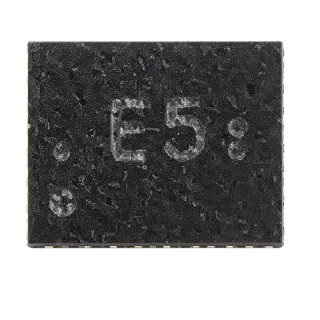
PTH05T210W - 30A, 5V Input PoL Power Module | Texas Instruments
MPN: PTH05T210W ✓ Active| Qty | Unit Price | Extended |
|---|---|---|
| 1 | $33.5 | $33.50 |
| 10 | $30.8 | $308.00 |
| 25 | $28.9 | $722.50 |
| 100 | $26.4 | $2,640.00 |
| 500 | $24.1 | $12,050.00 |
PTH05T210W Overview
A non-isolated PoL module is a type of DC-DC converter (part of the broader voltage regulator / power management IC hierarchy) that steps a distribution rail down to a regulated low voltage close to the load, without galvanic isolation. It integrates the controller, power MOSFETs, inductor, and loop compensation into one packaged module, replacing dozens of discrete components and dramatically shortening power-supply design cycles.
Key features include TI's proprietary TurboTrans technology, which lets designers optimize transient response and reduce required output capacitance, and Auto-Track sequencing for controlled power-up/down of multiple modules. Output voltage adjust is accomplished with a single external resistor, and the module provides remote sense for tight load regulation plus a power-good flag for system supervision. Multi-phase operation achieves high efficiency (typically around 96% for 5V-in to 3.3V-out per TI data) while minimizing output ripple.
Architecturally, the multi-phase topology interleaves switching channels so ripple currents partially cancel, allowing smaller magnetics and faster load-transient response than single-phase bucks at 30 A. The open-frame module construction aids airflow cooling in forced-air systems.
Typical applications include powering DSPs, FPGAs, ASICs, and microprocessors in telecom, networking, server, storage, and industrial equipment. The 30-A capability and wide output range also fit test and measurement platforms.
Design consideration: follow the datasheet input/output capacitance recommendations to maintain stability and transient response; TurboTrans pin settings should be tuned to the actual output capacitor network for best performance.
Drop-in alternatives for PTH05T210W — same package, pin-to-pin compatible. Different-package parts requiring PCB rework are excluded.
Variants in this series
Same-series models that are drop-in compatible with PTH05T210W (same form factor and footprint) — differing in Input Voltage Range, Mounting Type, Output Current, Output Voltage Range, Topology.
Quick Comparison Tool — Select alternative parts for side-by-side comparison:
PTH05T210WAD
✅ Drop-In📋 Reference alternative (not in catalog)
PTH05T210WAH
✅ Drop-In📋 Reference alternative (not in catalog)
PTH05T210WAS
✅ Drop-In📋 Reference alternative (not in catalog)
PTH04T241WAZT
⚡ Same Package ⚠️ Specs Unverified📋 Reference alternative (not in catalog)
PTH05010WAZT
⚡ Same Package ⚠️ Specs Unverified📋 Reference alternative (not in catalog)
PTH05T210W Maximum Ratings & Electrical Characteristics
| Topology | Multi-phase, non-isolated switch-mode (PoL) |
| Output Current | 30 A |
| Input Voltage Range | 4.5 V to 5.5 V |
| Output Voltage Range | 0.7 V to 3.6 V (resistor adjustable) |
| Number of Outputs | 1 |
| Special Features | TurboTrans, Auto-Track sequencing, Power Good, Remote Sense |
| Series Generation | 2nd generation PTH series |
| Typical Efficiency | Approximately 96% (5V in, 3.3V out, per TI data) |
| Output Regulation | Remote sense for tight load regulation |
| Mounting Type | Through-hole vertical mount |
| Family | PTH05T210W (ordering codes: PTH05T210WAD, PTH05T210WAH, PTH05T210WAS) |
| Isolation | Non-isolated |
| RoHS Status | unknown |
PTH05T210W Pin Configuration
| Pin 1 | VIN — Input supply, 4.5V to 5.5V |
| Pin 2 | GND — Ground / power return |
| Pin 3 | VOUT — Regulated output, 0.7V to 3.6V |
| Pin 4 | SENSE — Remote output voltage sense |
| Pin 5 | VO ADJUST — Output voltage adjust resistor pin |
| Pin 6 | TURBOTRANS — TurboTrans transient response tuning pin |
| Pin 7 | TRACK — Auto-Track sequencing input |
| Pin 8 | PG — Power Good flag output |
| Pin 9 | GND (mechanical) — Additional ground/thermal pin |
Typical Applications
PTH05T210W is suitable for 6 applications: FPGA and Processor Core Power, Telecom and Networking Equipment, Server and Storage Systems, Industrial Automation and Motor Control Boards, Test and Measurement Platforms, Distributed Power Architecture Bricks.
FPGA and Processor Core Power
The PTH05T210W's 30-A capability and 0.7-3.6V adjustable output directly cover FPGA and processor core rails that demand low voltages at high current. TurboTrans tuning lets designers meet tight load-transient budgets for high-current pulsed loads with reduced external output capacitance, while remote sense keeps millivolt-level regulation at the die even across PCB IR drop.
Recommended
Telecom and Networking Equipment
In telecom shelves and network switches, 5V distribution buses feed localized point-of-load converters next to ASICs and network processors. The PTH05T210W's non-isolated 4.5-5.5V input matches these distribution rails, and the power-good flag plus Auto-Track sequencing allows controlled multi-rail bring-up, critical for high-availability equipment with strict brownout behavior requirements.
Recommended
Server and Storage Systems
Server blade and storage controller boards concentrate many high-current low-voltage loads near CPUs, memory, and controllers. The second-generation PTH footprint reduces board area versus the original PTH series, and multi-phase operation keeps efficiency near 96% (5V-in/3.3V-out), directly lowering thermal load in dense forced-air server chassis where every watt of loss counts against cooling budget.
Recommended
Industrial Automation and Motor Control Boards
Industrial control boards use robust 5V intermediate buses from which localized modules power DSPs such as C2000 controllers. The PTH05T210W's through-hole vertical mount offers mechanical robustness against vibration, and its 30-A margin covers drive-control processing loads with headroom, while wide output adjust serves mixed 1.2V/1.8V/3.3V logic domains on one board design.
Recommended
Test and Measurement Platforms
Modular test instruments need reconfigurable, high-current point-of-load supplies for switchable load boards and processor cards. The PTH05T210W's single-resistor output adjust simplifies variant builds across a 0.7-3.6V range, and remote sense maintains accuracy at the load fixture. Multi-phase topology keeps output ripple low, important for powering sensitive analog signal-chain sections adjacent to digital loads.
Recommended
Distributed Power Architecture Bricks
In distributed power architectures where an intermediate 5V bus feeds multiple PoL converters, the PTH05T210W slots in as the second stage after bus converters. Auto-Track enables orderly sequencing across several modules sharing one bus, and the second-generation footprint simplifies reuse of legacy PTH layouts, cutting requalification effort when upgrading older 10-16A designs to 30-A capability.
Recommended
Recommended Products Summary
Engineering reference data for PTH05T210W — comparison, design guidance, and compliance information.
Selection Guide
Comparison with Alternatives
| Parameter | This Product | PTH05T210WAD | PTH05T210WAH | PTH05T210WAS | PTH04T241WAZT |
|---|---|---|---|---|---|
| Brand | Texas Instruments | Texas Instruments | Texas Instruments | Texas Instruments | Texas Instruments |
| Output Current | 30 A | 30 A | 30 A | 30 A | 16 A-class |
| TurboTrans | Yes | Yes | Yes | Yes | Yes (PTH04T generation) |
| Auto-Track Sequencing | Yes | Yes | Yes | Yes | Yes |
| Series Generation | 2nd generation PTH | 2nd generation | 2nd generation | 2nd generation | 1st generation (PTH04T) |
Key Differentiators
- Highest current in 5V-input PTH family at 30 A (vs PTH04T241WAZT)
- TurboTrans transient tuning reduces output capacitance (vs PTH05010WAZT)
- Auto-Track sequencing simplifies multi-module rails (vs Generic discrete buck solutions)
Design Notes
Size input capacitance per the TI datasheet recommendations - typically low-ESR bulk plus 10-47 uF ceramic close to the VIN pins - because 30-A multi-phase switching draws significant RMS input ripple current. Undersized input decoupling raises input ripple and can trip undervoltage behavior during load steps. Place the remote sense lines as a twisted pair routed to the exact load point to cancel PCB IR drop at 30 A.
At 30 A into a low output voltage, conduction losses concentrate in the module; TI specifies thermal derating versus airflow. Verify the derating curves in the datasheet against your enclosure airflow (typically 100-400 LFM required for full current). Ensure the vertical-mount pins and GND pads connect to generous copper pour on the host PCB for heat spreading.
TurboTrans must be configured to match the actual output capacitor network - setting TurboTrans for high transient performance with insufficient output capacitance can cause instability, while over-conservative settings waste headroom. Follow the TurboTrans table in the datasheet against your capacitance and ESR. Also do not leave the Auto-Track pin floating unintentionally; tie it per the datasheet for simple power-up.
Keep the output-voltage adjust resistor close to the module adjust pin and away from switching nodes to avoid output offset from noise pickup. Route power-good as an open-drain flag to system monitoring with a suitable pull-up. For parallel use or sequencing of multiple modules, follow the TI Auto-Track application section for ramp capacitor sizing.
Compliance Information
Compliance status not stated in provided web data; verify on TI product page or datasheet.