ST1S14PHR - 3A 36V Step-Down Switching Regulator | STMicroelectronics
MPN: ST1S14PHR ✓ Active| Qty | Unit Price | Extended |
|---|---|---|
| 1 | $2.45 | $2.45 |
| 10 | $2.2 | $22.00 |
| 100 | $1.95 | $195.00 |
| 500 | $1.75 | $875.00 |
| 1,000 | $1.6 | $1,600.00 |
ST1S14PHR Overview
A step-down switching regulator, also known as a buck converter, is a type of DC-DC converter that efficiently reduces a higher input voltage to a lower output voltage. Unlike linear regulators, which dissipate excess power as heat, switching regulators use an inductor and a switch to transfer energy in discrete packets, achieving high efficiency, especially when the input-to-output voltage difference is large. The ST1S14PHR belongs to the family of voltage regulators, specifically switching regulators, which are essential components in power management systems for converting and stabilizing voltages across electronic devices.
Key features of the ST1S14PHR include a wide input voltage range of 4.5V to 36V, an adjustable output voltage from 1.2V to 36V, and a maximum output current of 3A. The device offers a high efficiency of up to 90%, a low quiescent current of 2.5mA, and a switching frequency of 250kHz. It also includes internal compensation, a soft-start function, and a thermal shutdown protection, ensuring reliable operation in demanding environments.
The ST1S14PHR utilizes a current-mode control architecture, which provides fast transient response and simplifies loop compensation. The integrated high-side MOSFET reduces external component count, while the internal compensation network eliminates the need for external compensation components. The device operates over a junction temperature range of -40°C to +150°C, making it suitable for automotive and industrial applications where temperature extremes are common.
Typical applications include point-of-load (POL) converters, distributed power systems, industrial control systems, and automotive infotainment and body electronics. The wide input voltage range allows the ST1S14PHR to operate directly from 12V or 24V supply rails, while the high output current capability supports powering microprocessors, FPGAs, and other digital loads.
When designing with the ST1S14PHR, ensure proper PCB layout with short, low-inductance paths for the power stage. The exposed pad on the PowerSO-8 package should be soldered to a large copper area for effective heat dissipation. Additionally, select an inductor with a saturation current rating above the peak switch current to avoid core saturation and ensure stable operation.
Drop-in alternatives for ST1S14PHR — same package, pin-to-pin compatible. Different-package parts requiring PCB rework are excluded.
Variants in this series
Same-series models that are drop-in compatible with ST1S14PHR (same form factor and footprint) — differing in Efficiency, Input Voltage Range, Operating Temperature Range, Output Voltage Range, Package.
Quick Comparison Tool — Select alternative parts for side-by-side comparison:
ST1S14PH
✅ Drop-In📋 Reference alternative (not in catalog)
ST1S14PUR
✅ Drop-In ⚠️ Specs Unverified📋 Reference alternative (not in catalog)
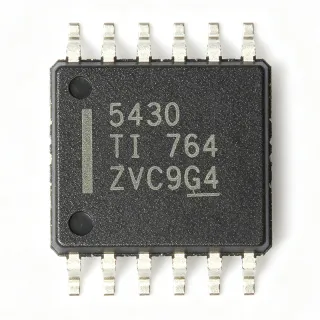
TPS5430
✅ Drop-In ⚠️ Specs Unverified📋 Reference alternative (not in catalog)
NCP3063
✅ Drop-In ⚠️ Specs Unverified📋 Reference alternative (not in catalog)
ST1S14PHR Maximum Ratings & Electrical Characteristics
| Function | Step-Down (Buck) |
| Output Current | 3 A |
| Input Voltage Range | 4.5 V to 36 V |
| Output Voltage Range | 1.2 V to 36 V (adjustable) |
| Switching Frequency | 250 kHz |
| Efficiency | Up to 90% |
| Quiescent Current | 2.5 mA |
| Output Type | Adjustable |
| Synchronous Rectifier | No |
| Package | PowerSO-8 |
| Mounting Type | Surface Mount |
| Operating Temperature Range | -40°C to +150°C (junction) |
| Soft-Start | Yes (internal) |
| Thermal Shutdown | Yes |
| RoHS Status | Compliant |
ST1S14PHR Pin Configuration
| Pin 1 | VIN — Input supply voltage |
| Pin 2 | SW — Switch node output |
| Pin 3 | GND — Ground |
| Pin 4 | FB — Feedback input |
| Pin 5 | EN — Enable input |
| Pin 6 | COMP — Compensation pin |
| Pin 7 | NC — No connect |
| Pin 8 | NC — No connect |
| Pin 9 | EP — Exposed pad (GND) |
Typical Applications
ST1S14PHR is suitable for 6 applications: Point-of-Load (POL) Converters, Industrial Control Systems, Automotive Infotainment, Distributed Power Systems, Telecom and Networking Equipment, Battery-Powered Devices.
Point-of-Load (POL) Converters
The ST1S14PHR is ideal for POL converters that step down a 12V or 24V bus to lower voltages for digital loads. Its 3A output current and wide input range make it suitable for powering FPGAs, ASICs, and microprocessors. In a typical POL application, the ST1S14PHR is placed close to the load to minimize trace inductance and improve transient response. The adjustable output voltage allows precise setting via a resistor divider. The high efficiency reduces heat generation, enabling compact designs without active cooling. The 250kHz switching frequency allows the use of small inductors and capacitors, saving PCB space. The internal soft-start prevents inrush current during power-up, protecting the input supply and downstream components.
Recommended
Industrial Control Systems
In industrial control systems, the ST1S14PHR provides a robust power solution for sensors, actuators, and control logic. Its wide input voltage range (4.5V to 36V) allows direct operation from 24V industrial supply rails, eliminating the need for intermediate conversion stages. The device's thermal shutdown and current limit protections ensure reliable operation in harsh environments. The high efficiency reduces power loss, which is critical in sealed enclosures with limited airflow. The adjustable output voltage enables generation of multiple rails (e.g., 5V, 3.3V) from a single input, simplifying the power architecture. The PowerSO-8 package with exposed pad facilitates heat dissipation to the PCB, enhancing long-term reliability.
Recommended
Automotive Infotainment
The ST1S14PHR is suitable for automotive infotainment systems, where it can step down the vehicle's 12V battery voltage to power audio processors, displays, and connectivity modules. Its wide input range accommodates voltage transients during cranking and load dumps. The device's operating temperature range of -40°C to +150°C ensures reliable operation in the automotive environment. The high efficiency minimizes heat generation, which is important in the confined spaces of a vehicle dashboard. The adjustable output allows generation of multiple supply rails (e.g., 5V for USB, 3.3V for logic) from a single converter. The internal soft-start prevents inrush current that could disturb other vehicle electronics.
Recommended
Distributed Power Systems
In distributed power systems, the ST1S14PHR can be used as a local DC-DC converter to generate clean, regulated voltages from a higher-voltage bus. Its 3A output current is sufficient for powering multiple loads, and the wide input range allows it to be used in systems with varying bus voltages. The device's high efficiency reduces the need for bulky heatsinks, enabling compact module designs. The adjustable output voltage provides flexibility in setting the required rail voltage. The 250kHz switching frequency allows the use of small magnetic components, reducing the overall footprint. The internal compensation simplifies the design, reducing external component count and design time.
Recommended
Telecom and Networking Equipment
The ST1S14PHR is well-suited for telecom and networking equipment, where it can convert a 48V telecom bus down to 5V or 3.3V for line cards, switches, and routers. Its wide input voltage range (4.5V to 36V) covers the typical 48V range when used with a front-end converter. The high efficiency reduces power dissipation, which is critical in high-density equipment racks. The device's thermal shutdown protection ensures safe operation under fault conditions. The adjustable output voltage allows precise regulation for sensitive networking ICs. The PowerSO-8 package with exposed pad aids in heat dissipation, improving reliability in continuous operation.
Recommended
Battery-Powered Devices
Although the ST1S14PHR is not optimized for ultra-low quiescent current, it can be used in battery-powered devices where the load current is moderate and the input voltage is derived from a battery pack. For example, in a 12V lead-acid battery system, the ST1S14PHR can efficiently step down to 5V for USB charging or logic circuits. Its wide input range accommodates battery voltage variations during discharge and charge. The high efficiency extends battery life by minimizing power loss. The internal soft-start prevents inrush current that could stress the battery. The device's thermal shutdown protects against overheating in portable enclosures.
Recommended
Recommended Products Summary
Engineering reference data for ST1S14PHR — comparison, design guidance, and compliance information.
Selection Guide
Comparison with Alternatives
| Parameter | This Product | ST1S14PH | ST1S14PUR | TPS5430 | NCP3063 |
|---|---|---|---|---|---|
| Package | PowerSO-8 | PowerSO-8 | PowerSO-8 | SOIC-8 | SOIC-8 |
| Brand | STMicroelectronics | STMicroelectronics | STMicroelectronics | Texas Instruments | onsemi |
| Output Current | 3 A | 3 A | 3 A | 3 A | 1.5 A |
| Input Voltage Range | 4.5V to 36V | 4.5V to 36V | 4.5V to 36V | 5.5V to 36V | 3V to 40V |
| Switching Frequency | 250 kHz | 250 kHz | 250 kHz | 500 kHz | Up to 150 kHz |
| Efficiency | Up to 90% | Up to 90% | Up to 90% | Up to 92% | Up to 85% |
| Quiescent Current | 2.5 mA | 2.5 mA | 2.5 mA | 3.5 mA | 2.5 mA |
| Operating Temperature Range | -40°C to +150°C | -40°C to +150°C | -40°C to +150°C | -40°C to +125°C | -40°C to +125°C |
Key Differentiators
- Wide input voltage range up to 36V (vs TPS5430)
- Higher output current than NCP3063 (vs NCP3063)
- Higher operating temperature range (vs TPS5430)
Design Notes
For optimal performance, place the input capacitor (10µF) and output capacitor (100µF) as close as possible to the VIN and SW pins respectively. Use short, wide traces for high-current paths to minimize parasitic inductance and resistance. The exposed pad (EP) must be soldered to a large copper area on the PCB to ensure adequate heat dissipation. A recommended copper area of at least 1 square inch is advised for continuous operation at 3A.
The ST1S14PHR can dissipate significant power at high input voltages and output currents. For example, at VIN=24V, VOUT=5V, and IOUT=3A, the power dissipation is approximately 57W (assuming 90% efficiency). This requires a heatsink or a large copper pour to keep the junction temperature below 150°C. Use thermal vias under the exposed pad to conduct heat to the opposite side of the PCB.
Ensure the inductor's saturation current rating is higher than the peak switch current (typically 1.2 times the maximum output current) to avoid core saturation and efficiency loss. Also, use a Schottky diode with a voltage rating at least 1.5 times the maximum input voltage and a current rating equal to the output current. Do not exceed the absolute maximum ratings, and ensure the feedback resistor divider uses 1% tolerance resistors for accurate output voltage.
Compliance Information
RoHS compliant per STMicroelectronics product page. Not AEC-Q100 qualified, but suitable for automotive applications with proper system-level qualification.