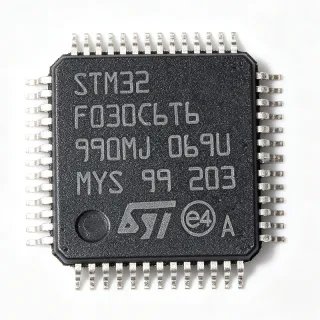
STM32L010C6T6 - Ultra-Low-Power ARM Cortex-M0+ MCU | STMicroelectronics
MPN: STM32L010C6T6 ✓ Active| Qty | Unit Price | Extended |
|---|---|---|
| 1 | $2.85 | $2.85 |
| 10 | $2.56 | $25.60 |
| 100 | $2.28 | $228.00 |
| 500 | $2.05 | $1,025.00 |
| 1,000 | $1.82 | $1,820.00 |
STM32L010C6T6 Overview
An ultra-low-power microcontroller (MCU) is a system-on-chip that integrates a processor core, memory, and peripherals, optimized to minimize power consumption while maintaining performance. The STM32L010C6T6 belongs to the STM32L0 family, which is part of the broader STM32 32-bit MCU portfolio. This hierarchy places it within the ARM Cortex-M0+ processor category, a 32-bit RISC architecture known for its energy efficiency and simplicity, ideal for cost-sensitive and power-constrained applications.
Key features include multiple low-power modes (Sleep, Low-power Run, Low-power Sleep, Stop, Standby) with current consumption as low as 0.29 µA in Standby mode with RTC, and 3.4 µA in Stop mode. The MCU integrates a 12-bit ADC with up to 16 channels, two comparators, a DMA controller, and a variety of communication interfaces including I2C, SPI, and USART. It also includes a real-time clock (RTC) with calendar and alarm functions, and a true random number generator (RNG).
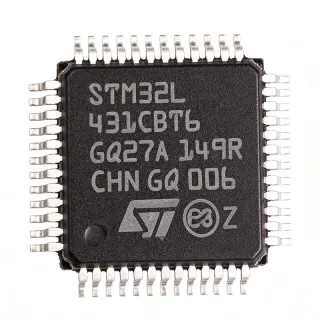
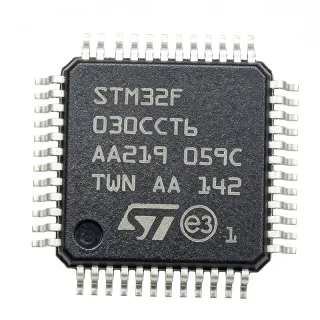
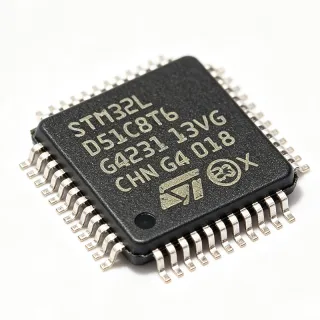
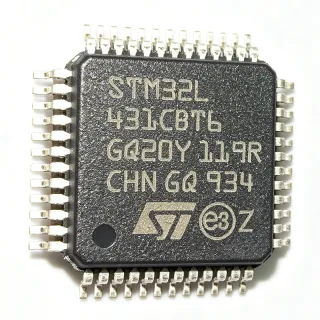
The STM32L010C6T6 is built on ST's ultra-low-power technology, featuring a flexible clock management with an internal 16 MHz RC oscillator and an external 32.768 kHz crystal for the RTC. The device supports a wide operating temperature range of -40°C to +85°C, and is available in a 48-pin LQFP package (7x7 mm). It is RoHS compliant and lead-free, meeting environmental standards for global distribution.
Typical applications include battery management systems, portable medical devices, smart sensors, IoT nodes, and industrial control systems. Its low power consumption and rich analog peripherals make it ideal for applications requiring precise analog measurements and long operational life.
When designing with this MCU, careful attention should be paid to power supply decoupling and PCB layout to minimize noise and ensure reliable operation. The use of the internal RC oscillator can reduce external component count, but for time-critical applications, an external crystal is recommended for better accuracy.
Drop-in alternatives for STM32L010C6T6 — same package, pin-to-pin compatible. Different-package parts requiring PCB rework are excluded.
Quick Comparison Tool — Select alternative parts for side-by-side comparison:
STM32L011C6T6
✅ Drop-In ⚠️ 参数待验证📋 Reference alternative (not in catalog)
STM32L031C6T6
✅ Drop-In ⚠️ 参数待验证📋 Reference alternative (not in catalog)
STM32L041C6T6
✅ Drop-In ⚠️ 参数待验证📋 Reference alternative (not in catalog)
STM32L071C6T6
✅ Drop-In ⚠️ 参数待验证📋 Reference alternative (not in catalog)
STM32L072C6T6
✅ Drop-In ⚠️ 参数待验证📋 Reference alternative (not in catalog)
STM32L082C6T6
✅ Drop-In ⚠️ 参数待验证📋 Reference alternative (not in catalog)
STM32L100C6T6
✅ Drop-In ⚠️ 参数待验证📋 Reference alternative (not in catalog)
STM32L151C6T6
✅ Drop-In ⚠️ 参数待验证📋 Reference alternative (not in catalog)
STM32L152C6T6
✅ Drop-In ⚠️ 参数待验证📋 Reference alternative (not in catalog)
STM32L162C6T6
✅ Drop-In ⚠️ 参数待验证📋 Reference alternative (not in catalog)
STM32L053C6T6
✅ Drop-In ⚠️ 参数待验证📋 Reference alternative (not in catalog)
STM32L063C6T6
✅ Drop-In ⚠️ 参数待验证📋 Reference alternative (not in catalog)
STM32L073C6T6
✅ Drop-In ⚠️ 参数待验证📋 Reference alternative (not in catalog)
STM32L083C6T6
✅ Drop-In ⚠️ 参数待验证📋 Reference alternative (not in catalog)
STM32L011C6T6TR
✅ Drop-In ⚠️ 参数待验证📋 Reference alternative (not in catalog)
STM32L031C6T6TR
✅ Drop-In ⚠️ 参数待验证📋 Reference alternative (not in catalog)
STM32L041C6T6TR
✅ Drop-In ⚠️ 参数待验证📋 Reference alternative (not in catalog)
STM32L071C6T6TR
✅ Drop-In ⚠️ 参数待验证📋 Reference alternative (not in catalog)
STM32L072C6T6TR
✅ Drop-In ⚠️ 参数待验证📋 Reference alternative (not in catalog)
STM32L082C6T6TR
✅ Drop-In ⚠️ 参数待验证📋 Reference alternative (not in catalog)
STM32L010C6T6 Maximum Ratings & Electrical Characteristics
| Core | ARM Cortex-M0+ |
| Max Clock Frequency | 32 MHz |
| Flash Memory | 32 KB |
| SRAM | 8 KB |
| Supply Voltage Range | 1.8 V to 3.6 V |
| Standby Current (with RTC) | 0.29 µA |
| Stop Mode Current | 3.4 µA |
| ADC Resolution | 12-bit |
| ADC Channels | 16 |
| Comparators | 2 |
| Communication Interfaces | I2C, SPI, USART |
| RTC | Yes (with calendar and alarm) |
| Random Number Generator | Yes (true RNG) |
| Operating Temperature Range | -40°C to +85°C |
| Package | LQFP-48 (7x7 mm) |
| Mounting Type | Surface Mount |
| RoHS Status | Compliant |
| Lead-Free | Yes |
STM32L010C6T6 Pin Configuration
| Pin 1 | VBAT — Battery backup supply for RTC |
| Pin 2 | PC14 — GPIO / OSC32_IN |
| Pin 3 | PC15 — GPIO / OSC32_OUT |
| Pin 4 | OSC_IN — External clock input |
| Pin 5 | OSC_OUT — External clock output |
| Pin 6 | NRST — Reset (active low) |
| Pin 7 | VSSA — Analog ground |
| Pin 8 | VDDA — Analog power supply |
| Pin 9 | PA0 — GPIO / ADC_IN0 |
| Pin 10 | PA1 — GPIO / ADC_IN1 |
| Pin 11 | PA2 — GPIO / USART2_TX |
| Pin 12 | PA3 — GPIO / USART2_RX |
| Pin 13 | PA4 — GPIO / SPI1_NSS |
| Pin 14 | PA5 — GPIO / SPI1_SCK |
| Pin 15 | PA6 — GPIO / SPI1_MISO |
| Pin 16 | PA7 — GPIO / SPI1_MOSI |
| Pin 17 | PB0 — GPIO / ADC_IN8 |
| Pin 18 | PB1 — GPIO / ADC_IN9 |
| Pin 19 | PB2 — GPIO / BOOT1 |
| Pin 20 | PB10 — GPIO / I2C2_SCL |
| Pin 21 | PB11 — GPIO / I2C2_SDA |
| Pin 22 | VSS — Ground |
| Pin 23 | VDD — Power supply |
| Pin 24 | PB12 — GPIO / SPI2_NSS |
| Pin 25 | PB13 — GPIO / SPI2_SCK |
| Pin 26 | PB14 — GPIO / SPI2_MISO |
| Pin 27 | PB15 — GPIO / SPI2_MOSI |
| Pin 28 | PA8 — GPIO / MCO |
| Pin 29 | PA9 — GPIO / USART1_TX |
| Pin 30 | PA10 — GPIO / USART1_RX |
| Pin 31 | PA11 — GPIO / USART1_CTS |
| Pin 32 | PA12 — GPIO / USART1_RTS |
| Pin 33 | PA13 — GPIO / SWDIO |
| Pin 34 | PA14 — GPIO / SWCLK |
| Pin 35 | PA15 — GPIO / SPI1_NSS |
| Pin 36 | PB3 — GPIO / SPI1_SCK |
| Pin 37 | PB4 — GPIO / SPI1_MISO |
| Pin 38 | PB5 — GPIO / SPI1_MOSI |
| Pin 39 | PB6 — GPIO / I2C1_SCL |
| Pin 40 | PB7 — GPIO / I2C1_SDA |
| Pin 41 | BOOT0 — Boot mode selection |
| Pin 42 | PB8 — GPIO / I2C1_SCL |
| Pin 43 | PB9 — GPIO / I2C1_SDA |
| Pin 44 | VSS — Ground |
| Pin 45 | VDD — Power supply |
| Pin 46 | PC13 — GPIO / RTC_TAMP1 |
| Pin 47 | PC14 — GPIO / OSC32_IN |
| Pin 48 | PC15 — GPIO / OSC32_OUT |
Typical Applications
STM32L010C6T6 is suitable for 6 applications: Battery Management Systems, Portable Medical Devices, Smart Sensors, IoT Nodes, Industrial Control Systems, Energy Harvesting Systems.
Battery Management Systems
The STM32L010C6T6 is ideal for battery management systems (BMS) due to its ultra-low power consumption and integrated analog peripherals. In a typical BMS, the MCU monitors cell voltages, temperatures, and current flow using its 12-bit ADC with up to 16 channels. The low standby current of 0.29 µA ensures minimal battery drain during idle periods, extending the overall battery life. The device's wide supply voltage range of 1.8V to 3.6V allows direct connection to battery packs without additional regulation. The I2C and SPI interfaces enable communication with battery monitoring ICs and protection circuits. The RTC with calendar and alarm functions can schedule periodic cell balancing and health checks. The MCU's low-power modes allow it to wake up only when needed, reducing average power consumption. The STM32L010C6T6's robust operating temperature range of -40°C to +85°C ensures reliable operation in automotive and industrial environments. Its small LQFP-48 package fits compact BMS designs. The device's DMA controller can handle data transfers without CPU intervention, improving efficiency. The true RNG can be used for secure authentication in battery packs. Overall, the STM32L010C6T6 provides a cost-effective solution for BMS applications requiring long battery life and precise monitoring.
Recommended
Portable Medical Devices
The STM32L010C6T6 is well-suited for portable medical devices such as glucose meters, pulse oximeters, and wearable health monitors. Its ultra-low power consumption, with standby current as low as 0.29 µA, enables long battery life, which is critical for devices that must operate for months or years on a single coin cell. The integrated 12-bit ADC with up to 16 channels allows precise measurement of biosignals, such as heart rate and blood oxygen levels. The device's low-power modes, including Stop and Standby, allow the MCU to conserve power between measurements. The I2C interface can connect to external sensor ICs, while the SPI interface can communicate with display modules. The RTC can schedule periodic measurements and data logging. The wide supply voltage range of 1.8V to 3.6V accommodates various battery chemistries. The operating temperature range of -40°C to +85°C ensures reliable operation in clinical and home environments. The STM32L010C6T6's small LQFP-48 package is suitable for compact wearable designs. The true RNG can be used for secure data encryption in patient monitoring. The DMA controller reduces CPU load during data acquisition, improving efficiency. Overall, the STM32L010C6T6 provides a reliable and energy-efficient platform for portable medical devices.
Recommended
Smart Sensors
The STM32L010C6T6 is an excellent choice for smart sensors in IoT and industrial applications. Its ultra-low power consumption allows sensors to operate for years on battery power, making it ideal for wireless sensor networks. The integrated 12-bit ADC with up to 16 channels can interface with various analog sensors, such as temperature, humidity, and pressure sensors. The device's low-power modes, including Stop and Standby, enable duty-cycled operation, where the MCU sleeps most of the time and wakes up periodically to take measurements and transmit data. The I2C and SPI interfaces allow connection to digital sensors and communication modules. The USART interface can be used for wired communication with a gateway. The RTC can schedule periodic measurements and data logging. The wide supply voltage range of 1.8V to 3.6V supports battery and energy-harvesting power sources. The operating temperature range of -40°C to +85°C ensures reliable operation in harsh environments. The STM32L010C6T6's small LQFP-48 package is suitable for compact sensor nodes. The true RNG can be used for secure communication. The DMA controller reduces CPU load during data acquisition. Overall, the STM32L010C6T6 provides a low-power, cost-effective solution for smart sensor applications.
Recommended
IoT Nodes
The STM32L010C6T6 is a perfect fit for IoT nodes that require low power consumption and reliable connectivity. Its ultra-low power modes, with standby current as low as 0.29 µA, enable battery-powered IoT devices to operate for years. The device's 32 MHz Cortex-M0+ core provides sufficient processing power for sensor data processing and communication protocols. The integrated 12-bit ADC allows direct connection to analog sensors, while the I2C, SPI, and USART interfaces enable communication with various peripherals, including wireless modules. The RTC can schedule periodic wake-ups for data transmission, reducing average power consumption. The wide supply voltage range of 1.8V to 3.6V supports battery and energy-harvesting power sources. The operating temperature range of -40°C to +85°C ensures reliable operation in outdoor and industrial environments. The STM32L010C6T6's small LQFP-48 package is suitable for compact IoT devices. The true RNG can be used for secure communication and authentication. The DMA controller reduces CPU load during data transmission. Overall, the STM32L010C6T6 provides a low-power, cost-effective platform for IoT nodes.
Recommended
Industrial Control Systems
The STM32L010C6T6 is suitable for industrial control systems that require reliable operation in harsh environments. Its wide operating temperature range of -40°C to +85°C ensures reliable performance in industrial settings. The device's 12-bit ADC with up to 16 channels allows precise monitoring of analog signals, such as temperature and pressure. The I2C, SPI, and USART interfaces enable communication with industrial sensors and actuators. The USART supports LIN and IrDA, which are common in industrial communication. The device's low-power modes can reduce energy consumption in battery-backed systems. The RTC can schedule maintenance and logging tasks. The wide supply voltage range of 1.8V to 3.6V allows operation from various power sources. The STM32L010C6T6's small LQFP-48 package is suitable for space-constrained control panels. The true RNG can be used for secure communication. The DMA controller reduces CPU load during data acquisition. Overall, the STM32L010C6T6 provides a robust and energy-efficient solution for industrial control applications.
Recommended
Energy Harvesting Systems
The STM32L010C6T6 is ideal for energy harvesting systems that operate from solar, thermal, or vibration energy sources. Its ultra-low power consumption, with standby current as low as 0.29 µA, allows the device to operate with minimal energy input. The wide supply voltage range of 1.8V to 3.6V is compatible with energy harvesting power management ICs. The device's low-power modes, including Stop and Standby, enable duty-cycled operation, where the MCU sleeps most of the time and wakes up only when sufficient energy is available. The integrated 12-bit ADC can monitor the energy harvester output and battery voltage. The I2C and SPI interfaces allow connection to energy harvesting PMICs and sensors. The RTC can schedule periodic measurements and data transmission. The operating temperature range of -40°C to +85°C ensures reliable operation in outdoor environments. The STM32L010C6T6's small LQFP-48 package is suitable for compact energy harvesting nodes. The true RNG can be used for secure communication. The DMA controller reduces CPU load during data acquisition. Overall, the STM32L010C6T6 provides a low-power, cost-effective solution for energy harvesting applications.
Recommended
Recommended Products Summary
Engineering reference data for STM32L010C6T6 — comparison, design guidance, and compliance information.
Selection Guide
Comparison with Alternatives
| Parameter | This Product | STM32L011C6T6 | STM32L031C6T6 | STM32L041C6T6 |
|---|---|---|---|---|
| Package | LQFP-48 | LQFP-48 | LQFP-48 | LQFP-48 |
| Brand | STMicroelectronics | STMicroelectronics | STMicroelectronics | STMicroelectronics |
| Core | ARM Cortex-M0+ | ARM Cortex-M0+ | ARM Cortex-M0+ | ARM Cortex-M0+ |
| Max Clock Frequency | 32 MHz | 32 MHz | 32 MHz | 32 MHz |
| Flash Memory | 32 KB | 16 KB | 32 KB | 32 KB |
| SRAM | 8 KB | 2 KB | 8 KB | 8 KB |
| Standby Current (with RTC) | 0.29 µA | 0.29 µA | 0.29 µA | 0.29 µA |
| ADC Resolution | 12-bit | 12-bit | 12-bit | 12-bit |
| DAC | No | No | Yes | Yes |
| USB | No | No | No | Yes |
Key Differentiators
- Ultra-low standby current of 0.29 µA with RTC (vs STM32L011C6T6)
- Cost-effective solution with 32 KB Flash and 8 KB SRAM (vs STM32L031C6T6)
- Pin-compatible with higher-performance STM32L0 series (vs STM32L041C6T6)
Design Notes
The STM32L010C6T6 operates from 1.8V to 3.6V. Use a low-dropout regulator (LDO) to provide a stable supply voltage. Place a 100 nF decoupling capacitor close to each VDD pin and a 1 µF capacitor at the main power input. For battery-powered designs, consider using the low-power modes to extend battery life. According to the ST datasheet, the device can operate in Standby mode with 0.29 µA current consumption.
For reliable operation, ensure proper PCB layout with a solid ground plane. Place the crystal oscillator components close to the OSC_IN and OSC_OUT pins to minimize parasitic capacitance. Use short traces for high-speed communication lines like SPI and I2C. According to the ST application notes, a 4-layer PCB is recommended for optimal performance.
Avoid exceeding the absolute maximum ratings, especially on the supply voltage and I/O pins. Ensure the BOOT0 pin is properly configured to select the correct boot mode. When using the internal RC oscillator, note that its accuracy is lower than an external crystal; for time-critical applications, use an external crystal. According to the ST datasheet, the internal RC oscillator has a tolerance of ±1%.
Compliance Information
RoHS compliant and lead-free per ST datasheet. AEC-Q100 qualification not specified for this part.