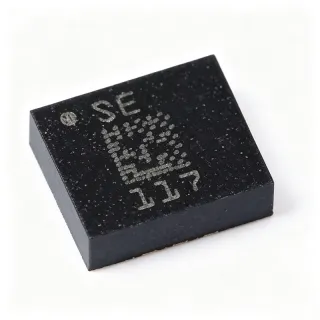
STM8L101F3P6 - 8-bit Ultra-Low-Power MCU, 8KB Flash | STMicroelectronics
MPN: STM8L101F3P6 ✓ Active| Qty | Unit Price | Extended |
|---|---|---|
| 1 | $1.77 | $1.77 |
| 10 | $1.59 | $15.90 |
| 100 | $1.42 | $142.00 |
| 500 | $1.28 | $640.00 |
| 1,000 | $1.15 | $1,150.00 |
STM8L101F3P6 Overview
An 8-bit microcontroller (MCU) is a single-chip computer with an 8-bit data bus, designed for embedded control applications. It integrates a processor core, memory (Flash, RAM, EEPROM), and peripherals (timers, communication interfaces, I/O ports) on a single integrated circuit. In the system hierarchy, an MCU is a type of embedded processor, which falls under the broader category of integrated circuits (ICs) and semiconductors. The STM8L101F3P6 is specifically optimized for ultra-low-power operation, making it a key component in the power management and energy-harvesting domain.
Key features of the STM8L101F3P6 include a supply voltage range of 1.8V to 3.6V, ultra-low power consumption with Halt mode at 0.3 µA and Active-halt mode at 0.8 µA, and a rich set of peripherals including multifunction timers, comparators, USART, SPI, and I2C interfaces. The device is available in a 20-pin TSSOP package (0.173", 4.40mm width), which is ideal for space-constrained designs. It operates over a temperature range of -40°C to +85°C, ensuring reliability in industrial and consumer environments.
From a technical depth perspective, the STM8L101F3P6 leverages ST's proprietary STM8 core, which is designed for low-power operation without compromising performance. The architecture includes a 24-bit linear addressing space, enabling efficient code execution and data handling. The device also features a flexible clock system with internal and external oscillators, allowing designers to optimize power consumption based on application requirements. The integrated data EEPROM provides non-volatile storage for calibration data or configuration parameters, reducing the need for external memory components.
Typical applications for the STM8L101F3P6 include battery-powered devices such as portable medical monitors, smart sensors, and wearable electronics. Its ultra-low-power modes make it ideal for energy-harvesting systems and IoT edge nodes where power efficiency is critical. The device's communication interfaces (USART, SPI, I2C) enable seamless integration with sensors, displays, and wireless modules, making it a versatile choice for embedded system designers.
When designing with the STM8L101F3P6, it is essential to consider the power supply decoupling and PCB layout to minimize noise and ensure stable operation. The device supports multiple low-power modes, and designers should leverage these modes to extend battery life in portable applications. Additionally, the STM8L101F3P6 is supported by ST's comprehensive development ecosystem, including the STM8CubeMX configuration tool and various IDEs, which accelerates firmware development and reduces time-to-market.
Drop-in alternatives for STM8L101F3P6 — same package, pin-to-pin compatible. Different-package parts requiring PCB rework are excluded.
Variants in this series
Same-series models that are drop-in compatible with STM8L101F3P6 (same form factor and footprint) — differing in RAM Size.
Quick Comparison Tool — Select alternative parts for side-by-side comparison:
STM8L101F3P6TR
✅ Drop-In📋 Reference alternative (not in catalog)
STM8L101F2P6
✅ Drop-In ⚠️ Specs Unverified📋 Reference alternative (not in catalog)
STM8L101F1P6
✅ Drop-In ⚠️ Specs Unverified📋 Reference alternative (not in catalog)
STM8L051F3P6
✅ Drop-In📋 Reference alternative (not in catalog)
STM8L151F3P6
✅ Drop-In ⚠️ Specs Unverified📋 Reference alternative (not in catalog)
STM8L101F3P6 Maximum Ratings & Electrical Characteristics
| Core | STM8 |
| Data Bus Width | 8 bit |
| Maximum Clock Frequency | 16 MHz |
| Program Memory Size | 8 KB (8K x 8) |
| Program Memory Type | Flash |
| RAM Size | 2 KB |
| Data EEPROM Size | 1.5 KB |
| Supply Voltage Range | 1.8 V to 3.6 V |
| Number of I/Os | 16 |
| Package | 20-TSSOP (0.173", 4.40mm Width) |
| Mounting Style | SMD/SMT |
| Operating Temperature Range | -40°C to +85°C |
| Halt Mode Current | 0.3 µA |
| Active-halt Mode Current | 0.8 µA |
| RoHS Status | Compliant |
STM8L101F3P6 Pin Configuration
| Pin 1 | PD0 — Port D0, general-purpose I/O |
| Pin 2 | PD1 — Port D1, general-purpose I/O |
| Pin 3 | NRST — Reset (active low) |
| Pin 4 | PA1 — Port A1, general-purpose I/O |
| Pin 5 | PA2 — Port A2, general-purpose I/O |
| Pin 6 | VSS — Ground |
| Pin 7 | VDD — Power supply |
| Pin 8 | PA3 — Port A3, general-purpose I/O |
| Pin 9 | PB0 — Port B0, general-purpose I/O |
| Pin 10 | PB1 — Port B1, general-purpose I/O |
| Pin 11 | PB2 — Port B2, general-purpose I/O |
| Pin 12 | PB3 — Port B3, general-purpose I/O |
| Pin 13 | PB4 — Port B4, general-purpose I/O |
| Pin 14 | PB5 — Port B5, general-purpose I/O |
| Pin 15 | PB6 — Port B6, general-purpose I/O |
| Pin 16 | PB7 — Port B7, general-purpose I/O |
| Pin 17 | PC0 — Port C0, general-purpose I/O |
| Pin 18 | PC1 — Port C1, general-purpose I/O |
| Pin 19 | PC2 — Port C2, general-purpose I/O |
| Pin 20 | PC3 — Port C3, general-purpose I/O |
Typical Applications
STM8L101F3P6 is suitable for 6 applications: Battery-Powered Medical Monitors, Smart Sensors and IoT Edge Nodes, Wearable Electronics, Industrial Automation and Control, Consumer Electronics and Remote Controls, Energy Harvesting Systems.
Battery-Powered Medical Monitors
The STM8L101F3P6 is ideal for portable medical monitors such as glucose meters and heart rate monitors. Its ultra-low power consumption (0.3 µA Halt mode) extends battery life, while the 16 MHz STM8 core provides sufficient processing power for sensor data acquisition and display control. The device's USART and I2C interfaces enable communication with external sensors and wireless modules, making it a versatile choice for medical IoT devices. Designers can leverage the low-power modes to achieve years of operation from a single coin cell battery, and the wide supply voltage range (1.8V to 3.6V) accommodates various battery chemistries. The integrated EEPROM allows storing calibration data and patient parameters without external memory, reducing BOM cost and board space.
Recommended
Smart Sensors and IoT Edge Nodes
The STM8L101F3P6 is well-suited for smart sensors and IoT edge nodes that require low power and reliable operation. Its ultra-low-power modes allow the device to sleep for extended periods and wake up only when needed, conserving energy in battery-powered deployments. The device's SPI and I2C interfaces enable seamless connection to a wide range of sensors, including temperature, humidity, and motion sensors. The 16 MHz clock speed ensures responsive data processing, while the 8 KB Flash provides ample space for firmware and sensor calibration data. The STM8L101F3P6's robust design, with an operating temperature range of -40°C to +85°C, makes it suitable for outdoor and industrial environments. Designers can use the STM8CubeMX tool to quickly configure peripherals and generate initialization code, accelerating development.
Recommended
Wearable Electronics
The STM8L101F3P6 is an excellent choice for wearable devices such as fitness trackers and smartwatches. Its compact 20-pin TSSOP package and low power consumption make it ideal for space-constrained, battery-powered designs. The device's 16 MHz core can handle sensor fusion algorithms and user interface updates, while the integrated comparators can be used for touch sensing or battery monitoring. The STM8L101F3P6 supports multiple low-power modes, allowing the device to achieve long battery life between charges. The I2C interface is perfect for connecting to accelerometers and gyroscopes, and the SPI interface can drive small displays. With a supply voltage range of 1.8V to 3.6V, the device can be powered directly from a lithium-ion battery or a coin cell. The STM8L101F3P6's robust ESD protection ensures reliability in wearable applications where the device is frequently handled.
Recommended
Industrial Automation and Control
The STM8L101F3P6 is suitable for industrial automation applications such as sensor nodes, motor control, and process monitoring. Its wide operating temperature range (-40°C to +85°C) and robust design ensure reliable operation in harsh industrial environments. The device's USART, SPI, and I2C interfaces enable communication with industrial sensors, actuators, and controllers. The 16 MHz clock speed provides sufficient processing power for real-time control loops, while the 8 KB Flash allows for complex firmware. The STM8L101F3P6's low power consumption is beneficial for remote industrial sensors powered by batteries or energy harvesting. The integrated EEPROM can store configuration parameters and calibration data, reducing the need for external memory. Designers can use the STM8L101F3P6 in conjunction with ST's motor control libraries to implement efficient motor drives.
Recommended
Consumer Electronics and Remote Controls
The STM8L101F3P6 is ideal for consumer electronics such as remote controls, smart home devices, and small appliances. Its ultra-low power consumption ensures long battery life, which is critical for remote controls that may be used infrequently. The device's 16 MHz core can handle IR signal encoding and decoding, while the I2C interface can connect to touch sensors or ambient light sensors. The STM8L101F3P6's small package and low cost make it an attractive choice for high-volume consumer products. The device supports multiple low-power modes, allowing it to wake up quickly when a button is pressed. The integrated comparators can be used for battery voltage monitoring, and the EEPROM can store user preferences. With a supply voltage range of 1.8V to 3.6V, the device can be powered by two AA batteries or a single lithium cell.
Recommended
Energy Harvesting Systems
The STM8L101F3P6 is well-suited for energy harvesting systems that collect energy from solar, thermal, or vibration sources. Its ultra-low power consumption (0.3 µA Halt mode) allows the device to operate with minimal energy input, making it ideal for self-powered sensors and wireless nodes. The device's wide supply voltage range (1.8V to 3.6V) is compatible with energy harvesting power management ICs that output a regulated voltage. The STM8L101F3P6 can wake up periodically to take measurements and transmit data, then return to sleep to conserve energy. The integrated EEPROM can store measurement data during power outages, ensuring data integrity. The device's communication interfaces enable connection to low-power radios such as LoRa or BLE, allowing for long-range data transmission. Designers can optimize the system's power budget by using the STM8L101F3P6's various low-power modes and clock gating features.
Recommended
Recommended Products Summary
Engineering reference data for STM8L101F3P6 — comparison, design guidance, and compliance information.
Selection Guide
Comparison with Alternatives
| Parameter | This Product | STM8L101F3P6TR | STM8L101F2P6 | STM8L101F1P6 | STM8L051F3P6 | STM8L151F3P6 |
|---|---|---|---|---|---|---|
| Package | 20-TSSOP | 20-TSSOP | 20-TSSOP | 20-TSSOP | 20-TSSOP | 20-TSSOP |
| Brand | STMicroelectronics | STMicroelectronics | STMicroelectronics | STMicroelectronics | STMicroelectronics | STMicroelectronics |
| Flash Memory | 8 KB | 8 KB | 4 KB | 2 KB | 8 KB | 8 KB |
| RAM | 2 KB | 2 KB | 1 KB | 1 KB | 2 KB | 2 KB |
| ADC | None | None | None | None | 12-bit | 12-bit |
| DMA | None | None | None | None | Yes | Yes |
| Supply Voltage | 1.8V to 3.6V | 1.8V to 3.6V | 1.8V to 3.6V | 1.8V to 3.6V | 1.8V to 3.6V | 1.8V to 3.6V |
| Max Clock Frequency | 16 MHz | 16 MHz | 16 MHz | 16 MHz | 16 MHz | 16 MHz |
Key Differentiators
- Ultra-low power consumption with 0.3 µA Halt mode (vs STM8L051F3P6)
- Lower cost due to simpler peripheral set (vs STM8L151F3P6)
- Same package and pinout as STM8L101F3P6TR (vs STM8L101F3P6TR)
Design Notes
The STM8L101F3P6 operates from 1.8V to 3.6V. Use a low-dropout regulator (LDO) to provide a stable supply voltage if the input source varies. Place a 100nF decoupling capacitor close to the VDD pin and a 1µF capacitor on the VDD rail to filter high-frequency noise. In battery-powered designs, leverage the Halt and Active-halt modes to minimize current consumption; ensure the device is properly configured to wake up from these modes via interrupts or reset.
For the 20-pin TSSOP package, ensure adequate copper pour for the ground plane to reduce noise and improve thermal performance. Keep the crystal oscillator (if used) close to the MCU and route the clock traces with controlled impedance. Use short, wide traces for power and ground connections. Place the decoupling capacitors as close as possible to the VDD and VSS pins to minimize parasitic inductance. Follow ST's layout guidelines for the STM8L family to ensure reliable operation.
A common pitfall is forgetting to configure the unused I/O pins to a defined state (e.g., input with pull-up or output low) to avoid floating inputs and excessive current consumption. Also, ensure the NRST pin is properly pulled up with a 100nF capacitor to ground to prevent spurious resets. When using the USART, SPI, or I2C interfaces, verify the alternate function mapping in the datasheet to avoid pin conflicts. Finally, do not exceed the absolute maximum ratings for supply voltage and I/O pins to prevent damage.
Compliance Information
RoHS compliant per STMicroelectronics product page. Not AEC-Q100 qualified. Halogen-free status not specified in the provided data.