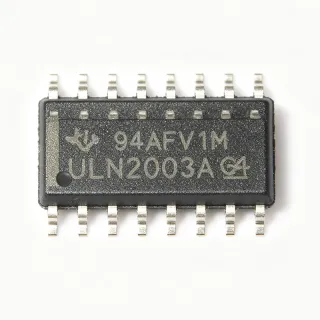
TUSB8041IRGCT - 4-Port USB 3.0 Hub 5Gbps VQFN-64 | Texas Instruments
MPN: TUSB8041IRGCT ✓ Active| Qty | Unit Price | Extended |
|---|---|---|
| 1 | $0 | $0.00 |
| 10 | $0 | $0.00 |
| 100 | $0 | $0.00 |
| 500 | $0 | $0.00 |
| 1,000 | $0 | $0.00 |
TUSB8041IRGCT Overview
A USB 3.0 hub controller is an integrated circuit that fans a single upstream SuperSpeed USB link out to multiple downstream ports, handling enumeration, transaction translation, and power management transparently to the host. Hub controllers sit in the USB interconnect tier of the system I/O hierarchy: host controller -> hub controller -> downstream devices, bridging the gap between a PC or embedded host and the peripherals it must serve.
The TUSB8041 supports USB 3.0 SuperSpeed (5 Gbps) operation on all four downstream ports while remaining backward compatible with USB 2.0 and USB 1.1 devices on the same ports. It provides GPIO, I2C, and SMBus interfaces for configuration and status monitoring, allowing designers to customize hub behavior, set port modes, and read fault status in embedded systems. The industrial temperature rating (-40C to +85C) of the TUSB8041I variant makes it suitable for deployments beyond office-climate conditions.
Architecturally, the device integrates the SuperSpeed hub repeater, USB 2.0 hub engine, and configuration ROM/EEPROM loading logic in a single die. Configuration can be performed via an external serial EEPROM or through the SMBus/I2C host interface, eliminating external glue logic. Integrated charge-pump and linear regulators generate the internal core supply from a single 3.3 V rail, simplifying power tree design.
Typical applications include docking stations, port replicators, industrial PC and HMI USB expansion, embedded computing boards, and test and measurement instrumentation that requires multiple robust SuperSpeed ports from one upstream connection.
Design consideration: USB 3.0 is a multi-gigabit differential signaling standard, so the 90-ohm differential impedance routing, length matching, and AC-coupling capacitor placement for the SuperSpeed pairs dominate signal integrity; place the device close to both the upstream connector and EEPROM, and follow the layout guidelines in the manufacturer datasheet.
This page synthesizes verified distributor data, drop-in alternatives, pricing tiers, and practical design notes not found in the manufacturer datasheet alone, with pricing references stated as of 2026-09-03.
Drop-in alternatives for TUSB8041IRGCT — same package, pin-to-pin compatible. Different-package parts requiring PCB rework are excluded.
Variants in this series
Same-series models that are drop-in compatible with TUSB8041IRGCT (same form factor and footprint) — differing in Function, Package, USB Standard.
Quick Comparison Tool — Select alternative parts for side-by-side comparison:
TUSB8041RGCT
✅ Drop-In📋 Reference alternative (not in catalog)
TUSB8041IRGCR
✅ Drop-In📋 Reference alternative (not in catalog)
TUSB8041IRGCT Specifications
| Function | 4-port SuperSpeed USB 3.0 hub controller |
| USB Standard | USB 3.0 (backward compatible with USB 2.0 / USB 1.1) |
| Number of Downstream Ports | 4 |
| Data Rate | 5 Gbps (SuperSpeed) |
| Configuration Interfaces | GPIO, I2C, SMBus |
| Supply Voltage | 1.10 V, 3.30 V |
| Operating Temperature Range | -40C to +85C (industrial) |
| Package | 64-VQFN (RGC), 9x9 mm |
| Mounting Type | Surface Mount |
| Number of Pins | 64 |
| Commercial Temperature Variant | TUSB8041 (0C to 70C) |
| External Configuration Memory | Serial EEPROM supported |
TUSB8041IRGCT 64-vqfn (rgc), 9x9 mm Pin Configuration Guide
Pin configuration for TUSB8041IRGCT (64-vqfn (rgc), 9x9 mm package). Pin numbering, functions, and connection diagrams are defined in the manufacturer datasheet. Refer to it for the exact footprint and soldering guidelines.

No detailed pinout data available for TUSB8041IRGCT.
Refer to the datasheet for full pin configuration.
Typical Applications
TUSB8041IRGCT is suitable for 6 applications: USB Docking Stations, Industrial PC and HMI USB Expansion, Embedded Computing Boards, Test and Measurement Instrumentation, Port Replicators and Monitor Hubs, Automotive-Adjacent and Infotainment Development.
USB Docking Stations
The TUSB8041IRGCT fits docking stations because it multiplies a single host SuperSpeed USB 3.0 port into four independent 5-Gbps downstream ports, matching the port-count and bandwidth demands of modern docks that simultaneously serve storage, displays via bridge chips, and peripherals. Its 5 Gbps per-port throughput prevents the bottleneck that a 480-Mbps USB 2.0 hub would impose when multiple high-bandwidth devices enumerate at once. In a typical dock topology, the hub's upstream port connects to the host PC through the docking connector, and downstream ports feed discrete device connectors; GPIO and SMBus interfaces allow the dock microcontroller to read per-port attach status and control power switching. Careful 90-ohm differential routing within the dock PCB and proper AC-coupling placement preserve the 5-Gbps eye diagram.
Recommended
Industrial PC and HMI USB Expansion
Industrial PCs and human-machine interface panels benefit from the TUSB8041IRGCT's -40C to +85C industrial temperature rating, which matches the extended environmental envelope of factory-floor electronics where 0C to 70C commercial parts risk parametric drift. The hub expands one host port from the compute module into four service ports for barcode scanners, maintenance laptops, and vision sensors, each running at native 5 Gbps SuperSpeed without bandwidth sharing penalties. Its SMBus/I2C management interface lets the system controller verify hub health and port state remotely, supporting predictive maintenance schemes. Because industrial enclosures often limit airflow, designers should confirm the 64-VQFN thermal performance at expected load currents per the datasheet power tables and provide adequate ground-plane copper under the exposed pad.
Recommended
Embedded Computing Boards
Single-board computers and embedded carriers use the TUSB8041IRGCT to fan out limited SoC host ports into the four or more USB connectors users expect. The device's EEPROM-based configuration lets each board carry its own vendor ID and serial strings for a branded enumeration experience, while the SMBus option allows the BMC or FPGA to reconfigure or monitor the hub at runtime. Backward compatibility with USB 2.0 and 1.1 means boot-time keyboards and flash programmers attach to the same ports as SuperSpeed storage. Layout on dense embedded boards demands length-matched SuperSpeed pairs and reference-plane continuity; placing the hub within a few centimeters of the host connector keeps traces under recommended length limits and avoids the need for equalization tuning.
Recommended
Test and Measurement Instrumentation
Bench instruments, data loggers, and protocol analyzers rely on the TUSB8041IRGCT to provide multiple host-facing ports for data export, control, and instrument chaining at full 5-Gbps SuperSpeed rates. The industrial -40C to +85C rating covers unconditioned lab trailers and field-deployed measurement units. Because the hub core is integrated - repeater, USB 2.0 engine, and configuration logic on one die - designers avoid multi-chip hub stacks that add jitter at 5 Gbps. GPIO pins report over-current and remote-wakeup events to the instrument's MCU, enabling graceful fault handling. Instrument front panels rarely offer thermal headroom, so verify VQFN-64 junction temperature using the datasheet thermal resistance with the enclosure's natural-convection assumptions before finalizing the mechanical design.
Recommended
Port Replicators and Monitor Hubs
Monitor-embedded USB hubs and port replicators use the TUSB8041IRGCT to deliver four downstream ports from a single USB upstream cable, with 5 Gbps per port ensuring that storage and cameras attached to the monitor are not throttled. The single 3.3 V main rail with integrated internal regulators simplifies the monitor's power tree, which is often constrained by the display power budget. SMBus connectivity to the monitor scaler allows on-screen-display (OSD) control of port power states. The commercial TUSB8041 variant suffices for consumer monitors, while the industrial I-graded IRGCT covers monitor-hub designs destined for digital signage in unconditioned environments where -40C cold start is a requirement rather than an option.
Recommended
Automotive-Adjacent and Infotainment Development
While the TUSB8041IRGCT itself is not automotive-qualified, it serves as the development and prototyping companion to the AEC-Q100-qualified TUSB8041IPAPQ1 used in production infotainment USB hubs. Engineering teams can validate hub configuration schemes, EEPROM images, and signal-integrity margins on IRGCT-based bench boards before committing to the Q1 device, shortening development cycles. Both parts share the same hub architecture and configuration interfaces (GPIO, I2C, SMBus), so firmware and test scripts port with minimal change. When the production platform requires the 5-Gbps port count of a four-port hub with automotive qualification, transition from the IRGCT prototype to TUSB8041IPAPQ1, re-verifying pin mapping because the PAP package differs from the RGC footprint.
Recommended
Recommended Products Summary
Engineering reference data for TUSB8041IRGCT — comparison, design guidance, and compliance information.
Selection Guide
Comparison with Alternatives
| Parameter | This Product | TUSB8041RGCT | TUSB8041IRGCR |
|---|---|---|---|
| Package | 64-VQFN (RGC) 9x9 mm | 64-VQFN (RGC) 9x9 mm - same | 64-VQFN (RGC) 9x9 mm - same |
| Brand | Texas Instruments | Texas Instruments | Texas Instruments |
| USB Standard | USB 3.0 (5 Gbps) | USB 3.0 (5 Gbps) | USB 3.0 (5 Gbps) |
| Downstream Ports | 4 | 4 | 4 |
| Operating Temperature | -40C to +85C (industrial) | 0C to 70C (commercial) | -40C to +85C (industrial) |
| Configuration Interfaces | GPIO, I2C, SMBus | GPIO, I2C, SMBus | GPIO, I2C, SMBus |
| Supply Voltage | 1.10 V, 3.30 V | 1.10 V, 3.30 V | 1.10 V, 3.30 V |
Key Differentiators
- Industrial temperature rating (vs TUSB8041RGCT)
- Full 5-Gbps per-port SuperSpeed throughput (vs Generic USB 2.0 hub controllers)
- Identical pinout within the TUSB8041 family (vs TUSB8041IRGCR)
Design Notes
USB 3.0 SuperSpeed pairs operate at 5 Gbps, so route the upstream and four downstream differential pairs at 90-ohm differential impedance with length matching within the tolerance stated in the TI TUSB8041 datasheet layout guidelines. Keep pairs referenced to continuous ground planes, avoid plane splits under pairs, and place AC-coupling capacitors on the SuperSpeed lines as close to the specified position per the datasheet as possible. Limit stub lengths on any test points - unreferenced vias and stubs at 5 Gbps cause reflections that close the eye diagram. Verify with TDR and an eye-pattern test on first-article boards.
The 64-VQFN (RGC) package has an exposed pad that must be soldered to a grounded thermal pad on the PCB with an array of vias to the ground plane for both thermal relief and low-inductance return paths - essential for 5-Gbps signal integrity. Place the configuration EEPROM close to the hub and keep its I2C/SMBus traces short. Provide 3.3 V and 1.1 V decoupling per the datasheet pin recommendation, with bulk capacitance near the device. Follow the pin 1 marker orientation when creating the footprint to avoid a 90-degree rotation error, which is a common VQFN-64 rework cause.
Do not mix up the commercial TUSB8041 (0C to 70C) and industrial TUSB8041I (-40C to +85C) orderable codes when generating BOMs - the suffixes RGCT versus IRGCT determine temperature grade, and substituting commercial for industrial parts in fielded equipment risks cold-start failures. Also confirm whether your design requires the RGCT (smaller tape-and-reel quantity) or RGCR (full reel) packaging to match assembly house pick-and-place volume. Verify hub configuration source (EEPROM vs SMBus strapping) at power-up, since an unprogrammed EEPROM leaves the hub with default enumeration strings.
Compliance Information
Compliance statuses not stated in the provided data; verify on the TI product page quality/environmental section. AEC-Q100: the IRGCT is the standard industrial part; the automotive-qualified family member is TUSB8041IPAPQ1.