Produtos (39.000+)

K4B4G1646D-BYH9 - 4Gb DDR3L SDRAM 256Mx16 1333Mbps | Samsung
K4B4G1646D-BYH9

K4B4G1646D-BYH9 - 4Gb DDR3L SDRAM 256Mx16 1333Mbps | Samsung

The Samsung K4B4G1646D-BYH9 is a 4Gb DDR3L SDRAM memory device organized as 256M x 16 bits across 8 internal banks. It operates at a data rate of 1333 Mbps per pin and is designed for low-voltage applications with a supply voltage of 1.35V. The device is housed in a 96-ball FBGA package and is lead-free and halogen-free, compliant with RoHS regulations. DDR3L (Double Data Rate 3 Low Voltage) is a type of synchronous dynamic random-access memory (SDRAM) that operates at a lower voltage (1.35V) compared to standard DDR3 (1.5V), reducing power consumption by about 20% while maintaining similar performance. It is part of the DDR3 memory family, which succeeded DDR2 and is widely used in computing, networking, and embedded systems. Key features include programmable CAS latency, write latency, on-die termination (ODT), and internal calibration for signal integrity. The device supports advanced DDR3 features such as posted CAS, programmable CWL, and asynchronous reset. It is designed for high-speed data transfer and is suitable for applications requiring reliable and efficient memory. The K4B4G1646D-BYH9 uses a 4Gb D-die architecture, which is the fourth generation of Samsung's DDR3 die, offering improved performance and power efficiency. The 96FBGA package provides a compact footprint and excellent thermal characteristics, making it suitable for space-constrained designs. Typical applications include personal computers, laptops, servers, networking equipment, automotive infotainment systems, and medical devices. Its low-voltage operation makes it ideal for battery-powered and energy-efficient systems. When designing with this device, ensure proper signal integrity by following the layout guidelines in the datasheet, including controlled impedance traces and adequate decoupling. The device supports a temperature range of 0°C to 85°C, making it suitable for commercial and industrial environments.

Cotação Contato
K4B4G1646D-BYH90 - 4Gb DDR3L SDRAM x16 96FBGA | Samsung
K4B4G1646D-BYH90

K4B4G1646D-BYH90 - 4Gb DDR3L SDRAM x16 96FBGA | Samsung

The Samsung K4B4G1646D-BYH90 is a 4Gb (512M x 16) DDR3L SDRAM device in a 96-ball FBGA package, designed for high-speed double-data-rate transfer rates up to 2133 Mb/sec/pin (DDR3-2133). It operates from a 1.35V supply (1.283V to 1.45V range) and is also compatible with 1.5V DDR3 operation, offering flexibility in power-sensitive applications. The device features a 16-bit I/O interface, 8 internal banks, and supports burst lengths of 8 and 4 with a burst chop option. DDR3L SDRAM is a type of dynamic random-access memory that operates at a lower voltage (1.35V) compared to standard DDR3 (1.5V), reducing power consumption by up to 20% while maintaining similar performance. It is part of the DDR3 SDRAM family, which uses double data rate architecture to transfer data on both edges of the clock, and is widely used in computing, networking, and embedded systems where high bandwidth and low power are critical. Key features include programmable CAS latency (CL) and CWL, on-die termination (ODT) using the ODT pin, internal self-calibration via ZQ calibration, and asynchronous reset. The device supports auto precharge, data mask, and dynamic on-chip termination, enhancing signal integrity and simplifying system design. It is lead-free and halogen-free, RoHS compliant, and operates over a temperature range of 0°C to +85°C. The K4B4G1646D uses a D-die process and is available in a 96-ball FBGA package (ball pitch 0.8mm), providing a compact footprint for space-constrained designs. The device includes a programmable output driver impedance and supports DLL (Delay Locked Loop) for precise timing. It also features a temperature-compensated self-refresh (TCSR) mode to reduce power in standby. Typical applications include DDR3L memory modules for laptops, embedded systems, networking equipment, and industrial computing. Its low voltage and high speed make it ideal for battery-powered devices and high-performance computing platforms. The device is also suitable for use in servers and storage systems where reliability and efficiency are paramount. When designing with this device, ensure proper decoupling capacitors near the power pins and follow the PCB layout guidelines in the datasheet to maintain signal integrity at 2133 Mbps. The ZQ pin requires a 240-ohm resistor to ground for calibration, and the VREFCA and VREFDQ should be properly bypassed.

Cotação Contato
K4B4G1646D-BYK0 - 4Gb DDR3L SDRAM 256Mx16 | Samsung
K4B4G1646D-BYK0

K4B4G1646D-BYK0 - 4Gb DDR3L SDRAM 256Mx16 | Samsung

The Samsung K4B4G1646D-BYK0 is a 4Gb DDR3L SDRAM organized as 256Mx16, operating at 1.35V (also compatible with 1.5V) in a 96-ball FBGA package. It supports data rates up to 1600 Mbps (PC3-12800) and is designed for a wide range of computing, networking, and embedded applications. DDR3L SDRAM is a type of dynamic random-access memory that operates at a lower voltage (1.35V) compared to standard DDR3 (1.5V), reducing power consumption by up to 20% while maintaining similar performance. It is part of the DDR3 memory family, which uses an 8n-prefetch architecture and on-die termination to achieve high-speed data transfer. DDR3L is commonly used in laptops, servers, and embedded systems where power efficiency is critical. Key features include a 4Gb density, 16-bit I/O width, 1.35V core supply (with 1.5V compatibility), and a 96-ball FBGA package. The device supports programmable CAS latency, burst lengths of 8 and 4 (with burst chop), and on-die termination (ODT) for improved signal integrity. It is lead-free and halogen-free, compliant with RoHS standards. The K4B4G1646D-BYK0 uses Samsung's D-die process technology, offering a balance of performance and power efficiency. The memory operates over a temperature range of 0°C to 85°C (TC), making it suitable for commercial and industrial applications. The 96-ball FBGA package provides a compact footprint for space-constrained designs. Typical applications include DDR3L memory modules for laptops and all-in-one PCs, networking equipment such as routers and switches, and embedded systems like single-board computers (e.g., OLinuXino boards). Its low voltage and high density make it ideal for power-sensitive designs. When designing with this device, ensure proper decoupling capacitors near the power pins and follow the layout guidelines in the datasheet to minimize signal integrity issues. The device supports both 1.35V and 1.5V operation, but the voltage must be consistent across the memory system.

Cotação Contato
K4B4G1646D-BYK00 - 4Gb DDR3L SDRAM 256Mx16 96FBGA | Samsung
K4B4G1646D-BYK00

K4B4G1646D-BYK00 - 4Gb DDR3L SDRAM 256Mx16 96FBGA | Samsung

The Samsung K4B4G1646D-BYK00 is a 4Gb DDR3L SDRAM organized as 256M x 16, operating at 1.35V nominal supply with dual-voltage support for 1.5V operation. It comes in a 96-ball TFBGA package and is designed for high-bandwidth memory applications in computing, networking, and embedded systems. DDR3L (Low Voltage DDR3) is a type of synchronous dynamic random-access memory that operates at 1.35V, reducing power consumption by up to 20% compared to standard 1.5V DDR3. It is part of the DDR3 SDRAM family, which uses double data rate architecture to transfer data on both edges of the clock, achieving high data rates up to 1600 Mbps per pin. DDR3L is widely used in mobile devices, laptops, and energy-efficient servers where power efficiency is critical. Key features include a data rate of 1600 Mbps (PC3-12800), programmable CAS latency, and support for both 1.35V and 1.5V supplies, making it versatile for various system designs. The device also includes auto precharge, asynchronous reset, ZQ calibration, data mask, and dynamic on-chip termination (DTC), enhancing signal integrity and simplifying memory controller design. Technically, the K4B4G1646D-BYK00 uses Samsung's D-die process technology, offering improved performance and power characteristics. The 96-ball TFBGA package provides a compact footprint with excellent thermal and electrical performance. The device supports a temperature range of 0°C to 85°C, suitable for commercial and industrial applications. Typical applications include DDR3L memory modules for laptops, embedded systems, networking equipment, and industrial PCs. Its low voltage operation makes it ideal for battery-powered devices and energy-conscious designs. When designing with this memory, ensure proper decoupling and signal integrity practices, including matched trace lengths and termination resistors, to achieve reliable operation at 1600 Mbps. The dual-voltage capability allows flexible power supply design, but careful attention to VDD and VDDQ levels is required.

Cotação Contato
K4B4G1646D-BYMA0 - 4Gb DDR3L SDRAM x16 96FBGA | Samsung
K4B4G1646D-BYMA0

K4B4G1646D-BYMA0 - 4Gb DDR3L SDRAM x16 96FBGA | Samsung

The Samsung K4B4G1646D-BYMA0 is a 4Gb DDR3L SDRAM organized as 256M x 16, operating at 1.35V with a data rate of 1866 Mbps (PC3-14900). It is housed in a 96-ball FBGA package and is lead-free and halogen-free, compliant with RoHS. This memory device is designed for high-performance computing, networking, and industrial applications where low power and high bandwidth are critical. DDR3L SDRAM (Double Data Rate 3 Low Voltage) is a type of synchronous dynamic random-access memory that operates at 1.35V, reducing power consumption by about 20% compared to standard 1.5V DDR3. It is part of the DDR3 family, which uses an 8n-prefetch architecture to achieve high data rates. DDR3L is backward-compatible with DDR3 slots, making it a popular choice for upgrading existing systems while saving energy. Key features include a 256M x 16 organization, 1.35V power supply, 1866 Mbps data rate, and a 96-ball FBGA package. It supports auto precharge, asynchronous reset, ZQ calibration, data mask, and dynamic on-chip termination (ODT). The operating temperature range is 0°C to +85°C, suitable for commercial and industrial environments. The device uses a 4Gb D-die, which is the fourth generation of Samsung's DDR3L die, offering improved performance and power efficiency. The 96-ball FBGA package provides excellent thermal and electrical characteristics, enabling high-speed signal integrity in dense PCB layouts. Typical applications include servers, networking equipment, industrial PCs, and embedded systems that require high memory density and low power. The 1.35V operation makes it ideal for power-sensitive designs, such as battery-powered devices and energy-efficient data centers. When designing with this component, ensure proper decoupling capacitors near the power pins and follow the layout guidelines in the datasheet to maintain signal integrity at 1866 Mbps. The ZQ calibration pin must be connected to a 240-ohm resistor to ground for proper on-die termination calibration.

Cotação Contato
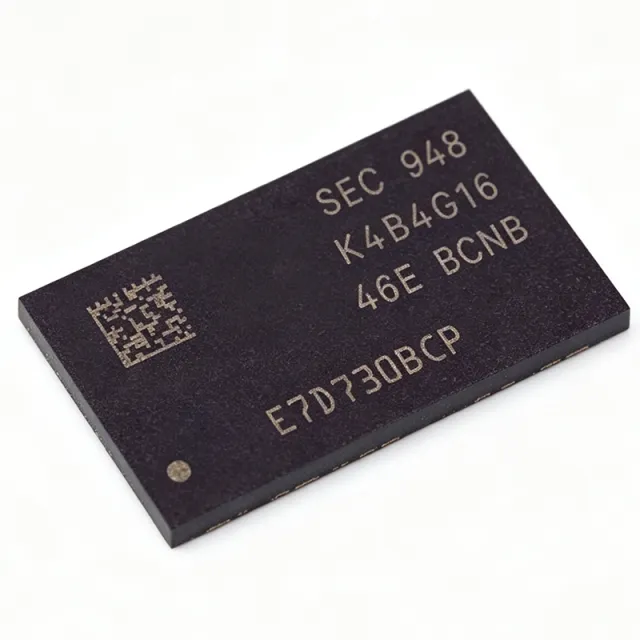
K4B4G1646E-BCNB - 4Gb DDR3 SDRAM, 256Mx16, 1.35V | Samsung
K4B4G1646E-BCNB

K4B4G1646E-BCNB - 4Gb DDR3 SDRAM, 256Mx16, 1.35V | Samsung

The Samsung K4B4G1646E-BCNB is a 4Gb DDR3 SDRAM organized as 256Mx16, operating at 1.35V (low voltage) with a data rate of 1866 Mbps. It is ideal for mobile and embedded applications requiring high bandwidth and low power consumption. The device is housed in a 96-ball FBGA package and is RoHS compliant.

USD $13,52 Contato
K4B4G1646E-BMK0 - 4Gb DDR3L SDRAM 1600Mbps | Samsung
K4B4G1646E-BMK0

K4B4G1646E-BMK0 - 4Gb DDR3L SDRAM 1600Mbps | Samsung

The Samsung K4B4G1646E-BMK0 is a 4Gb DDR3L SDRAM organized as 256M x 16, operating at a speed grade of 1600 Mbps (DDR3L-1600) with a supply voltage of 1.35V. It is housed in a 96-ball FBGA package, designed for high-density memory applications in computing, networking, and industrial systems. DDR3L SDRAM is a type of double data rate synchronous dynamic random-access memory that operates at a lower voltage (1.35V) compared to standard DDR3 (1.5V), reducing power consumption by approximately 15% while maintaining similar performance. It is part of the DDR3 memory family, which uses an 8n-prefetch architecture to achieve high data rates, and is widely used in servers, laptops, and embedded systems. Key features include a data rate of 1600 Mbps, a 16-bit I/O width, and support for various functions such as auto precharge, asynchronous reset, ZQ calibration, dynamic on-chip termination (ODT), and data mask. The device operates over a temperature range of -40°C to +95°C, making it suitable for industrial and automotive applications. The K4B4G1646E uses Samsung's E-die process technology, which offers improved performance and power efficiency compared to earlier die revisions. It supports programmable CAS latency, burst length of 8, and on-die termination for signal integrity. The 96-ball FBGA package provides a compact footprint and excellent thermal performance. Typical applications include main memory in embedded systems, networking equipment, industrial PCs, and automotive infotainment. Its low voltage and wide temperature range make it ideal for power-sensitive and harsh environments. When designing with this device, ensure proper decoupling capacitors near the power pins and follow the layout guidelines in the datasheet to minimize signal integrity issues. The ZQ calibration pin requires a 240-ohm resistor to ground for proper operation.

Cotação Contato
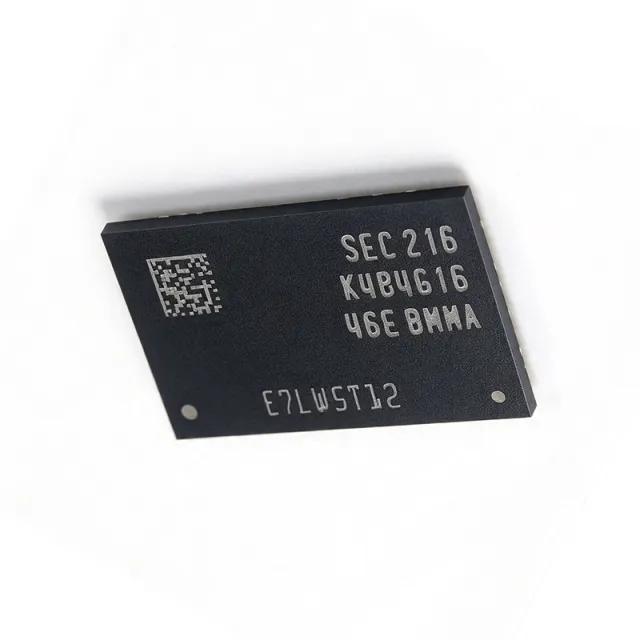
K4B4G1646E-BMMA - 4Gb DDR3L SDRAM 256Mx16 | Samsung
K4B4G1646E-BMMA

K4B4G1646E-BMMA - 4Gb DDR3L SDRAM 256Mx16 | Samsung

The Samsung K4B4G1646E-BMMA is a 4Gb DDR3L SDRAM organized as 256M x 16, operating at 1.35V with a data rate of 1600 Mbps (PC3L-12800). It is housed in a 96-ball FBGA package and supports a temperature range of -40°C to +95°C, making it suitable for industrial and automotive applications. This memory device features auto precharge, asynchronous reset, ZQ calibration, dynamic on-chip termination (DTC), and data mask functions, ensuring reliable and efficient operation in high-speed systems. DDR3L SDRAM (Double Data Rate 3 Low Voltage) is a type of synchronous dynamic random-access memory that operates at a lower voltage (1.35V) compared to standard DDR3 (1.5V), reducing power consumption by up to 20% while maintaining similar performance. It is part of the DDR3 memory family, which is widely used in computing, networking, and embedded systems. DDR3L is backward compatible with DDR3 slots, allowing flexible system design. Key features of the K4B4G1646E-BMMA include a 16-bit I/O interface, 8 internal banks, and support for burst lengths of 8 and 4 (with burst chop). It offers programmable CAS latency (CL) and additive latency (AL), and includes on-die termination (ODT) for improved signal integrity. The device also supports self-refresh and partial array self-refresh (PASR) for power saving in standby modes. Technically, the K4B4G1646E-BMMA uses Samsung's E-die process technology, which provides enhanced performance and lower power consumption compared to earlier die revisions. The 96-ball FBGA package measures 9mm x 13mm with a 0.8mm ball pitch, enabling high-density board layouts. The device is RoHS compliant and lead-free, meeting environmental standards. Typical applications include high-performance computing, networking equipment (routers, switches), industrial automation, automotive infotainment and ADAS, and medical imaging systems. Its wide temperature range and low voltage make it ideal for harsh environments where reliability is critical. When designing with this memory, ensure proper decoupling capacitors near the power pins and follow the layout guidelines in the datasheet to minimize signal integrity issues. The ZQ calibration pin requires a 240-ohm resistor to ground for correct impedance calibration.

USD $16,08 Contato
K4B4G1646E-BYK0 - 4Gb DDR3L SDRAM 256Mx16 | Samsung
K4B4G1646E-BYK0

K4B4G1646E-BYK0 - 4Gb DDR3L SDRAM 256Mx16 | Samsung

The Samsung K4B4G1646E-BYK0 is a 4Gb DDR3L SDRAM organized as 256M x 16, operating at 1.35V (DDR3L) with a data rate of DDR3-1600 (800 MHz). It comes in a 96-ball FBGA package (13 x 9 mm, 0.8 mm pitch) and is designed for high-performance computing, networking, and industrial applications requiring low power and high bandwidth. DDR3L SDRAM is a type of double data rate synchronous dynamic random-access memory that operates at a lower voltage (1.35V) compared to standard DDR3 (1.5V), reducing power consumption by up to 20% while maintaining similar performance. It is part of the DDR3 memory family, which uses an 8n-prefetch architecture to achieve high data rates. DDR3L is widely used in mobile devices, embedded systems, and servers where power efficiency is critical. Key features include a 4Gb density, x16 organization, and support for DDR3-1600 (800 MHz) operation. The device features on-die termination (ODT), ZQ calibration, and a programmable CAS latency. It operates over a temperature range of 0°C to +95°C (TC) and supports auto precharge and self-refresh modes. The 96-ball FBGA package provides a compact footprint suitable for space-constrained designs. The K4B4G1646E-BYK0 uses Samsung's E-die process technology, which offers improved performance and power efficiency compared to earlier die revisions. The device includes dynamic on-chip termination and asynchronous reset for robust signal integrity. It supports a burst length of 8 and a burst chop of 4, enabling flexible data access patterns. Typical applications include DDR3L memory modules for laptops, embedded computing, networking equipment, and industrial PCs. Its low voltage and high density make it ideal for power-sensitive designs. The device is also suitable for use in set-top boxes, routers, and other consumer electronics. When designing with this device, ensure proper decoupling capacitors near the power pins and follow the layout guidelines in the datasheet to maintain signal integrity at 800 MHz. The device requires a 1.35V supply and a separate VDDQ for the I/O, which should be regulated to the specified tolerances.

Cotação Contato
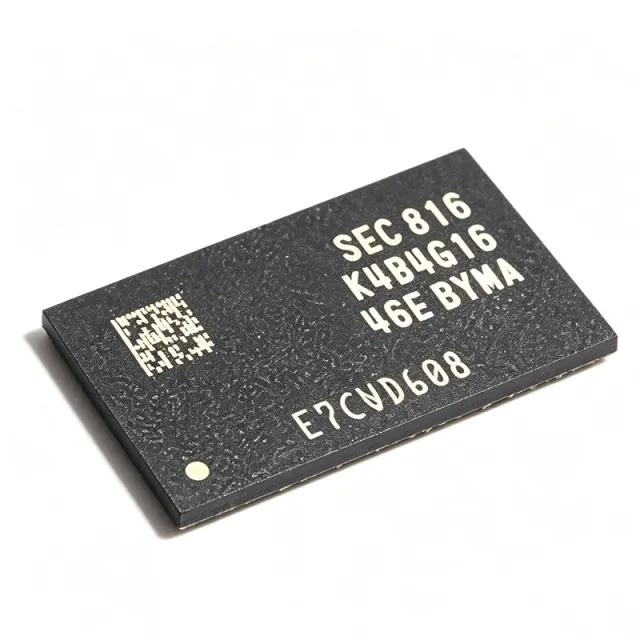
K4B4G1646E-BYMA - 4Gb DDR3L SDRAM 1866MHz | Samsung
K4B4G1646E-BYMA

K4B4G1646E-BYMA - 4Gb DDR3L SDRAM 1866MHz | Samsung

The Samsung K4B4G1646E-BYMA is a 4Gb (256M x 16) DDR3L SDRAM operating at 1.35V, designed for high-performance computing, networking, and industrial applications. It features a data rate of 1866 Mbps/pin (933 MHz clock) and is housed in a 96-ball FBGA package. This E-die DDR3L device supports JEDEC-standard DDR3L functionality, including dynamic on-chip termination (DTC), ZQ calibration, and data mask, ensuring signal integrity and reliable operation in dense memory systems. DDR3L SDRAM is a type of double data rate synchronous dynamic random-access memory that operates at a lower voltage (1.35V) compared to standard DDR3 (1.5V), reducing power consumption by up to 20% while maintaining compatibility with DDR3L and DDR3 systems. It is part of the memory hierarchy in computing systems, serving as main memory for processors, and is widely used in laptops, servers, embedded systems, and networking equipment. Key features include a 4Gb density organized as 256M x 16, a 1.35V power supply (with 1.28V to 1.575V range), a 933 MHz clock frequency, and a typical operating current of 14mA. The device supports auto precharge, asynchronous reset, and dynamic on-chip termination, enhancing performance and ease of use. The FBGA-96 package offers a compact footprint suitable for space-constrained designs. Technically, the K4B4G1646E-BYMA uses Samsung's advanced E-die process technology, providing high-speed operation with low power. It features programmable CAS latency, burst length, and output drive strength, allowing system designers to optimize performance. The device includes a temperature sensor for thermal management and supports on-die termination (ODT) for improved signal quality. Typical applications include DDR3L memory modules for laptops and ultrabooks, networking equipment such as routers and switches, industrial computing systems, and embedded applications requiring high-density, low-power memory. Its 1.35V operation makes it ideal for power-sensitive designs. When designing with this device, ensure proper decoupling capacitors near the power pins and follow the layout guidelines in the datasheet to minimize signal integrity issues. The device requires a stable 1.35V supply and a reference voltage (VREF) for optimal operation.

USD $14,32 Contato
K4B4G1646E-BYMATCV - 4Gb DDR3L SDRAM 96-FBGA | Samsung
K4B4G1646E-BYMATCV

K4B4G1646E-BYMATCV - 4Gb DDR3L SDRAM 96-FBGA | Samsung

The Samsung K4B4G1646E-BYMATCV is a 4Gb DDR3L SDRAM organized as 256M x 16, operating at 1.35V with a data rate of 1866Mbps (933MHz clock). It comes in a 96-ball FBGA package, offering high density and low power consumption for memory-intensive applications. DDR3L SDRAM (Double Data Rate 3 Low Voltage) is a type of synchronous dynamic random-access memory that operates at 1.35V, reducing power consumption by about 20% compared to standard 1.5V DDR3. It is part of the DDR3 family, which uses prefetch buffers and on-die termination to achieve high data rates. DDR3L is widely used in mobile devices, embedded systems, and networking equipment where power efficiency is critical. Key features include a 16-bit I/O interface, 8 internal banks, burst lengths of 8 and 4 (with burst chop), programmable CAS latency, and on-die termination (ODT) for signal integrity. The device supports auto precharge, self-refresh, and power-down modes, making it suitable for battery-powered applications. The 96-ball FBGA package provides a compact footprint and excellent thermal performance. Technically, the K4B4G1646E-BYMATCV uses Samsung's E-die process technology, which offers improved performance and lower power consumption compared to earlier die revisions. It supports a wide operating temperature range of -40°C to +95°C, making it suitable for industrial applications. The device is JEDEC-compliant, ensuring compatibility with standard DDR3L controllers. Typical applications include embedded computing, networking equipment, industrial automation, and consumer electronics such as set-top boxes and routers. Its low voltage and high density make it ideal for designs requiring large memory capacity with minimal power draw. When designing with this device, ensure proper decoupling capacitors near the power pins and follow the layout guidelines in the datasheet to maintain signal integrity at high speeds. The device requires a 1.35V supply and a separate VDDQ for the I/O, which should be regulated accurately.

Cotação Contato
K4B4G1646F-BYK0 - 4Gb DDR3L SDRAM 256Mx16 | Samsung
K4B4G1646F-BYK0

K4B4G1646F-BYK0 - 4Gb DDR3L SDRAM 256Mx16 | Samsung

The Samsung K4B4G1646F-BYK0 is a 4Gb DDR3L SDRAM organized as 256M x 16, operating at 1.35V/1.5V with a 96-ball FBGA package. It is designed for high-bandwidth memory applications, offering a data rate of 1866 Mbps (PC3L-14900) and a clock frequency of 933 MHz. The device supports standard DDR3L features including dynamic on-chip termination (DTC), ZQ calibration, and programmable CAS latency. DDR3L SDRAM is a type of double data rate synchronous dynamic random-access memory that operates at a lower voltage (1.35V) compared to standard DDR3 (1.5V), reducing power consumption by up to 20% while maintaining similar performance. It is part of the memory hierarchy in computing systems, serving as the main system memory for processors, and is widely used in laptops, servers, and embedded systems. Key features include a 4Gb density, 16-bit I/O width, 96-ball FBGA package, and support for 1.35V and 1.5V operation. The device offers a burst length of 8 and 4, programmable CAS latency, and on-die termination. It also includes auto precharge, self-refresh, and power-down modes for energy efficiency. The K4B4G1646F-BYK0 uses a high-performance CMOS process and features a pseudo-open-drain interface. It supports a wide operating temperature range of 0°C to 95°C (TC) and is RoHS compliant. The device is designed for reliable operation in demanding environments, with a typical refresh period of 7.8 us at 85°C. Typical applications include DDR3L memory modules for laptops, all-in-one PCs, and embedded systems, as well as networking equipment, industrial computers, and automotive infotainment systems. Its low voltage and high density make it ideal for power-sensitive designs. When designing with this device, ensure proper decoupling and signal integrity practices, including matched trace lengths and termination resistors, to achieve reliable high-speed operation.

Cotação Contato
K4B4G1646F-BYMA - 4Gb DDR3L SDRAM 256Mx16 | Samsung
K4B4G1646F-BYMA

K4B4G1646F-BYMA - 4Gb DDR3L SDRAM 256Mx16 | Samsung

The Samsung K4B4G1646F-BYMA is a 4-gigabit DDR3L SDRAM organized as 256M x 16, operating at 1.35V (1.28V~1.45V) and 1.5V (1.425V~1.575V). It comes in a 96-ball FBGA package with lead-free and halogen-free construction. This memory device supports data rates up to 1866 Mbps (PC3-14900) and features auto precharge, asynchronous reset, dynamic on-chip termination (DTC), ZQ calibration, and data mask functions. The operating temperature range is -40°C to +95°C, making it suitable for industrial and automotive applications. DDR3L SDRAM is a type of double data rate synchronous dynamic random-access memory that operates at a lower voltage (1.35V) compared to standard DDR3 (1.5V), reducing power consumption by about 20%. It is part of the DDR3 family, which uses an 8n-prefetch architecture to achieve high bandwidth. DDR3L is widely used in computing, networking, and embedded systems where power efficiency is critical. Key features include a 16-bit I/O interface, programmable CAS latency, burst lengths of 8 and 4 (with burst chop), on-die termination (ODT) for signal integrity, and a temperature-compensated self-refresh (TCSR) mode. The device supports DLL (Delay-Locked Loop) enabled mode for precise timing and has a 1KB page size. The FBGA-96 package provides a compact footprint suitable for high-density PCB designs. Technically, the K4B4G1646F-BYMA uses a 30nm-class process technology, enabling high density with low power. It incorporates a pseudo-open-drain interface for data strobe (DQS) and supports write leveling, read/write training, and multi-purpose register (MPR) for system calibration. The device is designed to meet JEDEC DDR3L standards, ensuring compatibility with standard memory controllers. Typical applications include laptops, servers, networking equipment, industrial PCs, and automotive infotainment systems. Its low voltage and wide temperature range make it ideal for battery-powered and thermally constrained environments. The 256M x 16 organization is suitable for systems requiring high-density memory with a 16-bit data bus. When designing with this device, ensure proper decoupling capacitors near the VDD and VDDQ pins, and follow the PCB layout guidelines for DDR3 routing to maintain signal integrity. The ZQ pin requires a 240-ohm resistor to ground for calibration.

Cotação Contato
K4B4G1646I-BYK0 - 4Gb DDR3L SDRAM 256Mx16 | Samsung
K4B4G1646I-BYK0

K4B4G1646I-BYK0 - 4Gb DDR3L SDRAM 256Mx16 | Samsung

The Samsung K4B4G1646I-BYK0 is a 4Gb DDR3L SDRAM organized as 256M x 16, operating at 1.35V with a data rate of 1866 Mbps (933 MHz clock). It is housed in a 96-ball FBGA package, offering high density and low power consumption for mobile and embedded applications. DDR3L SDRAM (Double Data Rate 3 Low Voltage) is a type of synchronous dynamic random-access memory that operates at 1.35V, reducing power consumption by about 20% compared to standard 1.5V DDR3. It is part of the DDR3 memory family, which uses double data rate signaling to transfer data on both edges of the clock, and is widely used in laptops, servers, and embedded systems where power efficiency is critical. Key features include a 4Gb density, 16-bit I/O width, 1.35V core voltage, and support for data rates up to 1866 Mbps. The device features on-die termination (ODT), programmable CAS latency, and burst lengths of 8 and 4. It also includes auto-refresh and self-refresh modes for power saving, making it suitable for battery-powered devices. The K4B4G1646I-BYK0 uses a high-performance CMOS process and a bank architecture of 8 banks, enabling high-speed random access. The FBGA-96 package provides excellent thermal and electrical performance, with a ball pitch of 0.8mm. The device supports a temperature range of 0°C to 95°C (case temperature), ensuring reliable operation in various environments. Typical applications include mobile devices, embedded computing, networking equipment, and industrial automation. Its low voltage and high density make it ideal for memory-intensive applications where space and power are constrained. When designing with this memory, ensure proper decoupling capacitors near the power pins and follow the layout guidelines in the datasheet to minimize signal integrity issues. The device requires a stable 1.35V supply and a reference voltage (VREF) for the I/O.

Cotação Contato
K4B4G1646Q - 4Gb DDR3L SDRAM x16 96FBGA | Samsung
K4B4G1646Q

K4B4G1646Q - 4Gb DDR3L SDRAM x16 96FBGA | Samsung

The Samsung K4B4G1646Q is a 4Gb (256Mx16) Q-die DDR3L SDRAM in a 96-ball FBGA package, operating at 1.35V. It is a high-density, low-power memory solution designed for a wide range of computing and embedded applications. DDR3L (Double Data Rate 3 Low Voltage) SDRAM is a type of synchronous dynamic random-access memory that operates at a reduced I/O voltage of 1.35V, compared to standard DDR3's 1.5V. This lower voltage reduces power consumption by approximately 15-20%, making it ideal for power-sensitive devices such as laptops, servers, and industrial systems. DDR3L is part of the DDR3 memory family, which uses an 8n-prefetch architecture to achieve high data rates, and is a predecessor to DDR4. Key features of the K4B4G1646Q include a 16-bit data bus, a data rate of up to 1866 Mbps (PC3-14900), and a 96-ball FBGA package. It is lead-free and halogen-free, and RoHS compliant. The device supports a burst length of 8 (BL8) and on-die termination (ODT) for improved signal integrity. It also features programmable CAS latency and additive latency, allowing system designers to optimize performance. Technically, the K4B4G1646Q uses Samsung's Q-die process technology, which is a 20nm-class DRAM process. This advanced process node enables higher density and lower power consumption compared to older D-die or E-die variants. The device includes an internal temperature sensor for self-refresh rate control, which helps manage power in thermally constrained environments. Typical applications include main memory for laptops and ultrabooks, embedded systems, networking equipment, and industrial PCs. Its low voltage and high density make it suitable for designs where power efficiency and board space are critical. When designing with this device, ensure proper decoupling capacitors are placed near the power pins, and follow the layout guidelines in the datasheet for the 96-ball FBGA package to maintain signal integrity at high data rates.

Cotação Contato
K4F6E3S4HM-THCL02V - 16Gb LPDDR4 SDRAM FBGA-200 | Samsung
K4F6E3S4HM-THCL02V

K4F6E3S4HM-THCL02V - 16Gb LPDDR4 SDRAM FBGA-200 | Samsung

The Samsung K4F6E3S4HM-THCL02V is a 16Gb (gigabit) LPDDR4 mobile SDRAM in a 200-ball Fine-Pitch BGA (FBGA) package, rated for 4266 Mbps operation. It is organized as 512M x 32 and operates from a 1.1V/1.1V/1.8V supply set (VDD1/VDD2/VDDQ), making it a high-bandwidth, low-voltage DRAM intended for flagship smartphones, AR/VR headsets, and AI accelerator edge platforms. An LPDDR4 (Low-Power Double Data Rate 4) SDRAM is a JEDEC-defined volatile memory standard optimized for mobile and embedded applications where bandwidth density and energy per bit matter. LPDDR4 SDRAM sits inside the broader taxonomy of DRAM -> volatile memory -> memory IC -> semiconductor. Compared to LPDDR3, it doubles peak data rates, halves the I/O voltage (1.1V VDDQ), and introduces a 16n-prefetch architecture. LPDDR4X (the closest variant in this family) further lowers I/O voltage to 0.6V for additional power savings. Key features of the K4F6E3S4HM-THCL02V include 4266 Mbps per-pin data rate, x32 organization (16Gb density), industrial-grade -40C to +105C operating temperature, and an ultra-thin FBGA-200 footprint tuned for sub-1.0mm stacked-package-on-package (PoP) and discrete mobile mainboard routing. The device supports both single-channel and dual-channel SoC interfaces, command-based training via MR (mode register) writes, and per-byte write leveling. Technically, this LPDDR4 uses a 16n prefetch architecture with eight internal banks per channel, programmable CAS latency, and on-die temperature sensing. The 4266 Mbps speed grade corresponds to a clock rate of 2133 MHz DDR. The wide operating range makes it suitable for automotive infotainment and industrial HMI where thermal margins exceed commercial-grade DRAM envelopes. Typical applications include flagship Android smartphones, AR/VR headsets, AI edge inference modules, automotive infotainment, and ultra-thin notebooks. Its 4266 Mbps bandwidth supports multi-camera ISP pipelines and on-device neural network inference with low DRAM power. Design tip: route the LPDDR4 channel as a 100-ohm differential matched-length group, place the device within 3 mm of the SoC to control fly-by impedance, and add a 100 nF + 1 uF decoupling set near each VDD1/VDD2/VDDQ ball. Ensure the SoC supports the JEDEC JESD209-4 LPDDR4 base specification for full timing compliance. This page synthesizes distributor pricing, drop-in alternatives, and practical layout guidance not found in the manufacturer datasheet.

Cotação Contato
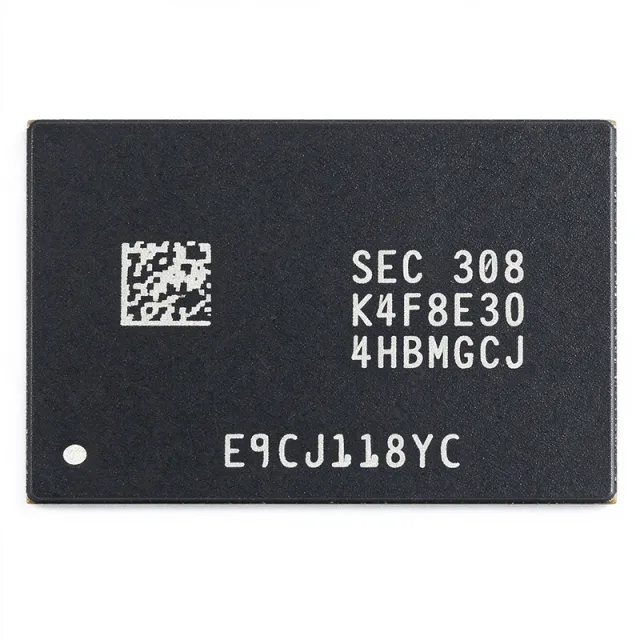
K4F8E304HB-MGCJ - 8Gb LPDDR4 x32 3733Mbps DRAM | Samsung
K4F8E304HB-MGCJ

K4F8E304HB-MGCJ - 8Gb LPDDR4 x32 3733Mbps DRAM | Samsung

The Samsung K4F8E304HB-MGCJ is an 8Gb LPDDR4 mobile DRAM memory IC organized as 256M x32 with a data rate up to 3733 Mbps, operating at a low 1.1V core voltage and housed in a 200-ball FBGA (TFBGA-200) package. LPDDR4 (Low Power Double Data Rate 4) is a JEDEC-standardized synchronous DRAM designed for mobile and embedded systems, offering high bandwidth at substantially lower power than DDR3/DDR4. Within the memory hierarchy, it sits under DRAM -> SDRAM -> volatile memory and serves as the main working memory for application processors in smartphones, tablets, and embedded computing modules. Key features include 8Gb density on a x32 data bus, a 3733 Mbps maximum data rate (1866 MHz clock), and 1.1V VDD core operation with a separate 1.8V rail per distributor data. The low voltage reduces dynamic and standby power, extending battery life in portable devices, while the wide x32 bus simplifies layout versus x16 stacking in bandwidth-limited designs. Technically, the device is fabricated on Samsung's advanced DRAM process and complies with the JEDEC LPDDR4 standard, ensuring interoperability with mainstream mobile and embedded SoCs. It supports power-saving modes including deep power-down and self-refresh to minimize idle current, and operates across -25C to +85C per distributor listings, suiting industrial as well as consumer environments. Typical applications include smartphones and tablets, AI accelerators and edge inference, VR headsets, wearables, industrial controllers, and computing modules where firmware boot, embedded logging, and high-bandwidth working memory are required. Design consideration: follow controlled-impedance, length-matched routing for the 3733 Mbps interface and place decoupling capacitors close to each VDD ball group; adequate power integrity is essential at full data rate. This page synthesizes distributor pricing, drop-in alternative cross-references, and practical design guidance not found in the manufacturer datasheet.

USD $2,55 Contato
K4M51163DC-BG75 - 512Mb Mobile SDRAM 16-bit 54FBGA | Samsung
K4M51163DC-BG75

K4M51163DC-BG75 - 512Mb Mobile SDRAM 16-bit 54FBGA | Samsung

The Samsung K4M51163DC-BG75 is a 512-Mbit Mobile SDRAM organized as 8M words x 16 bits x 4 banks, supplied in a 54-ball Fine-pitch BGA package with a 1.8 V power supply. It operates at a 133 MHz clock rate (-75 speed grade, tCK = 7.5 ns) and supports LVCMOS-compatible multiplexed addressing. The four-bank architecture enables concurrent row activation across independent banks, allowing higher sustained bandwidth for graphics and streaming workloads than single-bank predecessors. Mobile SDRAM (synchronous DRAM optimized for portable systems) is a class of low-voltage volatile memory that synchronizes data transfers to a rising clock edge, with on-chip bank structures, programmable CAS latency, and burst-mode operation to maximize data throughput while keeping the deep power-down mode used in battery-powered applications. Mobile SDRAM sits in the memory hierarchy below SRAM and above bulk NAND; for portable system designers, it is the canonical main-memory building block for camera modules, mobile TV receivers, GPS data buffers and featurephone application processors. Key features include programmable CAS latency (2/3 clocks), burst lengths of 1/2/4/8 and full-page, sequential or interleaved burst type, on-DM-Miss-tracking refresh, and deep power-down (DPD) mode that reduces IDD6 to a fraction of active standby. The 54-FBGA package (10 mm x 11 mm typical) provides a compact footprint suited to mobile-phone mainboards where board area is at a premium and standard TSOP/FBGA assembly lines are available. The device uses a single 1.8 V VDD supply plus a separate 1.8 V VDDQ for the LVCMOS interface; a self-refresh mode and temperature-compensated refresh (TCSR via EMRS) extend battery life. Four-bank operation with auto-precharge and precharge power-down allows designers to interleave page misses across banks for sustained throughput. Typical applications include mobile-phone baseband/working memory, portable media players, GPS navigation buffers, low-end DSC/DV working memory, and PDA/handheld terminal RAM expansion. The 133 MHz speed grade comfortably supports QVGA-class display framebuffers and audio codec sample buffers in mid-2000s portable designs. When designing with this part, place decoupling capacitors (0.1 uF plus 10 uF bulk) within 5 mm of each VDD/VDDQ ball group and route the clock net with controlled impedance. The signal-pin pitch of the 54-FBGA is conservative for hand-rework, but production designs should follow JEDEC JC-11 mobile-SDRAM layout rules for matched-length DQS/DQ traces. This page synthesizes distributor stock data, drop-in same-package alternatives, comparison data versus Samsung's wider Mobile-SDRAM family, and practical design notes not found in any single distributor listing.

Cotação Contato
K4M56163PG-BG75 - 128Mb Mobile SDRAM, 16Mx16, 54-FBGA | Samsung
K4M56163PG-BG75

K4M56163PG-BG75 - 128Mb Mobile SDRAM, 16Mx16, 54-FBGA | Samsung

The Samsung K4M56163PG-BG75 is a 128 Mbit (4M x 16Bit x 4 Banks) Mobile Synchronous DRAM (SDRAM) organized as 16M words x 16 bits across four internal banks, housed in a 54-ball Fine-pitch Ball Grid Array (FBGA) package with a 1.8 V power supply and LVCMOS-compatible I/O. The -BG75 speed grade denotes a tCK of 7.5 ns, equivalent to a 133 MHz maximum clock frequency at full-page burst operation, while the separate /RAS, /CAS, /WE control inputs and four-bank architecture support standard SDRAM command sequences including MRS-driven CAS latency and burst length programming and EMRS-driven I/O configuration. Mobile SDRAM is a category of synchronous DRAM that was optimized for portable, battery-powered applications in the early 2000s. Operating from a single 1.8 V rail (significantly lower than the 3.3 V required by earlier SDRAM generations), Mobile SDRAM sits in the broader taxonomy of dynamic random-access memory (DRAM) -> volatile memory -> semiconductor memory -> integrated circuit. Its four-bank internal structure allows concurrent activation of one row per bank, which hides precharge latency and improves sustained throughput versus single-bank PSRAM or SRAM alternatives in streaming workloads. Key features of the K4M56163PG-BG75 include 4M x 16bit x 4 Banks density, 1.8 V VDD/VDDQ supply, LVCMOS-compatible inputs with multiplexed address bus, programmable CAS latency (1, 2, or 3 clocks at 133 MHz), programmable burst length (1, 2, 4, 8, or Full Page), and programmable burst type (Sequential or Interleave). Auto-refresh and self-refresh modes are supported for power-conservation duty cycles, and the device is designed for low standby current, which is essential in handheld applications. The 54-FBGA package is approximately 8 mm x 8 mm with 0.8 mm pitch, suiting compact PCB layouts in mobile devices. In terms of architecture, the K4M56163PG-BG75 uses a four-bank SDRAM core with a 16-bit data bus, dual-bank interleaving for precharge parallelism, and a single data strobe (DQS) for source-synchronous read/write alignment. The interface follows JEDEC-compliant Mobile SDRAM signaling at 1.8 V. Compared with SRAM of identical capacity, the K4M56163PG-BG75 trades off random-access symmetry and deterministic latency for higher density per mm² and lower quiescent current in self-refresh, while still offering SDR-grade bandwidth for buffered video and frame-buffer roles. Typical applications include mobile phone baseband working memory, PDA operating-system memory, portable media player frame buffer, handheld GPS navigation RAM, early smartphone application-processor external SDRAM, and digital camera image-processing buffers. The 54-FBGA footprint was widely adopted in mobile handsets of its era, and the 1.8 V supply simplifies PMIC integration. When laying out a PCB for the K4M56163PG-BG75, route the 16-bit DQ group with matched trace lengths, keep the DQS strobe length-matched to within the data group, and place decoupling capacitors as close as possible to the VDD and VDDQ balls. The 0.8 mm-pitch FBGA requires via-in-pad or microvia fabrication, and an impedance-controlled layer stack is mandatory for stable read/write at 133 MHz. This page synthesizes distributor pricing from nine sources, four-bank SDRAM drop-in alternatives, and practical layout guidance not found in the original Samsung datasheet.

Cotação Contato
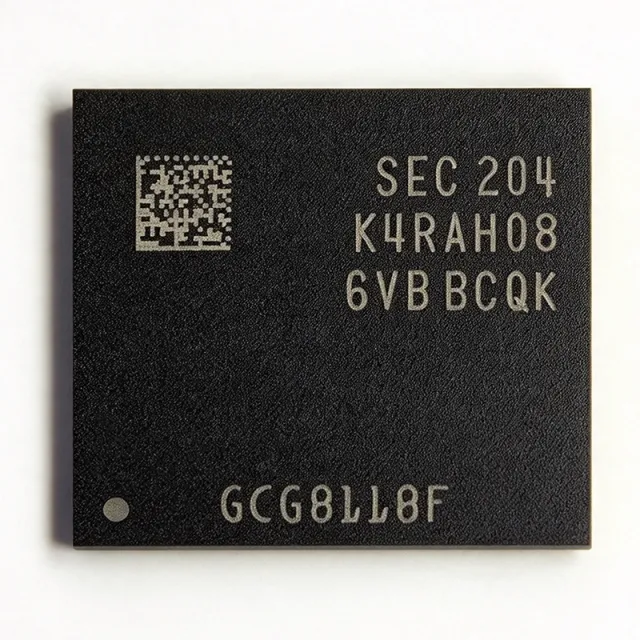
K4RAH086VB-BCQK - DDR5 SDRAM 16Gb 4800Mbps | Samsung
K4RAH086VB-BCQK

K4RAH086VB-BCQK - DDR5 SDRAM 16Gb 4800Mbps | Samsung

The Samsung K4RAH086VB-BCQK is a 16Gb DDR5 SDRAM memory chip organized as 2G x 8, operating at 4800 Mbps (DDR5-4800, 2400 MHz clock) from a 1.1V core supply, housed in an 82-ball FBGA package. It is Samsung's volume-production DDR5 die for next-generation memory modules and high-performance computing systems. DDR5 SDRAM (Double Data Rate Type 5 synchronous dynamic random-access memory) is the fifth generation of the JEDEC DDR memory family. In the system hierarchy it sits as a volatile main-memory component below CPU cache and above storage, supplying the working data set for CPUs, GPUs, SoCs, and AI accelerators. DDR5 doubles the bank groups of DDR4, moves the power management IC onto the module (DM supply), and lowers the operating voltage from 1.2V to 1.1V for roughly 30% better power efficiency. Key features of the K4RAH086VB-BCQK include 16 Gb density in a 2G x 8 organization, 4800 Mbps per-pin data rate, 1.1V VDD operation, and on-die ECC (link ECC) that improves data reliability without host overhead. The 82-ball FBGA surface-mount package delivers excellent signal integrity and thermal performance for dense DIMM and SO-DIMM layouts, and the part is commercial temperature rated (0C to 95C) per the DDR5 SDRAM standard. Technically, the device uses Samsung's advanced DRAM process with on-die termination, a DLL-enabled operating mode for the timing parameters in the datasheet, and burst length 32 (BL32) architecture typical of DDR5. Command/address inputs operate in single-data-rate mode with a defined compliance mask; DQ signals run at the full double-data rate of 4800 Mbps. Bank-group interleaving sustains high effective bandwidth across multiple independent banks. Typical applications include DDR5 UDIMM and RDIMM memory modules for desktops, workstations, and servers; embedded computing modules and industrial controllers requiring high-bandwidth main memory; and AI/HPC accelerator boards where DDR5 bandwidth and efficiency are critical. Per Samsung product literature, it serves data storage, firmware boot, and embedded logging use cases as well. Design consideration: DDR5 requires a PMIC supplying 1.1V with tight tolerance, accurate fly-by command/address routing with per-byte DQ termination, and PCB stackups controlled to the DDR5 channel impedance targets; verify the controller's supported data rate against the 4800 Mbps grade. This page synthesizes distributor stock data, drop-in alternatives, comparison tables, and practical design notes not found in the manufacturer datasheet.

USD $41,02 Em estoque
K4RAH086VB-BIQK - DDR5 16Gb 4800Mbps SDRAM | Samsung
K4RAH086VB-BIQK

K4RAH086VB-BIQK - DDR5 16Gb 4800Mbps SDRAM | Samsung

The Samsung K4RAH086VB-BIQK is a 16Gb DDR5 SDRAM DRAM component organized as 2G x 8 and operating at data rates up to 4800 Mbps, packaged in an 82-ball FBGA (82FBGA) lead-free and halogen-free surface-mount package. It belongs to Samsung's 16Gb DDR5 B-die family (K4RAH0x6VB, X4/X8 configurations) documented in the 16Gb DDR5 specification Rev 1.0. DDR5 SDRAM is the fifth generation of double-data-rate synchronous dynamic random access memory, the commodity memory technology that sits at the core of servers, workstations, desktops, industrial controllers, and AI computing platforms. Within the memory hierarchy, DRAM provides the main high-bandwidth working memory between the CPU and non-volatile storage such as NAND flash. DDR5 improves on DDR4 with on-die ECC, two independent 32-bit (or 40-bit with ECC) channels per DIMM, a 1.1V core supply, and roughly 30% better power efficiency per bit. Key features of the K4RAH086VB include 16Gb density in a single-die architecture, 4800 Mbps/pin bandwidth enabling 38.4 GB/s per 64-bit channel, a 1.1V nominal core voltage for reduced power, and on-die ECC (ODTE) for improved data integrity. The BIQK speed bin and industrial-relevant qualification make it suitable for memory module makers and embedded designers alike. Technically, the device operates in DLL-enabled mode per the Samsung DDR5 device operation datasheet, with bank-group architecture, burst lengths of 16 and 32, and command/address signaling (CA) reduced pin count. The 82FBGA ball map follows the JEDEC-standard x8 DDR5 component footprint used across qualified suppliers. Typical applications include DDR5 RDIMM/DIMM modules for servers, desktop and workstation memory modules, industrial computing modules, AI accelerator memory subsystems, and replacement sourcing for module repair and BOM fills. Design consideration: DDR5 requires precision fly-by routing with length matching and VDDQ termination; consult Samsung's DDR5 design guide and module design files for reference layouts. This page synthesizes distributor stock data, drop-in alternatives across Samsung and SK Hynix, and practical design notes not found in the raw datasheet.

Cotação Contato
K4RAH086VB-BIWM - DDR5 16Gb 5600Mbps DRAM | Samsung
K4RAH086VB-BIWM

K4RAH086VB-BIWM - DDR5 16Gb 5600Mbps DRAM | Samsung

The Samsung K4RAH086VB-BIWM is a 16Gb DDR5 SDRAM component organized as a high-speed synchronous dynamic random-access memory device delivering data rates up to 5600 Mbps per pin in a standard surface-mount FBGA package for next-generation memory modules and high-performance computing systems. DDR5 SDRAM (Double Data Rate 5 Synchronous Dynamic Random-Access Memory) is the fifth generation of the DDR SDRAM memory family, sitting in the memory hierarchy above DDR4 and below LPDDR5 for power-sensitive mobile applications. A DDR5 DRAM component provides the main-system memory function in servers, workstations, desktops, and embedded compute platforms, doubling the bank-group parallelism of DDR4 and integrating a power management architecture that moves voltage regulation onto the memory module for improved supply integrity. Key features of the K4RAH086VB-BIWM include its 16-gigabit single-die density, operation as part of the DDR5 standard with on-die termination (ODT) set through mode registers, internal calibration via MPC commands, and asynchronous reset support. Per the Samsung DDR5 16Gb B-die specification, the family supports posted CAS and programmable CAS latency (CWL) in DLL-enabled mode, features that improve bus efficiency and timing flexibility in multi-rank module designs. Technically, this device belongs to the Samsung K4RAH0x6VB family covering x4 and x8 organizations. The synchronous architecture achieves double-data-rate transfers on both clock edges, and DDR5's dual 32-bit sub-channel module topology allows the memory controller to service two independent streams simultaneously, reducing effective latency for bandwidth-hungry workloads. On-die ECC support in the DDR5 standard improves reliability at gigabit densities without external ECC pins. Typical applications include next-generation DDR5 RDIMM and UDIMM memory modules for data-center servers, high-performance computing and AI accelerator host memory, and high-bandwidth embedded compute designs. The -BIWM speed grade and industrial temperature indication make it suited to both commercial server and extended-temperature platforms. Design consideration: DDR5 operates at 1.1 V and is NOT pin- or voltage-compatible with DDR3 or DDR4 controllers - verify JEDEC DDR5 controller support, and confirm the exact speed bin and operating temperature range against the official Samsung datasheet before design-in. This page synthesizes distributor stock data, family-level alternatives, and DDR5 design guidance not found in a single manufacturer datasheet.

Cotação Contato
K4RAH086VP-BCWM - 16Gb DDR5 5600Mbps DRAM | Samsung
K4RAH086VP-BCWM

K4RAH086VP-BCWM - 16Gb DDR5 5600Mbps DRAM | Samsung

The Samsung Semiconductor K4RAH086VP-BCWM is a 16 Gb DDR5 SDRAM component operating at a 5600 Mbps data rate, organized as 2G x 8 (x8 configuration) with a 1.1 V operating voltage, supplied in a surface-mount FBGA package. DDR5 SDRAM (Double Data Rate 5 synchronous dynamic random-access memory) is the fifth generation of the DDR DRAM family standardized by JEDEC. Compared with DDR4, DDR5 doubles the bank groups, moves the power management IC onto the DIMM or package, and lowers the per-bit supply voltage, delivering higher bandwidth and lower power per transfer. In the memory hierarchy, this device sits at the component level: DRAM -> DDR5 SDRAM -> volatile memory -> semiconductor memory IC. Key features include a 16 Gbit density per die organized as 2G x 8, a 5600 Mbps/pin transfer rate (equivalent to DDR5-5600 operation, PC5-44800 class bandwidth), and a 1.1 V core supply consistent with the JEDEC DDR5 specification. The parallel interface supports burst-oriented access with on-die ECC available in DDR5 devices for improved reliability. Architecturally, the K4RAH086VP-BCWM belongs to Samsung's DDR5 component portfolio for industrial-class applications. Higher-speed operation shortens memory access latency at the system level, while the 1.1 V supply reduces dynamic power versus DDR4 1.2 V solutions. Typical applications include industrial servers and storage controllers, embedded computing modules, network appliances, and data acquisition systems that require high-bandwidth main memory. Design consideration: DDR5 signaling requires careful length-matched PCB routing and onboard PMIC voltage regulation; verify power-rail sequencing and on-die termination settings against the Samsung datasheet before layout. This page synthesizes distributor stock data, cross-reference candidates, and engineering selection guidance not consolidated in the manufacturer datasheet.

Cotação Contato
K4RAH086VP-BCWM - DDR5 16Gb 5600Mbps DRAM | Samsung
K4RAH086VP-BCWM

K4RAH086VP-BCWM - DDR5 16Gb 5600Mbps DRAM | Samsung

The Samsung Semiconductor K4RAH086VP-BCWM is a 16 Gb DDR5 SDRAM component with a 5600 Mbps/pin data rate, 2G x 8 memory organization, and 1.1 V core operating voltage, housed in a space-saving FBGA ball-grid-array package. It is part of Samsung's first-generation DDR5 family optimized for industrial and high-performance computing platforms. DDR5 SDRAM (Double Data Rate 5 synchronous dynamic random access memory) is the current-generation DRAM interface standard, doubling the bank-group count of DDR4 and introducing on-die ECC, decision-feedback equalization, and dual independent 32-bit subchannels per module. Within the memory hierarchy, the K4RAH086VP-BCWM is a volatile DRAM component sitting between the CPU memory controller and non-volatile storage, providing the primary working memory for compute systems. Key features include the 5600 Mbps data rate (PC5-44800 class bandwidth when assembled into modules), the 2G x 8 organization that allows x8-based server and desktop DIMM designs, and the 1.1 V VDD supply that reduces memory subsystem power versus 1.2 V DDR4. DDR5's on-die ECC and DFE receivers sustain signal integrity at high data rates across the DDR5 channel. Technically, the device uses Samsung DRAM process technology with DDR5-specific architecture: sixteen logical banks organized across multiple bank groups, burst length 16, and configurable on-die termination schemes. The BCWM speed bin denotes 5600 Mbps operation at the standard DDR5 supply range, and the component supports standard DDR5 JEDEC command timing per its manufacturer datasheet. Typical applications include industrial compute modules, server and workstation RDIMMs, edge computing gateways, and embedded controllers where industrial-temperature DDR5 memory is specified. Its x8 organization suits ECC-based DIMM topologies and high-density stacked or soldered-down memory subsystems. Design consideration: DDR5 power delivery splits VDD and VDDQ domains and moves power management onto the module via a PMIC, so board designers must provision both the 1.1 V core rail and the separate DQS/data termination rails, with careful fly-by or point-to-point routing per the DDR5 signal-integrity guidelines. This page synthesizes distributor stock data from multiple trading sources, drop-in family alternatives, and design notes not found in the manufacturer datasheet.

Cotação Contato