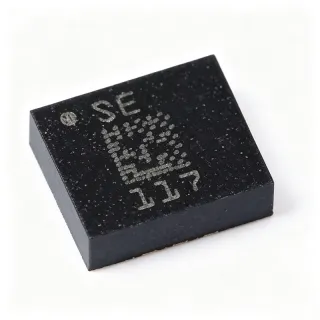
STM8AL3L88TCY - 8-bit Ultra-Low-Power MCU, 64KB Flash | STMicroelectronics
MPN: STM8AL3L88TCY ✓ Active| Qty | Unit Price | Extended |
|---|---|---|
| 1 | $3.25 | $3.25 |
| 10 | $2.95 | $29.50 |
| 100 | $2.45 | $245.00 |
| 500 | $2.1 | $1,050.00 |
| 1,000 | $1.85 | $1,850.00 |
STM8AL3L88TCY Overview
An 8-bit microcontroller (MCU) is a compact integrated circuit designed for embedded control applications, executing instructions on an 8-bit data bus. It typically includes a CPU, memory (Flash, RAM, EEPROM), and peripherals such as timers, ADCs, and communication interfaces. In the system hierarchy, an MCU sits between a simple logic IC and a full application processor, providing programmable intelligence for devices like sensors, meters, and industrial controllers. The STM8AL3L88TCY is optimized for ultra-low-power operation, making it suitable for battery-powered and energy-harvesting applications.
Key features include multiple low-power modes (Wait, Active-Halt, Halt) with current consumption as low as 0.35 µA in Halt mode, a 12-bit ADC with up to 25 channels, and a flexible clock system with an internal 16 MHz RC oscillator. The device also includes a real-time clock (RTC) with calendar, and a tamper detection feature for security-sensitive applications. The LQFP-48 package provides a compact footprint while offering sufficient I/O pins for complex designs.
Technically, the STM8AL3L88TCY uses a Harvard architecture with a 3-stage pipeline, achieving up to 16 MIPS at 16 MHz. The ultra-low-power design is achieved through advanced power management, including a low-power oscillator and the ability to disable unused peripherals. The EEPROM allows data storage without external components, and the integrated bootloader supports in-application programming (IAP) for firmware updates.
Typical applications include smart meters, portable medical devices, industrial sensors, and building automation systems. The ultra-low-power consumption extends battery life in remote monitoring applications, while the rich analog peripherals enable precise sensor interfacing. The wide operating voltage range and robust ESD protection make it suitable for harsh industrial environments.
When designing with this device, pay attention to the power supply decoupling and the selection of the appropriate low-power mode for your application. The Halt mode offers the lowest power consumption but requires an external or RTC wake-up source. Ensure the clock configuration is optimized for your performance and power requirements.
Drop-in alternatives for STM8AL3L88TCY — same package, pin-to-pin compatible. Different-package parts requiring PCB rework are excluded.
Variants in this series
Same-series models that are drop-in compatible with STM8AL3L88TCY (same form factor and footprint) — differing in Communication Interfaces, Flash Memory, Core, Package, ADC Channels.
Quick Comparison Tool — Select alternative parts for side-by-side comparison:
STM8L151C8T6
✅ Drop-In ⚠️ Specs Unverified📋 Reference alternative (not in catalog)
STM8L151C6T6
✅ Drop-In ⚠️ Specs Unverified✓ In Stock
$2.19 / Unit
View Datasheet →STM8L152C8T6
✅ Drop-In ⚠️ Specs Unverified📋 Reference alternative (not in catalog)
STM8AL3L88TCY Maximum Ratings & Electrical Characteristics
| Core | STM8 8-bit |
| Maximum Clock Frequency | 16 MHz |
| Flash Memory | 64 KB |
| RAM | 4 KB |
| EEPROM | 2 KB |
| Operating Voltage | 1.8 V to 3.6 V |
| Package | LQFP-48 (TCY) |
| ADC Resolution | 12-bit |
| ADC Channels | 25 |
| Comparators | 2 |
| Communication Interfaces | SPI, I2C, USART |
| Low-Power Modes | Wait, Active-Halt, Halt |
| Halt Mode Current | 0.35 µA |
| Operating Temperature | -40°C to +85°C |
| RoHS Status | Compliant |
STM8AL3L88TCY Pin Configuration
| Pin 1 | VDD — Power supply |
| Pin 2 | VSS — Ground |
| Pin 3 | PA0 — General purpose I/O / ADC input |
| Pin 4 | PA1 — General purpose I/O / ADC input |
| Pin 5 | PA2 — General purpose I/O / ADC input |
| Pin 6 | PA3 — General purpose I/O / ADC input |
| Pin 7 | NRST — Reset (active low) |
| Pin 8 | VSS — Ground |
| Pin 9 | VDD — Power supply |
| Pin 10 | PB0 — General purpose I/O / SPI clock |
| Pin 11 | PB1 — General purpose I/O / SPI MISO |
| Pin 12 | PB2 — General purpose I/O / SPI MOSI |
| Pin 13 | PB3 — General purpose I/O / SPI chip select |
| Pin 14 | PB4 — General purpose I/O / I2C SCL |
| Pin 15 | PB5 — General purpose I/O / I2C SDA |
| Pin 16 | PB6 — General purpose I/O / USART TX |
| Pin 17 | PB7 — General purpose I/O / USART RX |
| Pin 18 | VSS — Ground |
| Pin 19 | VDD — Power supply |
| Pin 20 | PC0 — General purpose I/O / ADC input |
| Pin 21 | PC1 — General purpose I/O / ADC input |
| Pin 22 | PC2 — General purpose I/O / ADC input |
| Pin 23 | PC3 — General purpose I/O / ADC input |
| Pin 24 | PC4 — General purpose I/O / ADC input |
| Pin 25 | PC5 — General purpose I/O / ADC input |
| Pin 26 | PC6 — General purpose I/O / ADC input |
| Pin 27 | PC7 — General purpose I/O / ADC input |
| Pin 28 | VSS — Ground |
| Pin 29 | VDD — Power supply |
| Pin 30 | PD0 — General purpose I/O / USART CK |
| Pin 31 | PD1 — General purpose I/O / USART RTS |
| Pin 32 | PD2 — General purpose I/O / USART CTS |
| Pin 33 | PD3 — General purpose I/O / timer input |
| Pin 34 | PD4 — General purpose I/O / timer output |
| Pin 35 | PD5 — General purpose I/O / timer output |
| Pin 36 | PD6 — General purpose I/O / timer output |
| Pin 37 | PD7 — General purpose I/O / timer output |
| Pin 38 | VSS — Ground |
| Pin 39 | VDD — Power supply |
| Pin 40 | PE0 — General purpose I/O / ADC input |
| Pin 41 | PE1 — General purpose I/O / ADC input |
| Pin 42 | PE2 — General purpose I/O / ADC input |
| Pin 43 | PE3 — General purpose I/O / ADC input |
| Pin 44 | PE4 — General purpose I/O / ADC input |
| Pin 45 | PE5 — General purpose I/O / ADC input |
| Pin 46 | PE6 — General purpose I/O / ADC input |
| Pin 47 | PE7 — General purpose I/O / ADC input |
| Pin 48 | VSS — Ground |
Typical Applications
STM8AL3L88TCY is suitable for 6 applications: Smart Metering, Portable Medical Devices, Industrial Sensors, Building Automation, Wireless Sensor Networks, Portable Consumer Electronics.
Smart Metering
The STM8AL3L88TCY is ideal for smart meters due to its ultra-low-power consumption (0.35 µA in Halt mode) and integrated 12-bit ADC for accurate measurement. It can operate for years on battery power while periodically waking to record consumption. The EEPROM stores calibration data and usage history without external memory. Communication interfaces (SPI, I2C, USART) enable connectivity with PLC or RF modules for data transmission. The wide operating voltage (1.8V-3.6V) accommodates battery voltage variations. In a typical smart meter, the MCU reads current and voltage sensors via the ADC, processes the data, and communicates readings to a central system. The low-power modes ensure minimal energy drain between measurements, extending battery life to 10+ years. Design considerations include using the RTC for scheduled wake-ups and optimizing ADC sampling to balance accuracy and power.
Recommended
Portable Medical Devices
The STM8AL3L88TCY is well-suited for portable medical devices like glucose meters and pulse oximeters. Its ultra-low-power operation extends battery life, critical for patient convenience. The 12-bit ADC provides precise sensor readings, and the EEPROM stores patient data securely. The device's small LQFP-48 package fits compact designs. In a glucose meter, the MCU reads the sensor via the ADC, calculates glucose levels, and displays results on an LCD. The low-power modes allow the device to remain in standby for months. The integrated comparators can detect sensor faults. Design considerations include using the RTC for timed measurements and ensuring EMC compliance for medical environments. The wide temperature range (-40°C to +85°C) ensures reliable operation in various conditions.
Recommended
Industrial Sensors
The STM8AL3L88TCY is ideal for industrial sensors such as pressure, temperature, and flow sensors. Its robust design operates from -40°C to +85°C, and the 12-bit ADC interfaces directly with analog sensors. The multiple communication interfaces (SPI, I2C, USART) allow connection to industrial networks like Modbus. The ultra-low-power modes enable battery-powered wireless sensors. In a typical pressure sensor, the MCU reads the sensor via the ADC, applies calibration coefficients from EEPROM, and transmits data over RS-485. The device's ESD protection ensures reliability in harsh environments. Design considerations include proper decoupling and using the watchdog timer for fault recovery. The wide voltage range supports 24V industrial supplies with a regulator.
Recommended
Building Automation
The STM8AL3L88TCY is used in building automation for HVAC control, lighting, and security systems. Its low-power operation is ideal for battery-powered sensors and actuators. The integrated RTC enables scheduled events, and the communication interfaces support BACnet or KNX protocols via external transceivers. In a smart thermostat, the MCU reads temperature sensors, controls relays for heating/cooling, and communicates with a central controller. The EEPROM stores user settings and schedules. The device's multiple timers can generate PWM for fan speed control. Design considerations include using the low-power modes during idle periods and ensuring proper isolation for safety. The wide operating voltage allows direct connection to 3.3V logic.
Recommended
Wireless Sensor Networks
The STM8AL3L88TCY is perfect for wireless sensor nodes in IoT applications. Its ultra-low-power consumption (0.35 µA Halt) allows battery-powered nodes to last years. The MCU wakes periodically to read sensors, process data, and transmit via an external RF module. The SPI interface connects to sub-GHz or 2.4GHz transceivers. In a typical node, the MCU reads a temperature sensor, formats the data, and sends it over SPI to a radio. The EEPROM stores node ID and configuration. The device's low-power modes are crucial for energy harvesting applications. Design considerations include minimizing active time and using the RTC for scheduled wake-ups. The wide voltage range supports various battery chemistries.
Recommended
Portable Consumer Electronics
The STM8AL3L88TCY is used in portable consumer devices like fitness trackers and remote controls. Its small package and low power consumption are ideal for wearable designs. The 12-bit ADC can interface with accelerometers and heart rate sensors. The EEPROM stores user profiles and settings. In a fitness tracker, the MCU reads motion sensors, counts steps, and displays data on an OLED. The low-power modes allow the device to run for weeks on a coin cell. The communication interfaces enable Bluetooth connectivity via an external module. Design considerations include optimizing the ADC sampling rate and using the RTC for timekeeping. The wide temperature range ensures operation in various climates.
Recommended
Recommended Products Summary
Engineering reference data for STM8AL3L88TCY — comparison, design guidance, and compliance information.
Selection Guide
Comparison with Alternatives
| Parameter | This Product | STM8AL3L88TAY | STM8L151C8T6 | STM8L151C6T6 | STM8L152C8T6 |
|---|---|---|---|---|---|
| Package | LQFP-48 | LQFP-64 | LQFP-48 | LQFP-48 | LQFP-48 |
| Brand | STMicroelectronics | STMicroelectronics | STMicroelectronics | STMicroelectronics | STMicroelectronics |
| Flash Memory | 64 KB | 64 KB | 64 KB | 32 KB | 64 KB |
| RAM | 4 KB | 4 KB | 4 KB | 2 KB | 4 KB |
| Halt Mode Current | 0.35 µA | 0.35 µA | 0.5 µA | 0.5 µA | 0.5 µA |
| ADC Resolution | 12-bit | 12-bit | 12-bit | 12-bit | 12-bit |
| LCD Driver | No | No | No | No | Yes |
| Operating Voltage | 1.8V - 3.6V | 1.8V - 3.6V | 1.8V - 3.6V | 1.8V - 3.6V | 1.8V - 3.6V |
Key Differentiators
- Ultra-low Halt mode current of 0.35 µA (vs STM8L151C8T6)
- Integrated EEPROM of 2 KB (vs STM8L151C6T6)
- LQFP-48 package with 25 ADC channels (vs STM8AL3L88TAY)
Design Notes
For ultra-low-power applications, use the Halt mode with an RTC wake-up. Ensure the power supply is stable and decoupled with 100nF and 10µF capacitors close to the VDD pins. The Halt mode current is 0.35 µA, but this can increase if the RTC is enabled. Optimize the clock configuration to use the low-speed internal oscillator (LSI) for RTC to minimize power consumption.
Place decoupling capacitors (100nF) as close as possible to each VDD pin, and a bulk capacitor (10µF) near the main power entry. For the LQFP-48 package, ensure proper grounding with a solid ground plane. Keep analog and digital grounds separate if using the ADC for precision measurements. Follow ST's layout guidelines in the datasheet for optimal EMC performance.
Avoid floating I/O pins by configuring them as outputs or enabling pull-ups. The NRST pin must be pulled high with a 100nF capacitor to ground for reliable reset. When using the ADC, ensure the reference voltage is stable and bypassed. Do not exceed the absolute maximum ratings for VDD (3.6V) to prevent damage. Use the watchdog timer to recover from software hangs in industrial environments.
Compliance Information
RoHS compliant per STMicroelectronics product page. Not AEC-Q100 qualified.