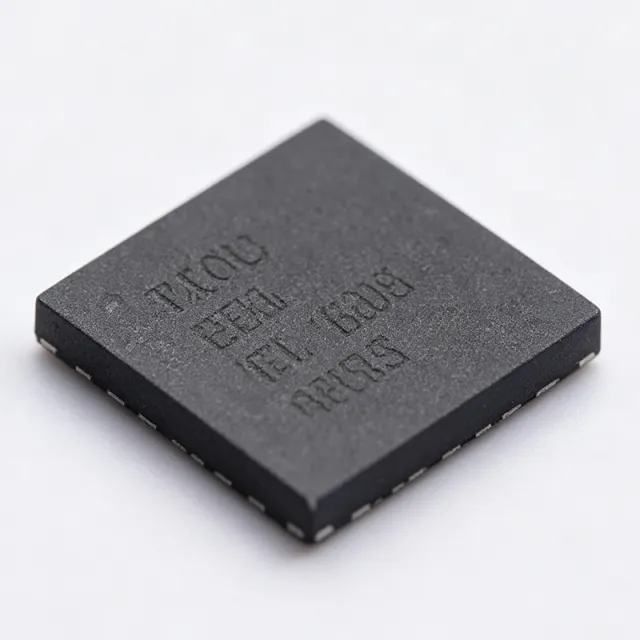
TIOL221RGER - Dual IO-Link PHY with LDO & SPI | TI
部品番号: TIOL221RGER ✓ 生産中| 数量 | 単価 | 小計 |
|---|---|---|
| 1 | $0 | $0.00 |
| 10 | $0 | $0.00 |
| 100 | $0 | $0.00 |
| 500 | $0 | $0.00 |
| 1,000 | $0 | $0.00 |
TIOL221RGER 概要
An IO-Link PHY (physical layer transceiver) is a specialized industrial communication interface IC that handles line driving, wake-up detection, and protection for point-to-point digital communication networks. Within the system hierarchy, it sits below the microcontroller (logic layer) and above the physical cabling, forming part of the broader industrial networking and sensor interface semiconductor category.
Key features include dual CQ channels with integrated low-power output drivers featuring active reverse polarity protection, wake-up pulse generation and detection (sinking or sourcing >= 500 mA for a typical 80 us duration per IO-Link specification), and wake-up reporting to the local microcontroller by asserting the WU pin low. Internal protection covers undervoltage, overcurrent, and overtemperature conditions, with fault reporting to the host.
The integrated LDO reduces external BOM count, and the SPI interface allows flexible configuration and diagnostics. The device can also be configured to generate wake-up pulses and be used in IO-Link master applications, and it integrates an auxiliary DI (digital input) channel.
Typical applications include IO-Link sensor hubs, industrial proximity sensors, actuator nodes, and compact IO-Link master ports.
Design tip: ensure the CQ driver thermal budget accounts for wake-up pulse current, and use the fault reporting pins for system-level diagnostics.
ドロップイン代替品: TIOL221RGER — 同一パッケージでピン互換。PCBの作り直しが必要な異なるパッケージの部品は除外されています。
クイック比較ツール — 並列比較する代替部品を選択:
TIOL221RGERT
✅ ドロップイン ⚠️ 仕様未検証📋 参考代替品(カタログ未掲載)
TIOL221RGER 仕様
| 機能 | Dual Channel IO-Link Device PHY with Integrated LDO and SPI |
| チャネル数 | 2 CQ channels + 1 auxiliary DI |
| インターフェース | SPI + IO-Link 3-wire (L+, L-, CQ) |
| Wake-up Pulse Current | >= 500 mA (sink or source) |
| Wake-up Duration | Typically 80 us |
| Wake-up Reporting | WU pin asserted low for tWUL |
| Protection Features | Undervoltage, overcurrent, overtemperature, reverse polarity (active) |
| Integrated LDO | Yes |
| Output Drivers | Dual low-power with active reverse polarity protection |
| IO-Link Mode | Device PHY; also configurable for IO-Link master wake-up generation |
| パッケージ | 24-VQFN (4x4 mm), VQFN-24 (RGE) |
| 実装タイプ | Surface Mount |
| Fault Reporting | Yes (UV, OC, OT) |
TIOL221RGER 24-vqfn (4x4 mm), vqfn-24 (rge) ピン配置ガイド
TIOL221RGER (24-vqfn (4x4 mm), vqfn-24 (rge) パッケージ) のピン配置。 ピン番号、機能、接続図はメーカーのデータシートで定義されています。正確なフットプリントとはんだ付けのガイドラインについては、データシートを参照してください。

詳細なピン配置データはありません: TIOL221RGER.
詳細は データシート をご参照ください。
主な用途
TIOL221RGER の用途: 6 件s: IO-Link Sensor Hubs, Industrial Proximity Sensor Nodes, IO-Link Master Ports, Actuator Nodes and Valve Control, Factory Automation PLC I/O Modules, Prototyping and IO-Link Evaluation.
IO-Link Sensor Hubs
The TIOL221's dual CQ channels let one IC connect two IO-Link sensor ports, making it ideal for sensor hub nodes that aggregate multiple binary or analog sensors. Its integrated LDO and SPI reduce BOM count, while >= 500 mA wake-up pulse capability and WU pin reporting ensure full IO-Link wake-up compliance. Reverse polarity and overcurrent protection tolerate industrial field miswiring, and the auxiliary DI channel adds a bonus digital input without extra transceivers.
おすすめ
Industrial Proximity Sensor Nodes
For IO-Link proximity and photoelectric sensors, the TIOL221 acts as the complete physical layer over the three-wire interface. The 80 us, >= 500 mA wake-up pulse handling meets IO-Link specification timing, and fault reporting for undervoltage, overcurrent, and overtemperature enables smart diagnostics demanded by IO-Link Class A ports. The 4x4 mm VQFN-24 fits the compact housings typical of modern industrial sensors.
おすすめ
IO-Link Master Ports
The TIOL221 can be configured to generate wake-up pulses, per TI's product page, which is exactly what an IO-Link master port needs to activate sleeping device nodes. Dual channels allow one IC to serve two master ports or one port plus an auxiliary DI. Integrated drivers with active reverse polarity protection improve master port robustness against wiring faults, and SPI enables master-side configuration and diagnostics.
おすすめ
Actuator Nodes and Valve Control
In IO-Link actuator nodes (solenoid valves, indicator drives), the TIOL221's dual CQ low-power drivers with active reverse polarity protection switch loads under host SPI control. Overcurrent and overtemperature protection guard against stalled loads and shorted wiring, while the auxiliary DI channel can read local feedback such as limit switches. The integrated LDO supplies local logic, simplifying compact actuator PCB designs.
おすすめ
Factory Automation PLC I/O Modules
PLC remote I/O modules benefit from the TIOL221's channel density: two CQ ports plus a DI channel in a single 4x4 mm VQFN-24 reduces board area versus discrete transceivers. SPI-based configuration lets firmware adapt port behavior at runtime, and fault reporting supports predictive-maintenance diagnostics over the IO-Link backbone. Wake-up detection with WU pin signaling simplifies power-saving node designs.
おすすめ
Prototyping and IO-Link Evaluation
The TI TIOL221EVM evaluation module lets engineers exercise device and master wake-up configurations, SPI register settings, and protection behaviors before committing to a PCB. Since the EVM ships from DigiKey as of 2026-08-30, teams can validate wake-up timing (80 us, >= 500 mA) and tWUL signaling against a master in days rather than weeks, de-risking the transition to production firmware.
おすすめ
おすすめ製品の概要
エンジニアリング参考データ: TIOL221RGER — 比較、設計ガイダンス、コンプライアンス情報。
選定ガイド
代替品との比較
| パラメータ | この製品 | TIOL1115DGQR | TIOL1113DMRR | L6360 |
|---|---|---|---|---|
| Package | 24-VQFN (4x4 mm, RGE) | VSSOP-10 | SOIC-8 | QFN-32 |
| Brand | Texas Instruments | Texas Instruments | Texas Instruments | STMicroelectronics |
| CQ Channels | 2 | 1 | 1 | 1 (plus DI/DO) |
| SPI Interface | Yes | No (pin-configurable) | No (pin-configurable) | Yes |
| Integrated LDO | Yes | Yes (LDO integrated) | Yes (LDO integrated) | Integrated DC-DC (buck) |
| Wake-up Pulse Capability | Generate and detect, >= 500 mA / 80 us | IO-Link device wake-up detect | IO-Link device wake-up detect | IO-Link wake-up detect |
| Protection | UV, OC, OT, reverse polarity (active) | UV, OC, OT, reverse polarity | UV, OC, OT, reverse polarity | UV, OC, OT, thermal |
主な差別化要因
- Dual CQ channels in one 4x4 mm package (vs TIOL1115DGQR)
- SPI-configurable operation (vs TIOL1113DMRR)
- Auxiliary DI channel (vs L6360)
設計ノート
The TIOL221 integrates an LDO, but the CQ drivers must sink or source >= 500 mA during each ~80 us wake-up pulse. Size the VQFN-24 exposed pad and PCB copper for these transient currents, and verify the upstream supply does not droop below undervoltage thresholds during wake-up, which could trigger false fault reporting.
Place the L+ and CQ line protection and bulk capacitance close to the IC and use short, wide traces for the CQ channels. Connect the thermal pad to a solid ground plane with multiple vias to dissipate wake-up pulse energy and improve overtemperature protection accuracy.
Wake-up timing is IO-Link-specified (typically 80 us at >= 500 mA) and the WU pin asserts low only for tWUL - ensure the MCU polls or uses an interrupt on WU rather than level-holding assumptions. When configuring via SPI, confirm register defaults match your CQ mode before enabling drivers to avoid unintended wake-up pulse generation.
コンプライアンス情報
Compliance status not stated in verified web data; consult TI product page and datasheet for RoHS/REACH details.







