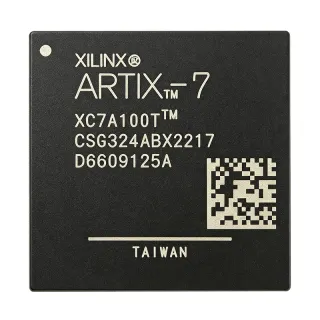
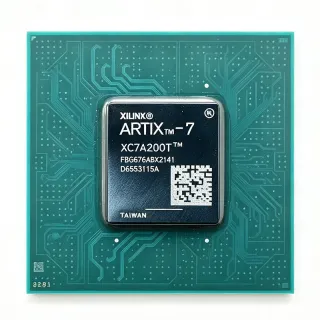
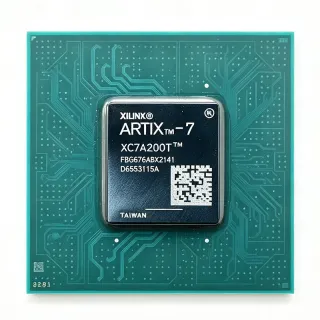
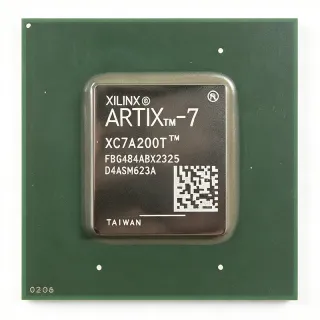
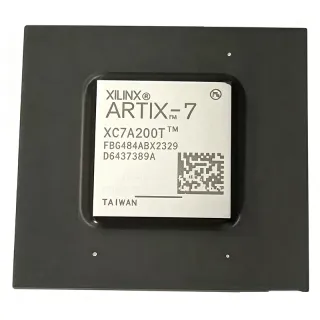
EP1C20F324C8NGA - Cyclone FPGA 20,060 LE, 324-BGA | Altera/Intel
MPN: EP1C20F324C8NGA ⚠ Last Time Buy| Qty | Unit Price | Extended |
|---|---|---|
| 1 | $38.5 | $38.50 |
| 10 | $34.65 | $346.50 |
| 100 | $30.8 | $3,080.00 |
| 500 | $27.5 | $13,750.00 |
| 1,000 | $24.75 | $24,750.00 |
EP1C20F324C8NGA Overview
A Cyclone FPGA is a low-cost, SRAM-based programmable logic device that combines look-up-table (LUT)-based logic fabric with embedded memory blocks, PLL-based clock management, and a flexible I/O ring. Within the broader hierarchy, a Cyclone device sits as: FPGA -> programmable logic device (PLD) -> logic IC -> integrated circuit -> semiconductor. The Cyclone family was Altera's (now Intel FPGA's) response to the low-density FPGA market, optimized for ASIC replacement, glue logic, and high-volume consumer/industrial designs rather than high-end transceivers or DSP.
Key features of the EP1C20F324C8NGA include 20,060 logic elements organized into 2,006 logic array blocks (LABs), 294,912 bits (288 Kbits) of M4K embedded RAM blocks distributed across the fabric, up to 233 user I/O pins supporting multiple I/O standards including LVTTL, LVCMOS, SSTL, and LVDS, and dedicated phase-locked loops (PLLs) for clock synthesis. The device is configured via a serial configuration device and supports in-system programmability through JTAG or Active Serial interfaces.
Architecturally, the Cyclone FPGA uses a 4-input LUT-based logic fabric with a predictable interconnect structure, M4K memory blocks that can be configured as RAM, ROM, or shift registers, and dedicated multiplier blocks (where present in higher-density Cyclone variants). The 324-FBGA package exposes the full I/O ring and PLLs of the EP1C20 silicon, making it suitable for designs that demand a high pin count without stepping up to the more expensive EP1C6/EP1C12 in the same package.
Typical applications include industrial control and factory automation controllers, telecom line cards and DSLAMs, video processing and display controllers, automotive infotainment prototypes, ASIC prototyping, and consumer electronics glue-logic consolidation. The EP1C20F324C8NGA is also frequently used in educational and development platforms where a generous logic capacity and I/O count are needed at minimal cost.
When designing with this part, verify that your Quartus II version supports the EP1C20 device family (Quartus II 13.0sp1 / 13.1 is the last officially supported branch) and budget for an EPCS serial configuration device or JTAG-based configuration. The 324-FBGA requires careful PCB layout with microvia technology or fan-out routing to break out the 1.0 mm pitch BGA. Note that the Cyclone (original) family is in production but considered mature; for new designs, Intel recommends the Cyclone IV or Cyclone 10 LP families unless pin-compatibility with legacy EP1C boards is required.
Drop-in alternatives for EP1C20F324C8NGA — same package, pin-to-pin compatible. Different-package parts requiring PCB rework are excluded.
Variants in this series
Same-series models that are drop-in compatible with EP1C20F324C8NGA (same form factor and footprint) — differing in Speed Grade, Process Technology, Package, Total RAM Bits, Family.
Quick Comparison Tool — Select alternative parts for side-by-side comparison:
EP1C20F324C8N
✅ Drop-In✓ In Stock
$42.36 / Unit
View Datasheet →EP1C20F324C8
✅ Drop-In✓ In Stock
$32 / Unit
View Datasheet →EP1C20F324C7N
✅ Drop-In✓ In Stock
$56.04 / Unit
View Datasheet →EP1C20F324C7
✅ Drop-In✓ In Stock
$17.95 / Unit
View Datasheet →EP1C20F324C6N
✅ Drop-In✓ In Stock
$21.75 / Unit
View Datasheet →EP1C20F324C6
✅ Drop-In✓ In Stock
$105 / Unit
View Datasheet →EP1C20F324C8NGA Maximum Ratings & Electrical Characteristics
| Series | Cyclone |
| Family | Cyclone (First Generation) |
| Logic Elements (LE) | 20,060 |
| Number of LABs/CLBs | 2,006 |
| Total RAM Bits | 294,912 (288 Kbit) |
| User I/O Count | 233 |
| Voltage - Supply | 1.5 V core (typical) |
| Package | 324-BGA (1.0 mm pitch, FineLine) |
| Mounting Type | Surface Mount |
| Operating Temperature | 0C to +85C (commercial) |
| Speed Grade | 8 (commercial, ~320 MHz internal) |
| Configuration Interface | JTAG / Active Serial (EPCS) |
| PLLs | Yes (2 PLLs) |
| Process Technology | SRAM-based, 130 nm |
EP1C20F324C8NGA 324-bga (1.0 mm pitch, fineline) Pin Configuration Guide
Pin configuration for EP1C20F324C8NGA (324-bga (1.0 mm pitch, fineline) package). This digital IC includes GPIO, communication interfaces (UART, SPI, I2C), and power pins. Refer to the manufacturer datasheet for alternate pin functions and configuration options. Essential for embedded system design and PCB layout.

No detailed pinout data available for EP1C20F324C8NGA.
Refer to the datasheet for full pin configuration.
Typical Applications
EP1C20F324C8NGA is suitable for 6 applications: Industrial Control and Factory Automation, Telecom Line Cards and DSLAMs, Video Processing and Display Controllers, ASIC Prototyping and Emulation, Automotive Infotainment Prototypes, Educational FPGA Development Platforms.
Industrial Control and Factory Automation
The EP1C20F324C8NGA's 20,060 logic elements and 233 user I/O pins make it well-suited for industrial PLC and motor-control designs where multiple encoder inputs, PWM outputs, and fieldbus interfaces must be consolidated onto a single programmable device. Its 288 Kbit of M4K embedded RAM supports large lookup tables for sensor linearization, while the two on-chip PLLs generate the precise clock trees needed for deterministic control loops. Industrial designers value the Cyclone family for its long-term availability, mature Quartus II tool chain, and tolerance of 0-85C operation in factory-floor enclosures.
Recommended
Telecom Line Cards and DSLAMs
The EP1C20F324C8NGA is widely deployed in legacy DSLAM and metro-Ethernet line cards, where it performs packet classification, traffic shaping, and SERDES-style aggregation logic. The 324-BGA exposes enough user I/O for parallel LVDS connections to network PHYs, while the 20,060 LE capacity absorbs deep TCAM emulations and CRC engines without external co-processors. Telecom system designers chose the original Cyclone family for its low unit cost per I/O and stable -40 to +85C industrial operation (the EP1C20F324I7N industrial-temperature variant).
Recommended
Video Processing and Display Controllers
The EP1C20F324C8NGA handles real-time video scaling, de-interlacing, and on-screen-display (OSD) overlay in mid-range medical imaging displays, industrial HMIs, and digital signage controllers. Its 233 user I/O support parallel RGB, ITU-R BT.656, and LVDS video buses, while the 288 Kbit M4K RAM provides line buffers for scaling algorithms. The two PLLs generate pixel clocks and shifted sampling clocks needed for TFT-LCD panels. Compared to a microcontroller, the Cyclone fabric gives designers the flexibility to swap video formats without respinning the PCB.
Recommended
ASIC Prototyping and Emulation
Engineering teams use the EP1C20F324C8NGA as a building block in multi-FPGA ASIC prototyping platforms because it offers 20,060 LEs and 233 I/O per device at low cost, allowing several FPGAs to be tiled on a single emulation board. The 324-BGA supports the high pin density required for inter-FPGA trace connections. Designers partition their ASIC RTL across multiple EP1C20 devices using multi-FPGA partitioning tools and rely on Quartus II's incremental compilation to manage timing closure across the array.
Recommended
Automotive Infotainment Prototypes
The EP1C20F324C8NGA is used in pre-production automotive infotainment head units where designers need to evaluate CAN, MOST, and LVDS video buses before committing to a production ASIC. The 324-BGA footprint exposes 233 user I/O, enough to bridge multiple in-vehicle network interfaces concurrently. For automotive production designs, the Cyclone family is generally replaced by Cyclone IV E or Cyclone 10 LP with AEC-Q100 qualification; the EP1C20F324C8NGA itself is commercial-temperature grade and is intended for prototyping rather than deployed vehicles.
Recommended
Educational FPGA Development Platforms
Universities and FPGA training labs select the EP1C20F324C8NGA-equipped Altera DE2-70 development kit as a teaching platform because it provides 20,060 LEs, 233 user I/O, and rich on-board peripherals (SDRAM, VGA, Ethernet, audio codec). Students gain hands-on Quartus II experience with a device large enough for RISC-V soft-core integration yet inexpensive enough for classroom adoption. The Cyclone first-generation device's mature, well-documented architecture makes it ideal for digital logic, computer architecture, and embedded systems courses.
Recommended
Recommended Products Summary
Engineering reference data for EP1C20F324C8NGA — comparison, design guidance, and compliance information.
Selection Guide
Comparison with Alternatives
| Parameter | This Product | EP1C20F324C8N | EP1C20F324C7N | EP1C20F324C6N |
|---|---|---|---|---|
| Brand | Altera (Intel FPGA) | Altera (Intel FPGA) | Altera (Intel FPGA) | Altera (Intel FPGA) |
| Package | 324-BGA (1.0 mm pitch) | 324-BGA (1.0 mm pitch) | 324-BGA (1.0 mm pitch) | 324-BGA (1.0 mm pitch) |
| Logic Elements | 20,060 | 20,060 | 20,060 | 20,060 |
| Speed Grade | 8 (commercial) | 8 (commercial) | 7 (faster) | 6 (fastest) |
| User I/O Count | 233 | 233 | 233 | 233 |
| Embedded RAM | 294,912 bits (288 Kbit) | 294,912 bits | 294,912 bits | 294,912 bits |
| Number of LABs | 2,006 | 2,006 | 2,006 | 2,006 |
| PLLs | 2 | 2 | 2 | 2 |
Key Differentiators
- Largest Cyclone first-generation FPGA in 324-BGA package (vs EP1C12F324C8N)
- Speed grade 8 is the most economical Cyclone variant (vs EP1C20F324C7N)
- Highest I/O density in the original Cyclone family (vs EP1C6Q240C8)
Design Notes
The 324-FBGA with 1.0 mm pitch requires PCB fabrication with microvia (laser-drilled) technology for inner-layer breakout. Estimated: a 4-layer PCB with HDI (any-layer microvia) is the minimum cost-effective stack-up; 6-layer with stacked microvias is preferred for signal integrity on parallel LVDS buses. Use the Cyclone Device Family datasheet's package outline to plan the keep-out zone and route the 19x19 ball array with a 0.5 mm/0.4 mm trace-and-space rule.
The EP1C20F324C8NGA requires a clean 1.5 V core supply (VCCINT), 3.3 V or 2.5 V I/O supplies (VCCIO, bank-selectable), and a 2.5 V PLL analog supply (VCCA_PLL). Decoupling must follow Altera's Cyclone reference design: at minimum 10 x 0.1 uF 0402 ceramics within 100 mils of each VCCINT pin, plus 4 x 10 uF bulk capacitors per supply rail. Estimated quiescent current at 320 MHz is approximately 1.2 A on VCCINT for a typical 70%-utilization design.
Do not confuse the EP1C20F324C8NGA with the industrial-temperature EP1C20F324I7N - both share the same 324-BGA footprint but the 'C' vs 'I' prefix changes the operating temperature from 0-85C commercial to -40-100C industrial. Also note that the Cyclone (original) family is supported by Quartus II up to version 13.0sp1 / 13.1; the modern Quartus Prime does not support EP1C20. Plan your tool chain accordingly and verify the bitstream programmer (USB-Blaster or ByteBlaster) is compatible with Quartus II 13.1.
Route all JTAG signals (TCK, TMS, TDI, TDO) with a 50 ohm characteristic impedance and keep traces under 2 inches to avoid signal-integrity issues during configuration. Place the EPCS serial configuration device within 1 inch of the FPGA's dedicated AS configuration pins (nCSO, DCLK, DATA, AS_DO, AS_MODE) and follow the reference schematic in the Cyclone Configuration Handbook. Estimated: configuration time for a full EP1C20 bitstream (~4 Mbit) is approximately 0.8 seconds using an EPCS16 at 40 MHz DCLK.
Compliance Information
RoHS status and halogen-free status not explicitly stated in the verified web data for the EP1C20F324C8NGA; lead-free is implied by the FineLine BGA finish. Not AEC-Q100 qualified - use the industrial-temperature EP1C20F324I7N only for industrial, not automotive safety-critical, applications.