LSM6DSLTR - 3D Accelerometer & 3D Gyroscope iNEMO | STMicroelectronics
MPN: LSM6DSLTR ✓ Active| Qty | Unit Price | Extended |
|---|---|---|
| 1 | $3.25 | $3.25 |
| 10 | $2.95 | $29.50 |
| 100 | $2.45 | $245.00 |
| 500 | $2.1 | $1,050.00 |
| 1,000 | $1.85 | $1,850.00 |
LSM6DSLTR Overview
An inertial measurement unit (IMU) is a device that combines accelerometers and gyroscopes to measure linear acceleration and angular velocity. The LSM6DSLTR is a 6-axis IMU, which is a subset of motion sensors used in a wide range of applications from smartphones to industrial robotics. IMUs are essential for orientation tracking, gesture recognition, and navigation systems. The LSM6DSLTR belongs to the iNEMO family of STMicroelectronics, which integrates multiple sensors and processing capabilities into a single package, enabling advanced motion sensing with minimal power consumption.
Key features of the LSM6DSLTR include a low power consumption of 0.4 mA in normal mode and 0.9 mA in high-performance mode, making it ideal for battery-powered devices. It also features a 16-bit data output for both accelerometer and gyroscope, an embedded temperature sensor, and a programmable interrupt generator. The device supports I2C and SPI interfaces, allowing flexible integration with microcontrollers. The LSM6DSLTR is AEC-Q100 qualified, making it suitable for automotive applications, and is RoHS compliant.
The LSM6DSLTR utilizes a micro-machined silicon structure with capacitive sensing elements, providing high stability and low noise. The device includes a 2 KB FIFO buffer that can store data to reduce host processor load, and it supports advanced features such as sensor fusion, pedometer, and significant motion detection. The device is designed to operate over a temperature range of -40°C to +85°C, ensuring reliable performance in harsh environments.
Typical applications include wearable devices, smartphones, gaming controllers, industrial vibration monitoring, and automotive navigation systems. The LSM6DSLTR is particularly suited for applications requiring low power consumption and high accuracy, such as fitness trackers and smartwatches, where continuous motion tracking is essential.
When designing with the LSM6DSLTR, ensure proper decoupling of the power supply with a 100 nF capacitor close to the VDD pin, and route the I2C/SPI lines with appropriate pull-up resistors. The device's interrupt pins can be configured to wake the system on motion, reducing overall power consumption in always-on applications.
Drop-in alternatives for LSM6DSLTR — same package, pin-to-pin compatible. Different-package parts requiring PCB rework are excluded.
Variants in this series
Same-series models that are drop-in compatible with LSM6DSLTR (same form factor and footprint) — differing in Package, Gyroscope Full-Scale Range, Current Consumption (High-Performance Mode), Interface, Accelerometer Full-Scale Range.
Quick Comparison Tool — Select alternative parts for side-by-side comparison:
LSM6DSO
✅ Drop-In ⚠️ Specs Unverified📋 Reference alternative (not in catalog)
LSM6DS3TR
✅ Drop-In ⚠️ Specs Unverified✓ In Stock
$1.05 / Unit
View Datasheet →LSM6DSL
✅ Drop-In ⚠️ Specs Unverified📋 Reference alternative (not in catalog)
BMI160
✅ Drop-In ⚠️ Specs Unverified📋 Reference alternative (not in catalog)
ICM-20602
✅ Drop-In ⚠️ Specs Unverified📋 Reference alternative (not in catalog)
LSM6DSLTR Maximum Ratings & Electrical Characteristics
| Accelerometer Full-Scale Range | ±2/±4/±8/±16 g |
| Gyroscope Full-Scale Range | ±125/±245/±500/±1000/±2000 dps |
| Output Data Rate (ODR) | 1.6 Hz to 6.66 kHz |
| Supply Voltage | 1.71 V to 3.6 V |
| Current Consumption (Normal Mode) | 0.4 mA |
| Current Consumption (High-Performance Mode) | 0.9 mA |
| Interface | I2C, SPI |
| Resolution | 16-bit |
| FIFO Size | 2 KB |
| Operating Temperature Range | -40°C to +85°C |
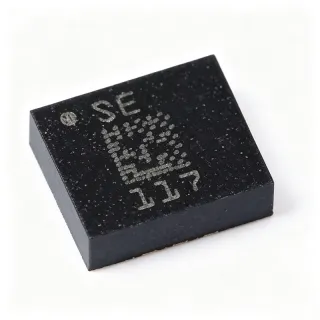
| Package | LGA-14L (2.5 x 3.0 x 0.86 mm) |
| Mounting Type | Surface Mount |
| AEC-Q100 | Qualified |
| RoHS | Compliant |
| Embedded Features | Pedometer, Tilt, Motion/Tilt Interrupts, Sensor Fusion |
LSM6DSLTR Pin Configuration
| Pin 1 | VDD_IO — Power supply for I/O pins |
| Pin 2 | SCL/SPC — I2C clock / SPI clock |
| Pin 3 | SDA/SDI/SDO — I2C data / SPI data in / SPI data out |
| Pin 4 | SDO/SA0 — SPI data out / I2C address select |
| Pin 5 | CS — Chip select (active low) |
| Pin 6 | INT1 — Interrupt 1 output |
| Pin 7 | INT2 — Interrupt 2 output |
| Pin 8 | GND — Ground |
| Pin 9 | GND — Ground |
| Pin 10 | VDD — Power supply |
| Pin 11 | NC — Not connected |
| Pin 12 | NC — Not connected |
| Pin 13 | NC — Not connected |
| Pin 14 | NC — Not connected |
Typical Applications
LSM6DSLTR is suitable for 6 applications: Wearable Fitness Trackers, Smartphones and Tablets, Industrial Vibration Monitoring, Automotive Navigation and Safety, IoT Smart Home Devices, Gaming Controllers and VR.
Wearable Fitness Trackers
The LSM6DSLTR is ideal for fitness trackers due to its low power consumption (0.4 mA) and embedded pedometer. It enables continuous step counting and activity recognition without draining the battery. The device's small LGA-14L package (2.5x3.0 mm) fits easily into compact wearable designs. The 16-bit resolution ensures accurate motion tracking, while the 2 KB FIFO reduces host processor wake-ups, further saving power. The embedded sensor fusion features allow for precise gesture and activity detection, enhancing user experience.
Recommended
Smartphones and Tablets
In smartphones, the LSM6DSLTR provides motion sensing for screen rotation, gaming, and step counting. Its high output data rate (up to 6.66 kHz) supports fast response for gaming and augmented reality applications. The device's low power consumption is critical for battery life, and the embedded motion interrupts allow the phone to wake on movement. The I2C/SPI interfaces enable easy integration with application processors. The LSM6DSLTR's AEC-Q100 qualification also makes it suitable for automotive-grade mobile devices.
Recommended
Industrial Vibration Monitoring
The LSM6DSLTR is used in industrial equipment to monitor vibration and detect anomalies. Its wide full-scale range (±16 g) and high resolution (16-bit) allow precise measurement of vibration levels. The device operates over a wide temperature range (-40°C to +85°C), making it suitable for harsh industrial environments. The embedded FIFO can store vibration data for analysis, reducing the need for continuous host polling. The SPI interface enables high-speed data transfer for real-time monitoring systems.
Recommended
Automotive Navigation and Safety
The LSM6DSLTR is AEC-Q100 qualified, making it suitable for automotive applications such as navigation, electronic stability control, and rollover detection. Its high accuracy and low drift ensure reliable performance in dynamic driving conditions. The device's wide temperature range and robust construction meet automotive reliability standards. The embedded sensor fusion features support dead reckoning and inertial navigation, complementing GPS in tunnels and urban canyons. The SPI interface allows integration with automotive microcontrollers.
Recommended
IoT Smart Home Devices
In smart home devices, the LSM6DSLTR enables motion detection for security systems, smart thermostats, and lighting control. Its low power consumption allows battery-powered operation for years. The device's motion interrupts can wake the system only when movement is detected, saving energy. The small package size enables integration into compact sensors and modules. The I2C interface simplifies connection to low-power microcontrollers like the STM32L0 series.
Recommended
Gaming Controllers and VR
The LSM6DSLTR provides precise motion tracking for gaming controllers and virtual reality headsets. Its high output data rate (up to 6.66 kHz) and low latency ensure responsive and immersive experiences. The device's 16-bit resolution captures fine movements, while the embedded sensor fusion reduces the need for external processing. The small package and low power consumption are ideal for handheld controllers. The SPI interface allows high-speed communication with gaming processors.
Recommended
Recommended Products Summary
Engineering reference data for LSM6DSLTR — comparison, design guidance, and compliance information.
Selection Guide
Comparison with Alternatives
| Parameter | This Product | LSM6DSO | LSM6DS3TR | BMI160 | ICM-20602 |
|---|---|---|---|---|---|
| Package | LGA-14L | LGA-14L (same) | LGA-14L (same) | LGA-14L (same) | LGA-14L (same) |
| Brand | STMicroelectronics | STMicroelectronics | STMicroelectronics | Bosch Sensortec | TDK InvenSense |
| Accelerometer Full-Scale Range | ±2/±4/±8/±16 g | ±2/±4/±8/±16 g | ±2/±4/±8/±16 g | ±2/±4/±8/±16 g | ±2/±4/±8/±16 g |
| Gyroscope Full-Scale Range | ±125/±245/±500/±1000/±2000 dps | ±125/±245/±500/±1000/±2000 dps | ±125/±245/±500/±1000/±2000 dps | ±125/±245/±500/±1000/±2000 dps | ±250/±500/±1000/±2000 dps |
| Output Data Rate (ODR) | 1.6 Hz to 6.66 kHz | 1.6 Hz to 6.66 kHz | 1.6 Hz to 6.66 kHz | 0.78 Hz to 3.2 kHz | 0.1 Hz to 32 kHz |
| Supply Voltage | 1.71V to 3.6V | 1.71V to 3.6V | 1.71V to 3.6V | 1.71V to 3.6V | 1.71V to 3.45V |
| Current Consumption (Normal Mode) | 0.4 mA | 0.3 mA | 0.9 mA | 0.45 mA | 0.5 mA |
| FIFO Size | 2 KB | 3 KB | 1 KB | 1 KB | 1 KB |
| AEC-Q100 | Qualified | Qualified | Qualified | Not qualified | Not qualified |
Key Differentiators
- Lowest power consumption in its class (vs LSM6DS3TR)
- Larger FIFO buffer (vs LSM6DS3TR)
- AEC-Q100 qualification (vs BMI160)
Design Notes
Decouple the VDD and VDD_IO pins with 100 nF ceramic capacitors placed as close to the pins as possible. A 1 uF bulk capacitor is recommended on VDD for stable operation. Ensure the power supply is clean and within the 1.71V to 3.6V range to avoid erratic behavior.
Route the I2C/SPI lines with appropriate pull-up resistors (typically 4.7 kOhm for I2C) and keep traces short to minimize noise. The CS pin must be tied high for I2C mode or controlled by the host for SPI. Place the sensor away from high-frequency noise sources and mechanical stress points on the PCB.
Do not leave the interrupt pins (INT1, INT2) floating; configure them as outputs and connect to the host MCU with pull-up resistors if needed. Ensure the device is properly initialized with the desired ODR and full-scale ranges before reading data. Avoid exceeding the absolute maximum ratings, especially on the supply voltage.
Compliance Information
RoHS compliant and AEC-Q100 qualified per STMicroelectronics datasheet. REACH compliance is assumed based on ST's environmental policy.