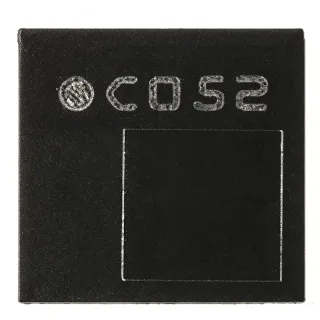
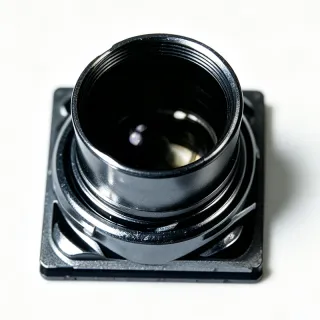
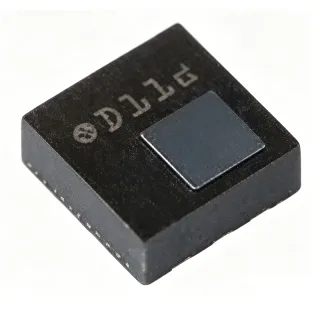
MPXM2102D - 100kPa Differential Pressure Sensor, M-PAK | NXP
MPN: MPXM2102D ✓ Active| Qty | Unit Price | Extended |
|---|---|---|
| 1 | $12.5 | $12.50 |
| 10 | $11.2 | $112.00 |
| 100 | $9.85 | $985.00 |
| 500 | $8.4 | $4,200.00 |
| 1,000 | $7.1 | $7,100.00 |
MPXM2102D Overview
What is a piezoresistive pressure sensor? A piezoresistive pressure sensor is a solid-state transducer that uses strain-induced resistance changes in a silicon diaphragm to convert applied pressure into a voltage. The sensor element itself is one tier in a broader transducer hierarchy: pressure sensor -> MEMS sensor -> transducer -> sensor IC. Piezoresistive sensors occupy the high-accuracy, low-pressure niche of this family, contrasted against capacitive (high sensitivity) and resonant (high stability) alternatives. They are widely used in medical and industrial applications where linearity, small size, and analog output simplicity outweigh the need for a digital interface.
Key features include a full-scale output of 40 mV at 10 V excitation, a sensitivity of 0.4 mV/kPa, an operating temperature range of -40C to +125C, and a differential/gauge measurement topology with dual horizontal ports. The integrated temperature compensation covers 0 to 85C with a typical temperature coefficient of 0.5% FS, and the monolithic silicon diaphragm is laser-trimmed during calibration to minimize offset and span errors across the operating range.
The MPXM2102D is built on NXP's mature MEMS process and a Wheatstone-bridge piezoresistive network diffused into the silicon diaphragm. The bridge excitation is ratiometric with the supply voltage, so the output scales linearly with Vex, enabling simple ADC conversion without a precision reference. The M-PAK 5-SMD module ports pressure horizontally through two opposed inlets, simplifying plumbing on both sides of a manifold or flow channel.
Typical applications include medical respiratory monitoring (spirometers, ventilators), HVAC differential pressure sensing, industrial process control, gas flow measurement, and altimeter/barometer modules. The differential topology is well suited to measuring pressure drop across a flow element or the positive/negative pressure swing in a pneumatic actuator.
When designing with this device, decouple the Vex supply with a 0.1 uF ceramic capacitor placed as close as possible to pins 2 and 4, and ensure the bridge output is conditioned by a low-offset, low-noise instrumentation amplifier such as the INA128 or MPX2010 to drive an ADC. Avoid mechanically stressing the M-PAK housing or the ports, as package strain couples directly into the diaphragm and degrades accuracy.
This page synthesizes distributor pricing, drop-in alternatives, and practical design notes not found in the manufacturer datasheet alone.
Drop-in alternatives for MPXM2102D — same package, pin-to-pin compatible. Different-package parts requiring PCB rework are excluded.
Variants in this series
Same-series models that are drop-in compatible with MPXM2102D (same form factor and footprint) — differing in Operating Pressure Range, Mounting Type, Operating Temperature, Output Type, Output Voltage.
Quick Comparison Tool — Select alternative parts for side-by-side comparison:
MPXM2202D
✅ Drop-In📋 Reference alternative (not in catalog)
MPXM2102A
✅ Drop-In✓ In Stock
$10.4 / Unit
View Datasheet →MPXM2102GS
✅ Drop-In✓ In Stock
$4.35 / Unit
View Datasheet →MPXM2102DT1
✅ Drop-In📋 Reference alternative (not in catalog)
MPXM2102D Maximum Ratings & Electrical Characteristics
| Pressure Type | Differential |
| Operating Pressure Range | 0 kPa to 100 kPa (0 psi to 14.5 psi) |
| Output Type | Analog Voltage (Wheatstone bridge, ratiometric) |
| Output Voltage | 0 mV to 40 mV at Vex = 10 V |
| Sensitivity | 0.4 mV/kPa nominal |
| Supply Voltage (Vex) | 10 V typical (up to 16 V max) |
| Supply Current | 6 mA typical at 10 V |
| Offset (null pressure) | 0 mV to 1 mV nominal |
| Linearity | ±0.1% FS typical (±0.5% FS max) |
| Temperature Compensation Range | 0C to 85C |
| Operating Temperature Range | -40C to +125C |
| Storage Temperature | -55C to +150C |
| Port Configuration | Dual horizontal ports, differential |
| Package | 5-SMD Module (M-PAK) |
| Mounting Type | Surface Mount |
| Media Compatibility | Dry air and non-corrosive gases |
| RoHS Status | Compliant (lead-free M-PAK) |
MPXM2102D Pin Configuration
| Pin 1 | Vex+ — Bridge excitation supply positive |
| Pin 2 | Vout+ — Bridge output positive (Wheatstone tap) |
| Pin 3 | GND — Bridge excitation ground reference |
| Pin 4 | Vout- — Bridge output negative (Wheatstone tap) |
| Pin 5 | Vex- — Bridge excitation return |
Typical Applications
MPXM2102D is suitable for 6 applications: Medical Spirometer / Respiratory Flow Meter, HVAC Differential Pressure / Filter Monitoring, Industrial Process Control / Gas Flow, Pneumatic Actuator / Vacuum System Feedback, Barometric / Altimeter Module (Pair with Absolute Sensor), Liquid-Level / Tank Differential Sensing.
Medical Spirometer / Respiratory Flow Meter
Differential pressure across a flow element (Fleisch pneumotach or differential-pressure orifice) is the standard spirometry measurement principle. The MPXM2102D's 0 to 100 kPa range covers the pressure drops typical of pneumotach flow heads (~0.1 to 5 kPa) while leaving headroom for coughing transients. Its 0.4 mV/kPa nominal sensitivity at 10 V excitation produces a 40 mV full-scale output that is easily amplified by an instrumentation amplifier (INA128 or AD8421) into a 0 to 4 V ADC range. Compared to a gauge-mode absolute sensor, the differential topology rejects ambient barometric pressure variation, which is critical for accurate tidal-volume measurement across changing altitudes or weather conditions.
Recommended
HVAC Differential Pressure / Filter Monitoring
Building automation routinely monitors duct static pressure and filter-loading differential to trigger fan-speed changes and maintenance alerts. The MPXM2102D measures pressure drops of 0 to 100 kPa across filter banks, cooling coils, and variable-air-volume boxes. The horizontal dual-port M-PAK module simplifies plumbing into ductwork with opposed barbed fittings, and the on-chip temperature compensation from 0 to 85 C tracks HVAC air-handler environments directly. Compared to industrial gauge sensors, the differential topology allows bidirectional pressure measurements (clean-side vs dirty-side) without an external reference, simplifying installation.
Recommended
Industrial Process Control / Gas Flow
Orifice-plate and laminar-flow-element flow meters use differential pressure as the primary flow variable (Bernoulli's equation). The MPXM2102D's 0 to 100 kPa range is well-matched to low-flow gas chromatography, vacuum-pump inlet monitoring, and cleanroom pressure cascade control. The 5-SMD M-PAK surface-mount package enables PCB-level integration inside a sealed flow-meter housing, and the 6 mA typical supply current at 10 V allows the sensor to share a regulated supply with adjacent instrumentation. Compared to integrated digital flow sensors, the analog output preserves bandwidth for transient flow-pulse analysis in process-control loops.
Recommended
Pneumatic Actuator / Vacuum System Feedback
Closed-loop control of pneumatic actuators and vacuum grippers requires a real-time differential pressure feedback signal proportional to cylinder force or vacuum level. The MPXM2102D reports cylinder-side pressure directly, enabling force control algorithms in pick-and-place robots and vacuum-clamp systems. Its -40 to +125 C operating range supports factory-floor temperature swings, and the 0 to 40 mV ratiometric output simplifies ADC front-end design. Compared to a sealed gauge sensor, the differential topology allows the low-pressure port to reference atmospheric pressure - critical for vacuum systems where absolute measurement would require a vacuum reference.
Recommended
Barometric / Altimeter Module (Pair with Absolute Sensor)
The MPXM2102D is differential rather than absolute, so it cannot directly measure barometric pressure - but it pairs with the MPXM2102A (absolute vacuum-reference) variant on the same PCB to compute a true barometric pressure. In altimeter and weather-station designs, the differential sensor monitors enclosure wind pressure or venturi airspeed while the absolute sensor reports atmospheric pressure. The identical M-PAK 5-SMD footprint lets designers use the same PCB layout for either or both sensors. Compared to integrated BMP280-class digital barometers, this analog solution preserves bandwidth for fast weather-front detection and avoids I2C bus contention.
Recommended
Liquid-Level / Tank Differential Sensing
Differential pressure measurement is the most reliable way to infer liquid level in a vented tank - one port sits in the headspace, the other in the liquid head, and the difference yields the hydrostatic column height independent of atmospheric variation. The MPXM2102D's 0 to 100 kPa range covers up to 10 meters of water column, suitable for process tanks and small reservoirs. The horizontal-port M-PAK module can be mounted adjacent to the tank wall with short flexible tubing, eliminating liquid wetted sensors. Compared to submersible hydrostatic probes, the external differential sensor keeps electronics out of the process fluid.
Recommended
Recommended Products Summary
Engineering reference data for MPXM2102D — comparison, design guidance, and compliance information.
Selection Guide
Comparison with Alternatives
| Parameter | This Product | MPXM2202D | MPXM2102A | MPXM2102GS | MPXM2102DT1 |
|---|---|---|---|---|---|
| Brand | NXP Semiconductors | NXP Semiconductors | NXP Semiconductors | NXP Semiconductors | NXP Semiconductors |
| Package | 5-SMD Module (M-PAK) | 5-SMD Module (M-PAK) - same | 5-SMD Module (M-PAK) - same | 5-SMD Module (M-PAK) - same | 5-SMD Module (M-PAK) - same |
| Pressure Type | Differential | Differential | Absolute | Gauge | Differential |
| Operating Pressure Range | 0 to 100 kPa (14.5 psi) | 0 to 200 kPa (29 psi) | 0 to 100 kPa (14.5 psi) | 0 to 100 kPa (14.5 psi) | 0 to 100 kPa (14.5 psi) |
| Output Voltage | 0 to 40 mV at Vex = 10 V | 0 to 40 mV at Vex = 10 V | 0 to 40 mV at Vex = 10 V | 0 to 40 mV at Vex = 10 V | 0 to 40 mV at Vex = 10 V |
| Sensitivity | 0.4 mV/kPa nominal | 0.2 mV/kPa nominal | 0.4 mV/kPa nominal | 0.4 mV/kPa nominal | 0.4 mV/kPa nominal |
| Supply Voltage | 10 V typical (16 V max) | 10 V typical (16 V max) | 10 V typical (16 V max) | 10 V typical (16 V max) | 10 V typical (16 V max) |
| Operating Temperature | -40C to +125C | -40C to +125C | -40C to +125C | -40C to +125C | -40C to +125C |
| RoHS | Compliant | Compliant | Compliant | Compliant | Compliant |
Key Differentiators
- Differential topology with horizontal ports (vs MPXM2102GS (gauge variant))
- On-chip temperature compensation 0 to 85 C (vs Generic uncompensated bridge sensors)
- Same M-PAK 5-SMD footprint as the broader MPXM2xxx series (vs Through-hole MPX2102DP)
Design Notes
The MPXM2102D bridge draws approximately 6 mA at 10 V excitation. Provide a low-noise regulated supply with a 0.1 uF ceramic decoupling capacitor placed as close as possible to pins 1 (Vex+) and 5 (Vex-/GND). Switching regulators on the same board can couple ripple into the ratiometric output - place an LC pi-filter (10 uH + 10 uF + 0.1 uF) on the bridge supply for sub-mV noise floors. The output is ratiometric with Vex, so any supply noise appears directly on the output.
The 0 to 40 mV full-scale output requires careful analog signal-chain design. Use a low-offset (<100 uV), low-drift (<5 uV/C) instrumentation amplifier such as INA128, INA333, or AD8421 with gain of ~100 to map the full scale into a 0 to 4 V ADC input. Add a first-order RC low-pass filter (R=10 kohm, C=10 nF, fc=1.6 kHz) at the in-amp output to reject sensor thermal noise. PCB layout must use Kelvin-sense wiring at the bridge pads and a guard trace around the analog signal path to reject leakage from the digital section.
Do not expose the M-PAK housing or ports to mechanical stress - package strain couples directly into the silicon diaphragm and shifts the output. Avoid potting or overmolding the sensor body. Use flexible silicone tubing on both ports and secure the PCB with standoffs rather than rigid mounts. For media compatibility, the sensor is rated for dry air and non-corrosive gases only - contact NXP for liquids, condensing humidity, or corrosive media. Avoid freezing the sensor with condensed water inside the ports.
On-chip temperature compensation covers 0 to 85 C only. For applications outside that range, add a software compensation step using the on-die thermistor or an external RTD. Bridge resistance drifts ~0.5% FS over the full -40 to +125 C range, so uncompensated readings at the temperature limits can show a 50 mV shift equivalent to ~12 kPa. PCB self-heating from nearby regulators can also bias the sensor - keep heat sources >10 mm away and add thermal reliefs on the copper pours.
Compliance Information
RoHS and REACH compliant per NXP product page. M-PAK 5-SMD variant ships lead-free; legacy through-hole MPX2102 variants are not lead-free. AEC-Q100 is not applicable for a pressure sensor at this performance tier.