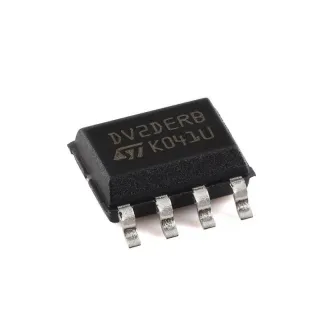
SIM800C - Quad-Band GSM/GPRS Module | SIMCom
MPN: SIM800C ✓ Active| Qty | Unit Price | Extended |
|---|---|---|
| 1 | $6.6 | $6.60 |
| 10 | $6.2 | $62.00 |
| 100 | $5.8 | $580.00 |
| 500 | $5.4 | $2,700.00 |
| 1,000 | $5 | $5,000.00 |
SIM800C Overview
A GSM/GPRS module is a cellular communication module that enables devices to connect to GSM networks for voice, SMS, and data services. It integrates a baseband processor, RF transceiver, and power management into a single package, allowing developers to add cellular connectivity to their products without designing complex RF circuitry. The SIM800C sits within the hierarchy of cellular modules, which includes 2G, 3G, 4G LTE, and NB-IoT categories, and is specifically a 2G GSM/GPRS module.
Key features of the SIM800C include support for Quad-Band frequencies, GPRS multi-slot class 12, and a rich set of interfaces including UART, USB 2.0, GPIO, SPI, and I2C. It also integrates an audio codec with speaker and microphone amplifiers, making it ideal for voice applications. The module supports AT command control, enabling easy integration with microcontrollers. Its low power consumption in sleep mode (around 1 mA) is beneficial for battery-powered devices.
Technically, the SIM800C is built on a mature GSM/GPRS platform, offering reliable performance in 2G networks. It supports SMS, voice calls, and data transmission, with a maximum GPRS downlink speed of 85.6 kbps. The module includes a power management unit that handles over-voltage and under-voltage protection, ensuring safe operation. It also features a PWRKEY pin for power-on/off control and supports normal power-off via AT command 'AT+CPOWD=1'.
Typical applications include remote monitoring, asset tracking, alarm systems, smart metering, and IoT gateways. Its compact size and low power consumption make it suitable for portable devices, while its robust interface set allows for flexible system integration. The SIM800C is widely used in industrial and consumer applications where 2G connectivity is still available.
When designing with the SIM800C, ensure a stable power supply within 3.4V to 4.4V and adequate decoupling. The module requires a proper antenna connection and careful PCB layout to minimize RF interference. Also, consider the lifecycle status, as 2G networks are being phased out in many regions, which may affect long-term deployment.
Drop-in alternatives for SIM800C — same package, pin-to-pin compatible. Different-package parts requiring PCB rework are excluded.
Variants in this series
Same-series models that are drop-in compatible with SIM800C (same form factor and footprint) — differing in Interfaces, Package, Supply Voltage.
Quick Comparison Tool — Select alternative parts for side-by-side comparison:
SIM800L
⚡ Same Package📋 Reference alternative (not in catalog)
SIM800H
⚡ Same Package ⚠️ Specs Unverified📋 Reference alternative (not in catalog)
A7683E
✅ Drop-In📋 Reference alternative (not in catalog)
SIM7080G
✅ Drop-In📋 Reference alternative (not in catalog)
A7670C
⚡ Same Package ⚠️ Specs Unverified📋 Reference alternative (not in catalog)
SIM800C Specifications (manufacturer-published)
| Technology | GSM/GPRS |
| Frequency Bands | 850/900/1800/1900 MHz |
| GPRS Data Rate | 85.6 kbps |
| Supply Voltage | 3.4V to 4.4V |
| Package | LCC 42-pin SMD |
| Dimensions | 17.6 x 15.7 x 2.3 mm |
| Interfaces | UART, USB 2.0, GPIO, SPI, I2C |
| Audio | Integrated codec with speaker/mic amplifier |
| Power Consumption (Sleep) | ~1 mA |
| Operating Temperature | -40C to +85C |
| RoHS | Compliant |
| AT Command Support | Yes |
| SMS Support | Yes |
| Voice Support | Yes |
| Antenna Connector | RF pad |
SIM800C Pin Configuration
| Pin 1 | VBAT — Power supply input (3.4V-4.4V) |
| Pin 2 | GND — Ground |
| Pin 3 | PWRKEY — Power-on/off key |
| Pin 4 | UART_TXD — UART transmit |
| Pin 5 | UART_RXD — UART receive |
| Pin 6 | USB_DP — USB data plus |
| Pin 7 | USB_DM — USB data minus |
| Pin 8 | GPIO1 — General purpose I/O |
| Pin 9 | GPIO2 — General purpose I/O |
| Pin 10 | SPI_CLK — SPI clock |
| Pin 11 | SPI_MISO — SPI master in slave out |
| Pin 12 | SPI_MOSI — SPI master out slave in |
| Pin 13 | SPI_CS — SPI chip select |
| Pin 14 | I2C_SCL — I2C clock |
| Pin 15 | I2C_SDA — I2C data |
| Pin 16 | MIC_P — Microphone positive |
| Pin 17 | MIC_N — Microphone negative |
| Pin 18 | SPK_P — Speaker positive |
| Pin 19 | SPK_N — Speaker negative |
| Pin 20 | RF_ANT — Antenna pad |
Power & Thermal Characteristics
| Power Input | 3.4V to 4.4V |
| Power Consumption | ~1 mA |
| Operating Temperature | -40C to +85C |
Power input and thermal parameters for SIM800C as published by the manufacturer.
Typical Applications
SIM800C is suitable for 6 applications: IoT Remote Monitoring, Asset Tracking, Alarm and Security Systems, Smart Metering, Portable Communication Devices, Automotive Telematics.
IoT Remote Monitoring
The SIM800C is ideal for IoT remote monitoring systems that require cellular connectivity for data transmission. Its quad-band GSM/GPRS support ensures broad network compatibility, and the GPRS data rate of 85.6 kbps is sufficient for sending sensor data, alarms, and status updates. The module's low power consumption in sleep mode (around 1 mA) extends battery life in remote sensors. With UART and GPIO interfaces, it easily connects to microcontrollers for data acquisition and control. The compact LCC package allows integration into small form-factor devices, making it suitable for environmental monitoring, industrial equipment, and smart agriculture applications.
Recommended
Asset Tracking
The SIM800C is well-suited for asset tracking applications where location data needs to be transmitted over cellular networks. Its GSM/GPRS capabilities allow real-time tracking via SMS or data connection. The module's small size (17.6 x 15.7 x 2.3 mm) enables integration into portable trackers. The UART interface simplifies connection to GPS modules, and the low power consumption supports battery-powered operation. The module's robust power management ensures reliable operation in varying conditions. With support for quad-band frequencies, it can be used globally where 2G networks are available, making it a cost-effective solution for fleet management, logistics, and personal tracking devices.
Recommended
Alarm and Security Systems
The SIM800C is an excellent choice for alarm and security systems that require cellular communication for alerts and remote control. Its voice capability allows for two-way audio communication, and the integrated audio codec simplifies the design of intercom or emergency call features. The module supports SMS alerts, enabling instant notifications to property owners or security personnel. The GPIO pins can interface with sensors and relays, while the UART allows connection to a central control unit. The module's reliable power management and wide operating temperature range (-40C to +85C) make it suitable for outdoor and harsh environments. Its compact size allows for discreet installation in security devices.
Recommended
Smart Metering
The SIM800C is ideal for smart metering applications, enabling remote reading of utility meters (electricity, water, gas) via GPRS. Its data capability supports periodic transmission of consumption data to central servers. The module's low power consumption is crucial for battery-operated meters, and the sleep mode current of ~1 mA extends battery life. The UART interface connects to metering ICs, and the compact package fits within meter housings. The module's quad-band support ensures compatibility with various network operators. With AT command control, integration is straightforward, and the module's reliability ensures consistent data reporting. This makes it a cost-effective solution for smart grid deployments.
Recommended
Portable Communication Devices
The SIM800C is suitable for portable communication devices such as walkie-talkies, emergency phones, and personal safety devices. Its voice capability and integrated audio codec enable clear voice transmission over GSM networks. The module's small size and low power consumption make it ideal for handheld devices. The UART and GPIO interfaces allow for keypad and display integration. The module supports both voice calls and SMS, providing versatile communication options. Its quad-band support ensures operation in multiple countries. The module's power management features protect against voltage fluctuations, ensuring reliable operation in portable devices. This makes it a practical choice for consumer and professional communication tools.
Recommended
Automotive Telematics
The SIM800C can be used in automotive telematics systems for vehicle tracking, emergency call (eCall), and remote diagnostics. Its GSM/GPRS connectivity enables real-time data transmission of vehicle location and status. The module's compact size allows integration into in-vehicle devices. The UART interface connects to the vehicle's CAN bus via a gateway, and the GPIO pins can trigger alerts. The module's wide operating temperature range (-40C to +85C) is suitable for automotive environments. Its low power consumption is beneficial for always-on systems. The module supports voice calls, enabling hands-free calling features. This makes it a viable solution for fleet management and vehicle security systems.
Recommended
Recommended Products Summary
Engineering reference data for SIM800C — comparison, design guidance, and compliance information.
Selection Guide
Comparison with Alternatives
| Parameter | This Product | SIM800L | SIM800H | A7683E | SIM7080G |
|---|---|---|---|---|---|
| Package | LCC 42-pin | LGA 42-pin | LGA 42-pin | LCC 42-pin | LCC 42-pin |
| Brand | SIMCom | SIMCom | SIMCom | SIMCom | SIMCom |
| Technology | GSM/GPRS (2G) | GSM/GPRS (2G) | GSM/GPRS (2G) | LTE Cat1 (4G) | LTE-M/NB-IoT |
| Data Rate | 85.6 kbps | 85.6 kbps | 85.6 kbps | 10 Mbps (downlink) | 300 kbps (LTE-M) |
| Audio Codec | Yes | No | Yes | Yes | No |
| Supply Voltage | 3.4V-4.4V | 3.4V-4.4V | 3.4V-4.4V | 3.4V-4.2V | 3.3V-4.3V |
| Dimensions | 17.6 x 15.7 x 2.3 mm | 15.8 x 17.8 x 2.4 mm | 24 x 24 x 3 mm | 17.6 x 15.7 x 2.3 mm | 17.6 x 15.7 x 2.3 mm |
| Pin Compatibility | Reference | No | No | Yes | Yes |
Key Differentiators
- Integrated audio codec (vs SIM800L)
- Pin-compatible with newer LTE modules (vs A7683E)
- Compact size (vs SIM800H)
Design Notes
The SIM800C requires a stable 3.4V to 4.4V supply. During GSM transmission bursts, current can spike up to 2A. Use a low-ESR capacitor (e.g., 100uF) close to the VBAT pin and a 1uF ceramic capacitor for high-frequency decoupling. A linear regulator or DC-DC converter with sufficient current capability is recommended.
For optimal RF performance, place the antenna on the edge of the PCB with a 50-ohm impedance-controlled trace. Keep the antenna away from high-speed digital lines and power traces. Follow SIMCom's hardware design guidelines for the recommended PCB layout, including ground plane and component placement.
Ensure the PWRKEY pin is pulled low for at least 500ms to power on the module. Do not apply voltage to the UART pins before the module is powered, as this can cause latch-up. Also, verify that the SIM card holder is properly connected and supports the required voltage levels.
Compliance Information
RoHS compliance indicated on LCSC product page. Other compliance data not specified in provided sources.