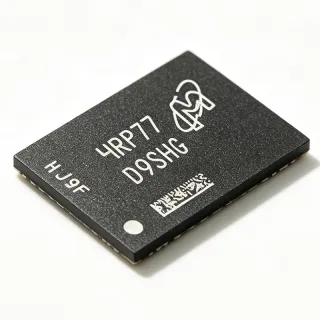
MT53B128M32D1DS-053 AUT:A - 4Gbit LPDDR4 1.866GHz | Micron
MPN: MT53B128M32D1DS-053 AUT:A ✓ Active| Qty | Unit Price | Extended |
|---|---|---|
| 1 | $0 | $0.00 |
| 10 | $0 | $0.00 |
| 100 | $0 | $0.00 |
| 500 | $0 | $0.00 |
| 1,000 | $0 | $0.00 |
MT53B128M32D1DS-053 AUT:A Overview
LPDDR4 (Low Power Double Data Rate 4) is a JEDEC-defined mobile DRAM standard optimized for low operating voltage and low power consumption. Within the memory hierarchy, LPDDR4 SDRAM sits under the volatile DRAM family as the power-optimized branch of synchronous DRAM, widely used where battery life and thermal budgets dominate design decisions. Unlike DDR4 for servers, LPDDR4 reduces interface voltage and adds deep power-down and per-bank refresh features.
Key features of this device include the 4Gbit density in a x32 organization suited to processors without 16-bit memory controllers, the -053 speed bin supporting 1866 MHz operation, and automotive AEC-Q100 qualification indicated by the AUT prefix with a -40C to +125C operating range. Micron characterizes the LPDDR4 family for ultra-low power consumption to extend battery life.
Architecturally, the device uses a dual-channel-capable LPDDR4 interface with dynamic frequency scaling support, low-voltage swing termination (LVSTL) I/O, and programmable drive strengths. The 1.1V VDD core with a separate 1.1V VDDQ interface minimizes I/O switching power, and self-refresh modes retain data during system idle states.
Typical applications include automotive infotainment and ADAS platforms, industrial HMI and edge-compute modules, and high-performance embedded processors requiring 32-bit wide memory buses.
Design consideration: LPDDR4 requires controller-side training of read/write leveling and DQS oscillator counts during initialization; verify your SoC memory controller supports the -053 (1866 MHz) speed bin timing parameters before layout.
This page synthesizes distributor availability, same-family drop-in speed-grade and temperature-grade alternatives, and practical design notes not consolidated in the manufacturer part catalog.
Drop-in alternatives for MT53B128M32D1DS-053 AUT:A — same package, pin-to-pin compatible. Different-package parts requiring PCB rework are excluded.
Variants in this series
Same-series models that are drop-in compatible with MT53B128M32D1DS-053 AUT:A (same form factor and footprint) — differing in Clock Frequency, Interface, Memory Type, Package, Speed Grade.
Quick Comparison Tool — Select alternative parts for side-by-side comparison:
MT53B128M32D1DT-053 AUT:A
✅ Drop-In📋 Reference alternative (not in catalog)
MT53B128M32D1DT-053 IT:A
✅ Drop-In📋 Reference alternative (not in catalog)
MT53B128M32D1DS-062
✅ Drop-In✓ In Stock
$5.45 / Unit
View Datasheet →MT53B128M32D1DS-053 IT:A
✅ Drop-In ⚠️ Specs Unverified📋 Reference alternative (not in catalog)
MT53B128M32D1DT-053 AAT:A
✅ Drop-In📋 Reference alternative (not in catalog)
MT53B256M32D1NP-053 WT:C
✅ Drop-In📋 Reference alternative (not in catalog)
MT53B128M32D1DS-053 AUT:A Specifications
| Memory Type | SDRAM - Mobile LPDDR4 |
| Memory Size | 4 Gbit |
| Memory Organization | 128M x 32 |
| Clock Frequency | 1.866 GHz |
| Access Time (Clock Cycle) | 3.5 ns |
| Supply Voltage (VDD/VDDQ) | 1.1 V |
| Operating Temperature | -40C to +125C |
| Grade | Automotive (AUT, AEC-Q100) |
| Speed Grade | -053 (1866 MHz) |
| Interface | Parallel |
| Memory Format | DRAM (volatile) |
| Package | 200-WFBGA (10 mm x 14.5 mm) |
| Mounting Type | Surface Mount |
| Feature | Ultra-low power consumption for enhanced battery life |
| Packaging Option | Tape & Reel (TR suffix variant) |
MT53B128M32D1DS-053 AUT:A 200-wfbga (10 mm x 14.5 mm) Pin Configuration Guide
Pin configuration for MT53B128M32D1DS-053 AUT:A (200-wfbga (10 mm x 14.5 mm) package). Pin numbering, functions, and connection diagrams are defined in the manufacturer datasheet. Refer to it for the exact footprint and soldering guidelines.

No detailed pinout data available for MT53B128M32D1DS-053 AUT:A.
Refer to the datasheet for full pin configuration.
Typical Applications
MT53B128M32D1DS-053 AUT:A is suitable for 6 applications: Automotive Infotainment, ADAS Sensor Processing, Industrial Edge Computing, Battery-Powered Mobile and Handheld Devices, Networking and Communications Equipment, Automotive Digital Instrument Clusters and Displays.
Automotive Infotainment
The MT53B128M32D1DS-053 AUT:A fits automotive infotainment head units because its AEC-Q100-grade AUT:A qualification and -40C to +125C range survive the cabin and dashboard thermal environment that consumer DRAM cannot. The 4Gbit 128M x 32 organization supplies 512 MB-class working memory on a single device, and the 1.866 GHz (LPDDR4-1866) data rate delivers the bandwidth required by navigation, media decode, and HMI rendering stacks. In a typical design the device connects to the SoC LPDDR4 controller over a 32-bit bus at 1.1V, with layout attention to length-matched DQ/DQS routing and reference-plane integrity; the LPDDR4 interface adds no switching regulator noise and its self-refresh mode cuts idle power significantly compared to keeping the full interface active.
Recommended
ADAS Sensor Processing
For ADAS camera-radar fusion ECUs, the MT53B128M32D1DS-053 AUT:A is chosen because 32-bit-wide x32 organization provides higher peak bandwidth per chip than 16-bit parts, reaching LPDDR4-1866 throughput needed to buffer multi-sensor frame data. The -40C to +125C automotive grade covers under-hood-adjacent zones and thermal soak conditions. Functionally, the LPDDR4 device serves as frame-buffer and working memory between image-sensor interfaces and the ADAS SoC; the 1.1V rail keeps DRAM power within ECU budgets, while deep power-down supports the ASIL-relevant fast-wake sequencing. Designers must implement controller-level read/write leveling training and verify the -053 speed bin timing tables against their SoC memory controller before committing the PCB stackup.
Recommended
Industrial Edge Computing
Industrial gateways and edge-AI modules use the MT53B128M32D1DS-053 AUT:A where extended temperature and long product life matter more than consumer-grade pricing. The 4Gbit capacity supports Linux-class operating systems and neural-network inference workloads, while 1866 MHz operation keeps the memory subsystem from bottlenecking Gigabit Ethernet and multi-camera input pipelines. The 1.1V LPDDR4 interface reduces total board power and heat dissipation inside sealed enclosures with no forced airflow - a quantified benefit when junction-level budgets are tight. Because the AUT:A grade exceeds typical industrial requirements (-40C to +125C), it also serves as a supply-chain hedge: the same socket accepts the lower-cost IT:A industrial variant if the automotive qualification is not required.
Recommended
Battery-Powered Mobile and Handheld Devices
The MT53B128M32D1DS-053's LPDDR4 architecture targets battery-powered products: Micron characterizes the family for ultra-low power consumption to extend battery life, and the 1.1V VDD/VDDQ rails cut dynamic I/O power roughly in half versus 1.5V LPDDR1-class interfaces. The 128M x 32 organization lets a handheld designer reach 512 MB with one package, preserving PCB area in space-constrained enclosures; the 200-WFBGA (10x14.5 mm) body fits the standard mobile memory footprint. Self-refresh and deep power-down states hold memory contents during idle with minimal current, and dynamic frequency scaling lets the host drop below the 1866 MHz maximum when workloads permit, trading bandwidth for runtime on battery.
Recommended
Networking and Communications Equipment
Enterprise access points, small-cell radios, and network-attached processors benefit from the MT53B128M32D1DS-053's combination of 4Gbit density and LPDDR4-1866 bandwidth: packet buffers, SSL/TLS session state, and wireless firmware working sets fit comfortably, and the x32 bus provides the throughput needed for multi-gigabit MACs. The 1.1V interface lowers thermal load in fanless networking hardware, and the -40C to +125C automotive grade comfortably exceeds the -40C to +85C requirement typical of telecom infrastructure, offering margin for hot ambient installations. Design consideration: LPDDR4 signal integrity at 1866 MHz requires controlled-impedance fly-by-free point-to-point routing with on-die-termination and per-byte DQS training handled by the host controller during boot.
Recommended
Automotive Digital Instrument Clusters and Displays
Digital clusters and in-vehicle displays require guaranteed frame-buffer memory over the full automotive temperature range, which the MT53B128M32D1DS-053 AUT:A provides with its -40C to +125C rating. Display pipelines for 1080p to multi-panel cockpit HMI need sustained bandwidth; the 1.866 GHz LPDDR4 interface with a 32-bit bus delivers the required megabytes-per-frame refresh rate with headroom for GPU rendering layers. The single-package 512 MB-class capacity simplifies BOM versus stacking two 16-bit parts, improving yield and placement cost. Because clusters demand functional-safety-aligned component sourcing, designers pair the AUT:A DRAM with Micron's automotive flash portfolio and implement controller ECC plus periodic software read-refresh per Micron LPDDR4 system-reliability guidance.
Recommended
Recommended Products Summary
Engineering reference data for MT53B128M32D1DS-053 AUT:A — comparison, design guidance, and compliance information.
Selection Guide
Comparison with Alternatives
| Parameter | This Product | MT53B128M32D1DT-053 AUT:A | MT53B128M32D1DT-053 IT:A | MT53B128M32D1DS-062 | MT53B256M32D1NP-053 WT:C |
|---|---|---|---|---|---|
| Package | 200-WFBGA (10x14.5) | 200-WFBGA (10x14.5) - same | 200-WFBGA (10x14.5) - same | 200-WFBGA (10x14.5) - same | 200-WFBGA - verify ball map |
| Brand | Micron Technology | Micron Technology | Micron Technology | Micron Technology | Micron Technology |
| Memory Size | 4 Gbit | 4 Gbit | 4 Gbit | 4 Gbit | 8 Gbit |
| Memory Organization | 128M x 32 | 128M x 32 | 128M x 32 | 128M x 32 | 256M x 32 |
Key Differentiators
- 32-bit wide x32 organization on a single package (vs MT41K128M16JT-125 AUT:K)
- Faster speed bin in the same footprint (vs MT53B128M32D1DS-062)
- Automotive qualification with +125C ceiling (vs MT53B128M32D1DT-053 IT:A)
Design Notes
At LPDDR4-1866, the 32-bit DQ bus, DQS strobes, and CA bus must be routed as length-matched point-to-point groups over a solid reference plane. Keep DQ-to-DQS skew within the controller training window (typically a few tens of picoseconds on-die after leveling), maintain 40-ohm-class single-ended impedance per Micron layout guidelines, and avoid stubs entirely. The LPDDR4 LVSTL I/O relies on on-die termination; do not add external bus termination resistors. For the 200-WFBGA fanout, use via-in-pad or HDI microvias since the 0.5 mm-class ball pitch does not allow through-via escape on standard 2-layer fanout.
Power the VDD and VDDQ rails from a dedicated 1.1V LPDDR4 PMIC rail (for example, a buck converter with LPDDR4-specific VDDQ tracking) rather than sharing an unregulated 1.1V plane. Estimated: at LPDDR4-1866 with a x32 bus, active read/write current for a 4Gbit device is typically in the hundreds of milliamps (exact IDD per the datasheet IDD tables), so size the rail for the peak burst condition plus self-refresh background current. Add bulk capacitance near the ball field plus per-ball decoupling on the inner layer to handle simultaneous switching noise during full-bus bursts.
LPDDR4 requires controller-side initialization training: write leveling, read training, and DQS oscillator-based frequency settling must run at boot for the -053 speed bin. Verify your SoC memory controller datasheet explicitly supports 1866 MHz LPDDR4 before selecting the -053 grade - if it tops out at 1600 MHz, use the -062. Also confirm CA bus mapping: some hosts expect x16 dual-channel configurations, and the x32 organization of this part requires a controller supporting a single 32-bit channel. Finally, register for Micron product-change and longevity notifications early in automotive programs.
Compliance Information
AUT:A suffix denotes Micron automotive grade per distributor listings; exact AEC-Q100 grade level should be confirmed against Micron qualification documentation. RoHS/REACH status not stated in retrieved data.