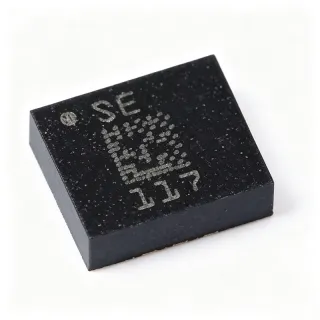
STM32F429BIT6 - 180MHz ARM Cortex-M4 MCU 2MB Flash LQFP-208 | STMicroelectronics
MPN: STM32F429BIT6 ✓ Active| Qty | Unit Price | Extended |
|---|---|---|
| 1 | $18.5 | $18.50 |
| 10 | $16.2 | $162.00 |
| 100 | $14.1 | $1,410.00 |
| 500 | $12.4 | $6,200.00 |
| 1,000 | $11.05 | $11,050.00 |
STM32F429BIT6 Overview
A microcontroller (MCU) is a compact integrated circuit that combines a processor core, on-chip memory, and programmable peripherals to govern a specific operation in an embedded system. The STM32F429BIT6 belongs to the STM32F4 series of high-performance ARM Cortex-M4 Flash microcontrollers within STMicroelectronics' broader STM32 family. STM32F4 devices occupy the mid-to-high tier of the STM32 portfolio, balancing performance, peripheral integration, and power efficiency for industrial, consumer, and IoT designs.
Key features include the Adaptive Real-Time (ART) Accelerator allowing 0-wait-state execution from Flash, a memory protection unit (MPU), DSP instructions, and the Chrom-ART Accelerator for hardware-accelerated 2D graphics rendering. The device integrates three 12-bit ADCs (up to 2.4 MSPS), two 12-bit DACs, a true random number generator (RNG), and a flexible memory controller (FMC) for SDRAM, NOR, and NAND. Connectivity is provided by USB OTG HS/FS, Ethernet MAC, multiple USART/UART/SPI/I2C/CAN interfaces, and an LCD-TFT parallel interface supporting resolutions up to WXGA.
The STM32F429BIT6 is built on a 90 nm CMOS process and operates from a 2.0-3.6 V supply with multiple low-power modes (Sleep, Stop, Standby). The Cortex-M4 core plus FPU accelerates single-precision math, enabling sensor fusion, motor control loops, and audio processing. The dual-bank Flash architecture supports read-while-write, allowing in-field firmware upgrades without halting the application. Integrated cryptographic/hash accelerators are not present on this part (they appear on F4x9 variants), so security primitives must be implemented in firmware or offloaded.
Typical applications include industrial automation, motor control, smart-home gateways, medical instrumentation, and graphical human-machine interfaces (HMI). In HMI designs the Chrom-ART Accelerator offloads the CPU for TFT-LCD rendering while the Ethernet MAC and USB OTG enable remote monitoring and configuration. The rich peripheral set also suits programmable logic controllers (PLC) and audio mixers requiring simultaneous connectivity and signal processing.
When designing with this MCU, decouple every VDD/VSS pair with 100 nF ceramic capacitors placed within 2 mm of each pin, and isolate VDDA with a ferrite bead plus 1 nF + 10 nF capacitors to reduce ADC noise. Use an external 32.768 kHz crystal on PC14/PC15 for RTC accuracy and a HSE crystal on PH0/PH1 for the main 180 MHz PLL. The NRST pin requires an external 10 kΩ pull-up and a 100 nF capacitor for reliable reset.
This page synthesizes distributor pricing, drop-in pin-compatible alternatives, and practical design notes not found in the manufacturer datasheet.
Drop-in alternatives for STM32F429BIT6 — same package, pin-to-pin compatible. Different-package parts requiring PCB rework are excluded.
Variants in this series
Same-series models that are drop-in compatible with STM32F429BIT6 (same form factor and footprint) — differing in ADC, Package, Timers, Mounting Type, Communication Interfaces.
Quick Comparison Tool — Select alternative parts for side-by-side comparison:
STM32F429BGT6
✅ Drop-In✓ In Stock
$7.24 / Unit
View Datasheet →STM32F429BET6
✅ Drop-In📋 Reference alternative (not in catalog)
STM32F429IIH6
✅ Drop-In ⚠️ Specs Unverified📋 Reference alternative (not in catalog)
STM32F439BIT6
✅ Drop-In✓ In Stock
$18.25 / Unit
View Datasheet →STM32F429ZIT6
✅ Drop-In ⚠️ Specs Unverified✓ In Stock
$11.4 / Unit
View Datasheet →STM32F427IIT6
✅ Drop-In✓ In Stock
$11.2 / Unit
View Datasheet →STM32F429BIT6 Maximum Ratings & Electrical Characteristics
| Core | ARM 32-bit Cortex-M4 with FPU |
| Maximum Clock Frequency | 180 MHz |
| DMIPS | 225 DMIPS (1.25 DMIPS/MHz, Dhrystone 2.1) |
| Flash Memory | 2 MB (dual-bank) |
| SRAM | 256 KB system + 4 KB backup |
| Package | LQFP-208 (28x28 mm) |
| Operating Voltage | 2.0 V to 3.6 V |
| I/O Voltage Tolerance | 5 V tolerant (most I/Os) |
| ADC | 3 x 12-bit, up to 2.4 MSPS |
| DAC | 2 x 12-bit |
| Timers | 17 (including 12-bit PWM, low-power) |
| Communication Interfaces | USB OTG HS/FS, Ethernet MAC, 6x USART/UART, 4x SPI, 3x I2C, 2x CAN |
| Graphics | Chrom-ART Accelerator, LCD-TFT parallel interface |
| Operating Temperature | -40 C to +85 C (industrial grade 6) |
| Mounting Type | Surface Mount (LQFP) |
| MSL Level | MSL 3 |
| RoHS Status | Compliant |
STM32F429BIT6 lqfp-208 (28x28 mm) Pin Configuration Guide
Pin configuration for STM32F429BIT6 (lqfp-208 (28x28 mm) package). This digital IC includes GPIO, communication interfaces (UART, SPI, I2C), and power pins. Refer to the manufacturer datasheet for alternate pin functions and configuration options. Essential for embedded system design and PCB layout.

No detailed pinout data available for STM32F429BIT6.
Refer to the datasheet for full pin configuration.
Typical Applications
STM32F429BIT6 is suitable for 6 applications: Industrial Human-Machine Interface (HMI) with TFT-LCD, Industrial Motor Control and Drives, Medical Patient Monitoring and Diagnostic Devices, Smart Home Gateway with Connectivity, Audio Processing and Mixing Console, Point-of-Sale (POS) Terminal with Secure Display.
Industrial Human-Machine Interface (HMI) with TFT-LCD
The STM32F429BIT6 is well-suited for industrial HMI panels driving 4-7 inch TFT-LCD displays because it integrates the Chrom-ART Accelerator and the LCD-TFT parallel interface in a single LQFP-208 package. The 180 MHz Cortex-M4 with FPU renders complex GUIs at 60 fps without offloading to an external graphics controller, while 2 MB of dual-bank Flash stores fonts, icons, and multilingual assets. The three 12-bit ADCs at 2.4 MSPS read touch-screen and front-panel sensors simultaneously. Compared to a discrete MCU + external LCD controller design, the integrated approach reduces BOM cost and PCB area. The Ethernet MAC enables Modbus TCP and PROFINET for factory-floor connectivity, and the 2.0-3.6 V supply accepts 24 V industrial rails after a step-down converter.
Recommended
Industrial Motor Control and Drives
The STM32F429BIT6's Cortex-M4 with FPU, DSP extensions, and 180 MHz clock make it a strong fit for field-oriented control (FOC) of three-phase PMSM and BLDC motors. The 17 timers include advanced PWM outputs capable of driving 6-step or sinusoidal commutation at switching frequencies up to 50 kHz. Three 12-bit ADCs sampled at 2.4 MSPS provide simultaneous current sensing on all three phases without external analog multiplexers. The 2 MB Flash accommodates FOC firmware libraries plus application code, and the 256 KB SRAM holds real-time control loops and tuning parameters. CAN interfaces connect to industrial motor networks (CANopen, DeviceNet). Compared to a Cortex-M0 motor controller, the FPU cuts loop time by 30-40% on the same algorithm, enabling higher PWM frequencies for lower audible noise.
Recommended
Medical Patient Monitoring and Diagnostic Devices
The STM32F429BIT6 is suitable for medical patient monitors and diagnostic instruments because its Cortex-M4 with FPU processes ECG, pulse-oximetry, and respiratory signal chains in real time, while its 256 KB SRAM buffers waveform data for graphical display. The three 12-bit ADCs sample at 2.4 MSPS with simultaneous sampling for accurate pulse-oximetry photodiode readings. USB OTG FS enables tethered PC connectivity for clinician review, and the Ethernet MAC supports HL7/DICOM over IP for hospital networks. The Chrom-ART Accelerator renders trend graphs and alarms on a TFT-LCD panel without burdening the CPU. Compared to an 8-bit MCU, the 32-bit performance and DSP instructions enable on-chip DSP filtering (FIR, IIR, FFT) reducing external analog filter complexity. Industrial-grade -40 C to +85 C operation covers clinical environments.
Recommended
Smart Home Gateway with Connectivity
The STM32F429BIT6 functions as a smart-home gateway hub because its USB OTG HS/FS, Ethernet MAC, and multiple UART/SPI/I2C ports aggregate Zigbee, Z-Wave, BLE, and Wi-Fi radios into a single coordinator. The 180 MHz Cortex-M4 handles routing, security, and protocol translation while the 2 MB Flash stores firmware stacks for multiple wireless protocols. The dual-bank Flash architecture supports read-while-write, enabling over-the-air (OTA) firmware updates without service interruption - critical for installed gateway reliability. The Ethernet MAC connects to home routers, while USB OTG HS supports external 4G/LTE modems for cellular failover. Compared to a Linux-based gateway, the bare-metal STM32 approach reduces BOM cost by 50% and eliminates OS security patching. The integrated RNG provides hardware entropy for TLS key generation.
Recommended
Audio Processing and Mixing Console
The STM32F429BIT6's Cortex-M4 with FPU and DSP extensions process multi-channel audio in real time, making it suitable for digital mixing consoles, effects processors, and audio streaming devices. The two 12-bit DACs plus I2S peripherals drive audio CODECs and DAC chips for low-latency playback. 256 KB of SRAM holds 32-bit floating-point audio buffers at 48 kHz with comfortable headroom for DSP effects. The USB OTG FS port appears as a USB Audio Class device to host computers, while Ethernet MAC supports Dante or AVB audio networking (with external PHY). The TFT-LCD interface displays level meters, EQ curves, and parameter values without an external graphics controller. Compared to a Cortex-M3 audio DSP, the FPU and DSP instructions enable on-chip biquad filtering, reverb tails, and FFT spectrum analysis at lower MHz.
Recommended
Point-of-Sale (POS) Terminal with Secure Display
The STM32F429BIT6 supports POS terminal designs where the integrated TFT-LCD controller drives the cashier display and the USB OTG HS hosts printers, scanners, and payment peripherals. The 2 MB Flash holds firmware, fonts, and graphical UI assets, while 256 KB SRAM buffers transaction records. The Ethernet MAC connects to store networks, and two CAN interfaces support industrial POS peripherals (cash drawers, customer displays). The three 12-bit ADCs read battery monitoring and touch inputs simultaneously. Compared to an external-MCU + LCD-controller design, the integrated graphics pipeline reduces BOM cost and enables thinner enclosures. Industrial-grade operation covers retail environments from -10 C to +60 C ambient.
Recommended
Recommended Products Summary
Engineering reference data for STM32F429BIT6 — comparison, design guidance, and compliance information.
Selection Guide
Comparison with Alternatives
| Parameter | This Product | STM32F429BGT6 | STM32F429BET6 | STM32F439BIT6 |
|---|---|---|---|---|
| Brand | STMicroelectronics | STMicroelectronics | STMicroelectronics | STMicroelectronics |
| Package | LQFP-208 (28x28 mm) | LQFP-208 - same | LQFP-208 - same | LQFP-208 - same |
| Core | Cortex-M4 with FPU | Cortex-M4 with FPU - same | Cortex-M4 with FPU - same | Cortex-M4 with FPU - same |
| Max Clock Frequency | 180 MHz | 180 MHz | 180 MHz | 180 MHz |
| Flash Memory | 2 MB | 1 MB (-50%) | 512 KB (-75%) | 2 MB |
| SRAM | 256 KB + 4 KB backup | 256 KB + 4 KB - same | 256 KB + 4 KB - same | 256 KB + 4 KB - same |
| Chrom-ART Graphics Accelerator | Yes | Yes | Yes | Yes |
| LCD-TFT Controller | Yes | Yes | Yes | Yes |
| Crypto/Hash Accelerator | No | No | No | Yes (AES/SHA/TRNG) |
| Operating Voltage | 2.0 V to 3.6 V | 2.0 V to 3.6 V | 2.0 V to 3.6 V | 2.0 V to 3.6 V |
| Approx Unit Price (qty 1000, as of 2026-10-10) | USD 11.05 | USD 9.50 | USD 8.20 | USD 13.10 |
Key Differentiators
- Largest Flash in the STM32F429 LQFP-208 family with Chrom-ART + LCD-TFT (vs STM32F429BGT6)
- Integrated Chrom-ART graphics accelerator with LCD-TFT controller (vs STM32F427IIT6)
- No crypto accelerator - lower cost than F439 variant (vs STM32F439BIT6)
Design Notes
Estimated: at 180 MHz with all peripherals active, core current consumption is approximately 80-100 mA from VDD (3.3 V); add 30-50 mA for ADC and USB OTG operation. Decouple every VDD/VSS pin pair with 100 nF ceramic capacitors placed within 2 mm of each pin. Bulk-decouple the 3.3 V rail with a 10 uF + 1 uF + 100 nF star network near the MCU. Use an isolated LDO (e.g., 3.3 V from 5 V) to keep digital switching noise away from VDDA; place a ferrite bead (e.g., BLM18PG471SN1D) between digital 3.3 V and analog VDDA, with 10 nF + 1 nF + 100 nF capacitors on the VDDA side.
Route HSE crystal traces (PH0/PH1) and LSE crystal traces (PC14/PC15) as short as possible (under 5 mm) with a guard ring tied to ground. Place HSE load capacitors (typically 5-15 pF, datasheet-specified) within 2 mm of the MCU. Keep the TFT-LCD parallel data bus length-matched within 1 mm across all 8/16/24 bits to avoid skew at 50 MHz+ pixel clock. The Ethernet MAC differential pairs (MII/RMII) require 100 ohm differential impedance and a 2 mm keep-out from switching signals. USB OTG HS D+/D- pairs need 90 ohm differential impedance and an ESD diode array (e.g., USBLC6-2SC6) within 3 mm of the connector.
Estimated: at full CPU load (180 MHz, all peripherals, Chrom-ART active) the LQFP-208 dissipates approximately 0.5-0.8 W, producing a junction temperature rise of 25-40 C above ambient given typical LQFP-208 theta_JA around 50 C/W. Industrial-grade parts are rated to +85 C ambient; ensure the case-to-ambient thermal resistance plus nearby heat sources stays below the +125 C junction limit. For high-ambient enclosures, add a thermal pad under the LQFP exposed pad (LQFP-208 does not have an exposed pad - rely on copper pour on top/bottom layers connected by 0.3 mm thermal vias around the package).
Do not leave NRST floating - tie it to VDD through a 10 kohm pull-up and a 100 nF capacitor to ensure clean reset at power-up. The BOOT0 pin must be tied to GND for normal Flash boot (or to VDD for system memory bootloader); do not leave it floating or the MCU may enter bootloader mode unintentionally. Use only 32.768 kHz crystals with CL load rating matching the datasheet's recommended 7 pF; wrong CL causes RTC drift and HSE startup failure. Watchdog (IWDG) must be refreshed in the main loop - never disable permanently in production firmware.
Allocate a continuous ground plane on layer 2 directly under the MCU; do not split the ground plane under high-speed traces. Route all VDD traces as wide as possible (>= 0.5 mm for main rail) to minimize DC drop. Place the 32.768 kHz LSE crystal on the opposite side of the PCB from the HSE crystal and any switching regulator or USB PHY to prevent capacitive coupling. If using an SDRAM via FMC, keep the SDRAM traces length-matched and reference to ground (not power) to meet setup/hold timing at 90 MHz.
Compliance Information
RoHS compliant per PartGenie cross-reference. MSL 3 per PartGenie. AEC-Q100 not applicable (industrial grade only, not automotive qualified).