TPS82130SILR - Módulo Step-Down MicroSiP de 17V 3A | Texas Instruments
N.º da peça: TPS82130SILR ✓ Ativo| Qtd. | Preço unitário | Total |
|---|---|---|
| 1 | $3.44 | $3,44 |
| 10 | $3.1 | $31,00 |
| 100 | $2.75 | $275,00 |
| 500 | $2.45 | $1.225,00 |
| 1.000 | $2.18 | $2.180,00 |
TPS82130SILR Visão geral
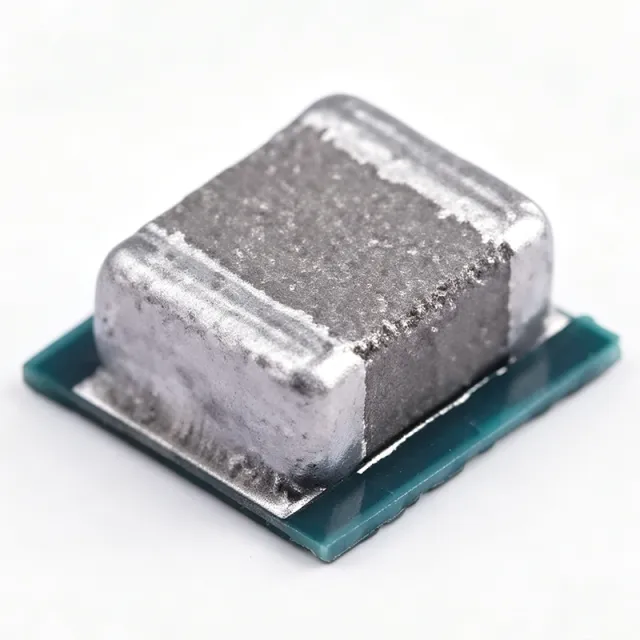
Um conversor step-down, também chamado de conversor buck, é um regulador de tensão DC-DC chaveado que converte uma tensão de entrada mais alta em uma tensão de saída mais baixa com alta eficiência. Conversores buck formam um bloco de construção central das hierarquias de ICs de gerenciamento de energia, ao lado de LDOs, bombas de carga e módulos de potência. O TPS82130 ainda condensa FETs de chaveamento discretos, indutor e compensação de malha em um único micromódulo, reduzindo drasticamente a contagem de componentes externos e a área de PCB em comparação com projetos de reguladores discretos que exigem FETs externos, um indutor de potência e componentes de compensação.
As principais características incluem a ampla faixa de entrada de 3V-17V que suporta sistemas de barramento de 12V e 5V, saída contínua de 3A, saída ajustável de 0,9V-5V via divisor de resistores externo, frequência de chaveamento fixa de 2,2MHz que permite capacitores externos pequenos, soft-start interno para limitação de corrente de inrush, um sinal de saída power-good para sequenciamento, um pino de enable para controle de desligamento e proteção de desligamento térmico. O encapsulamento MicroSiP expõe um pad térmico inferior que direciona o calor diretamente para o cobre da PCB.
Tecnicamente, o TPS82130 usa controle de modo de corrente de pico em frequência fixa, proporcionando resposta transitória rápida e estabilidade com capacitância de saída mínima (tipicamente 22uF cerâmico). Ele suporta operação com ciclo de trabalho de 100% para baixo dropout em altas relações VIN-to-VOUT. O indutor blindado integrado reduz EMI irradiada enquanto simplifica o layout da PCB, e o perfil baixo de 1,5mm é adequado para montagem automatizada com equipamentos de montagem superficial padrão.
Aplicações típicas incluem alimentação point-of-load (POL) para FPGAs, DSPs e ASICs em sistemas industriais, alimentação de sensores em automação de fábrica, energia distribuída em trilho de 12V em nós de borda IoT e equipamentos de teste portáteis onde o tamanho reduzido da solução é crítico.
Ao projetar, siga as recomendações do datasheet para capacitância cerâmica de entrada e saída, coloque o módulo próximo à carga e forneça uma área generosa de cobre sob o pad térmico, especialmente em altas correntes de saída. Referências de preços aplicáveis em 2026-08-28.
Esta página sintetiza preços de distribuidores, alternativas drop-in e notas práticas de projeto não encontradas no datasheet do fabricante.
Alternativas drop-in para TPS82130SILR — mesmo encapsulamento, compatível pino a pino. Peças de encapsulamento diferente que exigem retrabalho na PCB são excluídas.
Variantes desta série
Modelos da mesma série compatíveis como drop-in com TPS82130SILR (mesmo formato e footprint) — diferindo em Continuous Output Current, MSL Level, Output Voltage Range, Package, Switching Frequency.
Ferramenta de comparação rápida — selecione peças alternativas para comparação lado a lado:
TPS82140SILR
✅ Drop-In✓ Em estoque
$2.45 / unidade
Ver ficha técnica →TPS82150SILR
✅ Drop-In📋 Alternativa de referência (fora do catálogo)
TPS82130SILT
✅ Drop-In📋 Alternativa de referência (fora do catálogo)
TPS82130SILR Classificações máximas e características elétricas
| Topologia | Synchronous Buck (Step-Down) |
| Module Type | MicroSiP Power Module (integrated inductor and FETs) |
| Faixa de tensão de entrada | 3 V to 17 V |
| Faixa de tensão de saída | 0.9 V to 5 V (adjustable) |
| Continuous Output Current | 3 A |
| Frequência de comutação | 2.2 MHz (typical, fixed) |
| Control Mode | Peak Current Mode |
| Efficiency (typical) | >90% at moderate load |
| Soft-start | Internal |
| Saída Power Good | Yes |
| Pino de habilitação | Yes (active-high) |
| Desligamento térmico | Yes |
| Faixa de temperatura de operação | -40C to +125C |
| Encapsulamento | 8-pin uSIP (SIL) 3.0mm x 2.8mm x 1.5mm |
| Tipo de montagem | Surface Mount |
| Nível MSL | 2 (1 year floor life) |
| Status RoHS | Compliant |
Configuração de pinos do TPS82130SILR
| Pino 1 | VIN — Input supply voltage |
| Pino 2 | GND — Signal ground |
| Pino 3 | EN — Enable input (active high) |
| Pino 4 | PGND — Power ground |
| Pino 5 | FB — Feedback voltage input |
| Pino 6 | VOUT — Regulated output voltage |
| Pino 7 | PG — Power good output flag |
| Pino 8 | AGND — Analog ground |
Aplicações típicas
TPS82130SILR é adequado para 6 aplicaçãos: FPGA Point-of-Load Power, Industrial Sensor and PLC Supplies, IoT Edge Devices and Gateway Nodes, Portable Test and Measurement Equipment, DSP and ASIC Core Power, Communication Equipment Power.
FPGA Point-of-Load Power
The TPS82130SILR is an ideal point-of-load supply for FPGA core and auxiliary rails in industrial embedded systems. With 3A continuous output, 0.9V to 5V adjustable output range, and a 3.0mm x 2.8mm uSIP footprint, it can power the FPGA core (typically 1.0V-1.2V), auxiliary (1.8V), and I/O (2.5V or 3.3V) rails from a single 12V bus. The 2.2MHz switching frequency avoids interfering with common FPGA clock harmonics around 100-500MHz, eliminating beat-frequency noise issues that plague lower-frequency regulators. Integrated synchronous FETs and shielded inductor eliminate 6-8 discrete components, dramatically reducing PCB area versus discrete buck designs.
Recomendado
Industrial Sensor and PLC Supplies
The TPS82130SILR powers industrial 4-20mA loop transmitters, PLC analog input modules, and 24V-bus sensor conditioning circuits. Its 3V-17V input range directly accepts the 24V industrial bus (after protection/regulation) and 12V backplane rails commonly used in factory automation. The wide operating temperature range of -40C to +125C supports deployment in unconditioned factory environments. With internal thermal shutdown, power-good output, and enable pin for power sequencing, the TPS82130 provides the robustness required for industrial IEC 61010 environments. Typical efficiency above 90% minimizes thermal dissipation in sealed enclosures.
Recomendado
IoT Edge Devices and Gateway Nodes
The TPS82130SILR fits compact IoT edge nodes and gateway designs that require multiple voltage rails in a small footprint. The integrated MicroSiP package occupies 75% less PCB area than equivalent discrete buck designs, freeing space for wireless modules, sensors, and battery management. With 3A peak capability, the TPS82130 can power a small SoC plus Wi-Fi/BLE radio module directly from a 12V or USB-C input. The 2.2MHz switching frequency enables small ceramic output capacitors (typically 22uF), and the internal soft-start limits inrush current that could trip upstream USB current-limit switches.
Recomendado
Portable Test and Measurement Equipment
Handheld oscilloscopes, data loggers, and field test equipment benefit from the TPS82130SILR's compact size, high efficiency, and wide input range. Battery-powered instruments often use a 2-cell or 3-cell Li-ion pack (6V-12.6V) that maps directly to the TPS82130 input range. The 3A continuous capability powers analog front-end ADCs, FPGAs, and display backlight drivers simultaneously. The 1.5mm low-profile uSIP package allows the entire power tree to fit on the back side of small PCBs, leaving the top side for analog signal paths and user interface components. High efficiency above 90% extends battery runtime.
Recomendado
DSP and ASIC Core Power
The TPS82130SILR is well-suited as a POL supply for DSP, ASIC, and high-performance microcontroller core rails. Modern DSPs often require 1.0V to 1.2V at 2-3A peak current with tight transient response - the TPS82130's peak-current-mode control delivers fast transient response with minimal output capacitance. The adjustable output from 0.9V to 5V covers virtually all DSP/ASIC core voltage requirements. The integrated power-good output enables sequencing with other system rails, and the enable pin allows shutdown to microampere-level quiescent current for sleep-mode applications. According to TI datasheet, the device supports 100% duty cycle for low-dropout operation at high VIN-VOUT deltas.
Recomendado
Communication Equipment Power
Networking switches, wireless base stations, and small cell radio units can use the TPS82130SILR to power digital signal processors and baseband chips from 12V backplane rails. The 2.2MHz switching frequency and integrated shielded inductor minimize radiated EMI - critical for communication equipment that must meet FCC and CE conducted/radiated emissions limits. With 3A output capability, the TPS82130 powers baseband SoCs and DDR memory termination rails simultaneously. The small MicroSiP footprint allows power circuits to be placed directly beneath or adjacent to the load IC, minimizing parasitic inductance and improving transient response.
Recomendado
Resumo dos produtos recomendados
Dados de referência de engenharia para TPS82130SILR — comparação, orientação de projeto e informações de conformidade.
Guia de seleção
Comparação com alternativas
| Parâmetro | Este produto | TPS82140SILR | TPS82150SILR | TPS82130SILT |
|---|---|---|---|---|
| Package | 8-pin uSIP (SIL) 3.0x2.8mm | 8-pin uSIP (SIL) 3.0x2.8mm - same | 8-pin uSIP (SIL) 3.0x2.8mm - same | 8-pin uSIP (SIL) 3.0x2.8mm - same |
| Brand | Texas Instruments | Texas Instruments | Texas Instruments | Texas Instruments |
| Output Current | 3 A | 2 A | 1 A | 3 A |
| Input Voltage Range | 3 V to 17 V | 3 V to 17 V | 3 V to 17 V | 3 V to 17 V |
| Output Voltage Range | 0.9 V to 5 V | 0.9 V to 5 V | 0.9 V to 5 V | 0.9 V to 5 V |
| Switching Frequency | 2.2 MHz | 2.2 MHz | 2.2 MHz | 2.2 MHz |
| Module Type | MicroSiP (integrated inductor) | MicroSiP (integrated inductor) | MicroSiP (integrated inductor) | MicroSiP (integrated inductor) |
Principais diferenciais
- Maior corrente de saída na família TPS821xx uSIP (vs TPS82140SILR)
- Mesmo footprint, menor corrente para projetos de redução de custo (vs TPS82150SILR)
- Encapsulamento MicroSiP integrado elimina 6-8 componentes discretos (vs Projeto buck discreto TPS54360)
Notas de projeto
Estimado: Em VIN=12V, VOUT=3,3V e carga de 3A, o TPS82130SILR dissipa aproximadamente (12-3,3) x 3 = 26,1 W de potência. Com cobre adequado para o pad térmico inferior (o datasheet recomenda um padrão mínimo de footprint), a resistência térmica junção-ambiente é tipicamente em torno de 30-40 C/W, resultando em um aumento de temperatura de 50-80 C acima do ambiente. Para operação contínua de 3A, siga exatamente o padrão de layout de referência do datasheet e use múltiplas vias térmicas sob o pad exposto do encapsulamento para mover o calor para as camadas internas da PCB.
Coloque o módulo TPS82130SILR próximo ao IC de carga, idealmente dentro de 5-10mm, para minimizar a indutância parasita no loop de saída. Use preenchimentos de cobre largos (pelo menos 50mil) em VIN, VOUT, PGND e no pad térmico exposto. De acordo com as diretrizes de layout do datasheet da TI, coloque o capacitor cerâmico de entrada (tipicamente 22uF X7R) o mais próximo possível do pino VIN, e coloque o capacitor cerâmico de saída (tipicamente 22uF X7R) diretamente no pino VOUT. O pino AGND deve ser conectado ao preenchimento PGND em um único ponto próximo ao retorno de terra do capacitor de saída.
Não opere o TPS82130SILR acima do VIN máximo absoluto de 17V - transientes em barramentos industriais de 12V podem exceder isso durante eventos de hot-plug. Adicione um diodo TVS ou clamp de tensão de entrada se o projeto se conectar a cabos externos longos. Não omita o capacitor de entrada: o chaveamento de alto di/dt do TPS82130 requer um capacitor cerâmico de entrada de baixo ESR para evitar ringing no VIN. Conforme o datasheet, use capacitores cerâmicos X7R/X5R - não substitua por Y5V que perde 60-80% da capacitância nominal sob polarização DC e temperatura.
Mantenha a trilha FB (feedback) longe de nós de chaveamento ruidosos (VIN, PGND, VOUT) e roteie-a diretamente do topo do capacitor de saída para o pino FB usando uma trilha curta e estreita cercada por preenchimento de terra. Não coloque os resistores do divisor de feedback próximos ao indutor - o acoplamento magnético pode injetar ruído no caminho de feedback e causar ripple de saída ou instabilidade. A saída PG (power-good) é um sinal open-drain e requer um resistor de pull-up externo (tipicamente 10k-100k) para VOUT ou um trilho lógico.
Informações de conformidade
RoHS and REACH compliant per TI product page. Not AEC-Q100 qualified; choose TPS62150A-Q1 or similar -Q1 part for automotive applications.