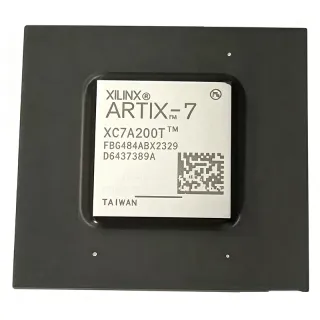
A3P600L-1PQG208I - 600K Gate ProASIC3L FPGA | Microchip
MPN: A3P600L-1PQG208I ✗ End of Life| Qty | Unit Price | Extended |
|---|---|---|
| 1 | $45 | $45.00 |
| 10 | $40.5 | $405.00 |
| 100 | $36 | $3,600.00 |
| 500 | $32.4 | $16,200.00 |
| 1,000 | $29 | $29,000.00 |
A3P600L-1PQG208I Overview
An FPGA (Field Programmable Gate Array) is an integrated circuit that can be configured by the customer or designer after manufacturing—hence "field-programmable." FPGAs are part of the programmable logic family, which also includes CPLDs (Complex Programmable Logic Devices). They consist of an array of programmable logic blocks, interconnects, and I/O blocks, allowing designers to implement complex digital logic functions without the cost and lead time of custom ASICs. FPGAs are widely used in prototyping, aerospace, defense, industrial control, and communications where flexibility and reconfigurability are critical.
Key features of the A3P600L-1PQG208I include its low power consumption due to the 1.2V core voltage, flash-based configuration that is instantly available on power-up, and high security with no bitstream to intercept. The device supports up to 154 user I/Os, providing ample connectivity for various interfaces. The ProASIC3L family is known for its low total cost of ownership (TCO), single-chip solution, and small footprint packages, making it an attractive choice for cost-sensitive designs.
Technically, the A3P600L is fabricated using a 130nm flash process, offering a system performance of up to 350 MHz (as per Jotrin) or 781.25 MHz (per FindIC) depending on the speed grade. The -1 speed grade indicates a standard performance level. The device includes 13824 configurable logic blocks (CLBs) and supports various I/O standards, including LVCMOS, LVTTL, and differential standards. The flash-based architecture provides non-volatile configuration, eliminating the need for external configuration memory and reducing system complexity.
Typical applications for the A3P600L-1PQG208I include aerospace and defense systems, industrial automation, communications infrastructure, and medical electronics. Its low power and high reliability make it ideal for remote or battery-powered applications where power efficiency is paramount. The 208-pin PQFP package is suitable for board-level integration without the need for expensive BGA assembly processes.
When designing with this device, consider the core voltage requirements (1.14V to 1.575V) and ensure proper decoupling with 0.1uF and 10uF capacitors. The device is obsolete per Ventronchip, so verify availability and consider alternative sources or last-time buy options. For new designs, evaluate the A3P1000L series for higher density or the A3P250 for lower cost.
This page synthesizes distributor pricing, drop-in alternatives, and practical design notes not found in the manufacturer datasheet, providing a comprehensive resource for engineers evaluating the A3P600L-1PQG208I.
Drop-in alternatives for A3P600L-1PQG208I — same package, pin-to-pin compatible. Different-package parts requiring PCB rework are excluded.
Variants in this series
Same-series models that are drop-in compatible with A3P600L-1PQG208I (same form factor and footprint) — differing in Package, Configuration Memory, RoHS Status, Temperature Grade, System Gates.
Quick Comparison Tool — Select alternative parts for side-by-side comparison:
A3P600L-PQG208I
✅ Drop-In📋 Reference alternative (not in catalog)
A3P1000L-1PQG208I
✅ Drop-In✓ In Stock
$28.9 / Unit
View Datasheet →A3P600L-FG484I
✅ Drop-In✓ In Stock
$45.6 / Unit
View Datasheet →A3P600L-FGG484I
✅ Drop-In✓ In Stock
$41.35 / Unit
View Datasheet →A3P1000L-1FGG484I
✅ Drop-In✓ In Stock
$28.8 / Unit
View Datasheet →A3P600L-1PQG208I Maximum Ratings & Electrical Characteristics
| Family | ProASIC3L |
| System Gates | 600000 |
| RAM Bits | 110592 |
| User I/Os | 154 |
| Core Supply Voltage | 1.14 V to 1.575 V |
| Number of CLBs | 13824 |
| Maximum Frequency | 350 MHz (per Jotrin) / 781.25 MHz (per FindIC) |
| Technology | 130nm |
| Package | 208-BFQFP (PQFP208) |
| Package Dimensions | 28 x 28 mm, 3.4 mm height, 0.5 mm pitch |
| Mounting Type | Surface Mount |
| RoHS Status | Compliant (Green, per Jotrin) |
| Speed Grade | -1 |
| Configuration | Flash-based, non-volatile |
A3P600L-1PQG208I Pin Configuration
| Pin 1 | IO — User I/O pin |
| Pin 2 | IO — User I/O pin |
| Pin 3 | IO — User I/O pin |
| Pin 4 | IO — User I/O pin |
| Pin 5 | IO — User I/O pin |
| Pin 6 | IO — User I/O pin |
| Pin 7 | IO — User I/O pin |
| Pin 8 | IO — User I/O pin |
| Pin 9 | IO — User I/O pin |
| Pin 10 | IO — User I/O pin |
| Pin 11 | IO — User I/O pin |
| Pin 12 | IO — User I/O pin |
| Pin 13 | IO — User I/O pin |
| Pin 14 | IO — User I/O pin |
| Pin 15 | IO — User I/O pin |
| Pin 16 | IO — User I/O pin |
| Pin 17 | IO — User I/O pin |
| Pin 18 | IO — User I/O pin |
| Pin 19 | IO — User I/O pin |
| Pin 20 | IO — User I/O pin |
| Pin 21 | IO — User I/O pin |
| Pin 22 | IO — User I/O pin |
| Pin 23 | IO — User I/O pin |
| Pin 24 | IO — User I/O pin |
| Pin 25 | IO — User I/O pin |
| Pin 26 | IO — User I/O pin |
| Pin 27 | IO — User I/O pin |
| Pin 28 | IO — User I/O pin |
| Pin 29 | IO — User I/O pin |
| Pin 30 | IO — User I/O pin |
| Pin 31 | IO — User I/O pin |
| Pin 32 | IO — User I/O pin |
| Pin 33 | IO — User I/O pin |
| Pin 34 | IO — User I/O pin |
| Pin 35 | IO — User I/O pin |
| Pin 36 | IO — User I/O pin |
| Pin 37 | IO — User I/O pin |
| Pin 38 | IO — User I/O pin |
| Pin 39 | IO — User I/O pin |
| Pin 40 | IO — User I/O pin |
| Pin 41 | IO — User I/O pin |
| Pin 42 | IO — User I/O pin |
| Pin 43 | IO — User I/O pin |
| Pin 44 | IO — User I/O pin |
| Pin 45 | IO — User I/O pin |
| Pin 46 | IO — User I/O pin |
| Pin 47 | IO — User I/O pin |
| Pin 48 | IO — User I/O pin |
| Pin 49 | IO — User I/O pin |
| Pin 50 | IO — User I/O pin |
| Pin 51 | IO — User I/O pin |
| Pin 52 | IO — User I/O pin |
| Pin 53 | IO — User I/O pin |
| Pin 54 | IO — User I/O pin |
| Pin 55 | IO — User I/O pin |
| Pin 56 | IO — User I/O pin |
| Pin 57 | IO — User I/O pin |
| Pin 58 | IO — User I/O pin |
| Pin 59 | IO — User I/O pin |
| Pin 60 | IO — User I/O pin |
| Pin 61 | IO — User I/O pin |
| Pin 62 | IO — User I/O pin |
| Pin 63 | IO — User I/O pin |
| Pin 64 | IO — User I/O pin |
| Pin 65 | IO — User I/O pin |
| Pin 66 | IO — User I/O pin |
| Pin 67 | IO — User I/O pin |
| Pin 68 | IO — User I/O pin |
| Pin 69 | IO — User I/O pin |
| Pin 70 | IO — User I/O pin |
| Pin 71 | IO — User I/O pin |
| Pin 72 | IO — User I/O pin |
| Pin 73 | IO — User I/O pin |
| Pin 74 | IO — User I/O pin |
| Pin 75 | IO — User I/O pin |
| Pin 76 | IO — User I/O pin |
| Pin 77 | IO — User I/O pin |
| Pin 78 | IO — User I/O pin |
| Pin 79 | IO — User I/O pin |
| Pin 80 | IO — User I/O pin |
| Pin 81 | IO — User I/O pin |
| Pin 82 | IO — User I/O pin |
| Pin 83 | IO — User I/O pin |
| Pin 84 | IO — User I/O pin |
| Pin 85 | IO — User I/O pin |
| Pin 86 | IO — User I/O pin |
| Pin 87 | IO — User I/O pin |
| Pin 88 | IO — User I/O pin |
| Pin 89 | IO — User I/O pin |
| Pin 90 | IO — User I/O pin |
| Pin 91 | IO — User I/O pin |
| Pin 92 | IO — User I/O pin |
| Pin 93 | IO — User I/O pin |
| Pin 94 | IO — User I/O pin |
| Pin 95 | IO — User I/O pin |
| Pin 96 | IO — User I/O pin |
| Pin 97 | IO — User I/O pin |
| Pin 98 | IO — User I/O pin |
| Pin 99 | IO — User I/O pin |
| Pin 100 | IO — User I/O pin |
| Pin 101 | IO — User I/O pin |
| Pin 102 | IO — User I/O pin |
| Pin 103 | IO — User I/O pin |
| Pin 104 | IO — User I/O pin |
| Pin 105 | IO — User I/O pin |
| Pin 106 | IO — User I/O pin |
| Pin 107 | IO — User I/O pin |
| Pin 108 | IO — User I/O pin |
| Pin 109 | IO — User I/O pin |
| Pin 110 | IO — User I/O pin |
| Pin 111 | IO — User I/O pin |
| Pin 112 | IO — User I/O pin |
| Pin 113 | IO — User I/O pin |
| Pin 114 | IO — User I/O pin |
| Pin 115 | IO — User I/O pin |
| Pin 116 | IO — User I/O pin |
| Pin 117 | IO — User I/O pin |
| Pin 118 | IO — User I/O pin |
| Pin 119 | IO — User I/O pin |
| Pin 120 | IO — User I/O pin |
| Pin 121 | IO — User I/O pin |
| Pin 122 | IO — User I/O pin |
| Pin 123 | IO — User I/O pin |
| Pin 124 | IO — User I/O pin |
| Pin 125 | IO — User I/O pin |
| Pin 126 | IO — User I/O pin |
| Pin 127 | IO — User I/O pin |
| Pin 128 | IO — User I/O pin |
| Pin 129 | IO — User I/O pin |
| Pin 130 | IO — User I/O pin |
| Pin 131 | IO — User I/O pin |
| Pin 132 | IO — User I/O pin |
| Pin 133 | IO — User I/O pin |
| Pin 134 | IO — User I/O pin |
| Pin 135 | IO — User I/O pin |
| Pin 136 | IO — User I/O pin |
| Pin 137 | IO — User I/O pin |
| Pin 138 | IO — User I/O pin |
| Pin 139 | IO — User I/O pin |
| Pin 140 | IO — User I/O pin |
| Pin 141 | IO — User I/O pin |
| Pin 142 | IO — User I/O pin |
| Pin 143 | IO — User I/O pin |
| Pin 144 | IO — User I/O pin |
| Pin 145 | IO — User I/O pin |
| Pin 146 | IO — User I/O pin |
| Pin 147 | IO — User I/O pin |
| Pin 148 | IO — User I/O pin |
| Pin 149 | IO — User I/O pin |
| Pin 150 | IO — User I/O pin |
| Pin 151 | IO — User I/O pin |
| Pin 152 | IO — User I/O pin |
| Pin 153 | IO — User I/O pin |
| Pin 154 | IO — User I/O pin |
| Pin 155 | VCC — Core power supply |
| Pin 156 | GND — Ground |
| Pin 157 | VCC — Core power supply |
| Pin 158 | GND — Ground |
| Pin 159 | VCC — Core power supply |
| Pin 160 | GND — Ground |
| Pin 161 | VCC — Core power supply |
| Pin 162 | GND — Ground |
| Pin 163 | VCC — Core power supply |
| Pin 164 | GND — Ground |
| Pin 165 | VCC — Core power supply |
| Pin 166 | GND — Ground |
| Pin 167 | VCC — Core power supply |
| Pin 168 | GND — Ground |
| Pin 169 | VCC — Core power supply |
| Pin 170 | GND — Ground |
| Pin 171 | VCC — Core power supply |
| Pin 172 | GND — Ground |
| Pin 173 | VCC — Core power supply |
| Pin 174 | GND — Ground |
| Pin 175 | VCC — Core power supply |
| Pin 176 | GND — Ground |
| Pin 177 | VCC — Core power supply |
| Pin 178 | GND — Ground |
| Pin 179 | VCC — Core power supply |
| Pin 180 | GND — Ground |
| Pin 181 | VCC — Core power supply |
| Pin 182 | GND — Ground |
| Pin 183 | VCC — Core power supply |
| Pin 184 | GND — Ground |
| Pin 185 | VCC — Core power supply |
| Pin 186 | GND — Ground |
| Pin 187 | VCC — Core power supply |
| Pin 188 | GND — Ground |
| Pin 189 | VCC — Core power supply |
| Pin 190 | GND — Ground |
| Pin 191 | VCC — Core power supply |
| Pin 192 | GND — Ground |
| Pin 193 | VCC — Core power supply |
| Pin 194 | GND — Ground |
| Pin 195 | VCC — Core power supply |
| Pin 196 | GND — Ground |
| Pin 197 | VCC — Core power supply |
| Pin 198 | GND — Ground |
| Pin 199 | VCC — Core power supply |
| Pin 200 | GND — Ground |
| Pin 201 | VCC — Core power supply |
| Pin 202 | GND — Ground |
| Pin 203 | VCC — Core power supply |
| Pin 204 | GND — Ground |
| Pin 205 | VCC — Core power supply |
| Pin 206 | GND — Ground |
| Pin 207 | VCC — Core power supply |
| Pin 208 | GND — Ground |
Typical Applications
A3P600L-1PQG208I is suitable for 6 applications: Aerospace and Defense Systems, Industrial Automation and Control, Communications Infrastructure, Medical Electronics, Test and Measurement Equipment, Automotive Electronics.
Aerospace and Defense Systems
The A3P600L-1PQG208I is ideal for aerospace and defense applications due to its flash-based, non-volatile configuration that provides instant-on capability and high security against bitstream interception. Its low power consumption (1.2V core) is critical for battery-powered or heat-constrained environments. With 600K system gates and 154 I/Os, it can handle complex logic for avionics, radar, and secure communications. The industrial temperature grade (-40°C to 100°C) ensures reliable operation in harsh environments. Designers can leverage the device's reprogrammability for in-field updates, reducing lifecycle costs. The 208-pin PQFP package is suitable for ruggedized boards where BGA may be impractical.
Recommended
Industrial Automation and Control
In industrial automation, the A3P600L-1PQG208I provides a reliable, low-power FPGA solution for motor control, PLCs, and robotics. Its 154 I/Os can interface with various sensors and actuators, while the flash-based configuration ensures quick startup and no external configuration memory. The device's 1.2V core reduces power dissipation, making it suitable for enclosed cabinets with limited cooling. With 600K gates, it can implement communication protocols like EtherCAT or PROFINET. The industrial temperature grade and RoHS compliance meet typical industrial requirements. Designers can use the FPGA's reprogrammability to adapt to changing control algorithms without hardware changes. The PQFP package is easy to solder and inspect, reducing manufacturing costs.
Recommended
Communications Infrastructure
The A3P600L-1PQG208I is well-suited for communications infrastructure such as base stations, routers, and switches. Its high I/O count (154) supports multiple serial interfaces, and the 1.2V core helps meet strict power budgets. The flash-based FPGA provides secure configuration, protecting intellectual property. With 600K gates, it can handle protocol bridging, packet processing, and error correction. The device's instant-on capability ensures minimal downtime during power cycling. The industrial temperature grade is suitable for outdoor or uncontrolled environments. Designers can implement custom PHY or MAC layers, and the reprogrammability allows for firmware updates in the field. The PQFP package is cost-effective for medium-volume production.
Recommended
Medical Electronics
In medical electronics, the A3P600L-1PQG208I offers a secure, low-power FPGA solution for imaging, patient monitoring, and diagnostic equipment. Its flash-based configuration ensures reliable startup and prevents unauthorized modification, which is critical for medical devices. The 1.2V core minimizes heat generation, important for compact enclosures. With 600K gates, it can handle image processing, signal conditioning, and control logic. The industrial temperature grade supports a wide range of operating conditions. The device's long-term availability (though now obsolete) and reprogrammability allow for design updates. The PQFP package is suitable for PCB designs where space is constrained. Designers can implement custom algorithms for specific medical applications.
Recommended
Test and Measurement Equipment
The A3P600L-1PQG208I is ideal for test and measurement equipment such as oscilloscopes, logic analyzers, and signal generators. Its 154 I/Os can interface with high-speed ADCs and DACs, while the 1.2V core reduces noise and power consumption. The flash-based FPGA provides fast configuration, enabling quick instrument startup. With 600K gates, it can implement trigger logic, data acquisition, and digital signal processing. The industrial temperature grade ensures accuracy in varying environments. The device's reprogrammability allows for firmware updates to add new measurement features. The PQFP package is suitable for benchtop instruments where board space is available. Designers can leverage the FPGA's parallel processing capabilities for real-time analysis.
Recommended
Automotive Electronics
The A3P600L-1PQG208I can be used in automotive electronics for infotainment, ADAS, and body control modules. Its low power consumption (1.2V core) is beneficial for battery-powered vehicles. The flash-based configuration provides instant-on and high reliability, essential for safety-critical applications. With 600K gates, it can handle sensor fusion, display control, and communication protocols like CAN or LIN. The industrial temperature grade (-40°C to 100°C) meets automotive requirements. The device's security features protect against unauthorized modifications. The PQFP package is suitable for automotive PCBs. However, note that the part is obsolete, so for new designs, consider the A3P1000L series or other current FPGAs.
Recommended
Recommended Products Summary
Engineering reference data for A3P600L-1PQG208I — comparison, design guidance, and compliance information.
Selection Guide
Comparison with Alternatives
| Parameter | This Product | A3P600L-PQG208I | A3P1000L-1PQG208I | A3P600L-FG484I | A3P600L-FGG484I | A3P1000L-1FGG484I |
|---|---|---|---|---|---|---|
| Package | 208-BFQFP (PQFP208) | 208-BFQFP (PQFP208) - same | 208-BFQFP (PQFP208) - same | 484-BGA (FG484) - different | 484-BGA (FGG484) - different | 484-BGA (FGG484) - different |
| Brand | Microchip Technology | Microchip Technology | Microchip Technology | Microchip Technology | Microchip Technology | Microchip Technology |
| System Gates | 600000 | 600000 | 1000000 | 600000 | 600000 | 1000000 |
| RAM Bits | 110592 | 110592 | 147456 | 110592 | 110592 | 147456 |
| User I/Os | 154 | 154 | 154 | 270 | 270 | 300 |
| Core Voltage | 1.14V to 1.575V | 1.14V to 1.575V | 1.14V to 1.575V | 1.14V to 1.575V | 1.14V to 1.575V | 1.14V to 1.575V |
| Speed Grade | -1 | Standard | -1 | Standard | Standard | -1 |
| Lifecycle | Obsolete | Obsolete | Obsolete | Obsolete | Obsolete | Obsolete |
Key Differentiators
- Flash-based non-volatile configuration (vs SRAM-based FPGAs (e.g., Xilinx Spartan-6))
- Low power consumption with 1.2V core (vs A3P600-1PQG208I (1.5V core))
- High I/O count in a PQFP package (vs A3P600L-FG484I (BGA package))
Design Notes
The A3P600L-1PQG208I requires a core supply voltage between 1.14V and 1.575V. Use a dedicated low-noise LDO or DC-DC converter to provide this rail. Place 0.1uF and 10uF decoupling capacitors close to each VCC pin to minimize voltage ripple and ensure stable operation. The total core current depends on the design's logic utilization and toggle rate; estimate using the power calculator in the Microchip Libero software. Ensure the power supply can handle peak current demands during configuration and operation.
The 208-pin PQFP package has a thermal resistance that depends on airflow and PCB copper area. For typical designs, ensure adequate airflow or a heatsink if the device dissipates more than 1W. The power dissipation is primarily from core and I/O switching. Use the thermal model in the datasheet to estimate junction temperature. Keep the junction temperature below the maximum rating (typically 125°C for industrial grade). Add thermal vias under the package if possible to improve heat transfer to the PCB.
For the PQFP208 package, ensure the PCB footprint matches the 0.5mm pitch and 28x28mm body. Use a solder stencil with appropriate aperture for fine-pitch leads. Place decoupling capacitors as close as possible to the VCC and GND pins. Route high-speed signals with controlled impedance if needed. Follow the layout guidelines in the Microchip FPGA layout application note. For the 208-pin package, consider using a 4-layer or more PCB to provide solid power and ground planes.
Compliance Information
RoHS compliant (Green) per Jotrin. Other compliance details not specified in the provided data.