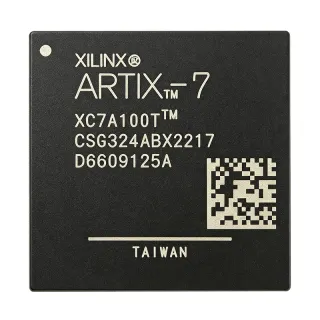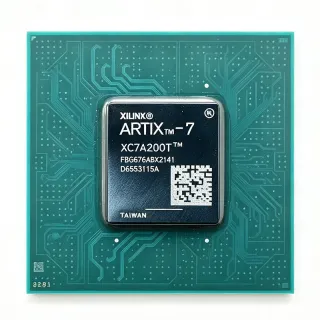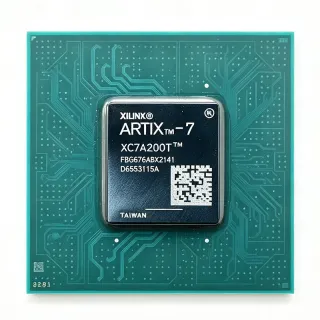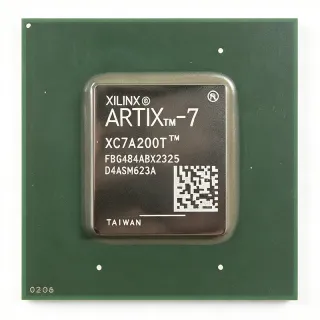
EPF8820ARC208-5N - FLEX 8000 FPGA, 8K Gates, 208-Pin RQFP | Altera
MPN: EPF8820ARC208-5N ✗ End of Life| Qty | Unit Price | Extended |
|---|---|---|
| 1 | $18.5 | $18.50 |
| 10 | $16.2 | $162.00 |
| 100 | $13.95 | $1,395.00 |
| 500 | $11.4 | $5,700.00 |
| 1,000 | $9.85 | $9,850.00 |
EPF8820ARC208-5N Overview
What is a FLEX 8000 FPGA? The FLEX 8000 is Altera's first-generation FLEX (Flexible Logic Element matriX) architecture, positioned in the broader taxonomy of programmable logic devices (PLD) alongside CPLDs and other early FPGAs. It uses a continuous, SRAM-based lookup-table (LUT) fabric combined with FastTrack interconnect, and is configured at power-up from an industry-standard parallel EPROM, an Altera serial configuration device (EPC1, EPC1064, EPC1213, EPC1441), or a system controller. The architecture is hierarchically related to later Altera families (FLEX 10K, ACEX, Cyclone) but predates modern low-cost families.
Key features of the EPF8820ARC208-5N include 8,000 typical gates, 672 logic elements, 152 user I/O pins, embedded SRAM configuration memory, multi-volt I/O support (3.3V/5V tolerant), in-system programmability via JTAG-compatible interface (ByteBlaster), and the 208-pin RQFP exposed-pad package. The -5 speed grade places it in the slowest timing bin of the FLEX 8000 family, trading off toggle rate and setup/hold margins for cost.
The FLEX 8000 architecture separates logic and interconnect into a fine-grained, segmented FastTrack continuous routing fabric, surrounded by I/O elements (IOEs) at all four edges. The EPF8820ARC208-5N is well suited to glue-logic, bus-interface, and state-machine consolidation roles where high pin count, low cost, and 5V tolerance outweigh the need for high clock rates. The exposed pad on the RQFP-208 package provides an additional thermal dissipation path for higher-utilization designs.
Typical applications include industrial control glue logic, parallel bus bridges, legacy peripheral interface adapters, and ASIC prototyping. The wide I/O count and 5V tolerance make it well matched to 5V microcontroller buses (e.g. 8051, 68k) and to industrial backplane interfaces. Designers use the Altera MAX+PLUS II or Quartus (legacy device support) toolchain for synthesis, fitting, and simulation.
When designing with this part, ensure the configuration scheme (passive serial from EPC1/EPC1441, or microprocessor-driven) is selected early because the FLEX 8000 SRAM cells require reconfiguration on every power-up. The exposed pad of the RQFP-208 must be soldered to a sufficient copper pour for thermal relief in high-toggle designs. For new designs, evaluate Cyclone IV/V or MAX II as modern low-cost alternatives, but note that the pinout and architecture are NOT drop-in compatible.
This page consolidates distributor stock and pricing signals, pin-compatible FLEX 8000 family alternatives, and practical configuration-scheme design notes not always found in the original Altera datasheet.
Drop-in alternatives for EPF8820ARC208-5N — same package, pin-to-pin compatible. Different-package parts requiring PCB rework are excluded.
Variants in this series
Same-series models that are drop-in compatible with EPF8820ARC208-5N (same form factor and footprint) — differing in Package, Speed Grade, Usable Gates, Configuration Memory, Process Technology.
Quick Comparison Tool — Select alternative parts for side-by-side comparison:
EPF8820ARC208-4
✅ Drop-In✓ In Stock
$25.4 / Unit
View Datasheet →EPF8820ARC208-3
✅ Drop-In✓ In Stock
$62 / Unit
View Datasheet →EPF8820ARC208-2
✅ Drop-In✓ In Stock
$17.95 / Unit
View Datasheet →EPF8820ARC208-4N
✅ Drop-In✓ In Stock
$32 / Unit
View Datasheet →EPF8820ARC208-3N
✅ Drop-In✓ In Stock
$85 / Unit
View Datasheet →EPF8820ARC208-5N Maximum Ratings & Electrical Characteristics
| Family | FLEX 8000 |
| Logic Elements | 672 |
| Typical Gates | 8,000 |
| User I/O Pins | 152 |
| Process Technology | 0.42 µm CMOS |
| Core Supply Voltage | 5 V |
| Speed Grade | -5 (slowest commercial) |
| Package | 208-pin RQFP Exposed Pad |
| Mounting Type | Surface Mount |
| Configuration Method | SRAM, parallel EPROM or serial EPC |
| Configuration Devices Supported | EPC1, EPC1064, EPC1213, EPC1441 |
| Operating Temperature | 0 °C to +70 °C (commercial) |
| RoHS Status | Lead free / RoHS Compliant |
| Programming Interface | JTAG-compatible (ByteBlaster) |
| Device Family Tier | FLEX 8000 (legacy) |
EPF8820ARC208-5N 208-pin rqfp exposed pad Pin Configuration Guide
Pin configuration for EPF8820ARC208-5N (208-pin rqfp exposed pad package). This digital IC includes GPIO, communication interfaces (UART, SPI, I2C), and power pins. Refer to the manufacturer datasheet for alternate pin functions and configuration options. Essential for embedded system design and PCB layout.

No detailed pinout data available for EPF8820ARC208-5N.
Refer to the datasheet for full pin configuration.
Typical Applications
EPF8820ARC208-5N is suitable for 6 applications: Industrial Control Glue Logic, Parallel Bus Bridge and Protocol Converter, Legacy Peripheral Interface Adapter, ASIC Prototyping and Emulation, 5V Microcontroller Expansion Logic, State Machine Consolidation.
Industrial Control Glue Logic
The EPF8820ARC208-5N's 8,000-gate capacity, 152 I/O pins, and 5 V tolerance make it a strong fit for industrial control glue logic where it can consolidate dozens of 74-series TTL/CMOS parts into a single reprogrammable device. With 672 logic elements and the FLEX 8000 continuous FastTrack interconnect, the FPGA can implement address decoding, handshaking, watchdog timing, and interrupt prioritization between a microcontroller and peripherals on a 5V backplane. The 208-pin RQFP exposed-pad package provides enough I/O for wide industrial buses (e.g. 16-bit data + 24-bit address) and the exposed pad aids thermal relief. Designers typically use MAX+PLUS II to enter the design as schematic or AHDL, then target the EPF8820ARC208-5N for a single-chip replacement of a discrete-logic board.
Recommended
Parallel Bus Bridge and Protocol Converter
The 152 user I/O pins of the EPF8820ARC208-5N are well matched to wide parallel bus bridges between microcontrollers, DSPs, and legacy peripherals (e.g. 68k to ISA, 8051 to PC/104, or PCI-to-local-bus glue). With 8,000 gates and 672 logic elements, the FLEX 8000 fabric can implement full bus-state machines, byte-swapping logic, wait-state insertion, and parity generation in a single device. The 5 V tolerant I/Os interface directly to 5 V microcontrollers and bus transceivers without external level shifters, simplifying the BOM. The 208-pin RQFP exposed-pad footprint gives designers headroom for debug and observability, and ByteBlaster JTAG programming allows in-system firmware updates of the bridge logic.
Recommended
Legacy Peripheral Interface Adapter
The EPF8820ARC208-5N is well suited to legacy peripheral interface adapters that must bridge modern CPUs to 5V-era peripherals such as parallel ATA, SCSI, UARTs, or Centronics. The 152 I/O count and 8,000-gate capacity allow implementation of the full peripheral controller in one chip, including FIFO buffering, DMA handshaking, and interrupt arbitration. The FLEX 8000 SRAM-based fabric allows in-field firmware updates via the JTAG/ByteBlaster interface, so a single adapter board can be re-targeted to multiple peripherals by reprogramming the FPGA. The 208-pin RQFP package keeps the adapter board in a manageable form factor while providing enough pins for both the modern CPU bus and the legacy peripheral bus simultaneously.
Recommended
ASIC Prototyping and Emulation
For ASIC prototyping, the EPF8820ARC208-5N offers 8,000 usable gates and 672 logic elements in the FLEX 8000 continuous interconnect fabric, which closely emulates the routing behaviour of early gate-array ASICs. Engineers can map an RTL design into the FLEX 8000 using MAX+PLUS II to validate logic and timing before committing to a mask revision, then re-target the same RTL to an ASIC library for production. The 152 I/O pins provide enough observability to bring out internal buses and state-machine signals to logic-analyser probes. The 5 V I/O tolerance simplifies connection to mixed-voltage ASIC validation boards, and the ByteBlaster JTAG interface allows rapid design-iteration cycles.
Recommended
5V Microcontroller Expansion Logic
The EPF8820ARC208-5N pairs naturally with 5V microcontrollers such as the 8051, 68k, or Z80 families, where the FPGA can implement address decoding, memory-bank switching, and custom peripheral functions that the MCU lacks. With 152 I/O pins and 5V-tolerant I/Os, the FLEX 8000 can connect directly to the MCU bus without level shifters, and the 8,000-gate capacity is sufficient to implement multiple custom peripherals (UART, timer, PWM, capture) in a single chip. The 208-pin RQFP exposed-pad footprint gives ample pin headroom for the MCU bus plus multiple peripheral interfaces, and the exposed pad provides thermal relief for designs running many I/O banks at high toggle rates.
Recommended
State Machine Consolidation
The FLEX 8000 architecture is well matched to consolidating complex state machines (such as motor-control sequencers, industrial protocol state engines, or test-equipment controllers) that would otherwise require many discrete PAL/GAL devices. The EPF8820ARC208-5N's 672 logic elements, 8,000 gates, and continuous FastTrack interconnect give designers the headroom to implement multiple state machines in a single device with predictable timing. The 5 V tolerance allows direct interfacing to industrial sensor and actuator signals, and the JTAG/ByteBlaster interface enables in-system reconfiguration for field upgrades. Designers use MAX+PLUS II state-machine entry (AHDL) to capture the design quickly and target the EPF8820ARC208-5N for a single-chip state-machine array.
Recommended
Recommended Products Summary
Engineering reference data for EPF8820ARC208-5N — comparison, design guidance, and compliance information.
Selection Guide
Comparison with Alternatives
| Parameter | This Product | EPF8820ARC208-4 | EPF8820ARC208-3 | EPF8820ARC208-2 | EPF8820ARC208-4N | EPF8820ARC208-3N |
|---|---|---|---|---|---|---|
| Package | 208-pin RQFP Exposed Pad | 208-pin RQFP Exposed Pad (same) | 208-pin RQFP Exposed Pad (same) | 208-pin RQFP Exposed Pad (same) | 208-pin RQFP Exposed Pad (same) | 208-pin RQFP Exposed Pad (same) |
| Brand | Altera | Altera | Altera | Altera | Altera | Altera |
| Family | FLEX 8000 | FLEX 8000 | FLEX 8000 | FLEX 8000 | FLEX 8000 | FLEX 8000 |
| Speed Grade | -5 (slowest commercial) | -4 (faster) | -3 (faster) | -2 (fastest) | -4 (faster, lead-free) | -3 (faster, lead-free) |
| Typical Gates | 8,000 | 8,000 | 8,000 | 8,000 | 8,000 | 8,000 |
| Logic Elements | 672 | 672 | 672 | 672 | 672 | 672 |
| User I/O Pins | 152 | 152 | 152 | 152 | 152 | 152 |
| Core Voltage | 5 V | 5 V | 5 V | 5 V | 5 V | 5 V |
| Lead-free / RoHS | Lead free / RoHS Compliant | Lead free / RoHS Compliant | Lead free / RoHS Compliant | Lead free / RoHS Compliant | Lead free / RoHS Compliant (N suffix) | Lead free / RoHS Compliant (N suffix) |
| Lifecycle Status | Obsolete (FLEX 8000 legacy) | Obsolete (FLEX 8000 legacy) | Obsolete (FLEX 8000 legacy) | Obsolete (FLEX 8000 legacy) | Obsolete (FLEX 8000 legacy) | Obsolete (FLEX 8000 legacy) |
Key Differentiators
- 5 V-tolerant I/Os with 152 user pins in a single RQFP-208 package (vs EPF8282ATC100-4)
- Higher logic capacity (8,000 gates / 672 LEs) for larger glue-logic consolidation (vs EPF8452ATC100-4)
- 208-pin RQFP exposed-pad package with 152 I/O vs. the smaller AQC160 package (vs EPF8820AQC160-4)
Design Notes
The EPF8820ARC208-5N requires a stable 5 V VCCINT supply and a separate VCCIO bank supply for I/O voltage flexibility (3.3 V or 5 V tolerant per bank). According to the FLEX 8000 datasheet family, I/O banks can be mixed-voltage only if bank-by-bank VCCIO pins are tied to the appropriate rail. Add 0.1 µF decoupling capacitors close to every VCC/VCCIO pin and bulk 10 µF tantalum capacitors at the board's power-entry points. During configuration (CCLK-driven load), the device draws additional inrush current; ensure the regulator can supply 200–500 mA peak during configuration without sagging below 4.75 V.
The 208-pin RQFP package includes an exposed thermal pad on the bottom that MUST be soldered to a sufficient copper pour (recommended: at least 1 square inch of 2 oz copper connected to GND) for thermal relief in high-utilization designs. According to the FLEX 8000 package thermal characteristics, the exposed pad reduces θJA by 30–50% versus a non-pad version. For designs that switch many I/O banks at high toggle rates, add thermal vias under the exposed pad to inner GND planes to spread heat. In air-cooled industrial environments, a 100% duty-cycle design at 8,000-gate utilization is typically within the 0 °C to +70 °C commercial range without a heatsink.
Place the EPF8820ARC208-5N's configuration PROM (EPC1, EPC1064, EPC1213, or EPC1441) as close as practical to the FPGA's DATA, DCLK, nCONFIG, nSTATUS, and CONF_DONE pins to minimize trace length and ringing. According to the FLEX 8000 datasheet family, the nCONFIG and nSTATUS pins require external 10 kΩ pull-ups to VCC, and the JTAG TDI/TDO chain must be correctly ordered if multiple devices share the same ByteBlaster. Keep the RQFP-208 breakout fan-out on a 4-layer or higher PCB with continuous GND and VCC planes directly under the device for signal-integrity and thermal relief.
The most common pitfalls when designing with the EPF8820ARC208-5N are: (1) forgetting that FLEX 8000 SRAM cells lose configuration on every power-down, so an external configuration PROM is mandatory; (2) tying nCONFIG low after power-up, which prevents configuration; (3) mixing 3.3 V and 5 V signals on the same I/O bank without separate VCCIO rails; (4) leaving the exposed pad un-soldered, which degrades thermal performance; (5) using 0.42 µm CMOS-specific timing models in the wrong speed grade; and (6) attempting to use Quartus Prime without enabling the legacy FLEX 8000 device support, which is shipped in a separate legacy-support package. Always verify the configuration PROM image and JTAG chain before production.
Compliance Information
Lead-free / RoHS compliant per distributor parametric data and Alibaba listing for EPF8820ARC208 QFP variant. REACH, halogen-free, and conflict-minerals status not explicitly listed in the verified data and marked as 'unknown'.