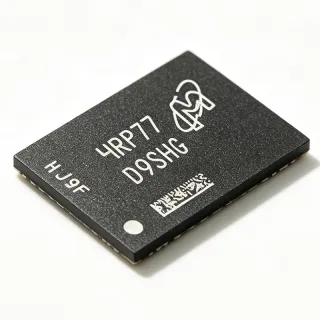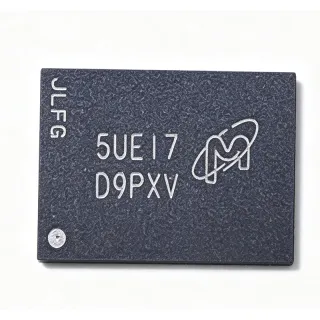
M29W128GH70ZA3E - 128Mbit Parallel NOR Flash, 70ns | Micron
MPN: M29W128GH70ZA3E ✓ Active| Qty | Unit Price | Extended |
|---|---|---|
| 1 | $3.71 | $3.71 |
| 10 | $3.41 | $34.10 |
| 100 | $3.15 | $315.00 |
| 500 | $2.92 | $1,460.00 |
| 1,000 | $2.7 | $2,700.00 |
M29W128GH70ZA3E Overview
Parallel NOR Flash is a non-volatile memory technology that allows random access to any address, making it the classic choice for storing boot code and firmware in microprocessor-based systems. In the memory hierarchy, it sits alongside serial NOR Flash and NAND Flash, but unlike serial NOR, the parallel interface (16-bit data bus) delivers substantially higher read throughput, and unlike NAND, it offers execute-in-place (XIP) capability with full random access on every byte or word.
Key features of the M29W128GH70ZA3E include its 128Mbit density, fast 70 ns access time suitable for zero-wait-state execution in many embedded processors, a parallel 16-bit data interface, and a compact 64-ball TBGA surface-mount package that conserves board area. The GH suffix denotes the bottom-boot-block architecture with uniform block organization options, supporting flexible firmware partitioning.
Architecturally, the device uses Micron's proven M29W floating-gate Flash process with block-structured erase, program and erase command sets compatible with industry-standard CFI (Common Flash Interface) usage. Sector/block erase and word programming operations are managed via standard command sequences, with status polling through the data pins.
Typical applications include boot-code storage for embedded processors and FPGAs, set-top boxes, networking equipment, industrial control systems, and automotive infotainment modules where code must execute directly from Flash.
A key design consideration is the parallel interface: allocate sufficient MCU/FPGA address and data lines, and carefully manage program/erase voltage and timing per the manufacturer datasheet, since bus contention during programming can corrupt data.
This page synthesizes distributor pricing, drop-in alternative candidates, and practical design notes not found in the manufacturer datasheet, giving engineers a single reference for sourcing and second-sourcing decisions.
Drop-in alternatives for M29W128GH70ZA3E — same package, pin-to-pin compatible. Different-package parts requiring PCB rework are excluded.
Variants in this series
Same-series models that are drop-in compatible with M29W128GH70ZA3E (same form factor and footprint) — differing in Package, Organization, Interface, Supply Voltage, Memory Type.
Quick Comparison Tool — Select alternative parts for side-by-side comparison:
M29W128GH70ZA6E
✅ Drop-In ⚠️ Specs Unverified📋 Reference alternative (not in catalog)
M29W128GT70ZA3E
✅ Drop-In ⚠️ Specs Unverified📋 Reference alternative (not in catalog)
M29W128GB70ZA3E
✅ Drop-In ⚠️ Specs Unverified📋 Reference alternative (not in catalog)
M29W128GH70N3E
✅ Drop-In ⚠️ Specs Unverified✓ In Stock
Contact for price
View Datasheet →M29W128GH70ZA3F
✅ Drop-In ⚠️ Specs Unverified📋 Reference alternative (not in catalog)
M29W128GH70ZA3E Maximum Ratings & Electrical Characteristics
| Memory Type | NOR Flash |
| Memory Size | 128 Mbit |
| Organization | 8M x 16 |
| Interface | Parallel |
| Access Time | 70 ns |
| Technology | SLC NOR |
| Mounting Type | Surface Mount |
| Package | 64-TBGA (10x13 mm) |
| Boot Block Architecture | Bottom boot (GH suffix) |
M29W128GH70ZA3E 64-tbga (10x13 mm) Pin Configuration Guide
Pin configuration for M29W128GH70ZA3E (64-tbga (10x13 mm) package). This digital IC includes GPIO, communication interfaces (UART, SPI, I2C), and power pins. Refer to the manufacturer datasheet for alternate pin functions and configuration options. Essential for embedded system design and PCB layout.

No detailed pinout data available for M29W128GH70ZA3E.
Refer to the datasheet for full pin configuration.
Typical Applications
M29W128GH70ZA3E is suitable for 6 applications: FPGA Boot Code Storage, Embedded Processor Firmware Storage, Industrial Control Systems, Networking Equipment, Set-Top Boxes and Consumer AV, Automotive Infotainment Boards.
FPGA Boot Code Storage
The M29W128GH70ZA3E fits FPGA boot and configuration storage because its 128Mbit density holds multiple configuration bitstreams plus application code, and its 70 ns access time minimizes configuration latency at power-up. The 16-bit parallel bus connects directly to FPGA address/data pins without protocol conversion, and XIP capability lets processors execute code directly from the array. In this role the device is programmed once (or field-updated via a small bootloader) and read-dominated, which aligns with NOR Flash endurance profiles. Designers should budget for the parallel bus pin count on the FPGA I/O and add series termination if bus lengths exceed a few centimeters.
Recommended
Embedded Processor Firmware Storage
Embedded microprocessors and SoCs require non-volatile code storage that supports random access; the M29W128GH70ZA3E delivers this through its 8M x 16 parallel organization and 70 ns access time, enabling near-zero-wait-state code execution in many 100 MHz-class processors. Its 128Mbit capacity accommodates a bootloader, operating system image, and parameter blocks in a single device, with the bottom-boot block architecture placing small, frequently rewritten blocks at the bottom of the map. Program and erase operations use industry-standard command sequences, simplifying firmware update drivers. Place the device close to the processor to limit bus loading and honor datasheet output timing under full capacitive load.
Recommended
Industrial Control Systems
Industrial controllers, PLCs, and motor-drive boards store firmware and calibration data that must survive power cycles for years; the M29W128GH70ZA3E provides 128Mbit of non-volatile parallel NOR in a robust 64-ball TBGA package suited to industrial temperature designs. Its random-access architecture lets the controller execute boot code directly, avoiding a copy-to-RAM step at startup and reducing boot time. The SLC NOR cell structure offers high endurance and long data retention compared with consumer storage. Designers should provide brown-out protection so program/erase sequences are never interrupted by unstable supply, and should reserve dedicated parameter blocks for field calibration data.
Recommended
Networking Equipment
Routers, switches, and line cards use parallel NOR Flash for bootloaders and diagnostic firmware that must be available before the main software image loads from NAND or eMMC. The M29W128GH70ZA3E's 70 ns access time keeps early-boot execution fast, and its 128Mbit capacity stores redundant boot images for fail-safe upgrades. The 16-bit parallel interface integrates cleanly with network processor and CPU local buses. Because network hardware often runs 24/7 for a decade, the SLC NOR endurance and retention profile of this device are important reliability factors; reserve two equal partitions for A/B image updates to tolerate power loss during field firmware upgrades.
Recommended
Set-Top Boxes and Consumer AV
Set-top box and consumer audio/video platforms require a dependable boot device ahead of the main NAND file system; the M29W128GH70ZA3E serves this role with 128Mbit of parallel NOR and a 70 ns access time, storing the secure bootloader and recovery image. The 64-ball TBGA (10x13 mm) package provides high density in a small footprint for cost-sensitive consumer boards, and the parallel bus connects to the SoC boot ROM interface without glue logic in most designs. Because consumer products ship in high volume, availability across multiple distributors (9 sources listed on Octopart as of 2026-09-02) supports supply continuity. Include a checksum-validated recovery block for field returns and service boot.
Recommended
Automotive Infotainment Boards
Automotive infotainment and telematics head units need a robust code-storage device for bootloaders and safety-relevant firmware; the M29W128GH70ZA3E's parallel NOR architecture gives deterministic random access at cold crank and after power interruptions, with 70 ns access time supporting fast boot targets. The 128Mbit array stores the primary boot image plus fallback copies, and the industrial-grade BGA package withstands the vibration profile of dashboard electronics. When qualifying for automotive programs, verify the exact temperature grade and AEC qualification status from the current Micron datasheet and select the appropriate ordering suffix. Design the power tree so VPP/program voltages are sequenced correctly relative to the main supply.
Recommended
Recommended Products Summary
Engineering reference data for M29W128GH70ZA3E — comparison, design guidance, and compliance information.
Selection Guide
Comparison with Alternatives
| Parameter | This Product | M29W128GH70ZA6E | M29W128GT70ZA3E | M29W128GB70ZA3E | M29W128GH70N3E |
|---|---|---|---|---|---|
| Package | 64-TBGA (10x13 mm) | 64-TBGA (10x13 mm) - same | 64-TBGA (10x13 mm) - same | 64-TBGA (10x13 mm) - same | 64-ball BGA sibling option - verify ball map |
| Brand | Micron Technology | Micron Technology | Micron Technology | Micron Technology | Micron Technology |
| Memory Size | 128 Mbit | 128 Mbit | 128 Mbit | 128 Mbit | 128 Mbit |
| Access Time | 70 ns | 60 ns (faster) | 70 ns | 70 ns | 70 ns |
| Boot Block Architecture | Bottom boot (GH) | Bottom boot (GH) | Top boot (GT) | Bank/block variant (GB) | Bottom boot (GH) |
| Interface | Parallel | Parallel | Parallel | Parallel | Parallel |
Key Differentiators
- Fast 70 ns parallel access for XIP (vs MT25QL128ABB8ESF-0AUT)
- Faster speed grade available in same footprint (vs M29W128GH70ZA6E)
- Bottom-boot organization favors bootloader placement (vs M29W128GT70ZA3E)
Design Notes
The 64-ball TBGA (10x13 mm) package requires careful BGA land-pattern design and reflow profiling. Follow the land pattern in the manufacturer datasheet and use standard SAC305 lead-free reflow profiles. Define a via-in-pad or dog-bone escape strategy for the 16-bit data bus and address lines, and keep trace lengths matched within the address group to preserve the 70 ns access-time budget at the host interface. X-ray inspection after reflow is recommended for production boards because BGA solder joints are not visually inspectable.
Decouple the supply pins with at least 0.1 uF ceramic capacitors placed close to the ball escapes, plus one bulk capacitor per device. Program and erase operations draw transient currents significantly higher than read mode; size the power rail so these transients do not droop below the datasheet minimum, or program/erase may fail silently. Add brown-out supervision so the host never asserts WE# while supply is collapsing, which can corrupt the block being written. Verify the exact supply voltage range from the current manufacturer datasheet revision.
Respect the timing relationship between CE#, OE#, and WE# during program/erase command sequences; bus contention or premature status polling is the most common cause of field programming failures. Use the CFI query or datasheet status-check flow rather than fixed delays for program/erase completion, as timing varies with temperature. When substituting family variants, confirm boot-block orientation (GH bottom boot vs GT top boot) because firmware link addresses differ. Do not hot-plug the parallel bus while the device is in an erase-suspend state.
Compliance Information
Compliance status was not stated in the provided verified web data. Confirm RoHS/REACH status on Micron's official part-detail page for the exact ordering code.