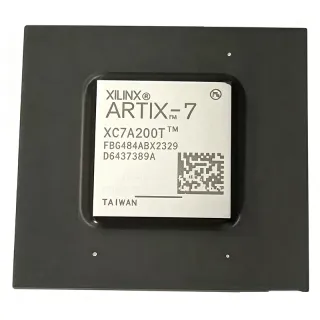
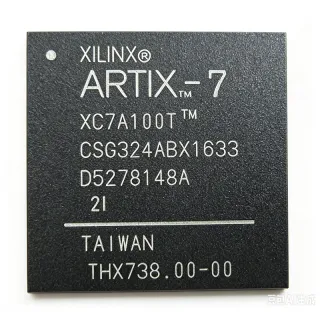
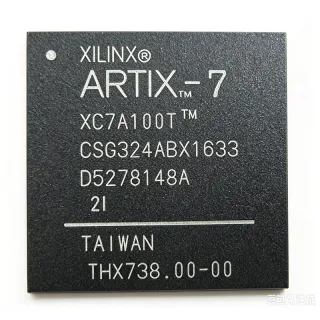
EP20K100QC240-1 - APEX 20K FPGA 100K Gates 240-PQFP | Intel
MPN: EP20K100QC240-1 ✗ End of Life| Qty | Unit Price | Extended |
|---|---|---|
| 1 | $185 | $185.00 |
| 10 | $165 | $1,650.00 |
| 100 | $142 | $14,200.00 |
| 500 | $120 | $60,000.00 |
| 1,000 | $98 | $98,000.00 |
EP20K100QC240-1 Overview
An FPGA (Field-Programmable Gate Array) is a type of programmable logic device (PLD) that allows designers to configure digital logic blocks and interconnect after manufacture. Within the broader taxonomy, an FPGA sits between a CPLD (Complex Programmable Logic Device) and an ASIC (Application-Specific Integrated Circuit): more flexible than an ASIC and higher density than a CPLD. The APEX 20K series introduced embedded dual-port RAM blocks and a MultiCore architecture combining look-up tables (LUTs) with product-term logic, allowing a single device to replace discrete SRAM, ROM, and glue logic on legacy system boards.
Key features of the EP20K100QC240-1 include 4,160 logic elements, 53,248 RAM bits, 189 maximum user I/O, a -1 speed grade targeting 250 MHz Fmax, JTAG-based IEEE 1149.1 boundary-scan support, and in-system programmability via the Altera (now Intel) Quartus and MAX+PLUS II toolchains. The 2.5 V core with 3.3 V-tolerant I/O simplifies interfacing to legacy 5 V-tolerant bus transceivers through external series resistors. The 240-pin PQFP with 0.5 mm pitch supports hand-soldering for prototypes and standard surface-mount assembly for production volumes.
Typical applications include PCI bridge designs, telecom line-card glue logic, network router backplane interfaces, industrial motor-control state machines, and migration paths for legacy APEX 20K prototypes still in field service. With a 0 to 85 °C commercial operating-temperature range, this part targets benign-environment embedded systems rather than automotive or extended-industrial deployments.
When designing with this device, plan JTAG chain access early and verify Quartus II version compatibility - newer Intel Quartus releases have dropped APEX 20K device support. For new designs, evaluate Cyclone IV or MAX II as the modern equivalent family, since APEX 20K silicon is mature and approaching end-of-life availability through authorized distributors.
Drop-in alternatives for EP20K100QC240-1 — same package, pin-to-pin compatible. Different-package parts requiring PCB rework are excluded.
Variants in this series
Same-series models that are drop-in compatible with EP20K100QC240-1 (same form factor and footprint) — differing in Speed Grade, Operating Temperature, Package, Device Type, Series.
Quick Comparison Tool — Select alternative parts for side-by-side comparison:
EP20K100QC240-2
✅ Drop-In ⚠️ Specs Unverified✓ In Stock
Contact for price
View Datasheet →EP20K100QC240-3
✅ Drop-In ⚠️ Specs Unverified✓ In Stock
$24.5 / Unit
View Datasheet →EP20K100CQ240C7
✅ Drop-In ⚠️ Specs Unverified✓ In Stock
$92 / Unit
View Datasheet →EP20K100CQ240C8
✅ Drop-In ⚠️ Specs Unverified✓ In Stock
$26.8 / Unit
View Datasheet →EP20K100CQ240C9
✅ Drop-In ⚠️ Specs Unverified✓ In Stock
$99.5 / Unit
View Datasheet →EP20K100QC240-1 Maximum Ratings & Electrical Characteristics
| Family | APEX 20K |
| Device Type | FPGA (Field-Programmable Gate Array) |
| Logic Elements (LEs) | 4,160 |
| Typical Gates | 100,000 |
| Maximum User I/O | 189 |
| Embedded RAM Bits | 53,248 |
| Process Technology | 0.22 µm CMOS |
| Core Supply Voltage | 2.5 V |
| Maximum Internal Frequency | 250 MHz |
| Speed Grade | -1 |
| Package | 240-pin PQFP (QFP-240) |
| Package Code | S-PQFP-G240 |
| Terminal Form | Gull Wing |
| Propagation Delay | 1.6 ns (per datasheet, typical) |
| Operating Temperature | 0 °C to +85 °C (Commercial) |
| Mounting Type | Surface Mount |
| JTAG Support | IEEE 1149.1 Boundary Scan |
| Programming | In-system (SRAM-based) via Quartus / MAX+PLUS II |
EP20K100QC240-1 s-pqfp-g240 Pin Configuration Guide
Pin configuration for EP20K100QC240-1 (s-pqfp-g240 package). This digital IC includes GPIO, communication interfaces (UART, SPI, I2C), and power pins. Refer to the manufacturer datasheet for alternate pin functions and configuration options. Essential for embedded system design and PCB layout.

No detailed pinout data available for EP20K100QC240-1.
Refer to the datasheet for full pin configuration.
Typical Applications
EP20K100QC240-1 is suitable for 6 applications: Telecom Line-Card Glue Logic, PCI Bridge / Bus Interface Controller, Industrial Motor-Control State Machine, Network Router Backplane Interface, Legacy APEX 20K Prototype Replacement, Embedded Test & Measurement Instrumentation.
Telecom Line-Card Glue Logic
The EP20K100QC240-1 fits telecom line-card glue logic because its 4,160 LEs and 189 user I/O provide enough density to bridge TDM/E1 framer chips, control parallel backplanes, and aggregate status LEDs without external CPLDs. At a 2.5 V core and 250 MHz Fmax, the device keeps up with 155 MHz Utopia/Posphy interfaces common in legacy DSLAM and SDH designs. With 53,248 bits of dual-port embedded RAM, it can also buffer small packet queues on-chip, simplifying board layout versus discrete SRAM plus glue logic. The PQFP-240 footprint allows hand-rework during sustaining engineering on cards already deployed in central offices. Engineers sustaining 2000s-era telecom infrastructure rely on this part precisely because it consolidates logic that would otherwise require two or three CPLDs.
Recommended
PCI Bridge / Bus Interface Controller
The EP20K100QC240-1 suits 32-bit/33 MHz PCI bridge designs because its 189 user I/O is enough to implement the full 32-bit PCI bus (AD[31:0], C/BE[3:0], FRAME, IRDY, TRDY, etc.) plus side-bus transceivers in a single device. The 4,160 LEs accommodate a target or master state machine alongside FIFOs mapped into the 53,248-bit dual-port embedded RAM. Operating at 33 MHz PCI clock, the -1 speed grade is well within timing margin at 2.5 V core. The 240-pin PQFP package's 0.5 mm pitch works with conventional PCB fabrication, unlike fine-pitch BGA alternatives. Designers sustaining legacy PCI systems (industrial PCs, medical instruments) use this part as a known-quantity bridge IP target.
Recommended
Industrial Motor-Control State Machine
The EP20K100QC240-1 is well suited to industrial motor-control state machines because its 4,160 LEs implement field-oriented control (FOC) pre-processing, encoder decoding, and PWM sequencing in a single chip. The 53,248 bits of embedded dual-port RAM buffer current/voltage sample rings without external SRAM. With 189 user I/O, the device can interface to multi-axis resolver-to-digital converters, gate-driver enable lines, and fault-inputs simultaneously. The commercial 0-85 °C temperature range covers factory-floor enclosures with adequate margin. Legacy CNC retrofit designers rely on this part because the Quartus II design entry preserves older VHDL/Verilog IP without re-validation.
Recommended
Network Router Backplane Interface
The EP20K100QC240-1 serves router backplane interface logic by aggregating multiple lower-speed serial or parallel links into a higher-speed fabric port. Its 4,160 LEs can host custom protocol engines for proprietary backplanes, while the 53,248 bits of dual-port RAM absorb small packet bursts during congestion. At 189 user I/O, the device drives enough LVCMOS signals to fan out across multi-slot backplane cards. The 250 MHz Fmax in the -1 grade comfortably handles 100 MHz backplane clocks with margin for state-machine setup. Sustaining engineering on enterprise routers deployed circa 2002-2010 keeps this part in demand for legacy line-card refresh.
Recommended
Legacy APEX 20K Prototype Replacement
The EP20K100QC240-1 is itself a target when sustaining legacy APEX 20K prototypes that need identical replacement parts during board repair. The 240-pin PQFP package allows drop-in socketed replacement without PCB rework, and the -1 speed grade preserves original timing characteristics when the exact same speed grade is reinstalled. With identical 4,160 LEs and 53,248 bits of RAM, the bitstream generated for the original part loads directly into a replacement unit. Service depots for telecom, industrial, and medical OEMs keep bonded inventory specifically to repair legacy boards in the field without forcing costly full-system replacement.
Recommended
Embedded Test & Measurement Instrumentation
The EP20K100QC240-1 fits embedded test and measurement instruments requiring custom trigger sequencers, waveform capture buffers, and protocol-decoder engines. The 4,160 LEs accommodate 4-8 channel decoder logic while the 53,248 bits of dual-port RAM serve as circular sample buffers. With 189 user I/O, the device can directly interface to analog front-ends, ADC digital outputs, and front-panel controls without external bus expanders. The 250 MHz Fmax in the -1 grade supports sampling rates up to 200 MSPS in typical decoder designs. Sustaining-engineering teams building handheld oscilloscopes, logic analyzers, and protocol testers use this part for its deterministic in-system SRAM configuration.
Recommended
Recommended Products Summary
Engineering reference data for EP20K100QC240-1 — comparison, design guidance, and compliance information.
Selection Guide
Comparison with Alternatives
| Parameter | This Product | EP20K100QC240-2 | EP20K100QC240-3 | EP20K100CQ240C7 | EP20K100CQ240C8 |
|---|---|---|---|---|---|
| Brand | Intel | Intel | Intel | Intel | Intel |
| Package | 240-PQFP (S-PQFP-G240) | 240-PQFP (S-PQFP-G240) - same | 240-PQFP (S-PQFP-G240) - same | 240-PQFP (S-PQFP-G240) - same | 240-PQFP (S-PQFP-G240) - same |
| Family | APEX 20K | APEX 20K | APEX 20K | APEX 20K | APEX 20K |
| Logic Elements | 4,160 | 4,160 (identical) | 4,160 (identical) | 4,160 (identical) | 4,160 (identical) |
| Typical Gates | 100,000 | 100,000 (identical) | 100,000 (identical) | 100,000 (identical) | 100,000 (identical) |
| Embedded RAM Bits | 53,248 | 53,248 (identical) | 53,248 (identical) | 53,248 (identical) | 53,248 (identical) |
| User I/O | 189 | 189 (identical) | 189 (identical) | 189 (identical) | 189 (identical) |
| Speed Grade | -1 (slowest) | -2 (mid, ~15-25% faster Fmax) | -3 (fastest, ~25-40% faster Fmax) | C7 (commercial, ~comparable) | C8 (commercial, ~mid) |
| Core Voltage | 2.5 V | 2.5 V (identical) | 2.5 V (identical) | 2.5 V (identical) | 2.5 V (identical) |
| Lifecycle Status | Obsolete | Obsolete | Obsolete | Obsolete | Obsolete |
Key Differentiators
- Lowest-cost speed grade within the 240-PQFP EP20K100 family (vs EP20K100QC240-2)
- Drop-in compatible with all EP20K100QC240 speed grades (vs EP20K100QC240-3)
- PQFP package enables hand-rework and prototype-friendly assembly (vs EP20K100BC356-1)
Design Notes
Estimated: Newer Intel Quartus Prime versions (after v13.0) have dropped APEX 20K device support, so designers sustaining this part must retain Quartus II v13.0 or earlier in a virtual machine. The legacy MAX+PLUS II toolchain also generates valid bitstreams but lacks modern timing-analysis features. Plan tooling-version control carefully - mixing bitstream revisions across tool versions can yield functionally identical but signature-different JIC files that fail in-system configuration.
PQFP-240 packages exhibit noticeable lead-inductance ringing above 100 MHz I/O switching. Series-dampening resistors (22-33 Ω) near the FPGA output are recommended for clocks and high-speed bus signals. Keep trace lengths matched within 5 mm on parallel buses (PCI, SDRAM) to avoid setup/hold violations. The 0.5 mm PQFP lead pitch requires careful solder-paste stencil aperture design - 4-mil stencil thickness is typical, but reduce to 3-mil for fine-pitch prototype runs.
Estimated: The PQFP-240 device dissipates approximately 0.5-1.5 W typical depending on toggle rate and utilization. At 1.5 W with a 240-PQFP θJA of ~35 °C/W (still air, no copper), junction temperature rises ~52 °C above ambient - acceptable for commercial 0-85 °C operation at 33 °C ambient. For sustained 250 MHz operation at high utilization, add a copper heatsink area beneath the package or specify a 1-oz copper pour on inner layers connected by thermal vias to a topside copper spreader.
Compliance Information
APEX 20K family predates RoHS enforcement (1999-2000 era). Most date codes ship with SnPb finish; later date codes may be RoHS-compliant. Compliance status for the specific EP20K100QC240-1 unit must be verified by date code and manufacturer label. Not AEC-Q100 qualified - commercial-grade part.