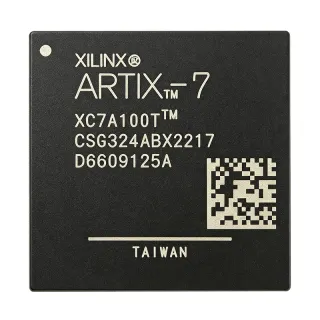
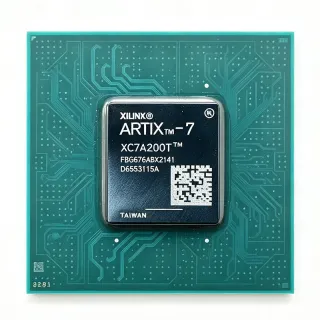
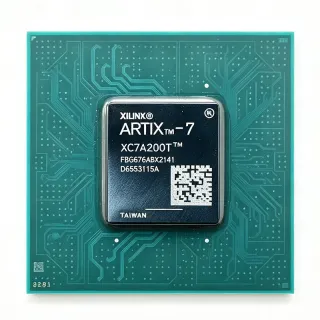
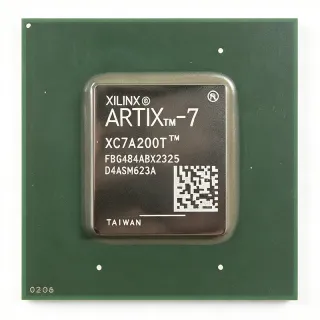
EPM9560WC208-15C - 560-Macrocell EE PLD | Altera MAX 9000
MPN: EPM9560WC208-15C ✗ End of Life| Qty | Unit Price | Extended |
|---|---|---|
| 1 | $285 | $285.00 |
| 10 | $256.5 | $2,565.00 |
| 100 | $220 | $22,000.00 |
| 500 | $198 | $99,000.00 |
| 1,000 | $178 | $178,000.00 |
Drop-in alternatives for EPM9560WC208-15C — same package, pin-to-pin compatible. Different-package parts requiring PCB rework are excluded.
Quick Comparison Tool — Select alternative parts for side-by-side comparison:
EPM9560WC208-15
✅ Drop-In✓ In Stock
$105 / Unit
View Datasheet →EPM9560WC208
✅ Drop-In✓ In Stock
$125 / Unit
View Datasheet →EPM9560RC208-15C
✅ Drop-In✓ In Stock
Contact for price
View Datasheet →EPM9560RC208-15
✅ Drop-In✓ In Stock
Contact for price
View Datasheet →EPM9560RC208-20C
✅ Drop-In✓ In Stock
Contact for price
View Datasheet →EPM9560WC208-15C Maximum Ratings & Electrical Characteristics
| Device Family | MAX 9000 |
| Series | EPM9560 |
| Macrocells | 560 |
| Logic Array Blocks (LABs) | 35 |
| Flip-Flops | 772 |
| User I/O Pins | 149 |
| Supply Voltage | 3.3 V or 5 V |
| Maximum Clock Frequency | 117.6 MHz |
| Pin-to-Pin Propagation Delay (tPD) | 16.6 ns |
| Process Technology | 0.35 µm CMOS EEPROM |
| Package | CQFP-208 (Ceramic Quad Flat Pack) |
| Terminal Pitch | 0.50 mm |
| Mounting Type | Surface Mount |
| Programming Interface | IEEE 1149.1 JTAG |
| Operating Temperature Grade | C (Commercial) |
| MultiVolt I/O | Yes (3.3 V / 5 V tolerant) |
| RoHS Status | ROHS3 Compliant |
| Moisture Sensitivity Level (MSL) | 3 (168 Hours) |
EPM9560WC208-15C cqfp-208 (ceramic quad flat pack) Pin Configuration Guide
Complete pinout information for EPM9560WC208-15C (cqfp-208 (ceramic quad flat pack) package) with 149 pins. This digital IC includes GPIO, communication interfaces (UART, SPI, I2C), and power pins. Refer to the manufacturer datasheet for alternate pin functions and configuration options. Essential for embedded system design and PCB layout.

No detailed pinout data available for EPM9560WC208-15C.
Refer to the datasheet for full pin configuration.
Estimated pin count: 149 pins (digital package)
Safe Operating Area (SOA) & Thermal Characteristics
No official SOA curve available for this digital IC. Always operate within absolute maximum ratings specified in the datasheet. Ensure adequate cooling and derate as needed.
Typical Applications
EPM9560WC208-15C is suitable for 6 applications: Industrial Control Logic Consolidation, Telecommunications Line-Card Glue Logic, Aerospace and Military Avionics, Legacy Bus-Interface Bridging, High-Reliability Medical Instrumentation, Test and Measurement Equipment.
Industrial Control Logic Consolidation
The EPM9560WC208-15C consolidates multi-chip TTL/CMOS glue logic into a single non-volatile device on industrial PLC and process-control boards. With 560 macrocells, 35 LABs, and 772 flip-flops it can absorb an entire 74-series decoder/buffer tree plus state-machine logic. The 16.6 ns tPD delivers deterministic timing for safety interlocks, and the JTAG ISP interface enables field firmware updates without removing the board. The 3.3 V/5 V MultiVolt I/O simplifies mixed-voltage interface to legacy 5 V sensors and modern 3.3 V microcontrollers.
Recommended
Telecommunications Line-Card Glue Logic
Telecom line cards rely on fast, deterministic glue logic to bridge backplane buses, framers, and switch fabrics. The EPM9560WC208-15C's 117.6 MHz internal counter frequency and 16.6 ns tPD suit 60 MHz synchronous interfaces such as E1/T1 framers and UTOPIA-level ATM/POS paths. Its 149 user I/O pins comfortably handle address-decoding, parity generation, and bus-arbitration logic. MultiVolt I/O supports direct connection to 3.3 V framers and 5 V legacy backplanes without level shifters.
Recommended
Aerospace and Military Avionics
The ceramic CQFP-208 package and C-grade temperature rating position the EPM9560WC208-15C for avionics subsystems that demand hermetic packaging and resistance to vibration and thermal cycling. With 560 macrocells the device can implement MIL-STD-1553 bus monitor logic, ARINC 429 interface glue, and discrete signal conditioning in a single chip. JTAG boundary-scan supports board-level test per IEEE 1149.1, which is mandatory for many DO-254 design-assurance flows.
Recommended
Legacy Bus-Interface Bridging
Designers frequently need to bridge between legacy parallel buses (ISA, VME, PCI) and modern processors. The EPM9560WC208-15C's 149 I/O and 772 flip-flops handle address-latch, wait-state generation, and bus-arbitration state machines in one device. The non-volatile EEPROM configuration boots in microseconds with no external PROM, simplifying board layout. Programmable I/O standards via MultiVolt allow direct interface to 3.3 V processors and 5 V peripheral buses.
Recommended
High-Reliability Medical Instrumentation
Medical imaging and patient-monitoring instruments demand long-life, deterministic logic with predictable boot behavior. The EPM9560WC208-15C's EEPROM-based configuration ensures instant-on with no external configuration memory, eliminating FPGA boot-PROM failure modes. Its 560 macrocells consolidate board real estate for patient-monitoring signal conditioning, while the hermetic ceramic package suits sterile-environment sterilization cycles. JTAG ISP enables in-the-field firmware upgrades for service technicians.
Recommended
Test and Measurement Equipment
Test instruments such as oscilloscopes, logic analyzers, and protocol testers use the EPM9560WC208-15C as front-panel and backplane glue. The 117.6 MHz max frequency and 16.6 ns tPD support channel-multiplexing and trigger-arming logic at hundreds of MHz. With 149 user I/O the device can drive multiple display buses, GPIB interfaces, and front-panel key-matrix decoders from a single chip, reducing BOM and improving MTBF for the instrument.
Recommended
Recommended Products Summary
Engineering reference data for EPM9560WC208-15C — comparison, design guidance, and compliance information.
Selection Guide
Comparison with Alternatives
| Parameter | This Product | EPM9560WC208-15 | EPM9560WC208 | EPM9560RC208-15C | EPM9560RC208-15 | EPM9560RC208-20C |
|---|---|---|---|---|---|---|
| Brand | Altera | Altera | Altera | Altera | Altera | Altera |
| Package | CQFP-208 | CQFP-208 - same | CQFP-208 - same | CQFP-208 - same | CQFP-208 - same | CQFP-208 - same |
| Macrocells | 560 | 560 | 560 | 560 | 560 | 560 |
| Logic Array Blocks (LABs) | 35 | 35 | 35 | 35 | 35 | 35 |
| User I/O Pins | 149 | 149 | 149 | 149 | 149 | 149 |
| Propagation Delay (tPD) | 16.6 ns | 16.6 ns | 22 ns (base) | 16.6 ns | 16.6 ns | 22 ns |
| Temperature Grade | C (Commercial) | Industrial | Commercial | Commercial | Industrial | Commercial |
| Supply Voltage | 3.3 V or 5 V | 3.3 V or 5 V | 3.3 V or 5 V | 3.3 V or 5 V | 3.3 V or 5 V | 3.3 V or 5 V |
| Programming Interface | JTAG (IEEE 1149.1) | JTAG (IEEE 1149.1) | JTAG (IEEE 1149.1) | JTAG (IEEE 1149.1) | JTAG (IEEE 1149.1) | JTAG (IEEE 1149.1) |
| Lifecycle Status | NRND | NRND | NRND | NRND | NRND | NRND |
Key Differentiators
- High density at 560 macrocells with 149 user I/O (vs EPM9320RC208-20)
- Commercial temperature grade with ceramic packaging (vs EPM9560WC208-15)
- MultiVolt I/O supports mixed 3.3 V and 5 V buses (vs MAX 7000AE family)
Design Notes
The CQFP-208 ceramic package has higher thermal resistance than equivalent plastic QFP packages because the ceramic body dissipates heat through the leads rather than the package top. Estimated: at 1.5 W dissipation with theta_JA around 35 C/W the junction rises roughly 52 C above ambient. Provide thermal-relief lead pads and, in high-vibration environments, mechanical staking to prevent lead fatigue. Verify junction temperature under worst-case ambient for the C-grade 0 C to 70 C window.
The 0.50 mm terminal pitch on CQFP-208 requires precise SMT land-pattern design. Use NSMD (Non-Solder Mask Defined) pads with a 0.27 mm pad width and 0.15 mm solder-mask expansion for reliable reflow. Stencil aperture should be 0.25 mm x 1.6 mm with 0.10 mm thickness to avoid solder bridges. For double-sided reflow, glue the package before the second pass because the ceramic body is heavy enough to lift during the second reflow cycle.
Do not confuse the EPM9560WC208-15C with the plastic QFP version. The 'W' in WC208 denotes the ceramic windowed package for UV-erase; if your design needs JTAG-only ISP, you can use either ceramic-windowed or ceramic-hermetic variants. Mixing the ceramic CQFP-208 footprint with a plastic QFP-208 footprint will cause lead-alignment failures. Also, JTAG chain ordering matters: place the CPLD after any 5 V TAP devices because its I/O are 3.3 V/5 V tolerant but VCC must match the chain driver reference.
Compliance Information
ROHS3 compliance per fpgalink.com listing. Ceramic CQFP package may use lead-bearing terminations depending on date code - confirm lead-finish code with supplier if Pb-free assembly is mandatory. REACH, halogen-free, and conflict-minerals status not disclosed in the available distributor data; request manufacturer statement of compliance for EU builds.