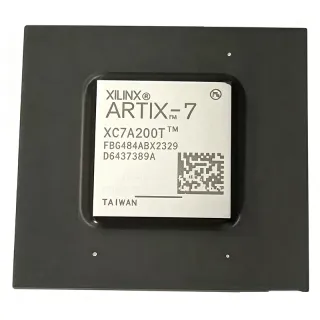
EPM9560WC208-20C - 560-Macrocell EE PLD, 20ns, CQFP-208 | Altera
MPN: EPM9560WC208-20C ✗ End of Life| Qty | Unit Price | Extended |
|---|---|---|
| 1 | $285 | $285.00 |
| 10 | $245 | $2,450.00 |
| 100 | $198 | $19,800.00 |
| 500 | $165 | $82,500.00 |
| 1,000 | $140 | $140,000.00 |
Drop-in alternatives for EPM9560WC208-20C — same package, pin-to-pin compatible. Different-package parts requiring PCB rework are excluded.
Quick Comparison Tool — Select alternative parts for side-by-side comparison:
EPM9560RC208-20C
✅ Drop-In✓ In Stock
Contact for price
View Datasheet →EPM9560RC208-20
✅ Drop-In✓ In Stock
Contact for price
View Datasheet →EPM9560RC208-20N
✅ Drop-In✓ In Stock
Contact for price
View Datasheet →EPM9560WC208-20
✅ Drop-In✓ In Stock
$25.8 / Unit
View Datasheet →EPM9560WC208-15C
✅ Drop-In✓ In Stock
$178 / Unit
View Datasheet →EPM9560WC208-15
✅ Drop-In✓ In Stock
$105 / Unit
View Datasheet →EPM9560WC208-20C Maximum Ratings & Electrical Characteristics
| Device Family | MAX 9000 (EE PLD) |
| Series | EPM9560 |
| Macrocells | 560 |
| Logic Array Blocks (LABs) | 35 |
| User I/O Pins | 149 |
| Propagation Delay (tPD) | 20 ns |
| Process Technology | CMOS, Electrically Erasable |
| Supply Voltage | 3.3 V or 5 V (configurable I/O) |
| Package | 208-pin CQFP (Ceramic Quad Flat Pack) |
| Pin Count | 208 |
| Programming Interface | JTAG BST (in-system programmable) |
| Operating Temperature Grade | Commercial (C suffix) |
| Mounting Type | Surface Mount (Ceramic QFP) |
| RoHS Status | ROHS3 Compliant (per fpgalink listing) |
| Moisture Sensitivity Level | MSL 3 (168 Hours) |
EPM9560WC208-20C 208-pin cqfp (ceramic quad flat pack) Pin Configuration Guide
Complete pinout information for EPM9560WC208-20C (208-pin cqfp (ceramic quad flat pack) package) with 208 pins. This digital IC includes GPIO, communication interfaces (UART, SPI, I2C), and power pins. Refer to the manufacturer datasheet for alternate pin functions and configuration options. Essential for embedded system design and PCB layout.

No detailed pinout data available for EPM9560WC208-20C.
Refer to the datasheet for full pin configuration.
Estimated pin count: 208 pins (digital package)
Safe Operating Area (SOA) & Thermal Characteristics
No official SOA curve available for this digital IC. Always operate within absolute maximum ratings specified in the datasheet. Ensure adequate cooling and derate as needed.
Typical Applications
EPM9560WC208-20C is suitable for 6 applications: Legacy Bus Address Decoding, Industrial Control Glue Logic, Avionics and Military Backplanes, Telecom Line Card Interface, Embedded System Peripheral Bridging, Test and Measurement Equipment.
Legacy Bus Address Decoding
The EPM9560WC208-20C's 560 macrocells and 149 I/Os make it ideal for legacy address-decoding and chip-select generation on 5 V and 3.3 V buses. With 20 ns tPD, combinatorial decode paths fit within a single 33 MHz bus cycle without wait states, replacing multiple 22V10 PALs with one MAX 9000 device. The 208-pin CQFP package supplies ample I/O for 32-bit address plus control-signal decoding in VME, PCI, or Multibus backplanes, while JTAG BST enables post-assembly repair via boundary-scan. Designers should allocate a global clear pin and use the I/O pin-keeper option for un-driven bus segments.
Recommended
Industrial Control Glue Logic
In industrial PLC and motor-drive control boards, the EPM9560WC208-20C consolidates discrete 74-series glue logic into a single reprogrammable device. Its 3.3 V/5 V configurable I/O interfaces directly to legacy 5 V optocouplers and 3.3 V microcontrollers without external level shifters, reducing BOM and PCB area. The 35 LAB architecture supports both combinatorial and registered logic with deterministic 20 ns timing, essential for safety interlocks and encoder-quadrature decoding. Designers typically instantiate state machines, PWM modulation, and watchdog logic in one EPM9560, using JTAG BST for firmware iteration without removing the part from the field.
Recommended
Avionics and Military Backplanes
The ceramic CQFP-208 package of the EPM9560WC208-20C provides hermeticity and extended thermal performance valued in avionics and military systems. Combined with 560 macrocells and deterministic 20 ns timing, the part supports reliable bus arbitration, MIL-STD-1553 interface glue, and redundant-channel switching in ruggedized environments. The electrically-erasable architecture allows in-field firmware updates via JTAG, a critical feature for deployed avionics modules. Designers must derate power dissipation for high-ambient operation and use the military temperature grade (M-suffix) variants for flight hardware, but the commercial "C" variant suits ground-based military test equipment.
Recommended
Telecom Line Card Interface
The EPM9560WC208-20C integrates framing, alarm-collection, and timeslot-assignment logic in legacy TDM telecom line cards. Its 149 I/Os handle HDLC channelization and serial backplane interconnect, while the 20 ns tPD supports T1/E1 line-rate processing without buffering. The non-volatile EE PLD configuration provides instant-on behavior during card insertion, eliminating FPGA configuration-time transients that disrupt live traffic. Engineers typically pair the EPM9560 with an octal E1 framer and use macrocell-based state machines for per-channel alarm correlation, reducing per-card component count and improving mean-time-between-failure metrics.
Recommended
Embedded System Peripheral Bridging
The EPM9560WC208-20C bridges asynchronous peripheral buses (ISA, PC/104, VME) to modern processors where off-the-shelf bridge ICs are unavailable. With 560 macrocells and 149 I/Os, designers can implement custom DMA controllers, interrupt concentrators, and chip-select generators in a single device. The 5 V-tolerant I/O protects against legacy bus overshoot while 3.3 V outputs interface cleanly to modern SoCs. Designers benefit from JTAG BST for board bring-up, using the EPM9560 as both logic and boundary-scan chain terminator, shortening prototype debug cycles by allowing in-circuit visibility of bus transactions.
Recommended
Test and Measurement Equipment
In bench-top and ATE test instruments, the EPM9560WC208-20C provides deterministic timing for pattern generation, signal-routing matrices, and front-panel control. The 20 ns tPD supports pattern-rate generation above 25 MHz, while the 149 I/Os drive multi-channel switching matrices without external buffers. Mixed-voltage I/O (3.3 V and 5 V) lets one device bridge modern ADC/DAC logic and legacy instrument buses. Engineers value the instant-on non-volatile configuration because test equipment must boot to known state without FPGA load-time complications. JTAG BST enables production-time calibration sequences, where the EPM9560 assists in self-test stimulus generation.
Recommended
Recommended Products Summary
Engineering reference data for EPM9560WC208-20C — comparison, design guidance, and compliance information.
Selection Guide
Comparison with Alternatives
| Parameter | This Product | EPM9560RC208-20C | EPM9560RC208-20 | EPM9560RC208-20N | EPM9560WC208-20 | EPM9560WC208-15C | EPM9560WC208-15 |
|---|---|---|---|---|---|---|---|
| Brand | Altera | Altera | Altera | Altera | Altera | Altera | Altera |
| Package | CQFP-208 (Ceramic) | RQFP-208 (Plastic Power) | RQFP-208 (Plastic Power) | RQFP-208 (Plastic Power) | CQFP-208 (Ceramic) - same | CQFP-208 (Ceramic) - same | CQFP-208 (Ceramic) - same |
| Macrocells | 560 | 560 | 560 | 560 | 560 | 560 | 560 |
| Propagation Delay (tPD) | 20 ns | 20 ns | 20 ns | 20 ns | 20 ns | 15 ns (-25%) | 15 ns (-25%) |
| User I/Os | 149 | 149 | 149 | 149 | 149 | 149 | 149 |
| Logic Array Blocks | 35 | 35 | 35 | 35 | 35 | 35 | 35 |
| Supply Voltage | 3.3 V / 5 V | 3.3 V / 5 V | 3.3 V / 5 V | 3.3 V / 5 V | 3.3 V / 5 V | 3.3 V / 5 V | 3.3 V / 5 V |
| Programming Interface | JTAG BST (ISP) | JTAG BST (ISP) | JTAG BST (ISP) | JTAG BST (ISP) | JTAG BST (ISP) | JTAG BST (ISP) | JTAG BST (ISP) |
| Temperature Grade | Commercial (0 C to +70 C) | Commercial | Commercial | Industrial (-40 C to +85 C) | Variant grade | Commercial | Variant grade |
| Approx. 1-pc Price (USD) | 285.00 | [DATA_NEEDED] | [DATA_NEEDED] | [DATA_NEEDED] | [DATA_NEEDED] | [DATA_NEEDED] | [DATA_NEEDED] |
Key Differentiators
- Original ceramic CQFP-208 package for high-reliability applications (vs EPM9560RC208-20)
- Drop-in form-fit-function replacement available via Altera PDN (vs EPM9560RC208-20C)
- 560 macrocells - highest density MAX 9000 tier (vs EPM7256SQC208-10)
Design Notes
Estimated: with 560 macrocells toggling at 33 MHz on a 5.0 V supply, the EPM9560WC208-20C core current is approximately 200-300 mA per the MAX 9000 datasheet ICC-versus-frequency curves. Designers must provision one 0.1 uF X7R ceramic decoupling capacitor per VCC/GND pair, placed within 3 mm of the package leads, plus a 10 uF tantalum bulk capacitor near the supply pin. For 3.3 V VCCIO operation, ICC drops proportionally. Power-rail sequencing between VCC and VCCIO should follow the datasheet's tRAMP specification to avoid I/O latch-up during hot-plug events.
The 208-pin CQFP package has fine-pitch gull-wing leads with a typical lead pitch of 0.5 mm (1.27 mm depending on pin count variant). Land-pattern design should follow Altera's MAX 9000 reference footprint with sufficient solder-mask-defined pads to control solder joint geometry during reflow. For ceramic CQFP, the coefficient-of-thermal-expansion mismatch with FR-4 PCB requires attention to lead compliance: avoid rigid pad-to-via structures and use plated through-hole vias with thermal relief. Estimated: keep high-speed signal traces away from the exposed die area; route JTAG signals as a 4-wire daisy chain with 10K pull-ups on TCK/TMS per BSDL recommendations.
Common pitfalls with the EPM9560WC208-20C: (1) Forgetting to instantiate the JTAG chain when using boundary-scan, which leaves TCK/TMS/TDO/TDO floating and causes ISP failures. (2) Driving 5 V into a 3.3 V VCCIO configured I/O - the I/O is NOT 5 V-tolerant when VCCIO is 3.3 V. (3) Assuming the ceramic CQFP footprint matches the plastic RQFP land-pattern one-to-one - the PDN-declared form-fit-function equivalence requires PCB layout verification. (4) Not accounting for the 20 ns tPD when targeting 50 MHz bus speeds - external latches become mandatory. (5) Mistaking the part for FPGA - the EE PLD is non-volatile and instant-on, no configuration bitstream loading required.
Compliance Information
RoHS3 compliant per fpgalink.com distributor listing. REACH, halogen-free, and conflict-mineral declarations not enumerated in verified data - request from Intel FPGA. AEC-Q100 not applicable - this is a commercial-grade logic device, not an automotive-qualified IC.